
Peintures d'art Aborigène de Papunya Tula
Dans l'art Aborigène, Papunya est une capitale, un big bang dans ce mouvement d'art contemporain.
En 1971, la relations de confiance nouée par le professeur de dessin des communautés Aborigènes installées à Papunya et les anciens, va permettre l'éclosion des premières peintures contemporaines. Cette émergence fut délicate au regard du caractère sacré de la plupart des œuvres. Cependant les anciens consentiront à ce que soit représenté sur le mur de l'école pour la première fois, le rêve de la fourmi à miel. A travers cette peinture et le bouillonnement créatif qui suivit, le monde a re-découvert un peuple nomade par l'entremise de signes signifiants porteurs de la plus ancienne culture continue au monde.
Ce fut un véritable big bang qui a donné naissance par la suite à de multiples communautés artistiques Aborigènes disséminées dans l'ensemble de l'Australie, y compris sur les 10 dernières années.(suite du texte ci-dessous).
Peintures des artistes Aborigènes de Papunya Tula disponibles au sein de la galerie :


Artiste : Ray James Tjangala
Titre de l'œuvre : Site of Yunala ( Ancestral storie of Tingari cycle)
Format : 183x153cm
Provenance et certificat : centre d'art de Papunya Tula
Référence de la peinture : RJ0408001
Demander le prix de l'œuvre/enquiry
Informations sur cette œuvre et l’artiste :
Ray James Tjangala (1958) was born at Yunala rockhole, west of Kiwirrkura. He is the son of Anatjari Tjampitjinpa, one of the original Papunya Tula artists, and Tjungkaya Napangati. Tjangala was encountered by Jeremy Long's Northern Territory Welfare Branch patrols in 1963 at Wudungunya rockhole north-west of Puntujarrpa (Jupiter Well). The family subsequently moved to Papunya in April 1964 where Tjangala attended school. By the late 1990s he had moved further west to Kiwirrkura and this return to his home country, along with the passing of many of the senior artists, invigorated his art, making him one of the most recognisable artists of Papunya Tula.
Generally, the Tingari are a group of ancestral beings of the Dreaming who travelled over vast stretches of the country, performing rituals and creating and shaping particular sites. The Tingari men were usually followed by Tingari women and were accompanied by novices, and their travels and adventures are enshrined in a number of song cycles. These ancestral stories form part of the teachings of the post initiatory youths today as well as providing explanations for contemporary customs.
His work has been acquired by major institutions and private collections across Australia and the world, as : Adelaide Art Galery of New South Wales, Sydney, Australia.
Flinders University Art Museum, Australia
National Gallery of Victoria, Melbourn, Australia
Aboriginal Art Museum, Holland, The Netherlands...

Artiste : Patrick Tjungurrayi
Titre de l'œuvre : Rockhole site of Wirrilpinya (ancestral Tingari cycle)
Format : 91 x 91 cm
Provenance et certificat : centre d'art aborigene de Papunya Tula Artists
Référence de cette peinture aborigene : PT1306081

Titre de l'œuvre : Rockhole of Mukula (ancestral travel stories)
Format : 183 x 152 cm
Provenance : centre d'art aborigene de Papunya Tula
Le certificat original du centre d'art Aborigène de Papunya Tula sera remis avec l'œuvre.
Référence de cette peinture aborigene : YN1310045

Artiste : Mary Napangati
Titre de l'œuvre : Rockhole site of Tjutalpi
Format : 153x122cm
Provenance : centre d'art de Papunya Tula
Le certificat original du centre d'art Aborigène de Papunya Tula sera remis avec l'œuvre.
Référence de cette peinture : MN2007041
Enquiry/ Demander le prix de l'œuvre
Explications sur cette œuvre et l’artiste :
Mary Brown Napangati (Napangardi) was born near Wilkinkarra (Lake Mackay) circa 1955. Her family lived in the vicinity of Lappi Lappi, located towards the northern area of Lake Mackay, until they walked into the Mt Doreen cattle station west of Yuendumu, in the Northern Territory. She later moved to Yuendumu, married there and later moved further west to Nyirrpi. After her first husband passed away, Mary remarried the well known artist Ronnie Tjampitjinpa and moved to Kintore, where she now lives and paints.
This painting evokes the rockhole site of Tjutalpi. In ancestral times a group of men and women travelled to this site. While at Tjutalpi they performed the dances and songs associated with the area. During their travels the men and women gathered a variety of bush foods including pura or bush tomatoes (Solanum chippendalei) and kampurarrpa or desert raisins (Solanum centrale). They also gathered wood for the manufacture of wana (digging sticks). The roundels in the work represent the soakage waters found at this site, while the lines represent the tali (sandhills).
Collections :
Private collections in Australia and Europe.

Artiste : Mary Napangati
Titre de l'œuvre : Rockhole site of Tjutalpi
Format : 122x122cm
Provenance : centre d'art de Papunya Tula
Le certificat original du centre d'art Aborigène de Papunya Tula sera remis avec l'œuvre.
Référence de cette peinture : MN2011057
Enquiry/ Demander le prix de l'œuvre
Explications sur cette œuvre et l’artiste :
Mary Brown Napangati (Napangardi) was born near Wilkinkarra (Lake Mackay) circa 1955. Her family lived in the vicinity of Lappi Lappi, located towards the northern area of Lake Mackay, until they walked into the Mt Doreen cattle station west of Yuendumu, in the Northern Territory. She later moved to Yuendumu, married there and later moved further west to Nyirrpi. After her first husband passed away, Mary remarried the well known artist Ronnie Tjampitjinpa and moved to Kintore, where she now lives and paints.
This painting evokes the rockhole site of Tjutalpi. In ancestral times a group of men and women travelled to this site. While at Tjutalpi they performed the dances and songs associated with the area. During their travels the men and women gathered a variety of bush foods including pura or bush tomatoes (Solanum chippendalei) and kampurarrpa or desert raisins (Solanum centrale). They also gathered wood for the manufacture of wana (digging sticks). The roundels in the work represent the soakage waters found at this site, while the lines represent the tali (sandhills).
Collections :
Private collections in Australia and Europe.

Artiste : Yinarupa Nangala
Titre de l'œuvre : Rockhole of Mukula ( Ancestral travel stories )
Format : 153 x 122 cm
Provenance : centre d'art de Papunya Tula
Le certificat original du centre d'art Aborigène de Papunya Tula sera remis avec l'œuvre.
Référence de cette peinture : YN1306076

Artiste : BCharlie Tjapangati
Titre de l'œuvre : Manakurranya - Tingari sacred story
Format : 122 x 61 cm
Provenance : centre d'art de Papunya Tula
Le certificat original du centre d'art Aborigène de Papunya Tula sera remis avec l'œuvre.
Référence de cette peinture : CT1710026

Artiste : Ningura Napurrula
Titre de l'œuvre : Women ceremonies - Sacred Rockholes
Format : 153 x 122 cm
Provenance et certificat : centre d'art de Papunya Tula
Le certificat original du centre d'art Aborigène de Papunya Tula sera remis avec l'œuvre.
Référence de la peinture : NN0809038
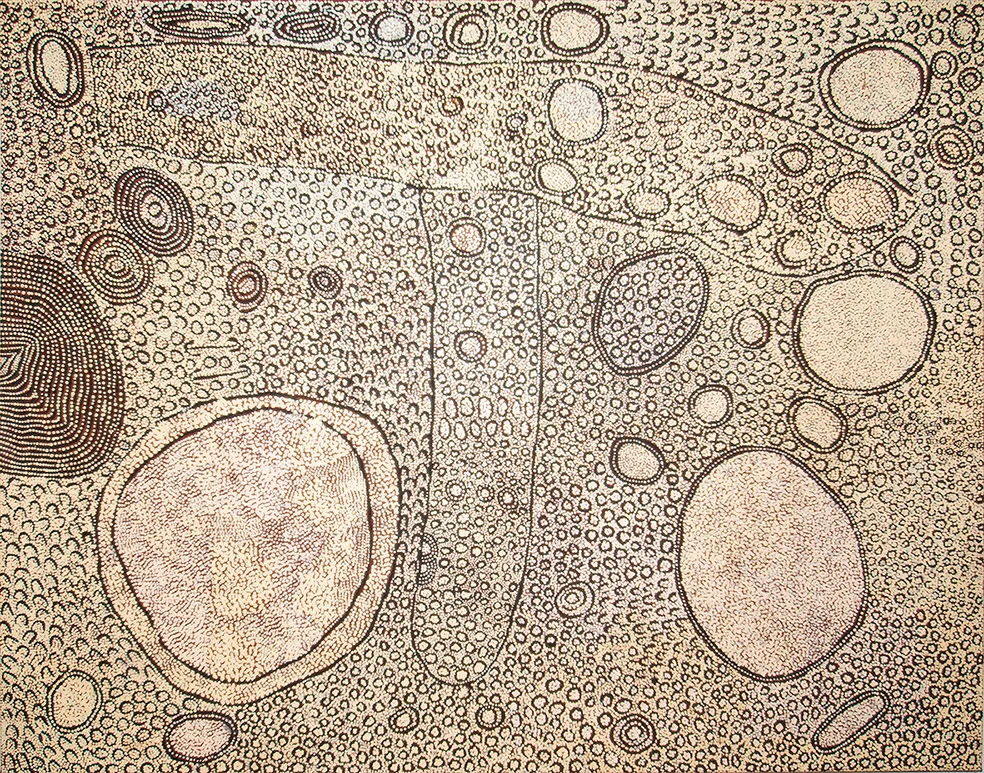
Titre de l'œuvre : Rockhole of Mukula (ancestral stories)
Format : 153 x 122 cm
Provenance : centre d'art aborigene de Papunya Tula
Le certificat original du centre d'art Aborigène de Papunya Tula sera remis avec l'œuvre.
Référence de cette peinture aborigene : YN1008003
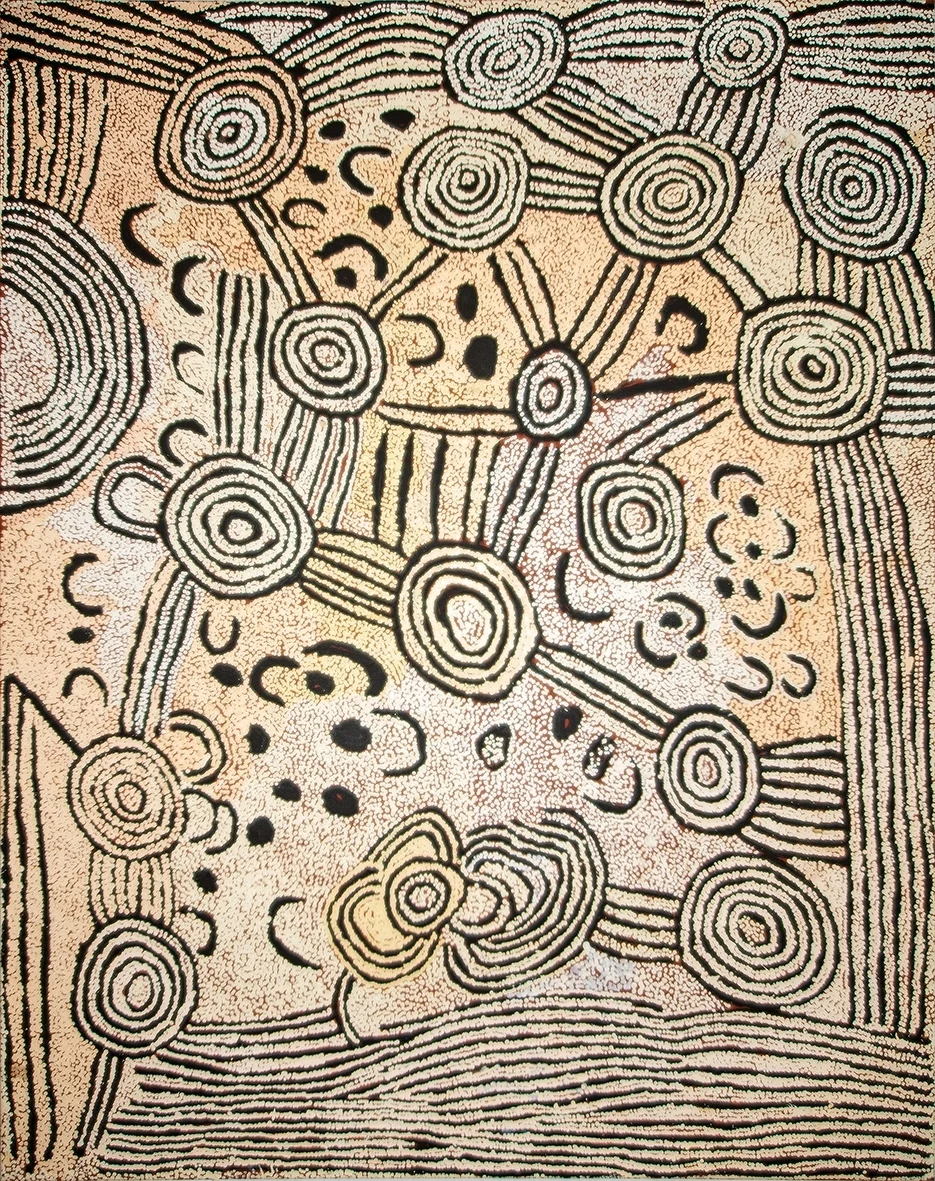
Artiste : Nancy Nungurrayi
Titre de l'œuvre : Ceremonies at Ngaminya rockhole
Format : 153 x 122 cm
Provenance et certificat : centre d'art aborigene de Papunya Tula
Référence de cette peinture aborigène : NN0807106

Artiste : Bobby West Tjupurrula
Titre de l'œuvre : Rockhole site of Palipalintja - Dreaming Time story
Format : 61 x 31 cm
Provenance : centre d'art aborigene de Papunya Tula Artists
Le certificat original du centre d'art Aborigène de Papunya Tula sera remis avec l'œuvre.
Référence de cette peinture aborigene : BW1904090
Enquiry/Demander le prix de l'œuvre
Explications sur cette œuvre et l’artiste :
Bobby West Tjupurrula (1958) is the son of Freddy West Tjakamarra, one of the founding shareholders of Papunya Tula Artists, and comes from an impressive family of established painters. Born at the rockhole site of Tjammu Tjammu near Kiwirrkura around 1958, Bobby’s family was later met by Jeremy Long’s welfare patrol at a rockhole further east in 1963. He commenced painting for Papunya Tula Artists in the late 1980s but it wasn’t until 1993 that he began painting regularly. Since then he has become an integral part of the company, not just as an artist, but also as the company Chairman on several occasions. Bobby is also strong advocate and voice on behalf of the Western Desert Dialysis unit, an organisation close to his heart given he too suffers renal failure and now receives dialysis.
This painting depicts designs associated with the rockhole site of Palipalintja, west of Jupiter Well. In mythological times a large group of Tingari Men came to this site from Jigalong. Generally, the Tingari are a group of mythical characters of the Dreaming who travelled over vast stretches of the country, performing rituals and creating and shaping particular sites. The Tingari Men were usually followed by Tingari Women and accompanied by novices.
Collections : National Gallery of Victoria (Sydney), Cornell University New-York, Hood Museum USA, Charles Darwin University, Private collections in Europe and Australia....
Papunya s'affirme comme un pilier pérenne de ce mouvement d'art, avec des œuvres sublimes profondément connectées à la tradition, conjuguant la force des symboles dans une palette graphique inventive mais épurée où l'essentiel résonne et vibre sur la toile.
Célébrés à travers le monde, les artistes de Papunya Tula firent l'objet d'une exposition anniversaire pour les 40 ans du mouvement d'art, au musée du Quai Branly en 2012, avec les premières peintures de 1971 à 1973. Les œuvres contemporaines pour leur part, figurent également dans les plus grandes institutions.
Artiste : Ray James Jangala
Titre de l'œuvre : Rockhole site of Mukula ( Ancestral storie of Tingari cycle)
Format : 91 x 61 cm
Provenance et certificat : centre d'art aborigene de Papunya Tula Artists
Référence de cette peinture aborigène : RJ1404076
Demander le prix de l'œuvre
Explications sur cette œuvre :
Ray James Tjangala (1958) was born at Yunala rockhole, west of Kiwirrkura. He is the son of Anatjari Tjampitjinpa, one of the original Papunya Tula artists, and Tjungkaya Napangati. Tjangala was encountered by Jeremy Long's Northern Territory Welfare Branch patrols in 1963 at Wudungunya rockhole north-west of Puntujarrpa (Jupiter Well). The family subsequently moved to Papunya in April 1964 where Tjangala attended school. By the late 1990s he had moved further west to Kiwirrkura and this return to his home country, along with the passing of many of the senior artists, invigorated his art, making him one of the most recognisable artists of Papunya Tula.
Generally, the Tingari are a group of ancestral beings of the Dreaming who travelled over vast stretches of the country, performing rituals and creating and shaping particular sites. The Tingari men were usually followed by Tingari women and were accompanied by novices, and their travels and adventures are enshrined in a number of song cycles. These ancestral stories form part of the teachings of the post initiatory youths today as well as providing explanations for contemporary customs.
Les œuvres de l’artiste figurent dans les prestigieuses collections suivantes :
Flinders University Art Museum.
Art Gallery of New South Wales.
National Gallery of Victoria.
Art Gallery of South Australia.
Aboriginal Art Museum, The Netherlands.
Harvard Art Museum, Cambridge, Massachusetts, USA.
National Gallery of Australia.
Toledo Musuem of Art, Toledo, Ohio, USA.
Voituron Collection, Belgium.