Christine Puruntatameri - Pwonga - 140 x 48 cm - 25-82
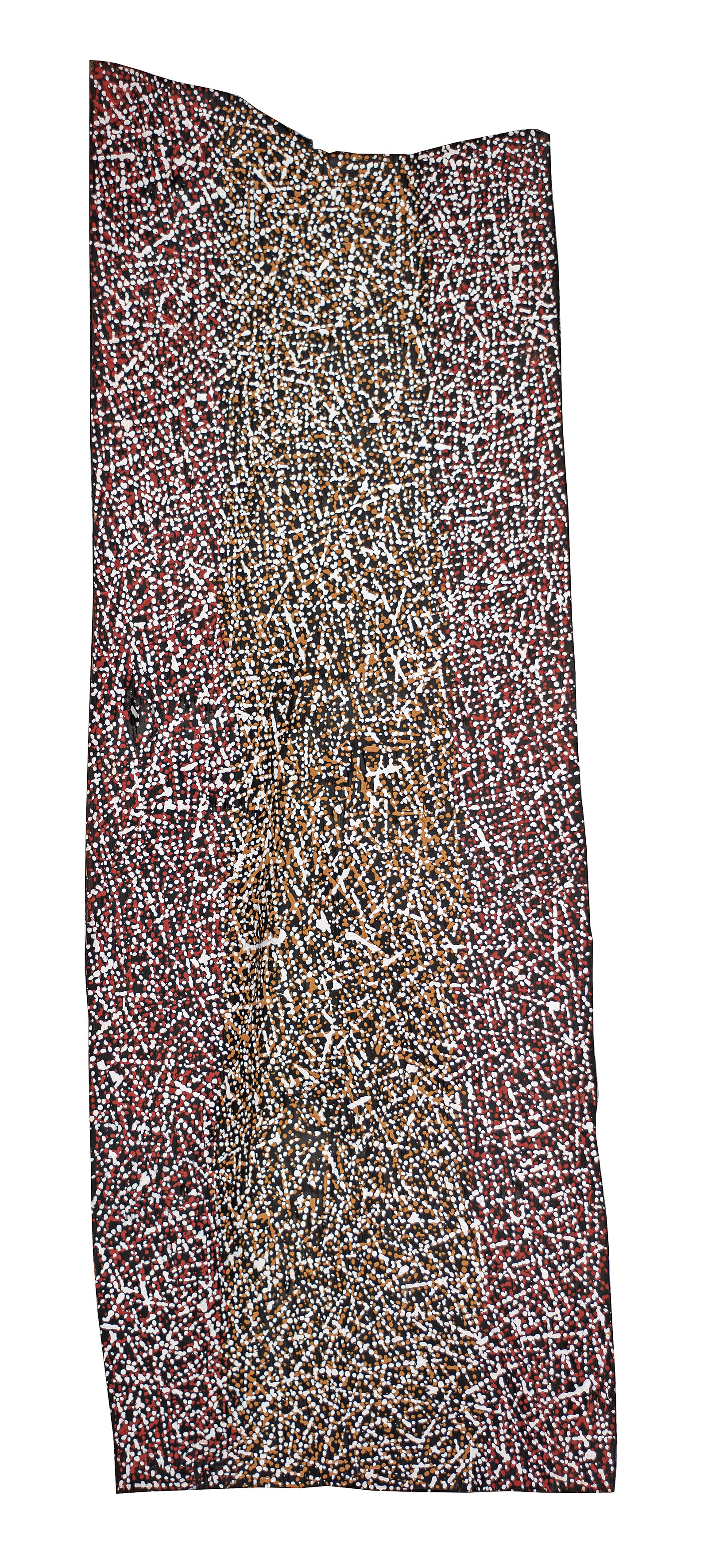
Christine Puruntatameri - Pwonga - 140 x 48 cm - 25-82
Artiste : Christine Puruntatameri
Titre de l'œuvre : Pwonga
Pigments naturels sur toile de lin
Format : 140 x 48 cm
Provenance et certificat : centre d'art aborigène de Munupi (Tiwi Island)
Référence de la peinture : 25-82
© Photo : Aboriginal signature with the courtesy of the artist & Munupi Art centre (Tiwi Island)
Explications sur cette œuvre :
Christine Daisy Puruntatameri born in 1983 in Darwin and grew up on Melville Island at Pirlangimpi.
Back on Pirlangimpi she met her first partner and they had a daughter. They moved to WA in 2002 and had 2 more children. Christine moved back to Pirlangimpi with her 3 children in 2008.
Christine has experience as a Director of Munupi Arts, and her grandfather was the famous Tiwi Potter John Boscoe Tipiloura, and father was renouned potter Eddie Puruntatameri, who shared his creative skills and cultural knowledge with his daughter.
While her children were going to school she came to the Art Centre whenever she could. Christine has worked at the Pirlangimpi store since 2017 and when she has the time she comes to the Art Centre to paint. She loves to paint and uses a pwoja (comb) to apply ochres to canvases.
Pwoja Jilamara During ceremony on the Tiwi Islands a series of ‘yoi’ (dances), are performed; some are totemic (inherited from the person's Mother) and some serve to act out the narrative of newly composed songs. This painting tells a story about Pwonga the spider woman who gave us the designs of the web lines. WhenTiwi look for water they look for the spider webs which tell us there is water near.
Participants in these ceremonies are painted with turtiyanginari (the different natural ochre colours) in varying designs, transforming the dancers and, in some cases, providing protection against recognition by mapurtiti (spirits). These designs can be applied in different ways, one of which is using the pwoja (or kayimwagakimi), a traditional Tiwi ‘comb’ carved with a single row of teeth on one or both ends, usually made using ironwood or bloodwood. After being dipped in ochre and applied to the body a straight row of dots is imprinted. Once completed, these dots are then collectively called yirrinkiripwoja (body painting). Painting of the face also occurs. These significant artistic designs collectively are called ‘Jilamara’.