Peintures d'art Aborigène de Bidyadanga

Cette communauté est située à près de 180 km de Broome, sur la côte ouest de l'Australie, avec de belles plages de sable blanc bordées par la mangrove et riche en animaux aquatiques.
L'histoire du centre d'art de Bidyadanga repose sur un jeune adolescent, Daniel Walbidi. A l'âge de ses 16 ans il est allé à Broome rencontrer une galerie, pour lui annoncer avec timidité mais force qu'il était un artiste et souhaitait lancer un mouvement artistique avec sa communauté. La volonté de Daniel ont permis d'encourager les plus anciens à embrasser la peinture à leur tour(suite du texte ci-dessous).
Peintures des artistes Aborigènes de Bidyadanga disponibles au sein de la galerie :

Artiste : Daniel Walbidi
Titre de l'œuvre : Kirriwirri living Jila
Format : 180 x 150 cm
Provenance et certificat : centre d'art aborigène de Bidyadanga
Référence de cette peinture aborigène : 831323
Œuvre vendue. Découvrez notre collection de peintures Aborigènes disponibles ici
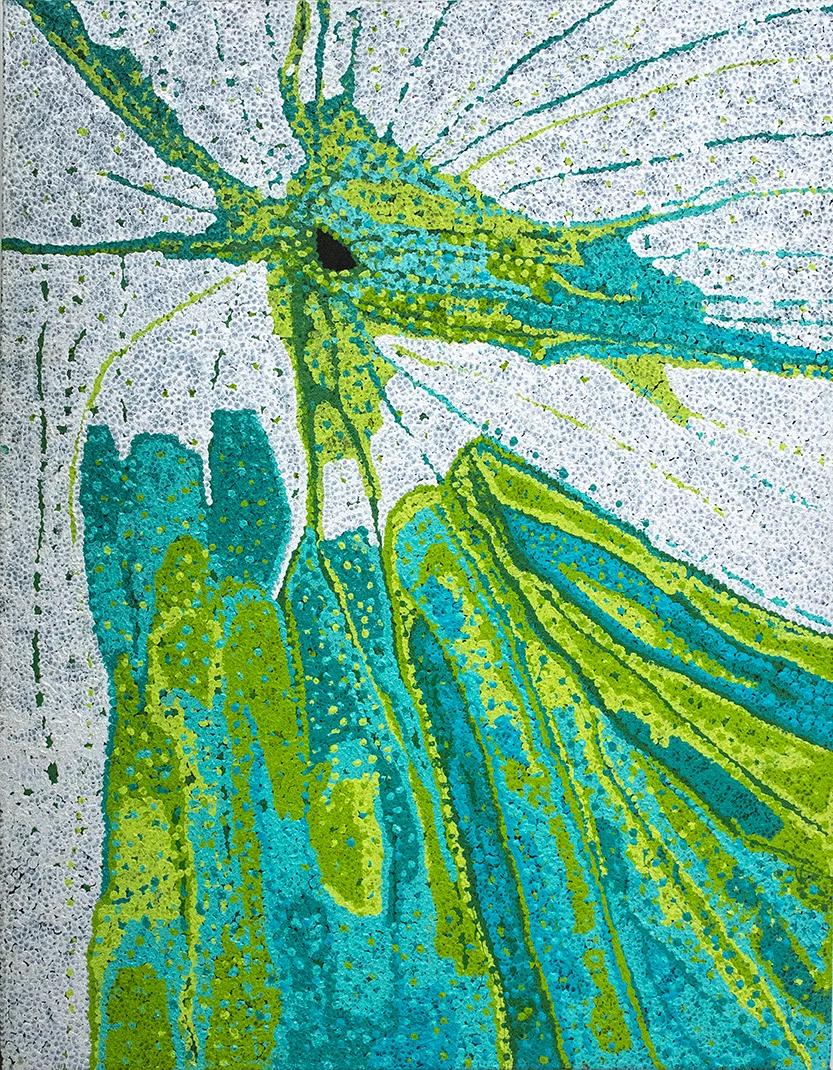
Artiste : Daniel Walbidi
Titre de l'œuvre : Winpa dreaming
Format : 89 x 70 cm
Provenance et certificat : centre d'art de Bidyadanga
Œuvre vendue. Découvrez notre collection de peintures Aborigènes disponibles ici
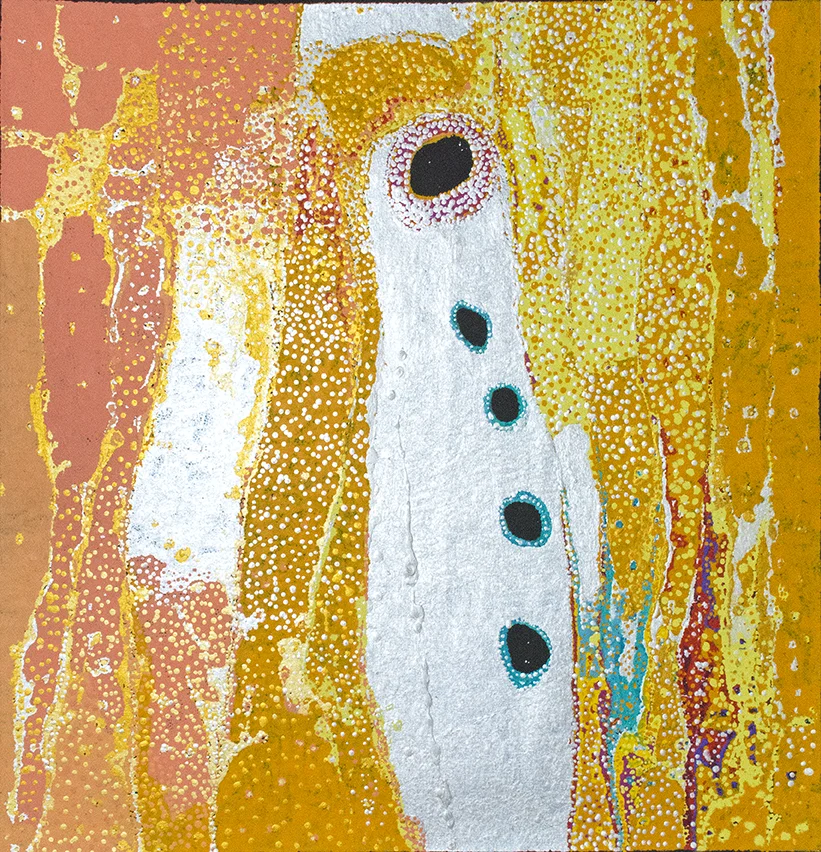
Artiste : Daniel Walbidi
Titre de l'œuvre : WInpa 2014
Format : 100 x 100 cm
Provenance et certificat : centre d'art aborigène de Bidyadanga
Référence de cette peinture aborigène : 827918
Œuvre vendue. Découvrez notre collection de peintures Aborigènes disponibles ici

Artiste : Daniel Walbidi
Titre de l'œuvre : Kiriwirri - Dreaming Time stories
Format : 180 x 95 cm
Provenance et certificat : Short Street opérant pour les artistes Yulparija de Bidyadanga
Référence de cette peinture aborigène : 841412
Explications sur cette œuvre :
Daniel Walbidi (1983) is one of the most sough after Aboriginal Contemporary artist. He was exhibited in significant museum like the MET and won the Telstra award few years ago.
Daniel says "this is a border place between Yulparija and Warnman country. Daniel says: 'Kirriwirri' is my grandfather's and grandmother's country. That is where they bought up all their children, and where my father was bought up. It is like their family home, their roots. There is big claypan at this place, it is an important place for our family. Our clan is also named Kirriwirri, and individual members of our clan clan are named 'Kirriwirri'. Kirriwirri is a jila (living water) near well 33 on the Canning stock route in the Great Sandy Desert. Daniel's painting reflects the complex desert landscape full of life and colour. He depicts saltlakes (white areas) and the talis (sandhills) Kiriwirri is the birthplace of my fathers family it is the family home. my father along with his older siblings spent their childhood and adolescents here.
Kiriwirri is also important to many other family and clan groups because it is a living jila meaning it has water that never dries out even during the dryest of seasons. i have never been to Kiriwirri but I have a deep desire with in to travel and see this country to become connected. my grandparents have sadly passed away a longtime ago so i guess if i ever do go back to Kiriwirri i would be taking a part of them back. i also paint another important place called wirnpa. wirnpa and kiriwirri are very important to me because i am related to two of these jila. Kiriwirri is my grandfather and Wirnpa is my grandfather they also related to each other being brother in laws. Wirnpa is of the same skin group as me we are both Purungu and Kiriwirri is the Milangka skin group.
© Photo : Aboriginal Signature Estrangin gallery with the courtesy of Short Street and the artist

Artiste : Lydia Balbal
Titre de l'œuvre : Martakulu - Dreaming Time stories
Format : 91 x 91 cm
Provenance et certificat : Short Street opérant pour les artistes Yulparija de Bidyadanga
Référence de cette peinture aborigène : 783617
Explications sur cette peinture d’art Aborigène :
Lydia Balbal (1958) is a Mangala woman. Lydia's country is near Punmu in the Great Sandy Desert of W.A. Her people's existence was threatened by severe drought so that they had little choice but to leave their traditional country. Her family were some of the last to walk out to the coastal town of Bidyadanga (then La Grange Mission) located two hours south of Broome in the early 70s. Lydia first began painting in 2007 but has already received significant attention from collectors and the media alike.
Martakulu is a soak out near Punmu near the Canning Stock Route in the Great Sandy Desert in Western Australia. It is strong womans country, it is part of the women's law line. Long time ago a law man he come up to this country, he went home and left his wife and baby. They make him fire and sit down, cook mayi (bush food) and then started to cry for her husband. Her tears made that soak. It is important country this one. Lydia says "I been young girl walked all around here with my mummy and daddy. We camp and hunt here." This painting shows the rockhole with king brown snakes and their eggs.
Collections : Murdoch University Art Collection. Aboriginal Art Museum, The Netherlands. Thomas Vroom Collection, The Netherlands. National Gallery of Victoria Felton Collection. Queensland Art Gallery. Laverty Collection. Monash University Art Collection. Lepley Collection. Western Australian Art Gallery. National Gallery of Australia. Wesfarmers Collection. Australia Parliament House Collection. Brocard - Estrangin Collection. Kluge-Ruhe Aboriginal Art Collection of the University of Virginia…
© Photo : Aboriginal Signature Estrangin gallery with the courtesy of Short Street and the artist

Artiste : Lydia Balbal
Titre de l'œuvre : Yidalarung - Dreaming Time stories
Format : 122 x 56 cm
Provenance et certificat : Short Street opérant pour les artistes Yulparija de Bidyadanga
Référence de cette peinture aborigène : 784774
Explications sur cette peinture d’art Aborigène :
Lydia Balbal (1958) is a Mangala woman. Lydia's country is near Punmu in the Great Sandy Desert of W.A. Her people's existence was threatened by severe drought so that they had little choice but to leave their traditional country. Her family were some of the last to walk out to the coastal town of Bidyadanga (then La Grange Mission) located two hours south of Broome in the early 70s. Lydia first began painting in 2007 but has already received significant attention from collectors and the media alike.
Lydia says: "This jila Yidalarung got hill kangaroo hunting in this one and dingo. This Mangala country belong Mother and Father and this my country. This bush side underground this water."
Collections : Murdoch University Art Collection. Aboriginal Art Museum, The Netherlands. Thomas Vroom Collection, The Netherlands. National Gallery of Victoria Felton Collection. Queensland Art Gallery. Laverty Collection. Monash University Art Collection. Lepley Collection. Western Australian Art Gallery. National Gallery of Australia. Wesfarmers Collection. Australia Parliament House Collection. Brocard - Estrangin Collection. Kluge-Ruhe Aboriginal Art Collection of the University of Virginia.
© Photo : Aboriginal Signature Estrangin gallery with the courtesy of Short Street and the artist

Artiste : Lydia Balbal
Titre de l'œuvre : Winpa - Dreaming Time stories
Format : 90 x 60 cm
Provenance et certificat : Short Street opérant pour les artistes Yulparija de Bidyadanga
Référence de cette peinture aborigène : 838533
Explications sur cette peinture d’art Aborigène :
Lydia Balbal (1958) is a Mangala woman. Lydia's country is near Punmu in the Great Sandy Desert of W.A. Her people's existence was threatened by severe drought so that they had little choice but to leave their traditional country. Her family were some of the last to walk out to the coastal town of Bidyadanga (then La Grange Mission) located two hours south of Broome in the early 70s. Lydia first began painting in 2007 but has already received significant attention from collectors and the media alike.
Winpa is jila (living water) located near the Percival Lakes in the Great Sandy Desert in WA. It is an important gathering of the Yulparija and neighbouring groups. they would gather for rain making ceremonial ceremonies.
Collections : Murdoch University Art Collection. Aboriginal Art Museum, The Netherlands. Thomas Vroom Collection, The Netherlands. National Gallery of Victoria Felton Collection. Queensland Art Gallery. Laverty Collection. Monash University Art Collection. Lepley Collection. Western Australian Art Gallery. National Gallery of Australia. Wesfarmers Collection. Australia Parliament House Collection. Brocard - Estrangin Collection. Kluge-Ruhe Aboriginal Art Collection of the University of Virginia.
© Photo : Aboriginal Signature Estrangin gallery with the courtesy of Short Street and the artist

Artiste : Lydia Balbal
Titre de l'œuvre : Winpa Desert place
Format : 90 x 60 cm
Provenance et certificat : Short Street opérant pour les artistes Yulparija de Bidyadanga
Référence de cette peinture aborigène : 830467
Explications sur cette peinture d’art Aborigène :
Lydia Balbal (1958) is a Mangala woman. Lydia's country is near Punmu in the Great Sandy Desert of W.A. Her people's existence was threatened by severe drought so that they had little choice but to leave their traditional country. Her family were some of the last to walk out to the coastal town of Bidyadanga (then La Grange Mission) located two hours south of Broome in the early 70s. Lydia first began painting in 2007 but has already received significant attention from collectors and the media alike.
Winpa is jila (living water) located near the Percival Lakes in the Great Sandy Desert in WA. It is an important gathering of the Yulparija and neighbouring groups. they would gather for rain making ceremonial ceremonies.
Collections : Murdoch University Art Collection. Aboriginal Art Museum, The Netherlands. Thomas Vroom Collection, The Netherlands. National Gallery of Victoria Felton Collection. Queensland Art Gallery. Laverty Collection. Monash University Art Collection. Lepley Collection. Western Australian Art Gallery. National Gallery of Australia. Wesfarmers Collection. Australia Parliament House Collection. Brocard - Estrangin Collection. Kluge-Ruhe Aboriginal Art Collection of the University of Virginia.
© Photo : Aboriginal Signature Estrangin gallery with the courtesy of Short Street and the artist

Artiste : Lydia Balbal
Titre de l'œuvre : Martakulu - Dreaming Time stories
Format : 100 x 100 cm
Provenance et certificat : Short Street opérant pour les artistes Yulparija de Bidyadanga
Référence de cette peinture aborigène : 834421
Explications sur cette peinture d’art Aborigène :
Lydia Balbal (1958) is a Mangala woman. Lydia's country is near Punmu in the Great Sandy Desert of W.A. Her people's existence was threatened by severe drought so that they had little choice but to leave their traditional country. Her family were some of the last to walk out to the coastal town of Bidyadanga (then La Grange Mission) located two hours south of Broome in the early 70s. Lydia first began painting in 2007 but has already received significant attention from collectors and the media alike.
Martakulu is a soak out near Punmu near the Canning Stock Route in the Great Sandy Desert in Western Australia. It is strong womans country, it is part of the women's law line. Long time ago a law man he come up to this country, he went home and left his wife and baby. They make him fire and sit down, cook mayi (bush food) and then started to cry for her husband. Her tears made that soak. It is important country this one. Lydia says "I been young girl walked all around here with my mummy and daddy. We camp and hunt here." This painting shows the rockhole with king brown snakes and their eggs.
Collections : Murdoch University Art Collection. Aboriginal Art Museum, The Netherlands. Thomas Vroom Collection, The Netherlands. National Gallery of Victoria Felton Collection. Queensland Art Gallery. Laverty Collection. Monash University Art Collection. Lepley Collection. Western Australian Art Gallery. National Gallery of Australia. Wesfarmers Collection. Australia Parliament House Collection. Brocard - Estrangin Collection. Kluge-Ruhe Aboriginal Art Collection of the University of Virginia…
© Photo : Aboriginal Signature Estrangin gallery with the courtesy of Short Street and the artist
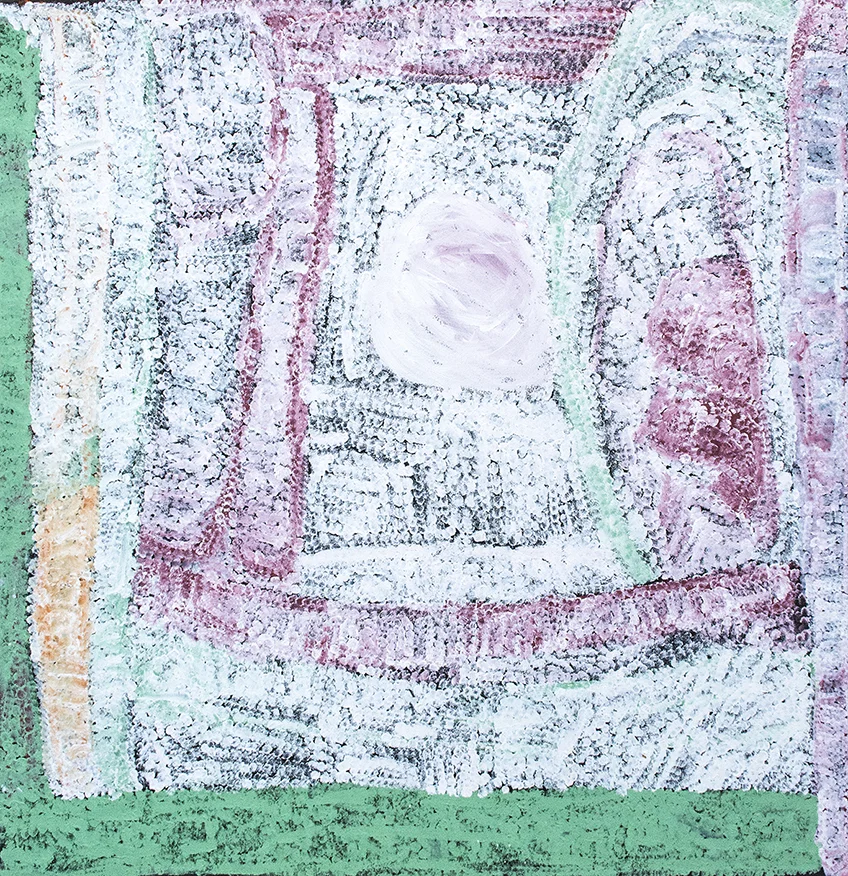
Artiste : Lydia Balbal
Titre de l'œuvre : Poorada Poorada
Format : 91 x 91 cm
Provenance et certificat : centre d'art aborigène de Bidyadanga
Référence de cette peinture aborigène : 26244

Artiste : Margaret Baragurra
Titre de l'œuvre : Lajarri
Format : 102 x 76 cm
Provenance et certificat : Short Street opérant pour les artistes Yulparija de Bidyadanga
Référence de cette peinture aborigène : 787568
Explications sur cette peinture d’art Aborigène :
Margaret Baragurra (1939) was born in Kalpirti located in the Great Sandy Desert of W.A. Her people, the Yulparija, walked out of their traditional country in the early 1970s when their existence was threatened by a severe drought. Margaret travelled with her family to the coastal town of Bidyadanga (then LeGrange Mission) where she now lives.
Since Margaret started painting in 2003 her work has enjoyed critical acclaim and she has been widely exhibited. She combinations the traditional imagery of the Great Sandy Desert with the vibrant colours of the saltwater landscape she now inhabits.
Lajarri is Margaret's traditional country which is south east of Bidyadanga where she now lives. As a child she travelled with her parents across this desert country. This is when the country is full of water in the wet season. In this country there is a big warla (mud flat) which makes the water go milky . At this time there is much mayi (bush tucker) and the country is very beautiful. This is an important place for Margaret.
Collections : University of Newcastle. National Gallery of Australia. Notre Dame University. Laverty Collection. Kerry Stokes, Perth. Sam Barry Collection. QLD State Gallery. Parliament House Collection, Canberra
© Photo : Aboriginal Signature Estrangin gallery with the courtesy of Short Street and the artist
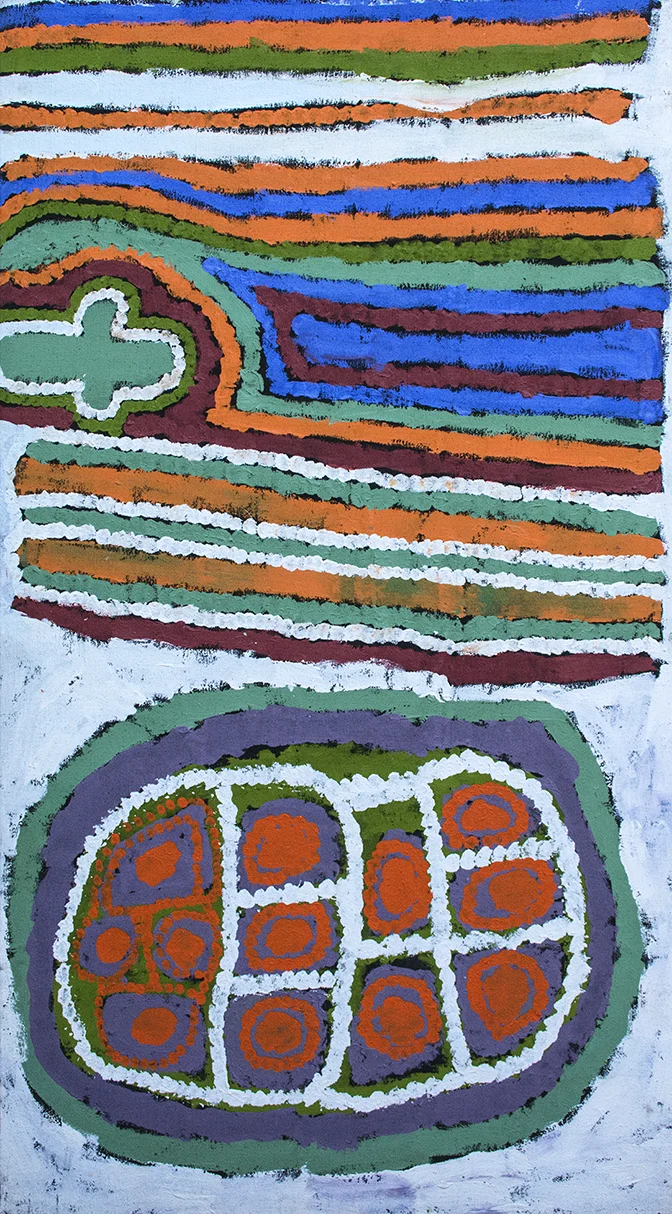
Artiste : Weaver Jack
Titre de l'œuvre : "Desert way with community and jila"
Format : 106,5 x 60 cm
Provenance et certificat : centre d'art aborigène de Bidyadanga
Référence de cette peinture aborigène : 26689
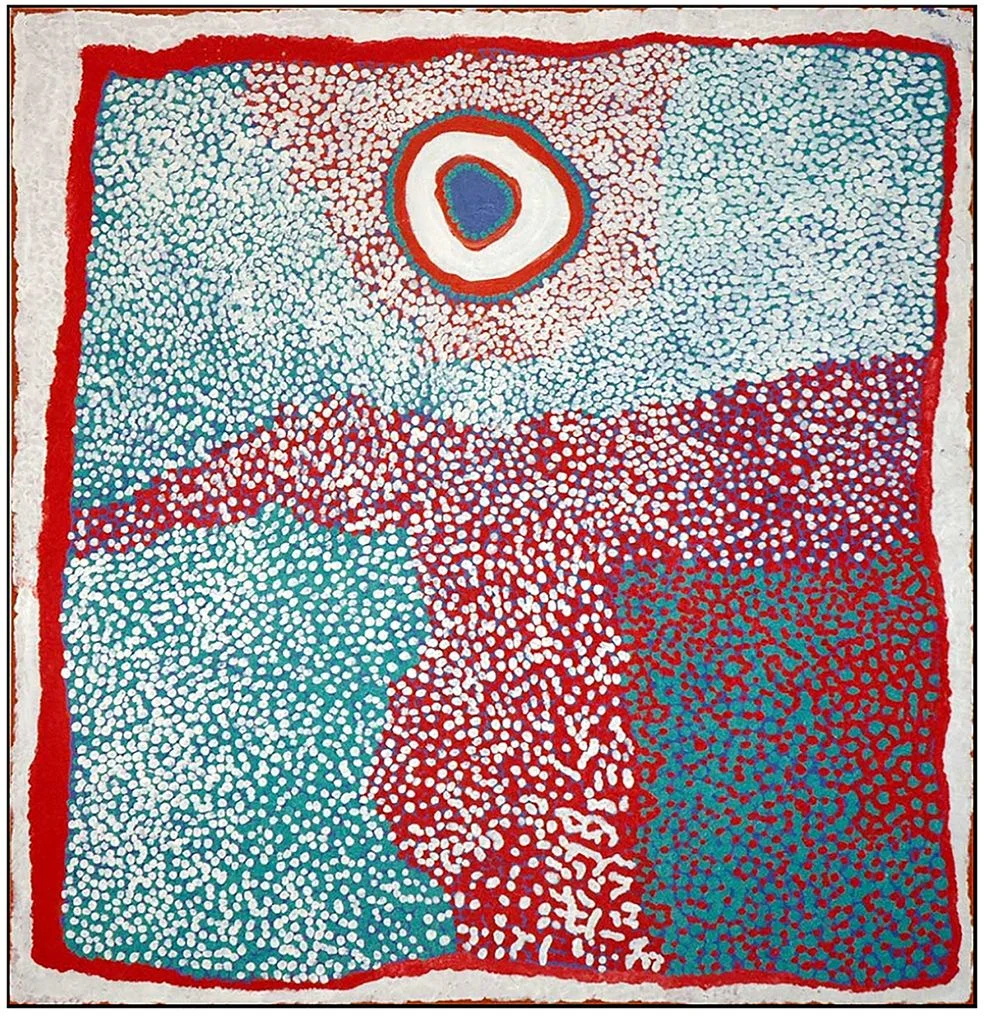
Artiste : Margaret Baragurra
Titre de l'œuvre : Ngatarn at Nanarra - Dreaming Time stories
Format : 97 x 97 cm
Provenance et certificat : centre d'art aborigène de Bidyadanga
Référence de cette peinture aborigène : 786402
Les zones désertiques de cette communauté restent en effet aujourd'hui inhabitables en raison de la sécheresse et des compagnies minières réduisant par leur exploitation les nappes phréatiques.
On peut donc évoquer pour Bidyadanga, des peintres de la "diaspora" Aborigène, qui représentent les mythes associés au temps du rêve et célèbrent leurs territoires par l'entremise de leur mémoire. La peinture participe ainsi de cet échange de savoir entre générations.
Les artistes Aborigènes de Bidyadanga ont tous développé des styles et une façon de peindre soulignant leur profonde individualité. Il est ainsi particulièrement marquant d'observer comment le même rêve ou mythes est traité par les peintres Alma Webou (dec.), Weaver Jack (dec.), Jan Billycan, ou Daniel Walbidi.
Des pèlerinages réalisés sur leur terre d'origine ont permis aux différentes générations de retrouver une lecture fine et toute l'émotion de l'ancrage au territoire et à ces dimensions spirituelles.
Certains artistes aborigènes comme Lydia Balbal ont quitté le désert dans leur adolescence, ce qui donne à leur peinture une force et une authenticité, qui ne cesse de se réinventer dans le temps présent.
Leurs artistes sont très recherchés et figurent dans les plus grandes institutions. Daniel Walbidi fut par exemple exposé au MET à New York en 2010. Lydia Balbal, Alma Webou, Weaver, Jan Billycan Jack furent exposés à plusieurs reprises en Europe : à l'exposition d'art aborigène Grand Nord Grand Sud de l'Abbaye de Daoulas en 2011, au Musée d'Aquitaine à Bordeaux lors de Mémoires vives en 2013, au musée d'art aborigène contemporain d'Utrecht en Hollande en 2014...
Artiste : Daniel Walbidi
Titre de l'œuvre : Kulyakartu
Format : 180 x 95 cm
Provenance et certificat : centre d'art aborigène de Bidyadanga
Référence de cette peinture aborigène : 837547
Explications pour cette œuvre :
Daniel says "this is a border place between Yulparija and Warnman country. This is where all the old people used to live. The Yulparija and Warman people shared this country. We went through here when we travelled to our traditional country in 2006 from our current home at Bidyadanga on the coast two hours south of Broome. There are plenty of jila (living water) here. There is also an old mining road and two windmills here."
Kulyakartu is in the Great Sandy Desert of W.A. south and west of Winpa located near the Percival Lakes. Winpa is a gathering place, an important rain making site that was created by the last ancestor to change into the landscape. Winpa had travelled to the south and seen all his countrymen changing into sacred snakes inhabiting important waterholes. He was the last one to lay down and was a very powerful law man and rainmaker. He rested near his five sons. He remains active still today.
Vendue