Exposition d’art Aborigène “Sacred Earth” - Aboriginal art from Australia
En lien avec les artistes de 10 centres d’art d’Australie (Papunya Tula, Tjala, Ikuntji, Warlu, Warmun, Buku, Munupi, Jilamara, Yulparija, Mimili Maku...).
A la galerie Aboriginal Signature Estrangin : 101 rue Jules Besme, 1081 Bruxelles.
Vernissage sur RDV le mercredi 11 décembre de 14h à 21h30.
A 20h - discours du directeur de la galerie et drink.
RSVP - réserver votre visite
Ensuite la galerie vous reçoit sur RDV jusqu’au samedi 21 décembre 2024, du mardi au samedi, de 11h à 19h : vous pouvez réserver votre visite dés à présent dans notre agenda ici.
“Sacred Earth : l’âme vibrante de la culture Aborigène”
Découvrez une exposition qui dépasse les frontières du visible pour vous plonger dans la spiritualité profonde et intemporelle des terres Indigènes d'Australie. Chaque peinture est une porte ouverte sur des récits sacrés, une ode à la puissance de la nature et à la transmission de savoirs ancestraux.
Un voyage au cœur du sacré
Les œuvres exposées, imprégnées de mystère et de symboles, célèbrent l’essence d’une culture millénaire. Elles révèlent la relation sacrée avec la terre (Manta Miil miilpa) et la richesse des récits spirituels (Tjukurpa Miil miilpa), tout en préservant l’intimité des secrets transmis de génération en génération.
Des artistes porteurs de lumière
Les artistes présentés sont bien plus que des créateurs : ils sont les gardiens d’histoires millénaires et universelles. À travers leurs œuvres, ils transforment la toile en un espace sacré présenté avec pudeur, où le mouvement des paysages, les vibrations des couleurs et l’écho des chants anciens se rencontrent. Beverly Burton, Muna Kulyuru, Rhoda, Barbara Moore et bien d’autres partagent avec vous des fragments de leur pays et de leur âme.
Un dialogue entre passé, présent et éternité
Cette exposition est une invitation à ressentir, à méditer et à explorer. Elle connecte à l’essentiel : la force de la terre, la magie des récits sacrés et la puissance des liens humains avec leur environnement. Chaque toile vibre d’une énergie spirituelle qui transcende les époques et les cultures.
Traversez les immenses paysages sublimés par les artistes de l'Australie du Nord au sud et d’Est en Ouest. Laissez-vous guider par la profondeur de ces œuvres, et ressentez la force immuable d’un peuple qui se tient debout, enraciné dans la sacralité de son territoire.
À la galerie Aboriginal Signature Estrangin, nous attachons une grande importance à l’approche communautaire solidaire dans nos expositions. En réunissant à chaque fois plusieurs artistes d’une même communauté, nous souhaitons souligner la force de la transmission entre générations, des artistes seniors aux plus jeunes, dans une dynamique de partage du savoir millénaire australien.
Ici dans la capitale de l’Europe, nous vous convions pour célébrer la puissance de ces artistes qui perpétuent une tradition ancestrale tout en la réinventant pour le monde moderne. Les œuvres sélectionnées vibrent d'une énergie connectée, reflétant la beauté préservée de leur territoire, et la résilience de ces peuples premiers, gardiens de la terre.
Découvrez les peintures de l’exposition :
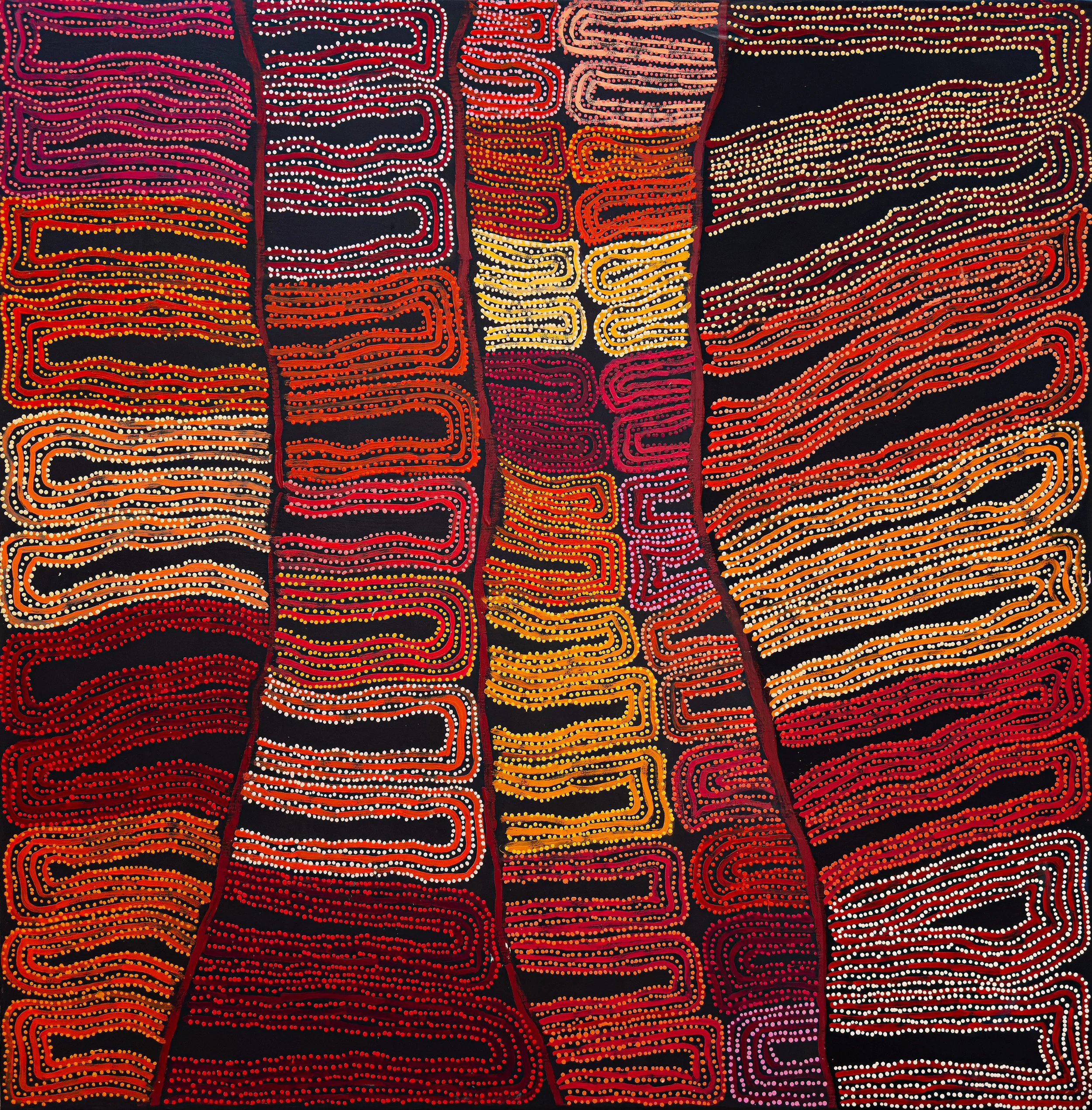
Artiste : Beverly Burton
Titre de l'œuvre : Ngayuku ngura - My Country
Format : 154 x 153 cm
Provenance et certificat : centre d'art aborigène de Tjala Arts
Référence de cette peinture aborigène : 359-23
Enquiry / Demander le prix de l'œuvre
Explication pour cette œuvre :
Beverly Burton is one of Tjala Arts strongest emerging painters who is dedicated to her practice and works in the studio daily. She comes from an influential family lineage of cultural leaders and artists. Her mother, Naomi Kantjuriny is known for her work with the Mitakiki Womens Collaborative and as a traditional Ngangkari Healer.
Her father, Kunmanara (Hector) Burton was a senior artist at Tjala Arts and as an elder revered as an extremely important caretaker of Anangu law and culture.
Beverlys paintings are powerful and dynamic, her use of brush and choice of palette creates vibrations and movement across the canvas the way the landscape shifts and changes across her country.
In this painting Beverley has depicted her country. The different colours and designs represent variations in the landscape.
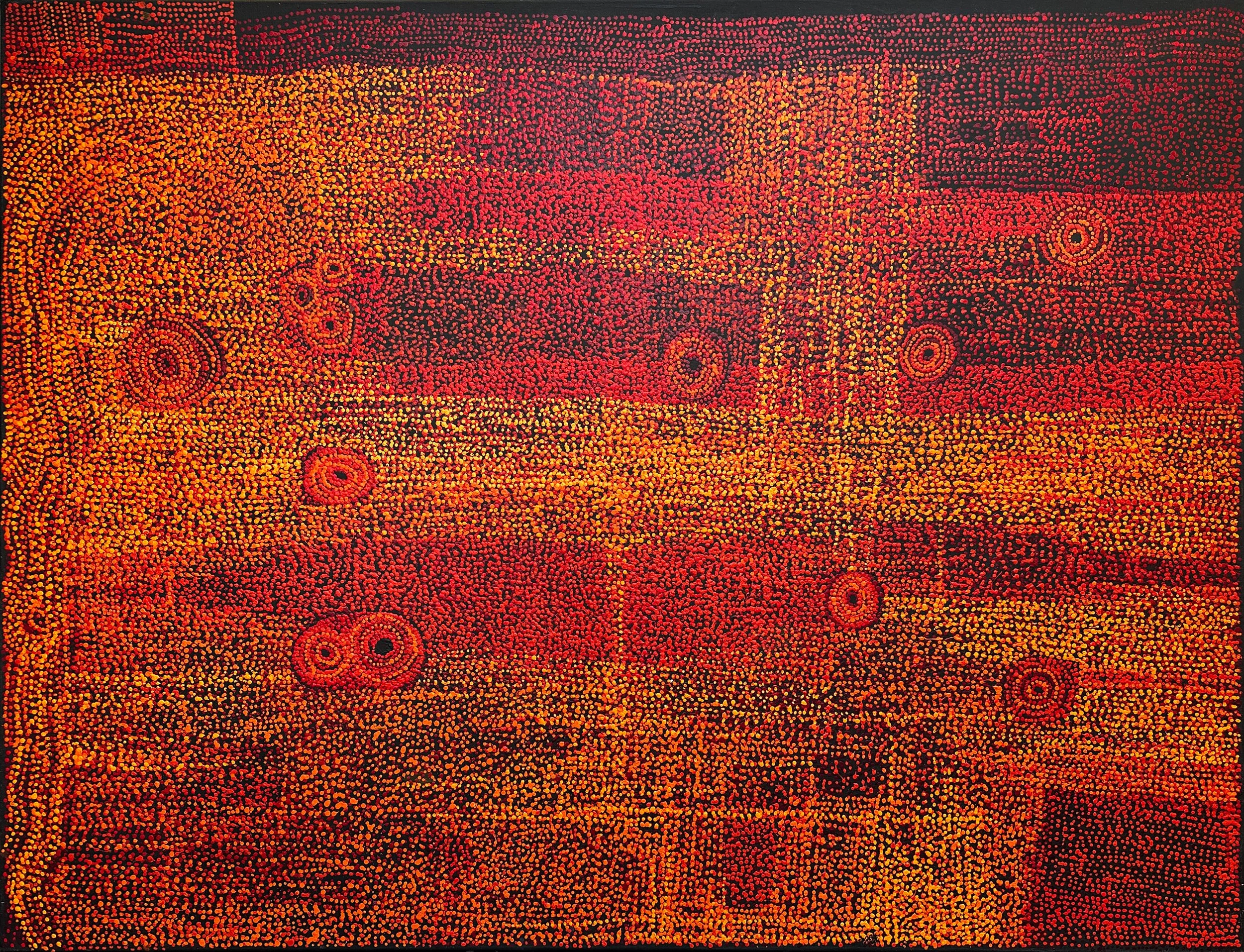
Artiste : Muna Kulyuru
Titre de l'œuvre : Ngayuku ngura - My Country
Format : 200 x 152 cm
Provenance et certificat : centre d'art aborigène de Tjala Arts
Référence de cette peinture aborigène : 456-23
Explications sur cette œuvre :
Muna Kulyuru is a respected artist, teacher, and community leader in Amata. Born in Tjiwuru near Ernabella in 1964, Muna began painting with Tjurma Homelands and then Minyamku Arts (later named Tjala Arts) when it opened. Today Muna paints exclusively at Tjala Arts in Amata, creating vibrant, energetic paintings which celebrate the vitality of her Country and its important cultural stories.
In this painting Muna has depicted her country. The different colours and designs represent variations in the landscape.
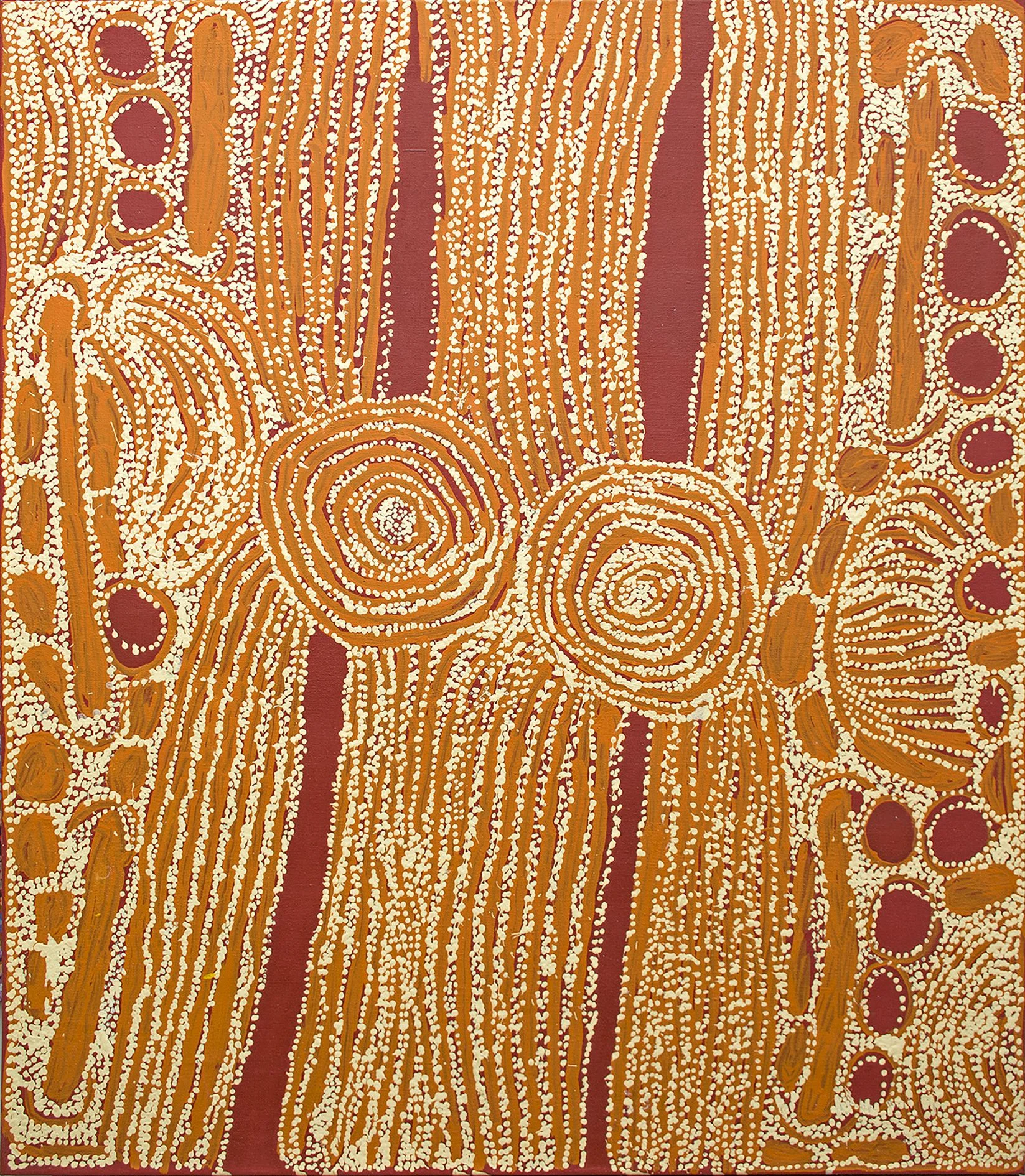
Artiste : Ningura Napurrula
Titre de l'œuvre : Rockhole site of Wirrulnga (women ceremonies)
Format : 122 x 107 cm
Provenance : centre d'art de Papunya Tula
Le certificat original du centre d'art Aborigène de Papunya Tula sera remis avec l'œuvre.
Référence de la peinture : NN0807198
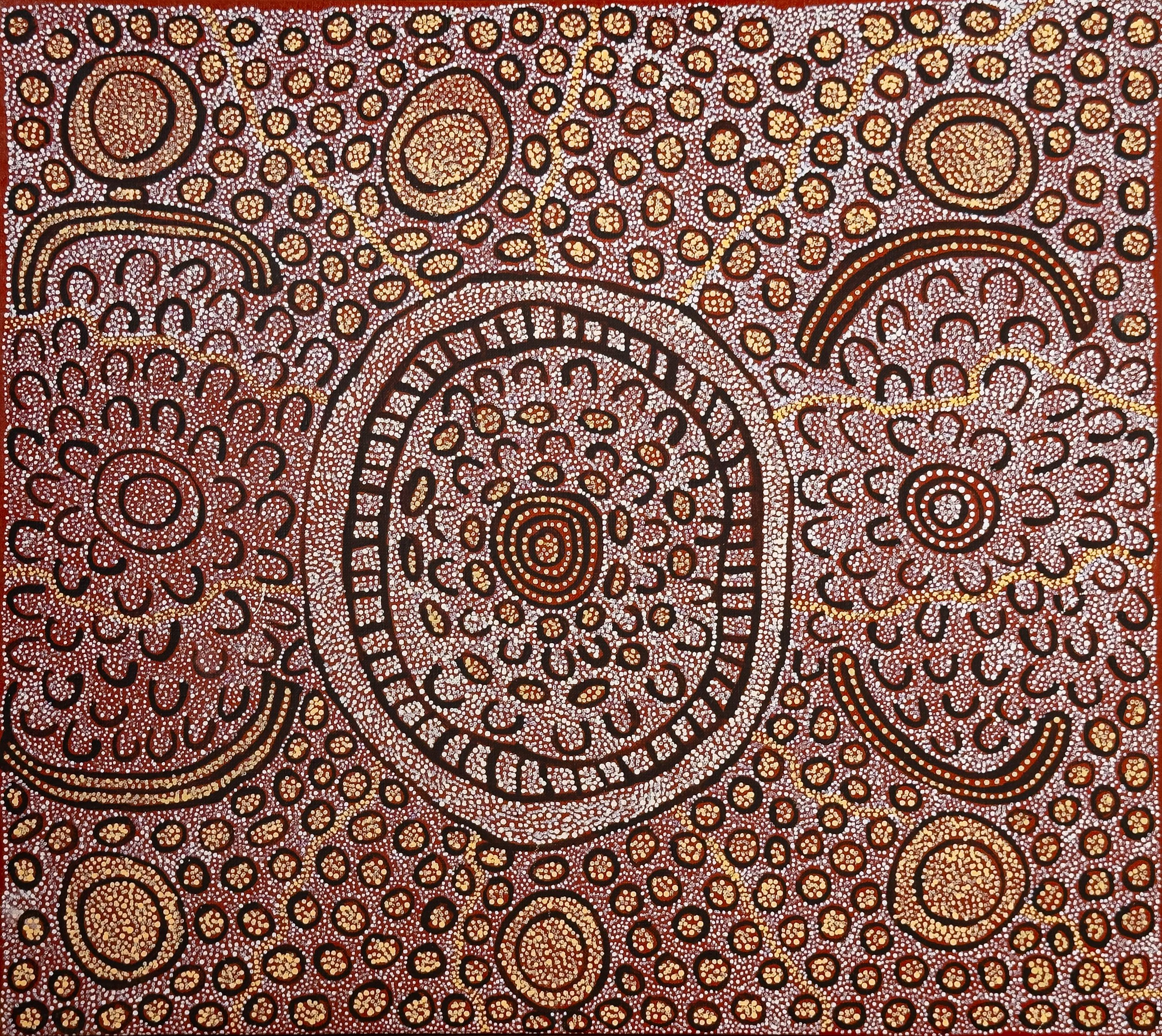
Artiste : Joy Gibson Napaltjarri
Titre de l'œuvre : Mukula
Format : 61 x 55 cm
Provenance : centre d'art de Papunya Tula
Le certificat original du centre d'art Aborigène de Papunya Tula sera remis avec l'œuvre.
Référence de cette peinture : JN2306015
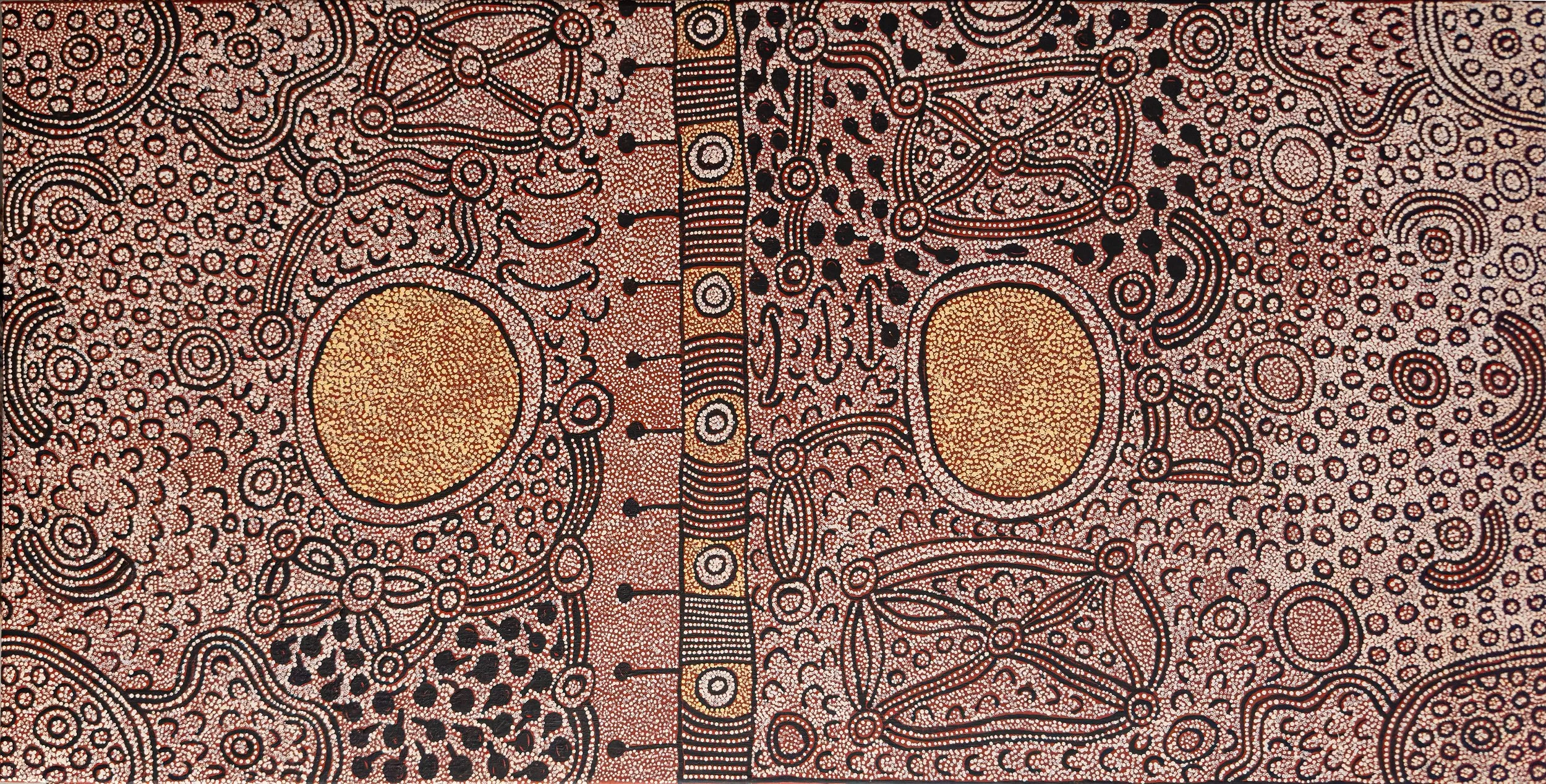
Artiste : Joy Gibson Napaltjarri
Titre de l'œuvre : Rockhole site of Mukula
Format : 122 x 61 cm
Provenance : centre d'art de Papunya Tula
Le certificat original du centre d'art Aborigène de Papunya Tula sera remis avec l'œuvre.
Référence de cette peinture : JN2303001
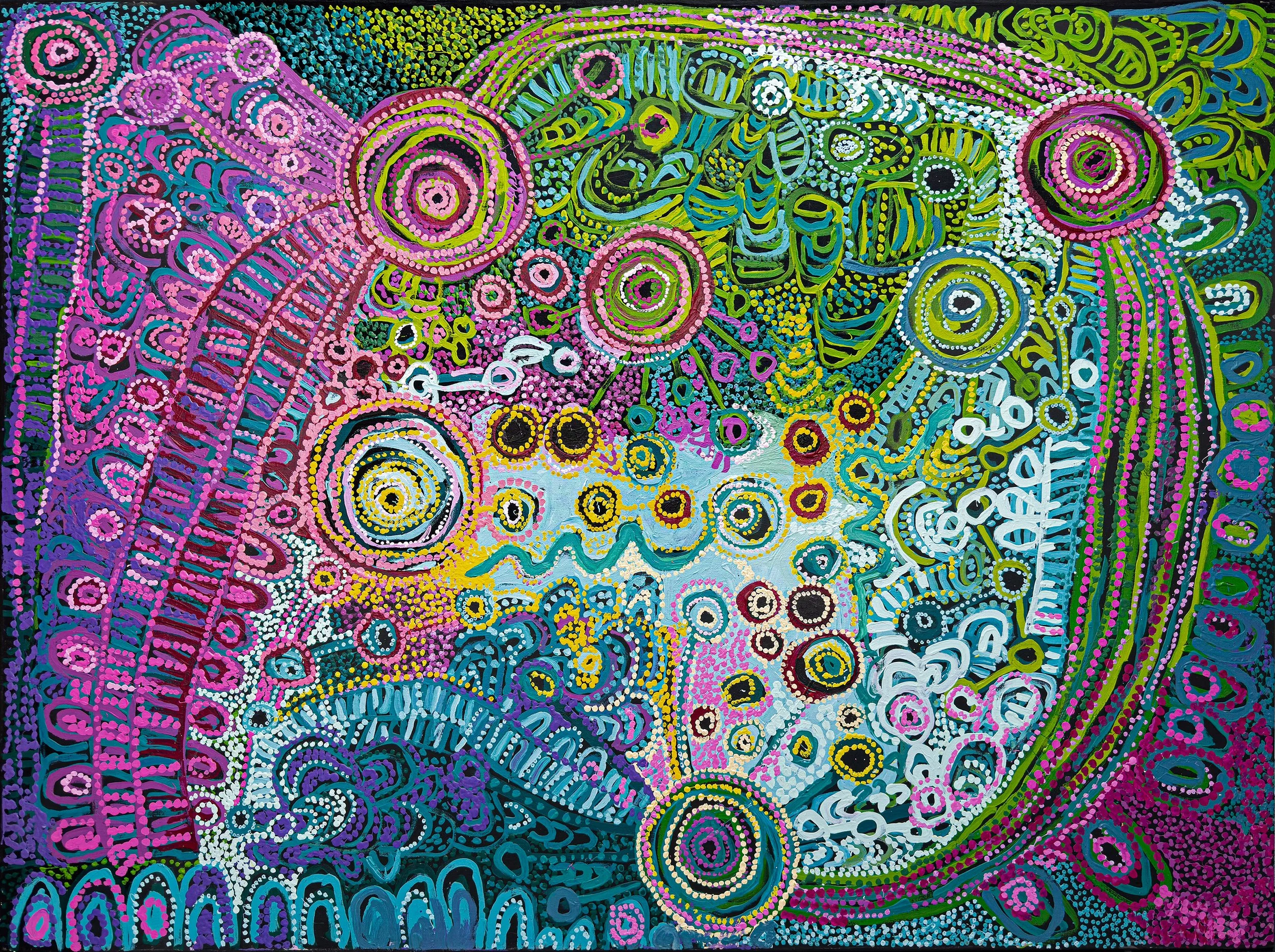
Artiste : Rhoda Tjitayi
Titre de l'œuvre : Piltati Tjukurpa
Format : 198 x 152,5 cm
Provenance et certificat : centre d'art aborigène de Tjala
Référence de cette peinture : 281-22AS
Demander le prix de l'œuvre / Enquiry
Rhoda was born in Pukatja on the APY Lands in 1969. Rhoda's grandfather was from Nyapari and grandmother from Makiri, Tjala Minyma Ngura, a scared women’s place relating to the Honeyant. Rhoda is now based in Adelaide and began working at the APY Studio Adelaide in 2019.
Rhoda’s exquisite works depict Piltati Tjukurpa, an important cultural story learnt from her grandmother. Rhoda remembers visiting her grandmother and sitting with her while she painted. When Rhoda paints she says “I am remembering the story she passed on. I am painting this to pass it on to my children. I have learnt this story from my grandmother she put the story in my heart and it’s going out to my grandchildren. When she was painting, she would tell a story and sing.” Rhoda learnt how to dance and sing from her grandmother and is now teaching her daughter and her family. Rhoda says “I am happy to be painting my grandmother’s story.”
Rhoda has been included in numerous exhibitions at APY Gallery and most recently has been featured in the 2022 Adelaide Biennial of Australian Art: Free/State at the Art Gallery of South Australia and 2022 Wynne Prize at the Art Gallery of New South Wales.
© Photo : Aboriginal Signature Estrangin gallery with the courtesy of the artists and AS.

Artiste : Barbara Moore
Titre de l'œuvre : Ngayuku ngura - My Country
Format : 198 x 122 cm
Provenance et certificat : centre d'art aborigene de Tjala
Référence de cette peinture aborigene : 116-22
Explications sur cette œuvre :
Barbara grew up in Ti Tree in the Northern Territory, and moved to Amata to live with her husband. Barbara began to paint at Tjala Arts (formerly Minymaku Arts) in 2003, and is committed to her painting practice, working at Tjala Arts on a daily basis.
Barbara's paintings are highly regarded in the indigenous arts sector, but are also gaining significant success in the in the nonindigenous art world as outstanding contemporary artworks in their own right. Her bold and confident command of large scale canvases, saw her receive the prestigious General Painting Award at the National Aboriginal and Torres Strait Islander Art Award (Telstra Prize) in 2012. She has been a multiple finalist at the National Indigenous Art Awards at the Museum and Art Gallery of the Northern Territory and the Wynne Prize at the Art Gallery of New South Wales.
In November 2019 Barbara has her first solo show and residency at the Kluge Ruhe Collection of Aboriginal Art at the University of Virginia. Barbara's work is held in numerous prestigious collections in Australia and abroad.
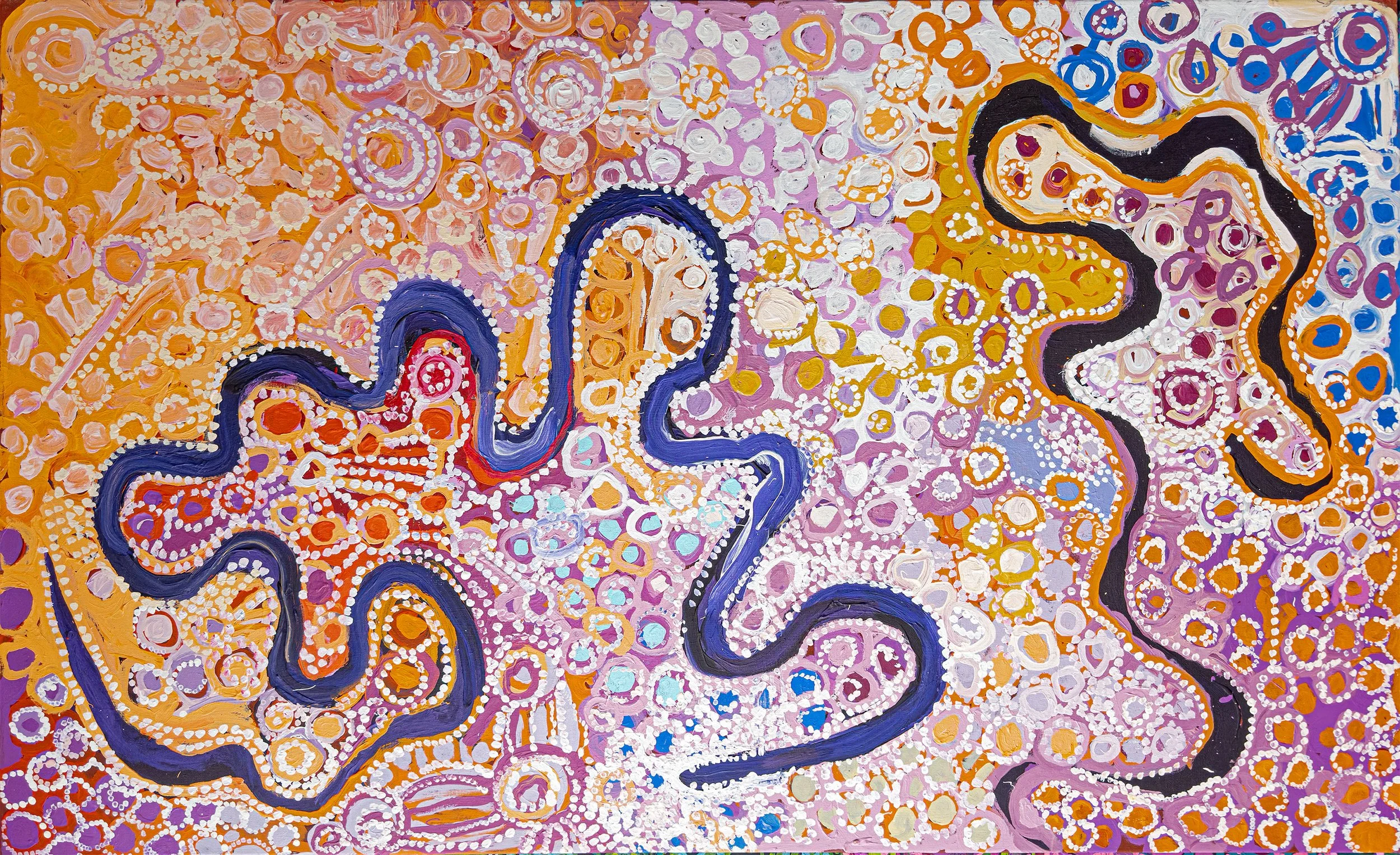
Artiste : Kukika Adamson
Titre de l'œuvre : Piltati Tjukurpa
Format : 198 x 121 cm
Provenance et certificat : centre d'art aborigène de Tjala
Référence de cette peinture : 118-22AS
Demander le prix de l'œuvre / Enquiry
My name is Kukika Adamson, I was born in Pukatja Community and now live in Adelaide. I am the daughter of a great artist named Tiger Palpatja and I paint the Wanampi Tjukurpa, an important cultural story I inherited from my father. The first artworks I made at Ernabella Arts were floor rugs and weaving.
I started work at Ernabella Arts when I was a school kid, and worked there after school. Today at the APY Adelaide Studio I work beside Yaritji (Mutu Mutu) Heffernan and Wanatjura Lewis. We were schoolmates when we were little girls at Pukatja. It's over 50 years later and we are still working together in our art centre.
This is the Piltati story, and important cultural story I inherited from my father, Tiger Palpatja. This story tells of two snake brothers and their wives, who are sisters, that lived at Piltati a waterhole west of Amata. This was my father Tiger’s story, and now me and my daughter hold it for the generations to come.
© Photo : Aboriginal Signature Estrangin gallery with the courtesy of the artists and AS.
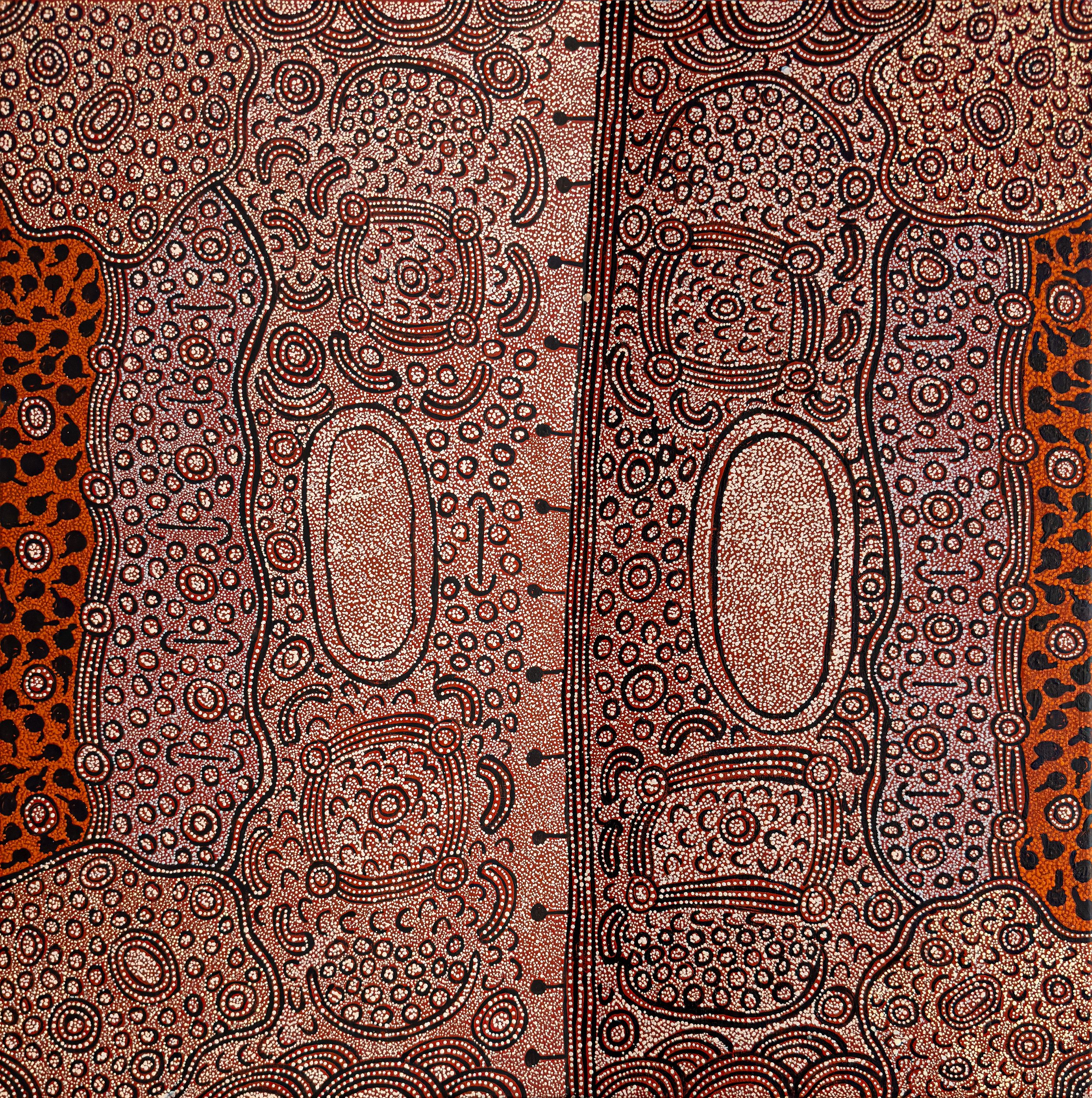
Artiste : Joy Gibson Napaltjarri
Titre de l'œuvre : Rockhole site of Mukula
Format : 91 x 91 cm
Provenance : centre d'art de Papunya Tula
Le certificat original du centre d'art Aborigène de Papunya Tula sera remis avec l'œuvre.
Référence de cette peinture : JN2303119
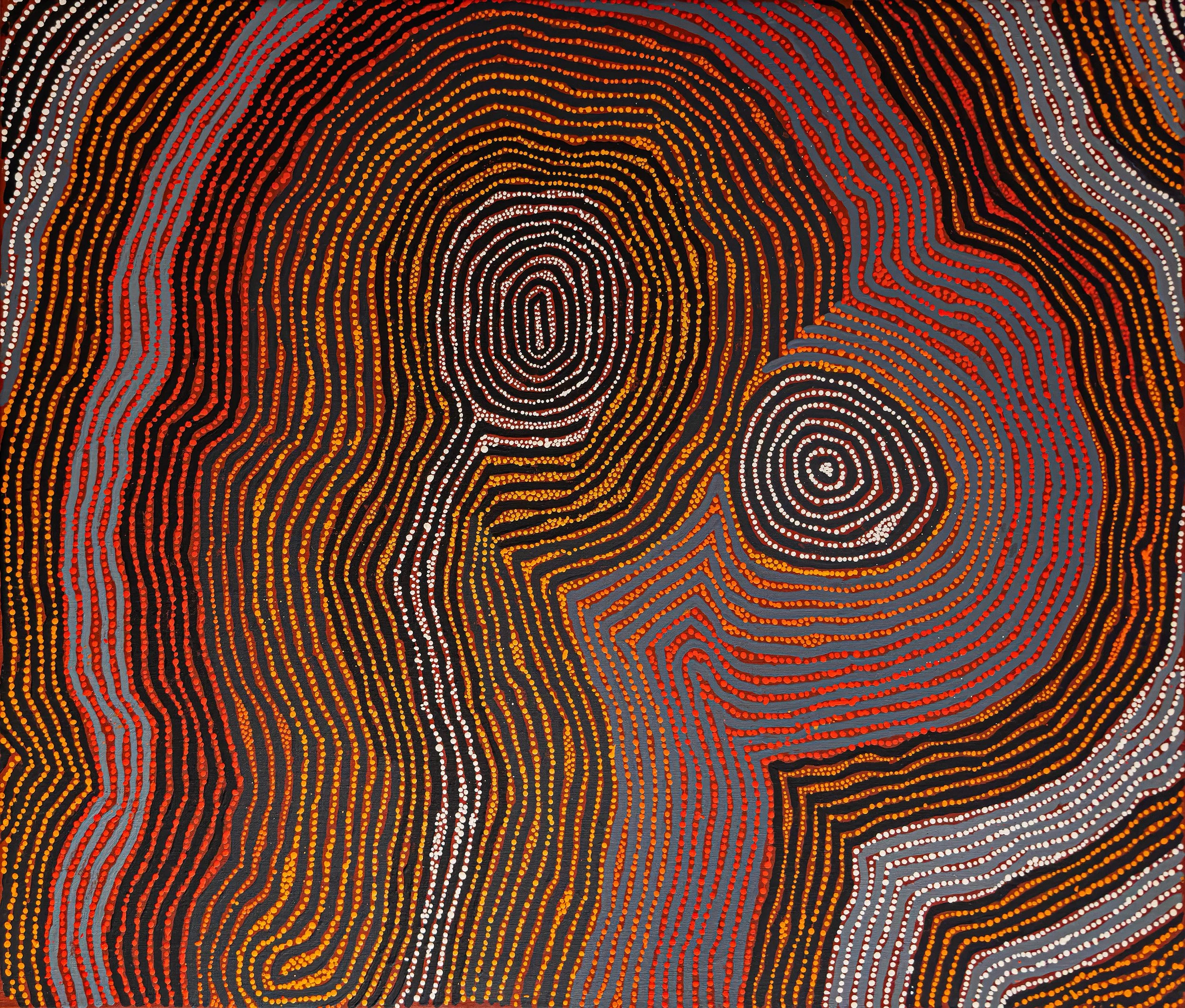
Artiste : Charlie Tjapangati
Titre de l'œuvre : Pirrinya - Tingari sacred story
Format : 107 × 91 cm
Provenance : centre d'art de Papunya Tula
Le certificat original du centre d'art Aborigène de Papunya Tula sera remis avec l'œuvre.
Référence de cette peinture : CT1810097
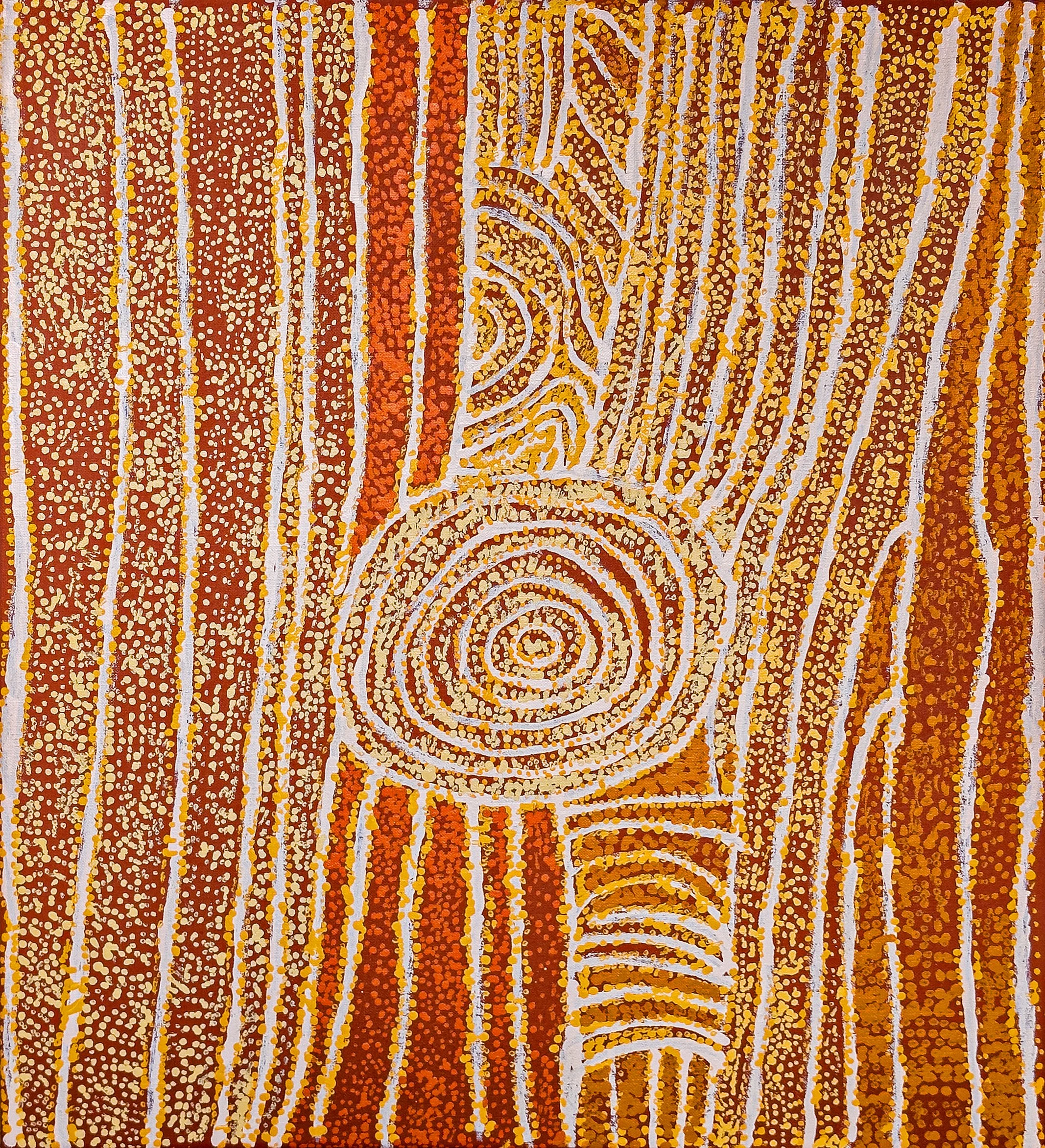
Artiste : Mary Napangati
Titre de l'œuvre : Rockhole site of Tjutalpi
Format : 61x55 cm
Provenance : centre d'art de Papunya Tula
Le certificat original du centre d'art Aborigène de Papunya Tula sera remis avec l'œuvre.
Référence de cette peinture : MN2305137
Enquiry/ Demander le prix de l'œuvre
Explications sur cette œuvre et l’artiste :
Mary Brown Napangati (Napangardi) was born near Wilkinkarra (Lake Mackay) circa 1955. Her family lived in the vicinity of Lappi Lappi, located towards the northern area of Lake Mackay, until they walked into the Mt Doreen cattle station west of Yuendumu, in the Northern Territory. She later moved to Yuendumu, married there and later moved further west to Nyirrpi. After her first husband passed away, Mary remarried the well known artist Ronnie Tjampitjinpa and moved to Kintore, where she now lives and paints.
This painting evokes the rockhole site of Tjutalpi. In ancestral times a group of men and women travelled to this site. While at Tjutalpi they performed the dances and songs associated with the area. During their travels the men and women gathered a variety of bush foods including pura or bush tomatoes (Solanum chippendalei) and kampurarrpa or desert raisins (Solanum centrale). They also gathered wood for the manufacture of wana (digging sticks). The roundels in the work represent the soakage waters found at this site, while the lines represent the tali (sandhills).
Collections :
Private collections in Australia and Europe.

Artiste : Ray Ken
Titre de l'œuvre : Kulata Tjuta
Format : 152,5 x 101,5 cm
Provenance et certificat : centre d'art de Tjala
Référence de la peinture : 469-17
Enquiry / Demander le prix de l'œuvre
Explication sur la signification de cette peinture d'art Aborigène :
Ray has depicted kulata (spears) - an important hunting instruments used by men.

Artiste : Beverly Burton
Titre de l'œuvre : Ngayuku ngura - My Country
Format : 152 x 122 cm
Provenance et certificat : centre d'art aborigène de Tjala Arts
Référence de cette peinture aborigène : 371-22
Enquiry / Demander le prix de l'œuvre
Explication pour cette œuvre :
Beverly Burton is one of Tjala Arts strongest emerging painters who is dedicated to her practice and works in the studio daily. She comes from an influential family lineage of cultural leaders and artists. Her mother, Naomi Kantjuriny is known for her work with the Mitakiki Womens Collaborative and as a traditional Ngangkari Healer.
Her father, Kunmanara (Hector) Burton was a senior artist at Tjala Arts and as an elder revered as an extremely important caretaker of Anangu law and culture.
Beverlys paintings are powerful and dynamic, her use of brush and choice of palette creates vibrations and movement across the canvas the way the landscape shifts and changes across her country.
In this painting Beverley has depicted her country. The different colours and designs represent variations in the landscape.
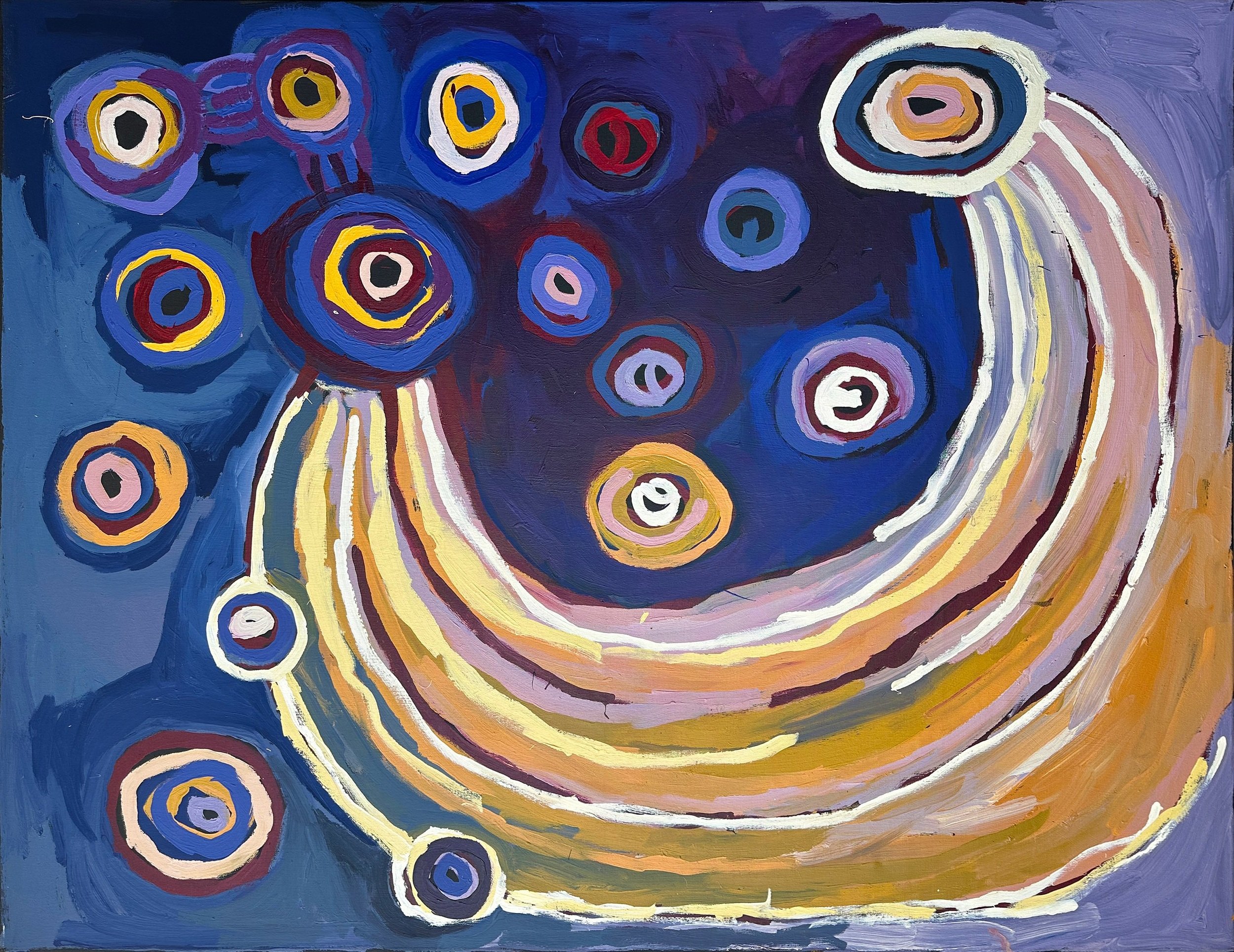
Artiste : Barbara Moore
Titre de l'œuvre : Ngayuku ngura - My Country
Format : 200 x 152 cm
Provenance et certificat : centre d'art aborigene de Tjala
Référence de cette peinture aborigene : 47-23
Explications sur cette œuvre :
Barbara grew up in Ti Tree in the Northern Territory, and moved to Amata to live with her husband. Barbara began to paint at Tjala Arts (formerly Minymaku Arts) in 2003, and is committed to her painting practice, working at Tjala Arts on a daily basis.
Barbara's paintings are highly regarded in the indigenous arts sector, but are also gaining significant success in the in the nonindigenous art world as outstanding contemporary artworks in their own right. Her bold and confident command of large scale canvases, saw her receive the prestigious General Painting Award at the National Aboriginal and Torres Strait Islander Art Award (Telstra Prize) in 2012. She has been a multiple finalist at the National Indigenous Art Awards at the Museum and Art Gallery of the Northern Territory and the Wynne Prize at the Art Gallery of New South Wales.
In November 2019 Barbara has her first solo show and residency at the Kluge Ruhe Collection of Aboriginal Art at the University of Virginia. Barbara's work is held in numerous prestigious collections in Australia and abroad.
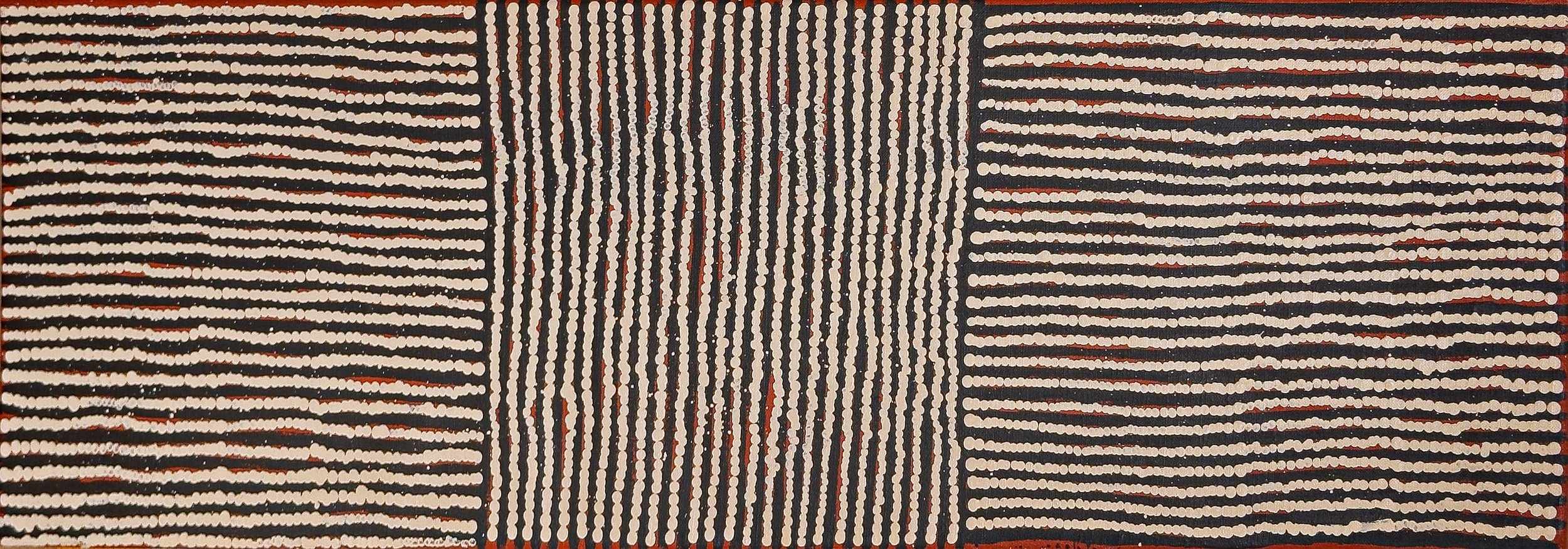
Artiste : Maureen Ward Nakamarra
Titre de l'œuvre : Rockhole site of Kulkuta
Format : 87 x 28 cm
Provenance et certificat : centre d'art aborigene de Papunya Tula Artists
Référence de cette peinture aborigène : MW2210075

Artiste : Kamayi Nakamarra
Titre de l'œuvre : Rocholes site of Tjukurla
Format : 61 x 55 cm
Provenance : centre d'art de Papunya Tula
Le certificat original du centre d'art Aborigène de Papunya Tula sera remis avec l'œuvre.
Référence de cette peinture : KN2305006
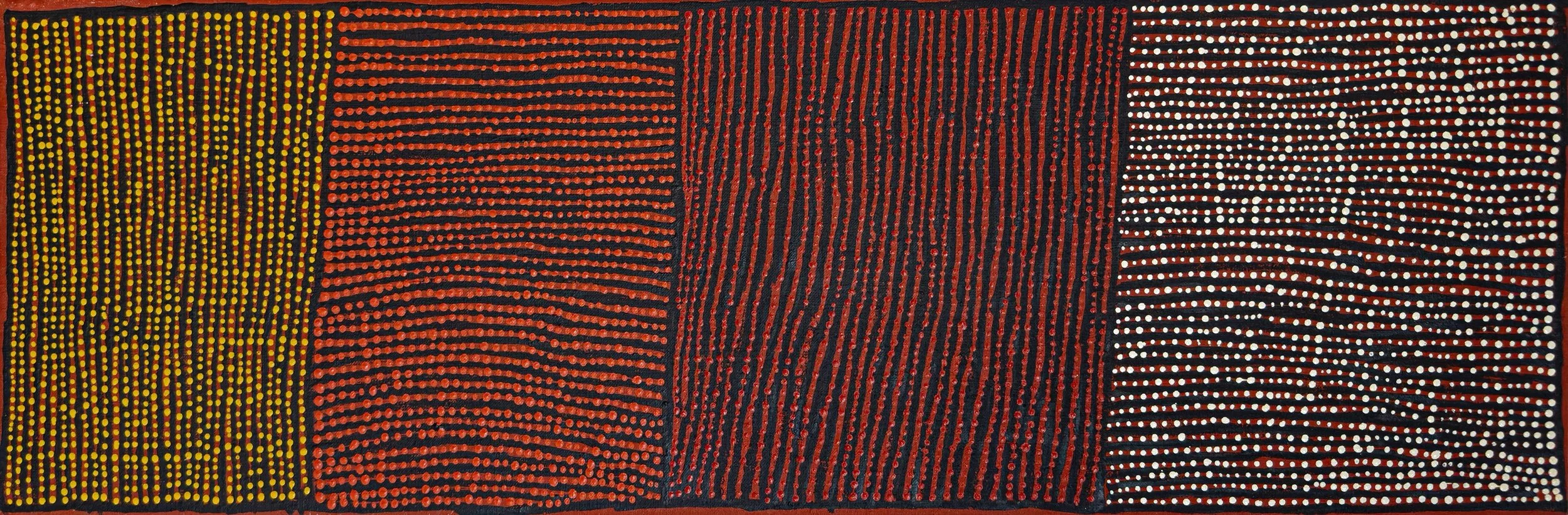
Artiste : Winnie Nakamarra
Titre de l'œuvre : Site of Lupulnga
Format : 87 x 28 cm
Provenance et certificat : centre d'art aborigene de Papunya Tula Artists
Référence de cette peinture aborigène : WN2210041
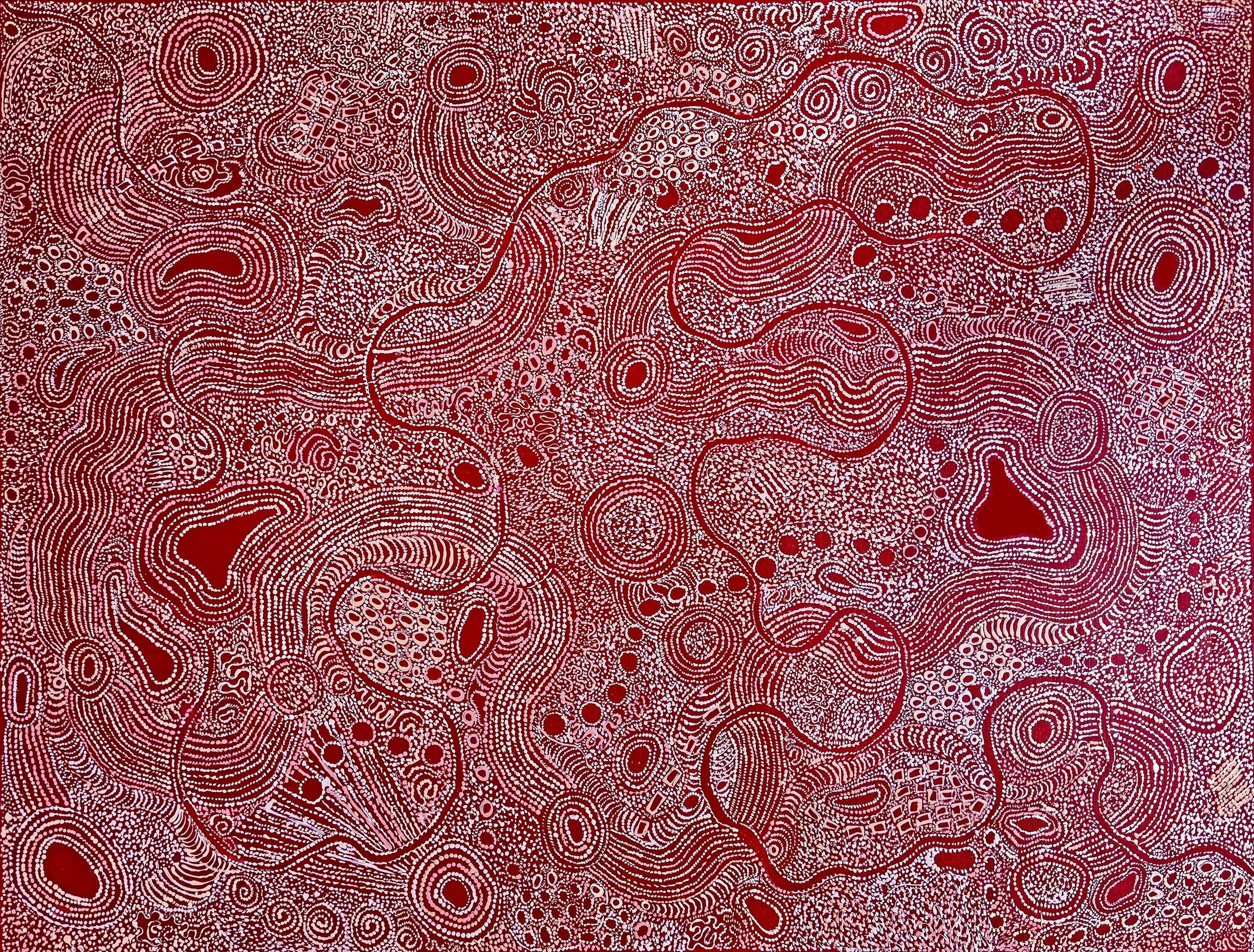
Artiste : Janie Kulyuru Lewis
Titre de l'œuvre : Ngayuku ngura - My Country
Format : 201 x 152 cm
Provenance et certificat : centre d'art aborigène de Tjala Arts
Référence de cette peinture aborigène : 481-23
Explications sur cette œuvre :
Janie Kulyuru is an incredibly talented artist working at Tjala Arts. Her father’s country is Aparatjara, Western Australia and her mother’s country is Watarru, South Australia. After attending school in Adelaide, Janie moved to Amata to live with her family here. Before coming to work at Tjala Arts, then known as Minymaku Arts, Janie specialised in batik, working under the umbrella of Tjurma Homelands Arts and Craft Centre, before beginning to painting on canvas. Janie sometimes paints her mother’s Creation story Tjukurpa Waru or fire story. She paints alongside her sister Munu Kulyuru.
In this painting Janie has depicted her country. The different colours and designs represent variations in the landscape.

Artiste : Carol Nampijinpa Larry
Titre de l'œuvre : Karnta Jukurrpa (Womens Dreaming)
Format : 152 x 61 cm
Provenance et certificat : centre d'art aborigène de Yuendumu
Référence de cette peinture : 1733/17ny
Demander le prix de l'œuvre / Enquiry
© Photo : Aboriginal Signature Estrangin gallery with the courtesy of the artists and Yuendumu
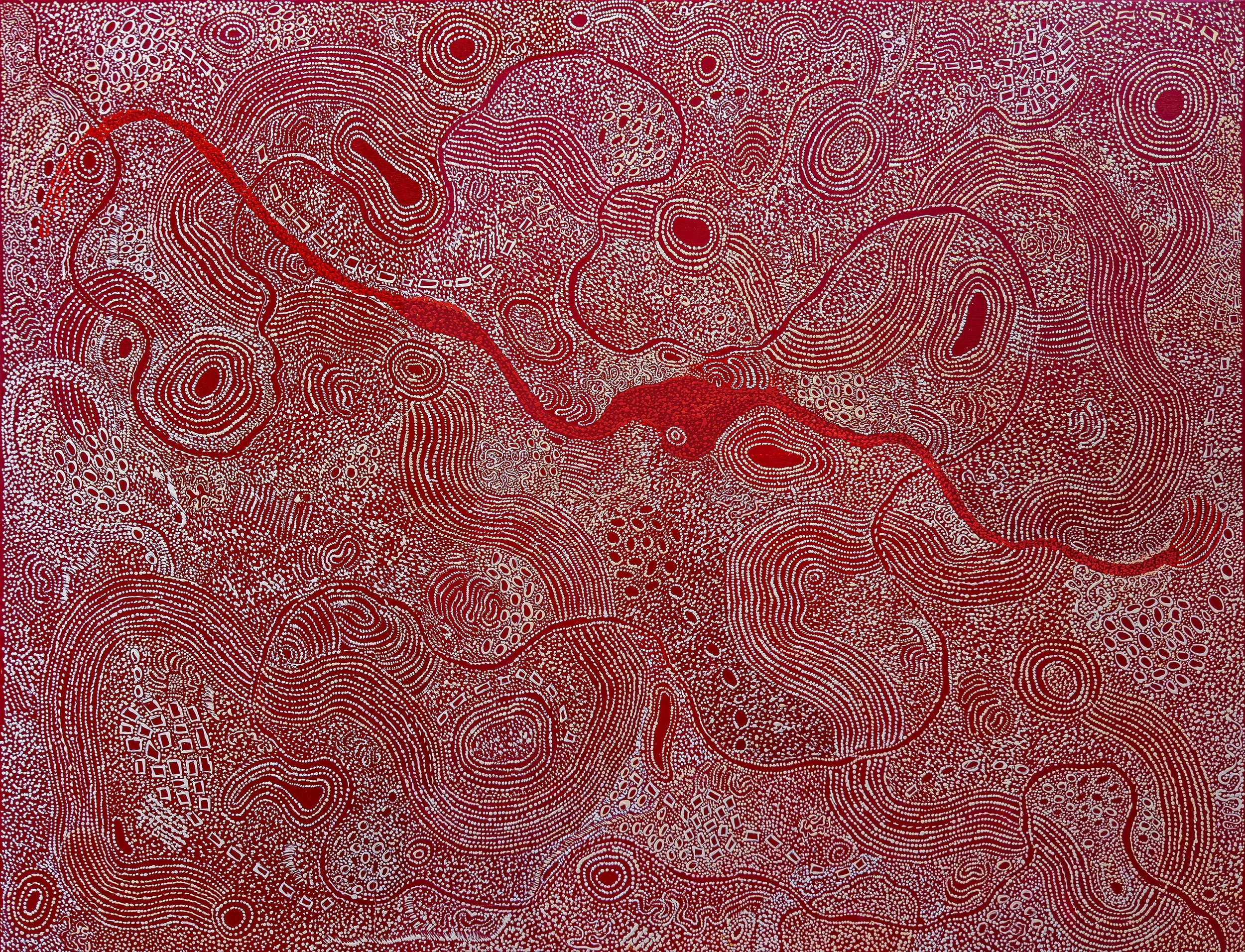
Artiste : Janie Kulyuru Lewis
Titre de l'œuvre : Ngayuku ngura - My Country
Format : 201 x 152 cm
Provenance et certificat : centre d'art aborigène de Tjala Arts
Référence de cette peinture aborigène : 83-23
Explications sur cette œuvre :
Janie Kulyuru is an incredibly talented artist working at Tjala Arts. Her father’s country is Aparatjara, Western Australia and her mother’s country is Watarru, South Australia. After attending school in Adelaide, Janie moved to Amata to live with her family here. Before coming to work at Tjala Arts, then known as Minymaku Arts, Janie specialised in batik, working under the umbrella of Tjurma Homelands Arts and Craft Centre, before beginning to painting on canvas. Janie sometimes paints her mother’s Creation story Tjukurpa Waru or fire story. She paints alongside her sister Munu Kulyuru.
In this painting Janie has depicted her country. The different colours and designs represent variations in the landscape.
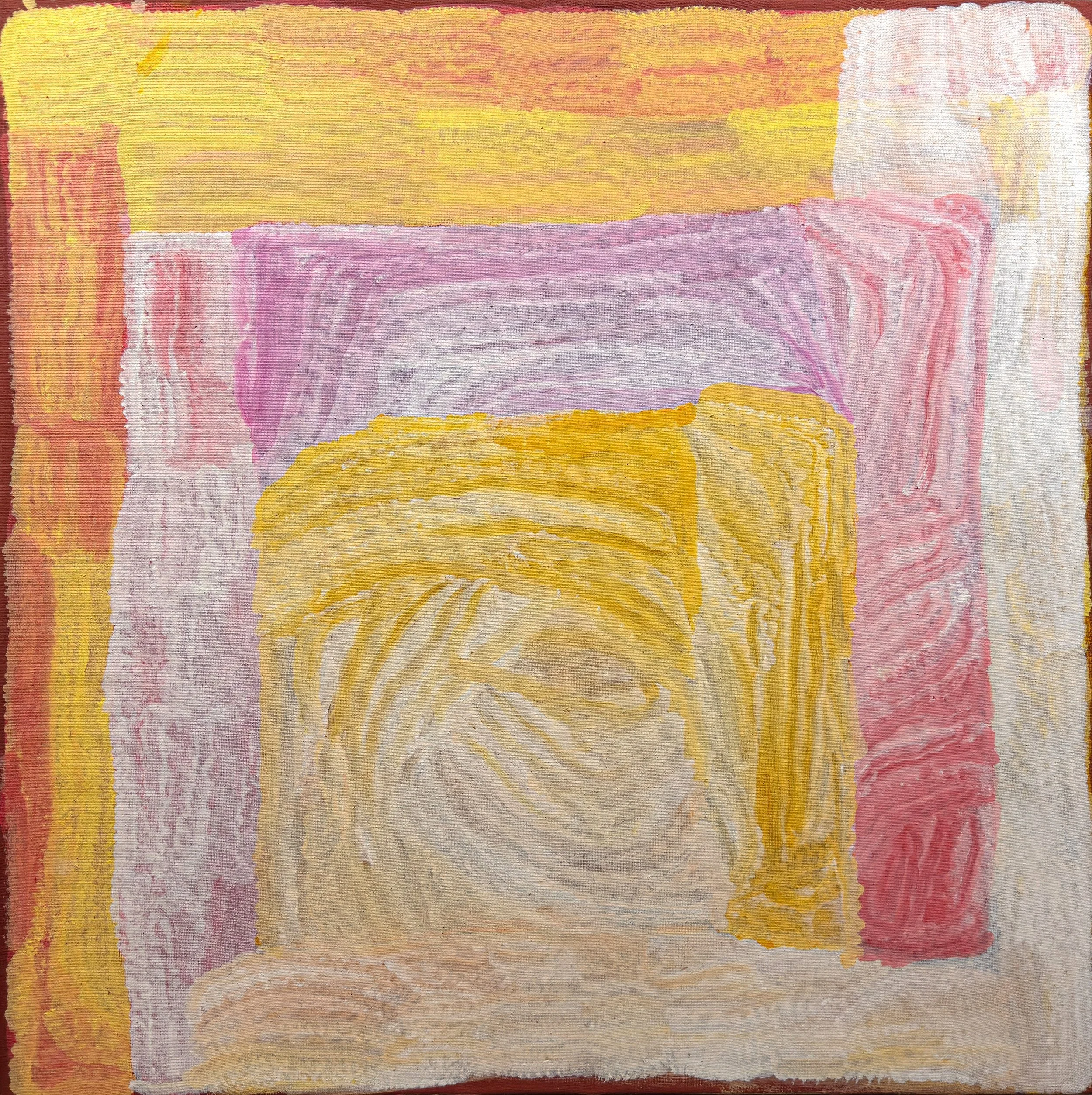
Artiste : Lydia Balbal
Titre de l'œuvre : Winpa - Dreaming Time stories
Format : 95 × 95 cm
Provenance et certificat : Short Street opérant pour les artistes Yulparija de Bidyadanga
Référence de cette peinture aborigène : 841485
Explications sur cette peinture d’art Aborigène :
Lydia Balbal (1958) is a Mangala woman. Lydia's country is near Punmu in the Great Sandy Desert of W.A. Her people's existence was threatened by severe drought so that they had little choice but to leave their traditional country. Her family were some of the last to walk out to the coastal town of Bidyadanga (then La Grange Mission) located two hours south of Broome in the early 70s. Lydia first began painting in 2007 but has already received significant attention from collectors and the media alike.
Winpa is jila (living water) located near the Percival Lakes in the Great Sandy Desert in WA. It is an important gathering of the Yulparija and neighbouring groups. they would gather for rain making ceremonial ceremonies.
Collections : Murdoch University Art Collection. Aboriginal Art Museum, The Netherlands. Thomas Vroom Collection, The Netherlands. National Gallery of Victoria Felton Collection. Queensland Art Gallery. Laverty Collection. Monash University Art Collection. Lepley Collection. Western Australian Art Gallery. National Gallery of Australia. Wesfarmers Collection. Australia Parliament House Collection. Brocard - Estrangin Collection. Kluge-Ruhe Aboriginal Art Collection of the University of Virginia.
© Photo : Aboriginal Signature Estrangin gallery with the courtesy of Short Street and the artist
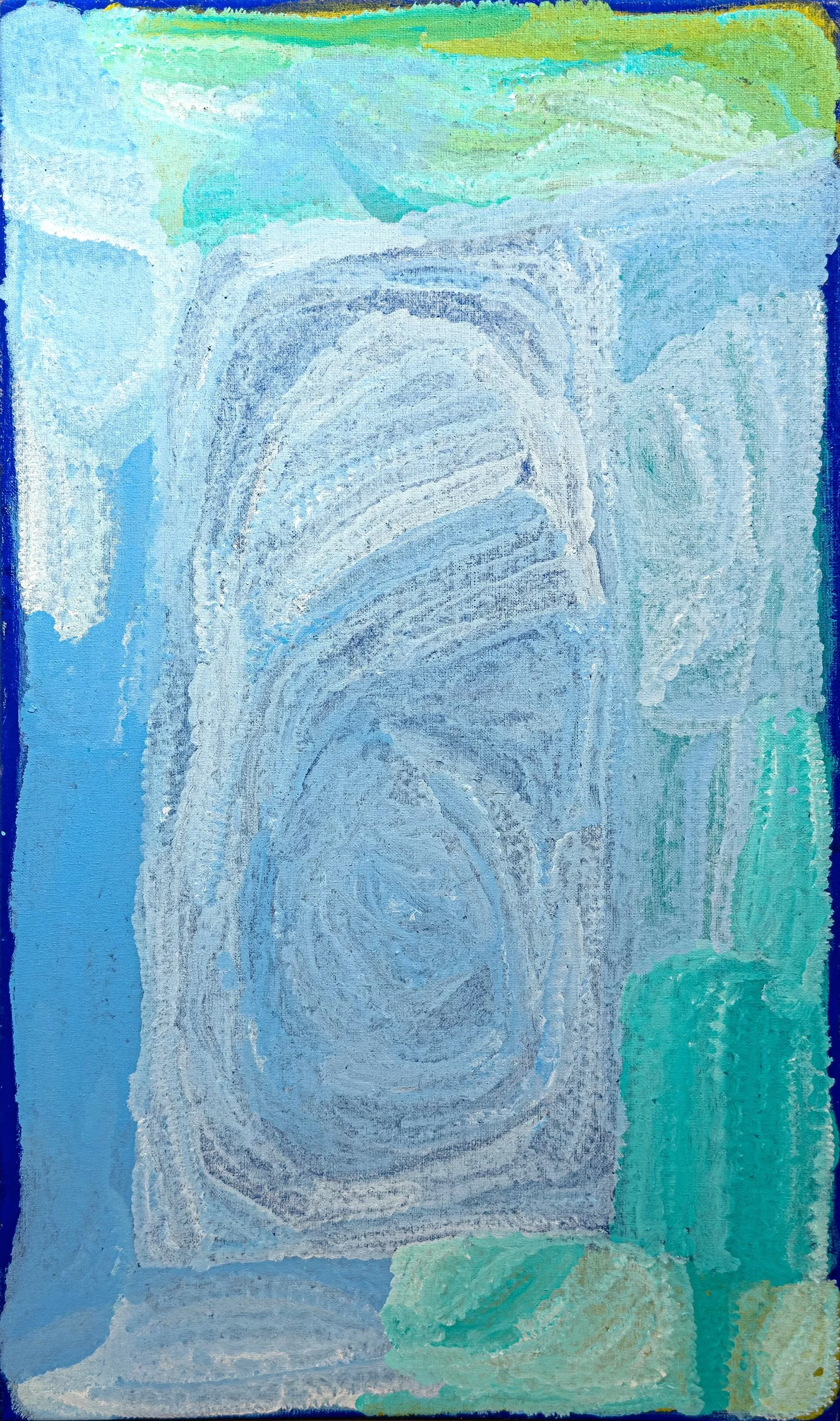
Artiste : Lydia Balbal
Titre de l'œuvre : Winpa - Dreaming Time stories
Format : 90 × 50 cm
Provenance et certificat : Short Street opérant pour les artistes Yulparija de Bidyadanga
Référence de cette peinture aborigène : 841452
Explications sur cette peinture d’art Aborigène :
Lydia Balbal (1958) is a Mangala woman. Lydia's country is near Punmu in the Great Sandy Desert of W.A. Her people's existence was threatened by severe drought so that they had little choice but to leave their traditional country. Her family were some of the last to walk out to the coastal town of Bidyadanga (then La Grange Mission) located two hours south of Broome in the early 70s. Lydia first began painting in 2007 but has already received significant attention from collectors and the media alike.
Winpa is jila (living water) located near the Percival Lakes in the Great Sandy Desert in WA. It is an important gathering of the Yulparija and neighbouring groups. they would gather for rain making ceremonial ceremonies.
Collections : Murdoch University Art Collection. Aboriginal Art Museum, The Netherlands. Thomas Vroom Collection, The Netherlands. National Gallery of Victoria Felton Collection. Queensland Art Gallery. Laverty Collection. Monash University Art Collection. Lepley Collection. Western Australian Art Gallery. National Gallery of Australia. Wesfarmers Collection. Australia Parliament House Collection. Brocard - Estrangin Collection. Kluge-Ruhe Aboriginal Art Collection of the University of Virginia.
© Photo : Aboriginal Signature Estrangin gallery with the courtesy of Short Street and the artist
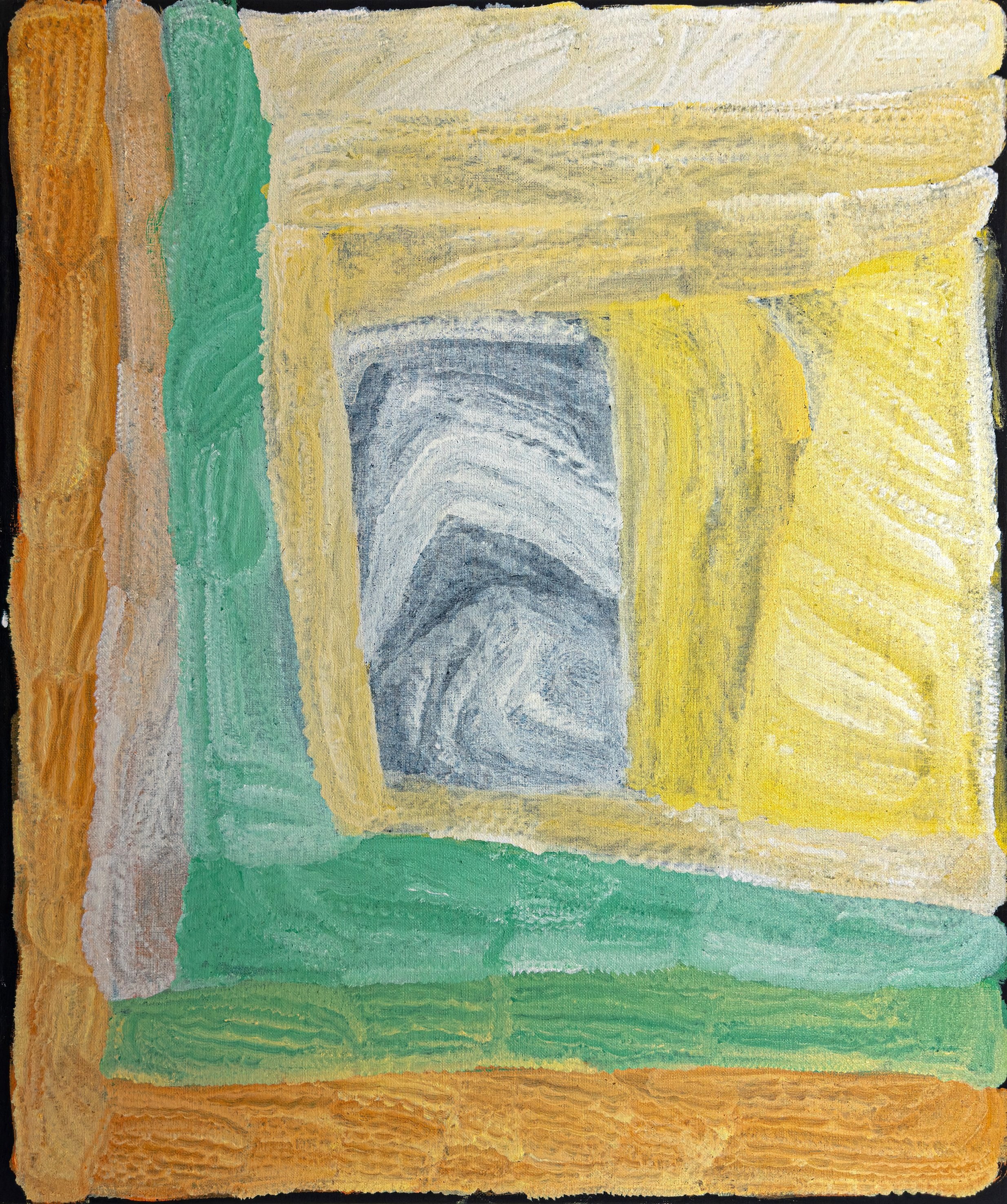
Artiste : Lydia Balbal
Titre de l'œuvre : Winpa - Dreaming Time stories
Format : 108 × 90 cm
Provenance et certificat : Short Street opérant pour les artistes Yulparija de Bidyadanga
Référence de cette peinture aborigène : 841470
Explications sur cette peinture d’art Aborigène :
Lydia Balbal (1958) is a Mangala woman. Lydia's country is near Punmu in the Great Sandy Desert of W.A. Her people's existence was threatened by severe drought so that they had little choice but to leave their traditional country. Her family were some of the last to walk out to the coastal town of Bidyadanga (then La Grange Mission) located two hours south of Broome in the early 70s. Lydia first began painting in 2007 but has already received significant attention from collectors and the media alike.
Winpa is jila (living water) located near the Percival Lakes in the Great Sandy Desert in WA. It is an important gathering of the Yulparija and neighbouring groups. they would gather for rain making ceremonial ceremonies.
Collections : Murdoch University Art Collection. Aboriginal Art Museum, The Netherlands. Thomas Vroom Collection, The Netherlands. National Gallery of Victoria Felton Collection. Queensland Art Gallery. Laverty Collection. Monash University Art Collection. Lepley Collection. Western Australian Art Gallery. National Gallery of Australia. Wesfarmers Collection. Australia Parliament House Collection. Brocard - Estrangin Collection. Kluge-Ruhe Aboriginal Art Collection of the University of Virginia.
© Photo : Aboriginal Signature Estrangin gallery with the courtesy of Short Street and the artist
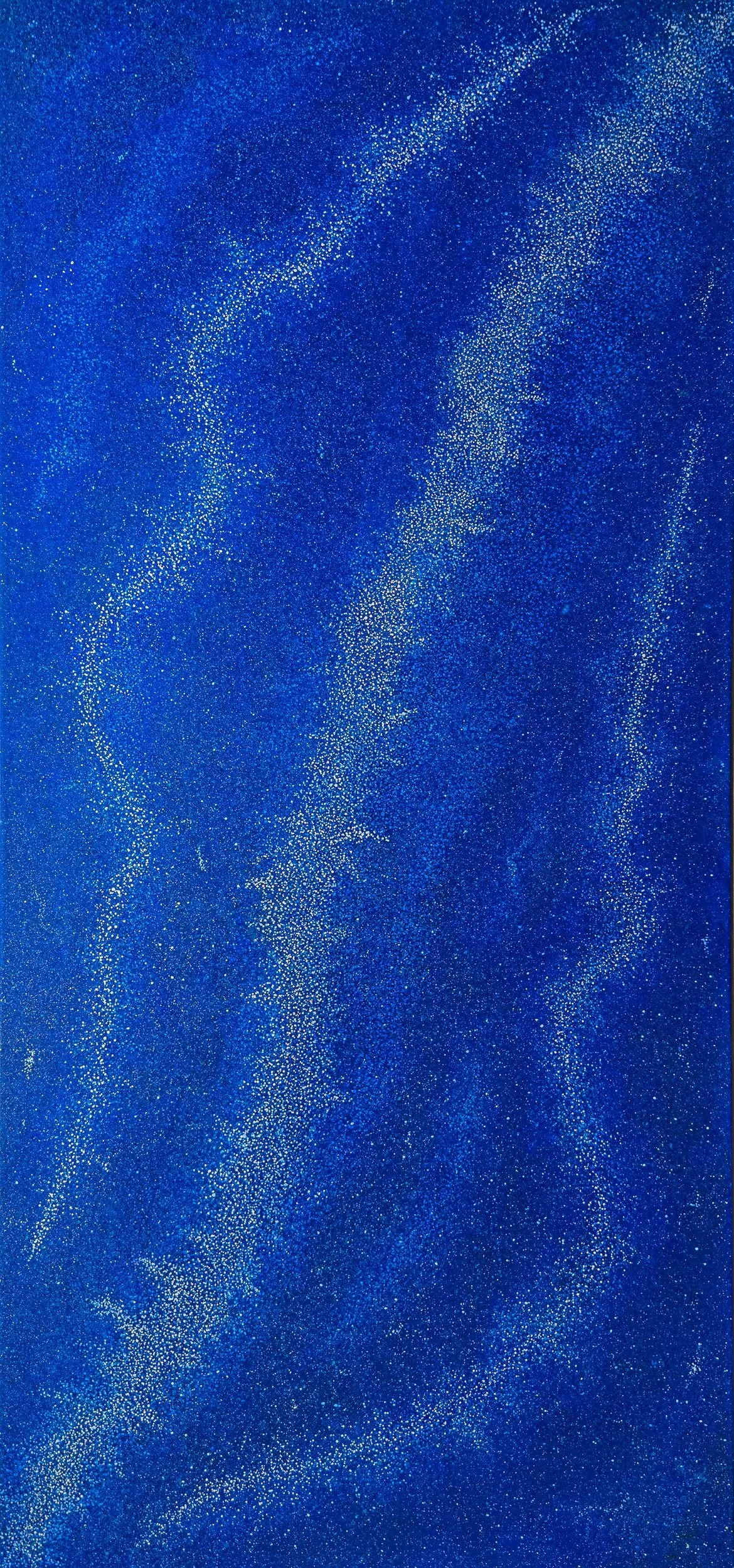
Artiste : Alison Napurrula Multa Pantjiti
Titre de l'œuvre : Mungkangka - Nightsky
Format : 150,5 x 70,5 cm
Provenance : Ikuntji Artists
Référence de la peinture : 23-AM125

Artiste : Myrtle Pennington
Titre de l'œuvre : Mulpulya
Format : 75 x 60 cm
Provenance et certificat : centre d'art aborigène du Spinifex Art Project
Référence de cette peinture : 17-82
Demander le prix de l'œuvre / Enquiry
Explications pour cette œuvre :
The Spinifex People inhabited the Great Victoria Desert long before Europeans landed on this continent’s shoreline. They survived in an arid but beautiful environment, equipped with the necessary skills required for such a life. A spiritual people guided by cultural law were able to exist virtually unchallenged and unchanged until the 1950’s when the British atomic testing began at Emu Fields and later at Maralinga. These tests directly displaced the Spinifex People and it would be over thirty years before their traditional lands were finally returned to them in the form of native title and they were able to once again access the country that formed them from birth. For the landscape holds the culture of the Spinifex People and their daily interactions are governed by the moral compass of the first beings who created the physical realm. With story interwoven in song and dance, the country maps a tangible way forward for the people to reflect and learn upon.
It is this country, this spiritual landscape that defines and permeates Myrtle Pennington’s work. Although abstract in appearance each piece holds part history, part ceremony and part country. Myrtle assumes the vastness of the landscape imbued with the colourful light in profound yet simple compositions. She recalls the places that sustained her during those early formative years and gives rise to the sites of Mulpulya and Kanpa, surrounding them with sandhills and salt lakes or plains that lead to rocky escarpments. She reads the scene from a sense of belonging, of being interwoven into the fabric of the landscape she creates. All this Myrtle captures and conveys with ease, moving the brush and colour freely, building a textural quality that prompts one to walk with her through this vast Country.
Myrtle (1939) was born c. 1939 in the vicinity of a rock hole called Kanpa in central Spinifex. The rock hole itself is a point along a highly sensitive senior Men’s tjukurpa which Myrtle would not have seen or drawn water from.
Myrtle’s journey out of Spinifex to Cundeelee Mission in the late 1950’s was particularly tragic for Myrtle and her family (a son and husband perished on the trip). Myrtle, with another son and daughter, were eventually located by Australian servicemen from an army base at Neale’s Junction, who held them until Cundeelee Mission staff arrived to take the family to Cundeellee.
The story of Myrtle’s flight from the British atomic testing range at Maralinga was to become key evidence tendered to Royal Commission into the British Nuclear Tests in Australia in 1984 and sadly Myrtle had to re-live the tragic events.
Myrtle and her surviving son and daughter were awarded individual compensation from the Australian Government. Myrtle did not paint on the Women’s Native Title painting and gradually came into the Project through Women’s collaborative art. She was mostly an occasional painter until the past decade when almost overnight she developed a most striking, minimal style with bold symbols that leap out against a vividly plain background. Myrtle continues to paint regularly, seemingly unaffected by others styles evolving around her.
Her artworks are in the following prestigious collections :
National Gallery Of Victoria, Melbourne, Australia.
The Art Gallery Of South Australia, Adelaide, S.A (Womens Collaborative)
The British Museum, London, England.(Womens Collaborative)
The Corrigan Collection, Australia. (Womens Collaborative)
Artbank, Australian Government Collection. Australia.
Parliament House Art Collection, Canberra, Act (Womens Collaborative)
W. & V. Mcgeoch Collection, Melbourne, Vic.
The Art Gallery Of New South Wales, Sydney, Nsw
Kluge-Ruhe Aboriginal Art Collection Of The University Of Virginia, Usa.

Artiste : Timothy Cook
Titre de l'œuvre : Kulama
Pigments naturels sur toile de lin Belge
Format : 90 x 80 cm
Provenance et certificat : centre d'art aborigène de Jalimara (Tiwi Island)
Référence de la peinture : 237-19
© Photo : Aboriginal signature with the courtesy of the artist & Jilamara Art centre (Tiwi Island)
Explications sur cette œuvre :
The Kulama Ceremony is performed in the late wet season (March-April) when a ring appears around the moon. Kulama is a traditional initiation for young men which coincides with the harvest of a certain wild yam species. Elders of both sexes sing and dance for three days welcoming the boys into adulthood. The boy is then renamed with his true man's name.

Artiste : Djalinda Yunupiŋu (1954)
Titre de l'œuvre : Yathiny
Pigments naturels sur écorce
Format : 89cm x 31cm
Provenance et certificat original : centre d'art aborigène de Yirrkala
Référence de la peinture : 1153-23
© Photo & text : Aboriginal signature with the courtesy of the artist, & Buku-Larrngay Mulka.
Explication de l’œuvre :
Djalinda here has painted her mother’s Rirratjiŋu clan sea country at Yirrkala, the waters between the mainland and Bremer Island. These waters are shared with the Djambarrpuyngu clan. Here lies the sacred rock Manhala. Turtle swim here and feed on the Yathiny, a blue sea anemone that floats on the surface.
Looking left up the coast from Yirrkala about two kilometres is the rocky escarpment leading down into the sea known as Galariya by the Rirratjiŋu. Off shore from there the island of Dhambaliya can be seen. These two areas and the sea in between is an important site influenced by Djambawal the Thunder Man and Daymirri the Ancestral Whale.
The Ancestral hunters took turtle in these waters and also left their mark on the mainland at Galariya as well as Dhambaliya. The land and associate events connect the two clan groups of the Rirratjiŋu and Djambarrpuyŋu who have custodial rites to this country. Minyipa and Dhaŋgatjiya were young sons of Mururruma who is referred to as the Grandfather of the Rirratjiŋu family. Mururruma was killed in a ritual spearing by the family of his young wife who Mururruma had killed because she had constantly complained about being separated from her own family.
Aer killing Mururruma on the mainland, the warriors of the young wife’s family pursued his sons Minyipa and Dhaŋgatjiya across the sea to Dhambaliya but were themselves defeated. For their stealth and courage in the battle Minyipa and Dhangatjiya became renown Waŋarr (spirit forms living in times past), to the Rirratjiŋu and Djambarrpuyŋu people. As Gutharra (Grandchild/Rirratjiŋu) and Märi (Grandfather/Djambarrpuyŋu) clans to each other - “Gutharra is the body of the Märi” - these two clans share responsibility for areas of the mainland and Dhambaliya…
Her artworks are in the following prestigious collections :
Art Gallery of New South Wales, Sydney NSW
Art Gallery of South Australia, Adelaide SA
Charles Darwin University Art Collection
JW Kluge Collection, Virginia USA
Seattle Art Museum, Seattle USA
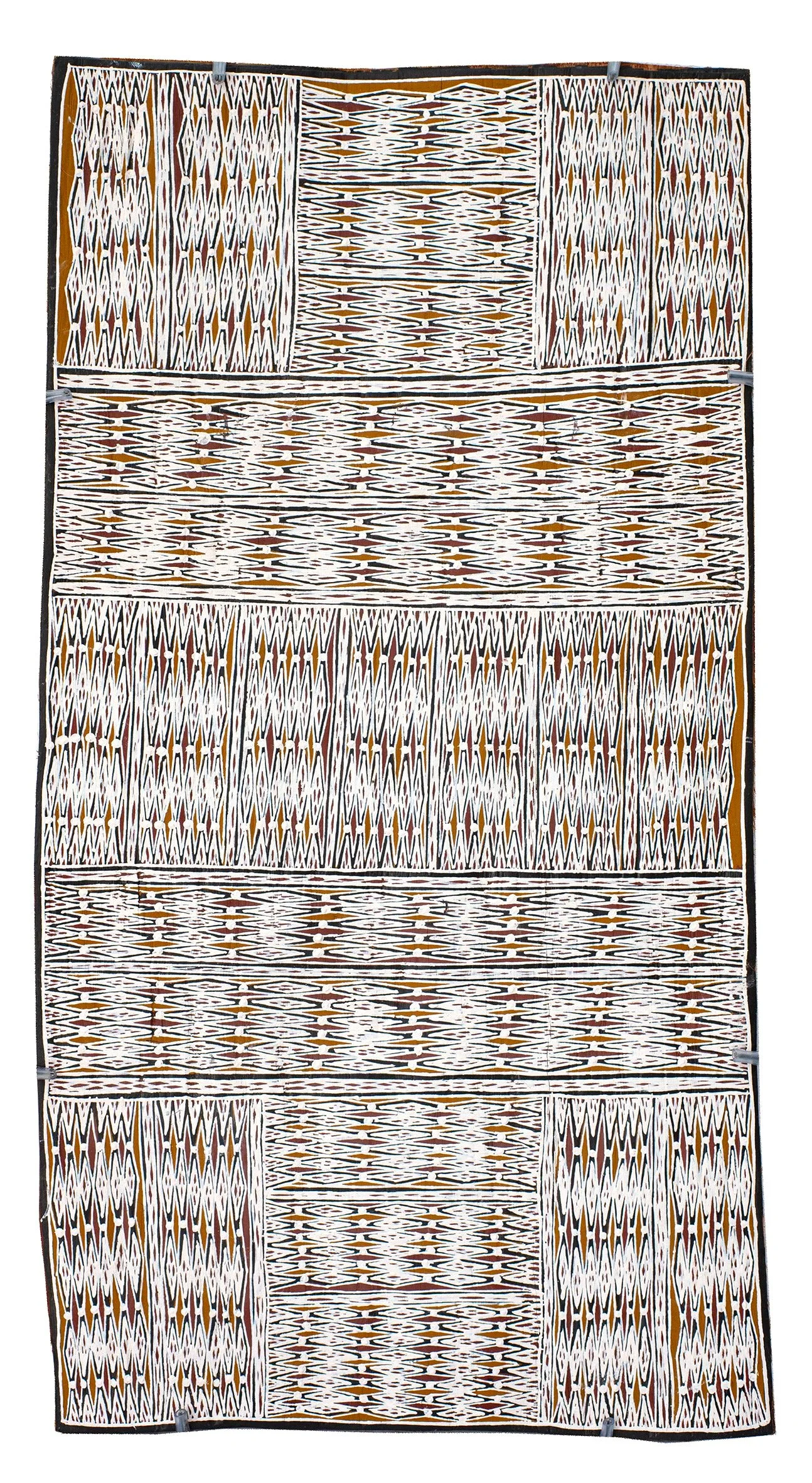
Artiste : Rerrkirrwaŋa Munuŋgurr
Titre de l'œuvre : Gurtha
Pigments naturels sur écorce
Format : 61 x 33 cm
Provenance et certificat original : centre d'art aborigène de Yirrkala
Référence de la peinture : 1300-19
© Photo : Aboriginal signature with the courtesy of the artist & Buku-Larrngay Mulka.
Explication de l’œuvre :
This bark painting by Rerrkirrwaŋa Munuŋgurr (1971) depicts Gurtha. In ancestral times, the leaders of Yirritja moiety clans used fire for the first time during a ceremony at Ŋalarrwuy in Gumatj country. This came about as fire brought to the Madarrpa clan country by Bäru the ancestral crocodile, spread north and swept through the ceremonial ground. From this ceremonial ground the fire spread further to other sites. Various ancestral animals were affected and reacted in different ways. These animals became sacred totems of the Gumatj people and the areas associated with these events became important sites.
The creatures as cockatoo & Dugong are all associated with named sites which were burnt as the ancestral fire spread across the land. Where the sites described occur outside Gumatj clan country, the path of the fire represents important relationships held between these clans. The Gumatj clan design associated with these events, a diamond design, represents fire; the red flames, the white smoke and ash, the black charcoal and the yellow dust. Also the black skin, yellow fat, white bone and red blood of Gumatj people. Clans owning connected parts of this sequence of ancestral events share variations of this diamond design.
Collections :
2009 Telstra National Aboriginal and Torres Strait Islander Art Awards, Darwin NT - Winner Best Bark Painting.
Private collections.

Artiste : Mario Walarmerpui
Titre de l'œuvre : Jilamara Design
Pigments naturels sur toile de lin
Format : 100 x 100 cm
Provenance et certificat : centre d'art aborigène de Munupi (Tiwi Island)
Référence de la peinture : 19-392
© Photo : Aboriginal signature with the courtesy of the artist & Munupi Art centre (Tiwi Island)
Explications sur cette œuvre :
During ceremony on the Tiwi Islands a series of 'yoi' (dances), are performed; some are totemic (inherited from the person's Mother) and some serve to act out the narrative of newly composed songs. Participants in these ceremonies are painted with turtiyanginari (the different natural ochre colours) in varying designs, transforming the dancers and, in some cases, providing protection against recognition by mapurtiti (spirits).
These designs can be applied in different ways. Ochre is applied to the body and face. These significant artistic designs collectively are called 'Jilamara'.
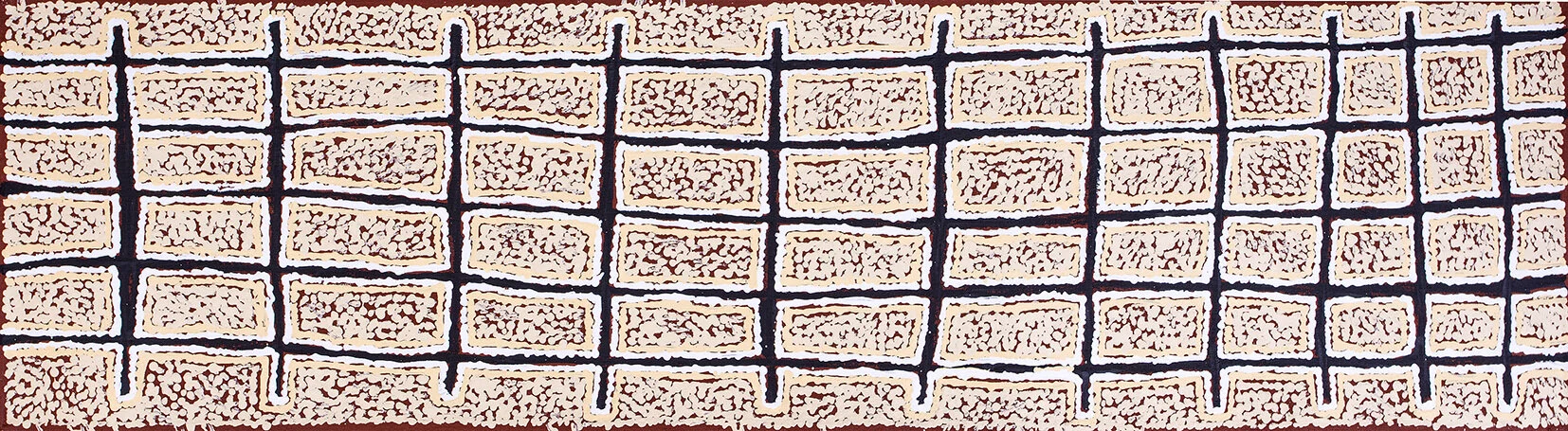
Artiste : Eileen Napaltjarri
Titre de l'œuvre : Tjiturrulpa - Ancestral time travel
Format : 107 x 28 cm
Provenance et certificat : centre d'art de Papunya Tula
Le certificat original du centre d'art Aborigène de Papunya Tula sera remis avec l'œuvre.
Référence de la peinture : EN1708045
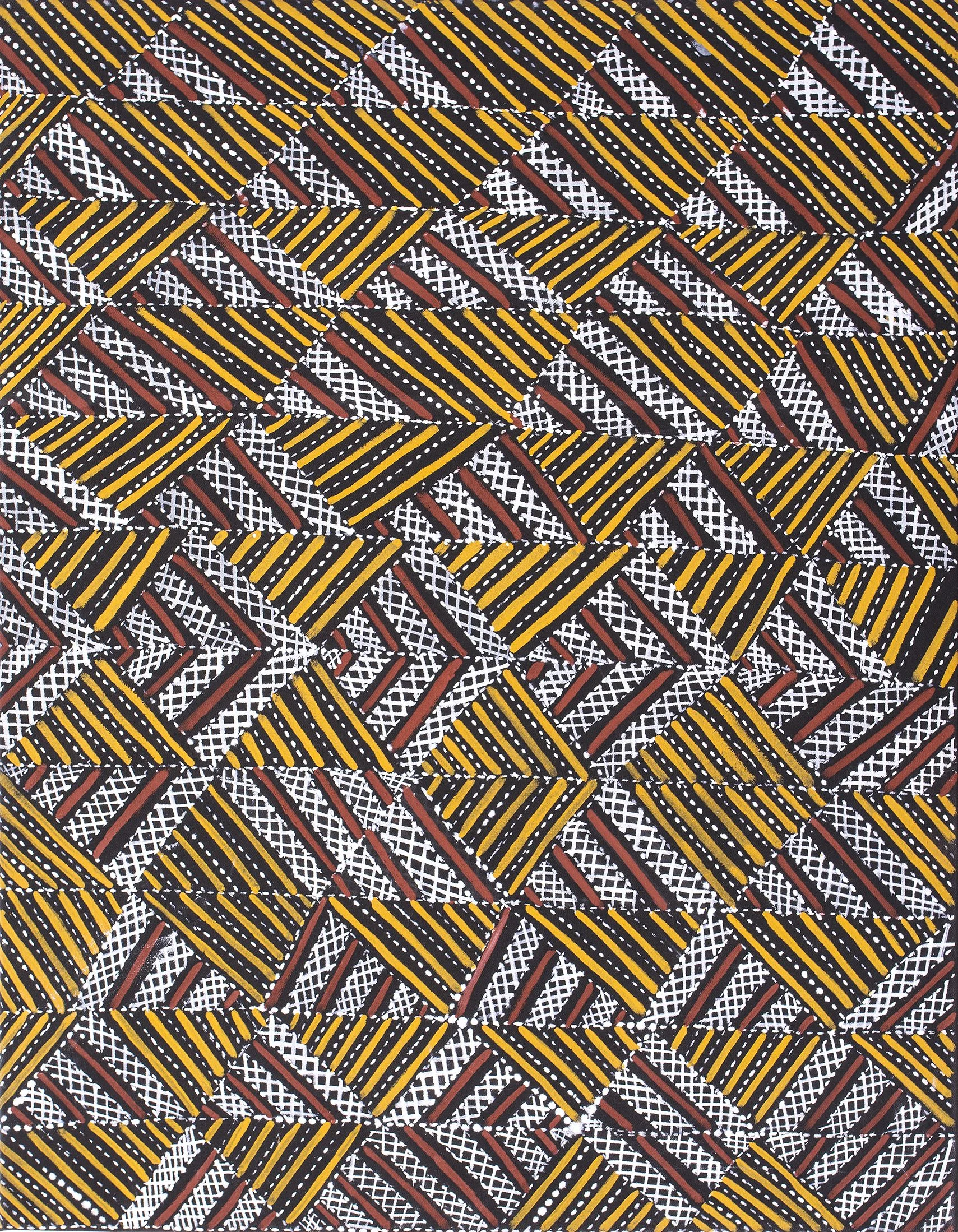
Artiste : Shirley Puruntatameri (née Tipungwuti)
Titre de l'œuvre : Pupuni Jilamara
Pigments naturels sur toile de lin Belge
Format : 90 x 71 cm
Provenance et certificat : centre d'art aborigène de Munupi (Tiwi Island)
Référence de la peinture : 17-311
© Photo : Aboriginal signature with the courtesy of the artist & Munupi Art centre (Tiwi Island)
Explications sur cette œuvre :
During ceremony on the Tiwi Islands a series of ‘yoi’ (dances), are performed; some are totemic (inherited from the person's Mother) and some serve to act out the narrative of newly composed songs. Participants in these ceremonies are painted with turtiyanginari (the different natural ochre colours) in varying designs, transforming the dancers and, in some cases, providing protection against recognition by mapurtiti (spirits). These designs can be applied in different ways, one of which is using the pwoja (or kayimwagakimi), a traditional Tiwi ‘comb’ carved with a single row of teeth on one or both ends, usually made using ironwood or bloodwood. After being dipped in ochre and applied to the body a straight row of dots is imprinted. Once completed, these dots are then collectively called yirrinkiripwoja (body painting).
Painting of the face also occurs. These significant artistic designs collectively are called ‘Jilamara’.
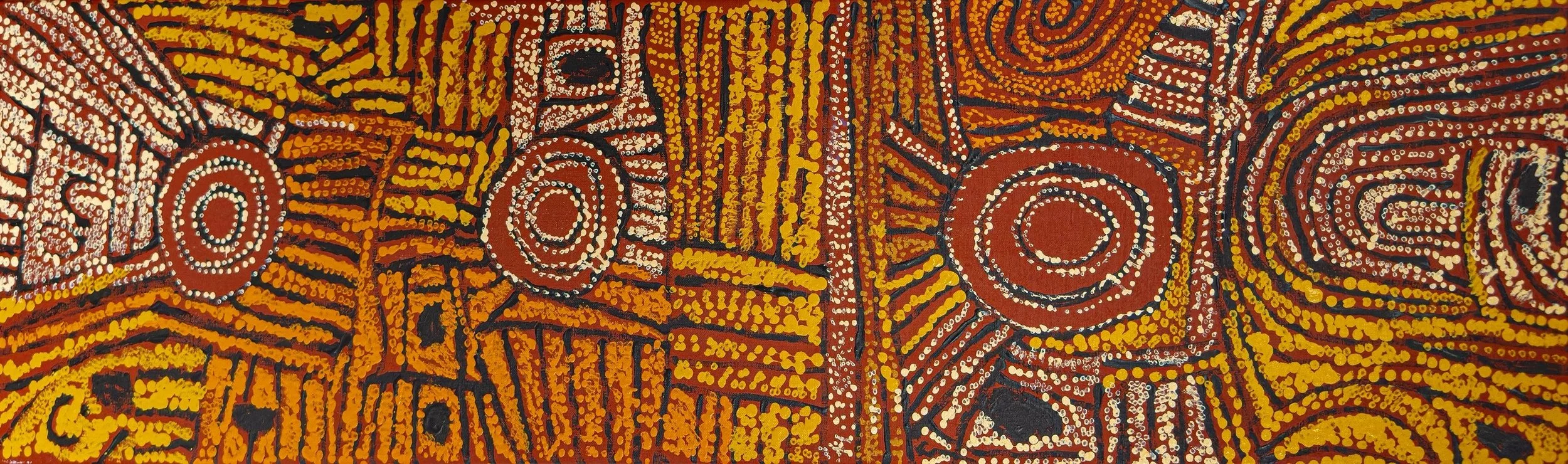
Artiste : Mary Napangati
Titre de l'œuvre : Rockhole site of Tjutalpi
Format : 107×28 cm
Provenance : centre d'art de Papunya Tula
Le certificat original du centre d'art Aborigène de Papunya Tula sera remis avec l'œuvre.
Référence de cette peinture : MN2305137
Enquiry/ Demander le prix de l'œuvre
Explications sur cette œuvre et l’artiste :
Mary Brown Napangati (Napangardi) was born near Wilkinkarra (Lake Mackay) circa 1955. Her family lived in the vicinity of Lappi Lappi, located towards the northern area of Lake Mackay, until they walked into the Mt Doreen cattle station west of Yuendumu, in the Northern Territory. She later moved to Yuendumu, married there and later moved further west to Nyirrpi. After her first husband passed away, Mary remarried the well known artist Ronnie Tjampitjinpa and moved to Kintore, where she now lives and paints.
This painting evokes the rockhole site of Tjutalpi. In ancestral times a group of men and women travelled to this site. While at Tjutalpi they performed the dances and songs associated with the area. During their travels the men and women gathered a variety of bush foods including pura or bush tomatoes (Solanum chippendalei) and kampurarrpa or desert raisins (Solanum centrale). They also gathered wood for the manufacture of wana (digging sticks). The roundels in the work represent the soakage waters found at this site, while the lines represent the tali (sandhills).
Collections :
Private collections in Australia and Europe.
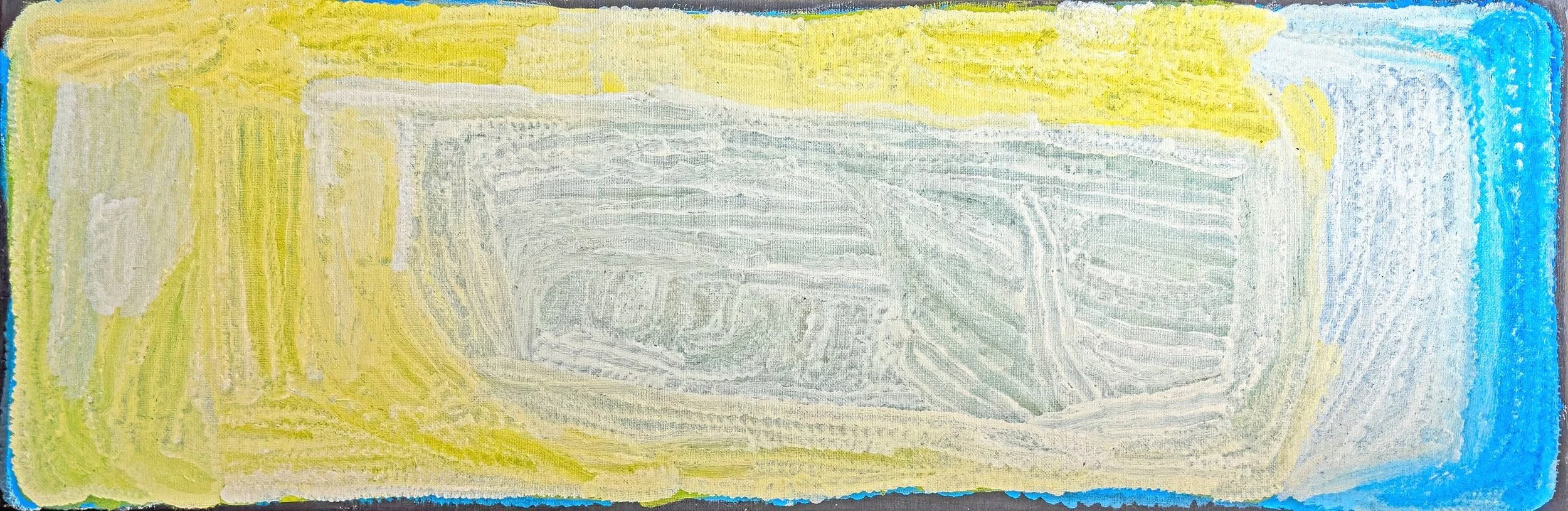
Artiste : Lydia Balbal
Titre de l'œuvre : Winpa - Dreaming Time stories
Format : 121 × 40 cm
Provenance et certificat : Short Street opérant pour les artistes Yulparija de Bidyadanga
Référence de cette peinture aborigène : 841481
Explications sur cette peinture d’art Aborigène :
Lydia Balbal (1958) is a Mangala woman. Lydia's country is near Punmu in the Great Sandy Desert of W.A. Her people's existence was threatened by severe drought so that they had little choice but to leave their traditional country. Her family were some of the last to walk out to the coastal town of Bidyadanga (then La Grange Mission) located two hours south of Broome in the early 70s. Lydia first began painting in 2007 but has already received significant attention from collectors and the media alike.
Winpa is jila (living water) located near the Percival Lakes in the Great Sandy Desert in WA. It is an important gathering of the Yulparija and neighbouring groups. they would gather for rain making ceremonial ceremonies.
Collections : Murdoch University Art Collection. Aboriginal Art Museum, The Netherlands. Thomas Vroom Collection, The Netherlands. National Gallery of Victoria Felton Collection. Queensland Art Gallery. Laverty Collection. Monash University Art Collection. Lepley Collection. Western Australian Art Gallery. National Gallery of Australia. Wesfarmers Collection. Australia Parliament House Collection. Brocard - Estrangin Collection. Kluge-Ruhe Aboriginal Art Collection of the University of Virginia.
© Photo : Aboriginal Signature Estrangin gallery with the courtesy of Short Street and the artist
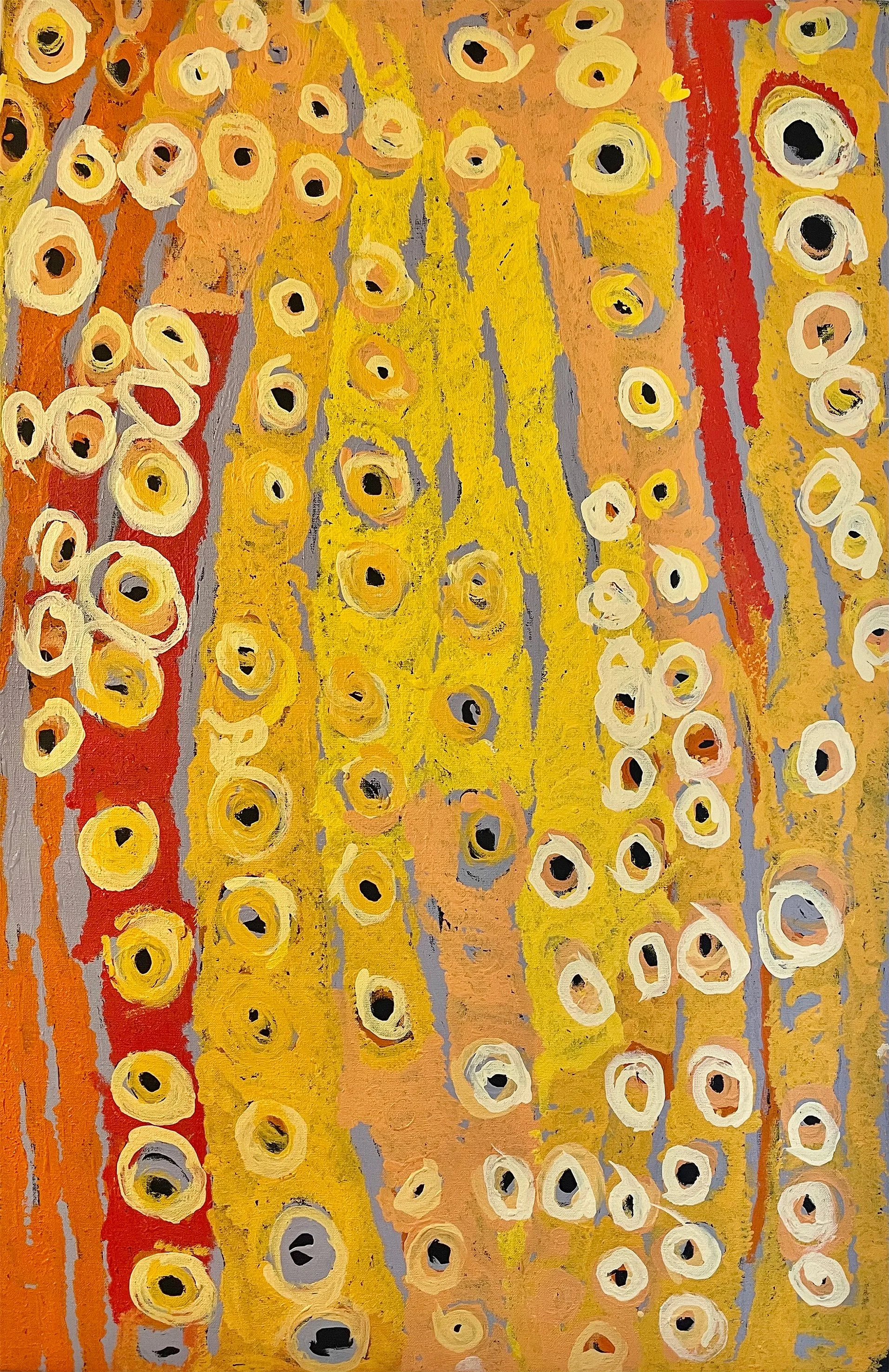
Artiste : Katarra Butler NAPALTJARRI
Titre de l'œuvre : Women’s ceremonies at rockhole of Ngaminya
Format : 91 x 61 cm
Provenance : centre d'art de Papunya Tula
Le certificat original du centre d'art Aborigène de Papunya Tula sera remis avec l'œuvre.
Référence de la peinture : KB1311052

Artiste : Tatali Napurrula
Titre de l'œuvre : Rockhole site of Pinpirri
Format : 87 x 28 cm
Provenance et certificat : centre d'art aborigene de Papunya Tula Artists
Référence de cette peinture aborigène : TN2211018
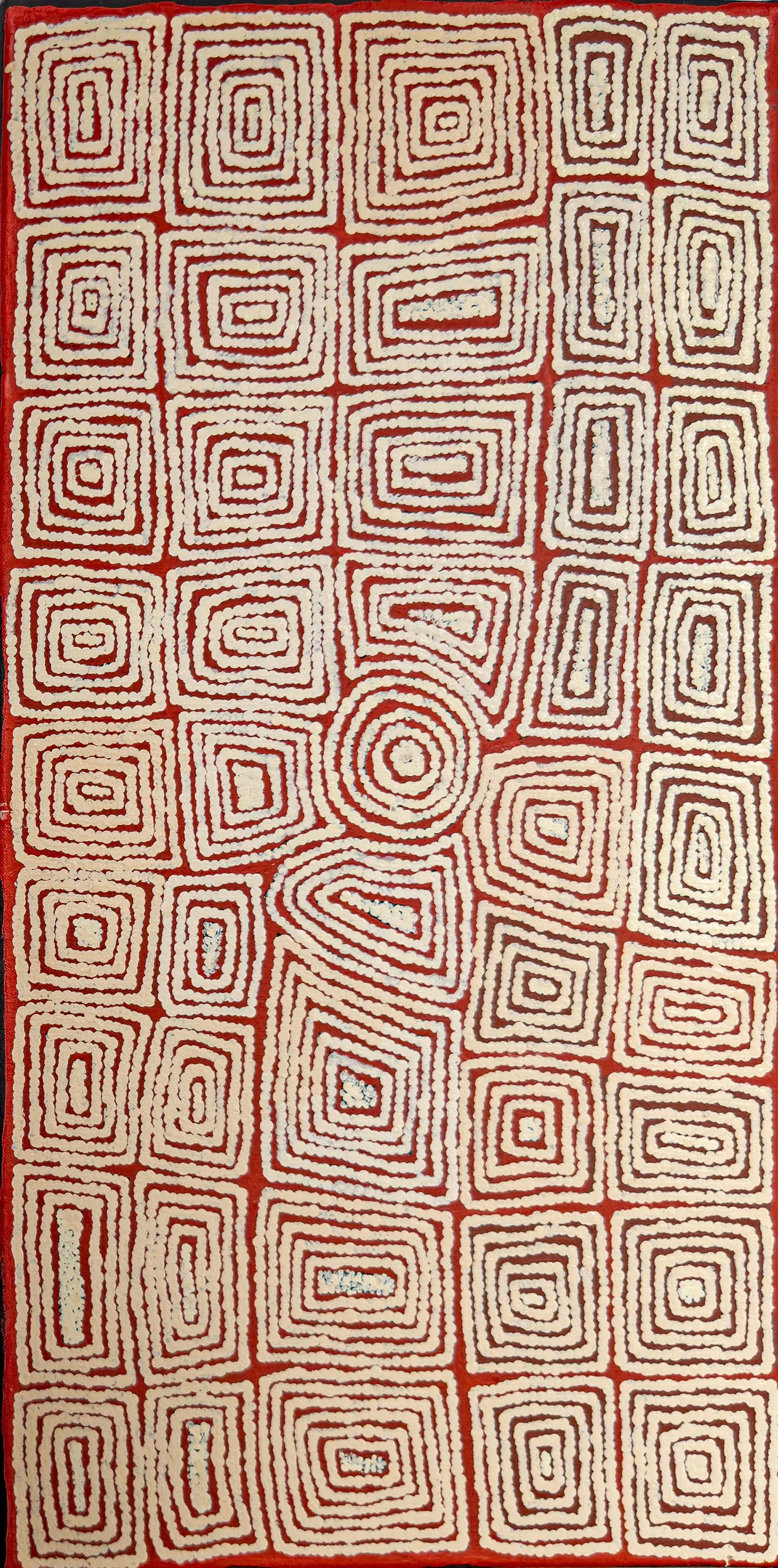
Artiste : Rosie Nampitjinpa
Titre de l'œuvre : Rockhole site of Yilpikarri
Format : 61 × 31 cm
Provenance et certificat : centre d'art de Papunya Tula Artists
Référence de la peinture : RN2305067
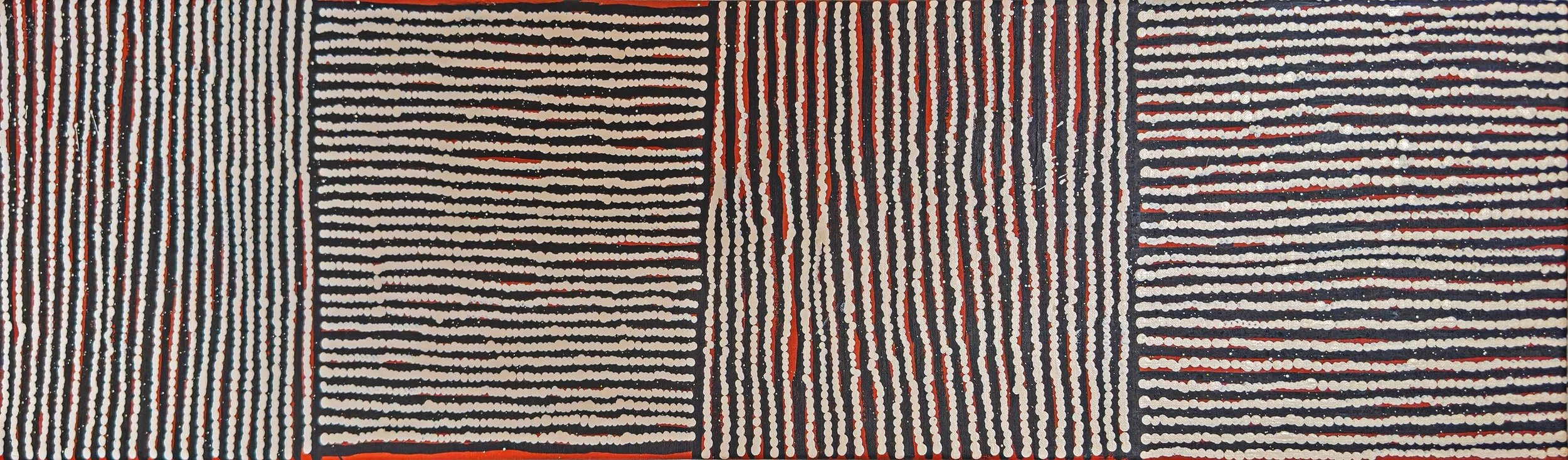
Artiste : Maureen Ward Nakamarra
Titre de l'œuvre : Rockhole site of Kulkuta
Format : 107 x 28 cm
Provenance et certificat : centre d'art aborigene de Papunya Tula Artists
Référence de cette peinture aborigène : MW2211064
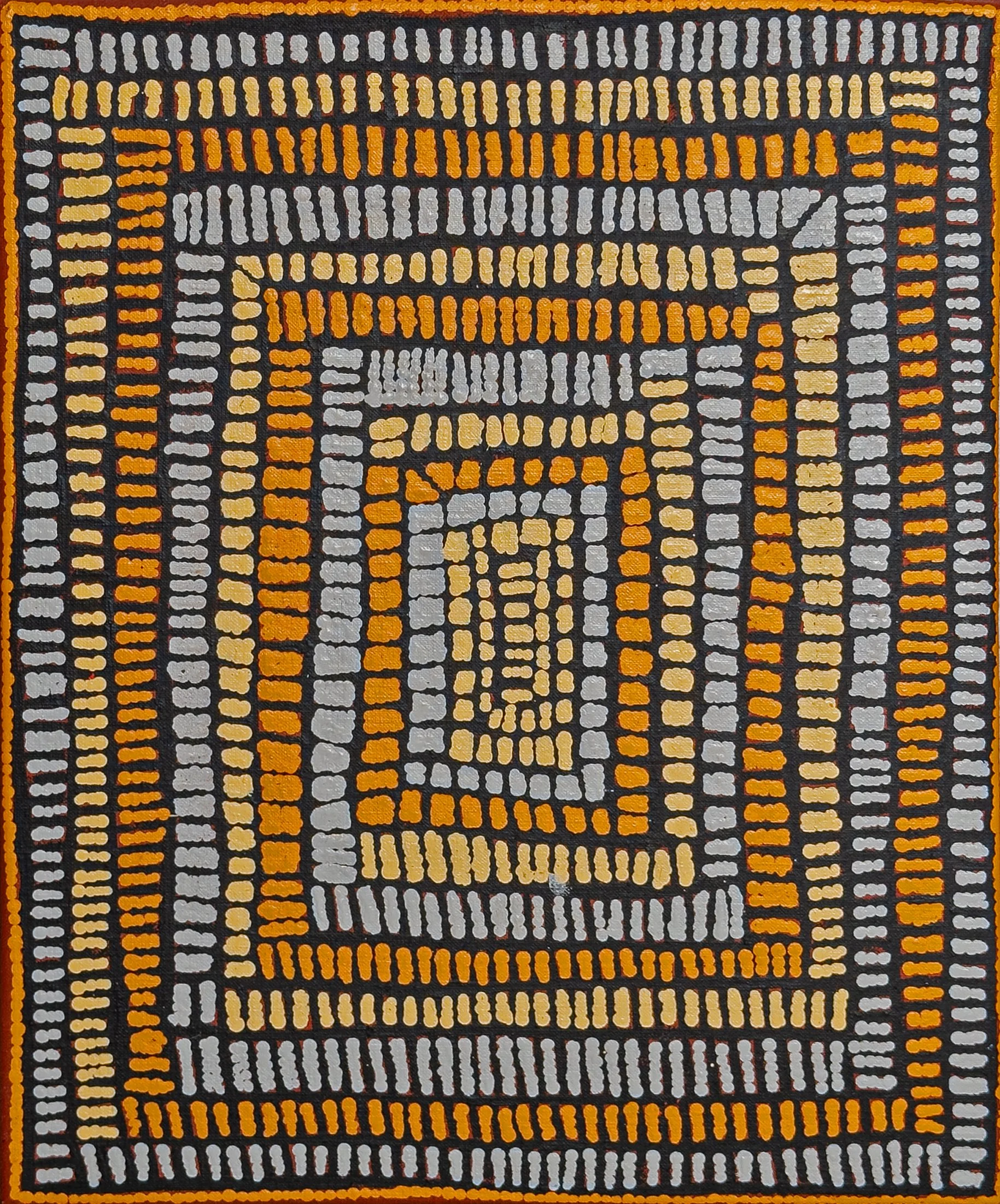
Artiste : Donna Nungurrayi
Titre de l'œuvre : rockhole site of Umari
Format : 46 x 38 cm
Provenance : centre d'art de Papunya Tula
Le certificat original du centre d'art Aborigène de Papunya Tula sera remis avec l'œuvre.
Référence de cette peinture : DN2305184
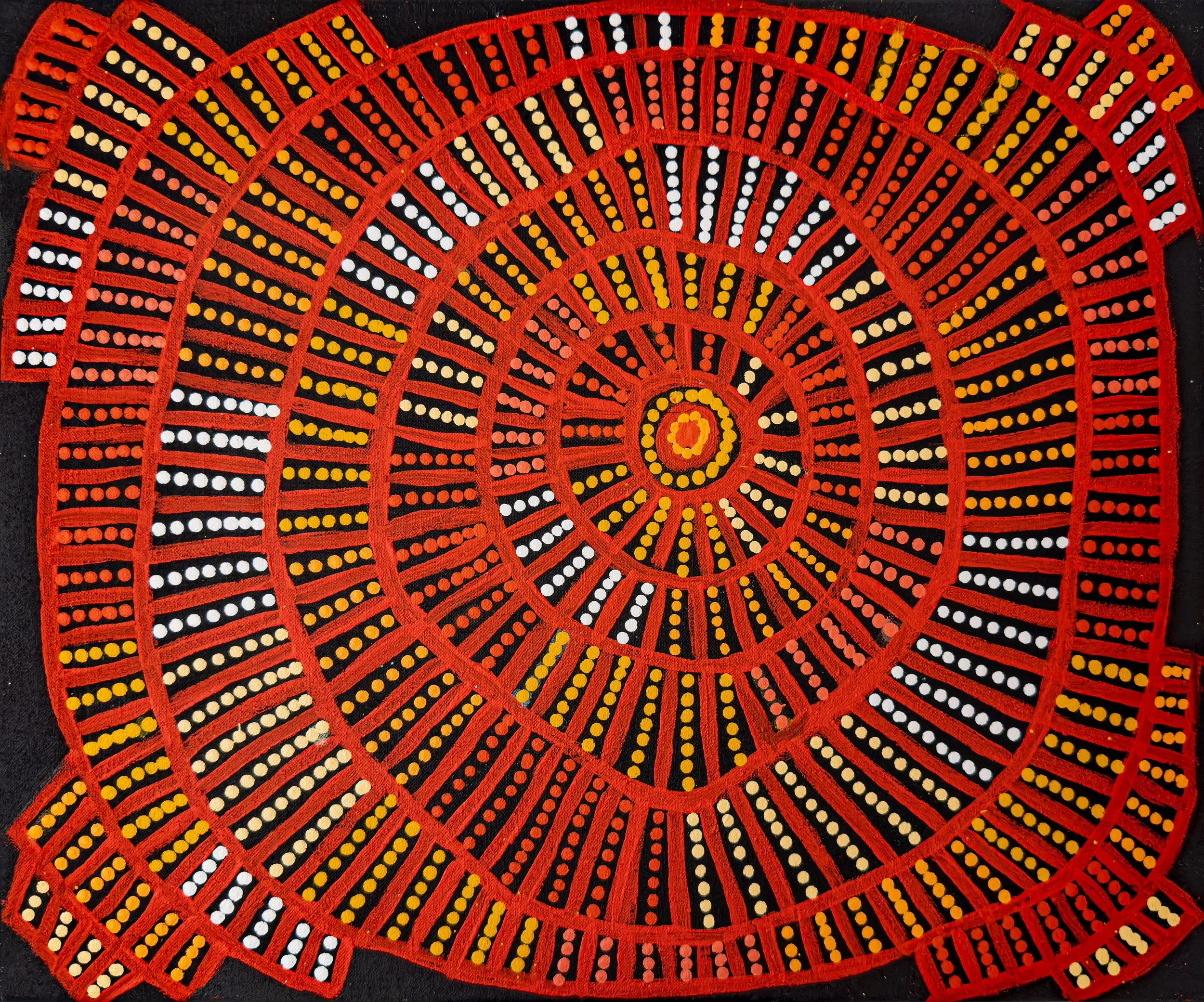
Artiste : Jeannie Bruno Nampitjinpa
Titre de l'œuvre : site of Marrapinti
Format : 46 x 38 cm
Provenance : centre d'art de Papunya Tula
Le certificat original du centre d'art Aborigène de Papunya Tula sera remis avec l'œuvre.
Référence de cette peinture : JB2304113

Titre de l'œuvre : Mulupuku (important bush food collect)
Artiste : Bai Bai Napangardi
Format : 100 x 50 cm
Provenance et certificat : centre d'art aborigène de Balgo - Warlayiriti Artists Aboriginal Corporation
Référence de cette peinture aborigene : 185/13
© with the courtesy of the artist & the Aboriginal art centre. Photo : Aboriginal Signature
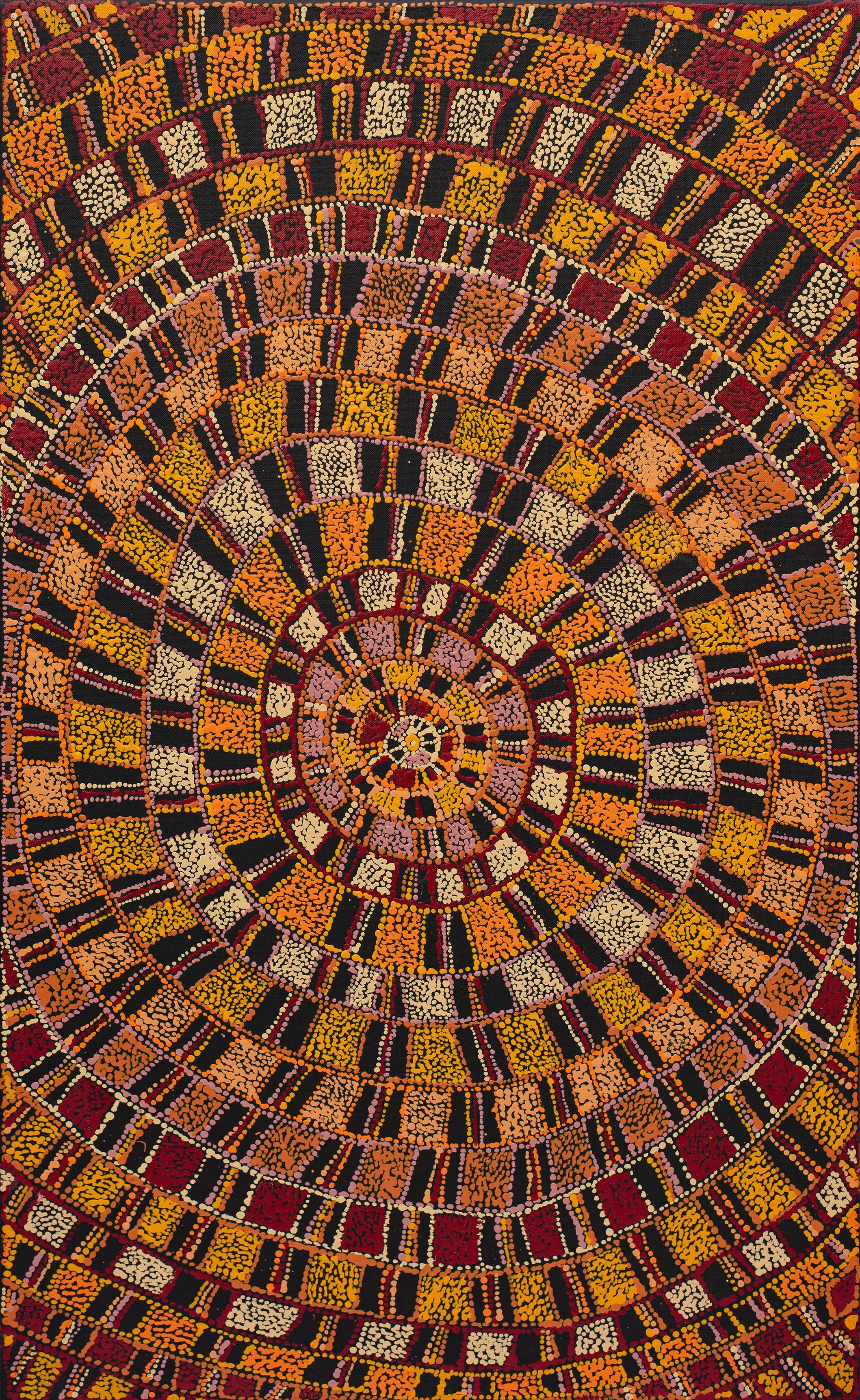
Artiste : Sabrina Nangala Robertson
Titre de l'œuvre : Ngapa Jukurrpa (Water Dreaming) - Pirlinyarnu
Format : 76 x 46 cm
Provenance et certificat : centre d'art aborigène de Yuendumu
Référence de cette peinture : 3907/23
Demander le prix de l'œuvre / Enquiry
Explications de l'œuvre :
The site depicted in this painting is Pirlinyarnu (Mt. Farewell), about 165 km west of Yuendumu in the Northern Territory. The ‘kirda’ (owners) for the water Dreaming site at Pirlinyarnu are Nangala/Nampijinpa women and Jangala/Jampijinpa men.
Two Jangala men, rainmakers, sang the rain, unleashing a giant storm that collided with another storm from Wapurtali at Mirawarri. A ‘kirrkarlanji’ (brown falcon [Falco berigora]) carried the storm further west from Mirawarri. The two storms travelled across the country from Karlipirnpa, a ceremonial site for the water Dreaming near Kintore that is owned by members of the Napaljarri/Japaljarri and Napanangka/Japanangka subsections. Along the way the storms passed through Juntiparnta, a site that is owned by Jampijinpa men. The storm eventually became too heavy for the falcon. It dropped the water at Pirlinyarnu, where it formed an enormous ‘maluri’ (claypan). A ‘mulju’ (soakage) exists in this place today.
Whenever it rains today, hundreds of ‘ngapangarlpa’ (bush ducks) still flock to Pirlinyarnu.
© Photo : Aboriginal Signature Estrangin gallery with the courtesy of the artists and Yuendumu

Artiste : Paddy Japaljarri Sims
Titre de l'œuvre : Warlu Jukurrpa (Fire Dreaming)
Format : 61 x 46 cm
Provenance et certificat de cette peinture d'art Aborigène : centre d'art de Yuendumu
Référence de la peinture : 1949/08
Artiste : Robert Fielding (1969)
Titre de l'œuvre : Manta Miil Miilpa - Sacred Earth
Format : 152 cm x 122 cm
Provenance et certificat : centre d'art aborigène de Mimili Maku
Référence de cette peinture aborigène : 230-21
Demander le prix de cette œuvre
Explications pour cette peinture d'art Aborigène :
Anangu culture has many layers of secrecy. Not all knowledge is to be held by each member of our community, some knowledge is only to be held by few. These paintings are also layered with much secrecy, things we share and things we choose not to share.
Some truths are so strong and important they shine through the veils and complex systems of sacred storylines. These are the foundations of our culture, the sacredness of our land, and the depth of our knowledge.
Like our culture these paintings cover the secret and sacred, whilst celebrating the strong cornerstones of what it is to be Anangu.
Manta Miil miilpa — sacred land.
Tjukurpa Miil miilpa — sacred culture.
We stand strong.
Mimili Community is home to 300 Pitjantjatjara and Yankunytjatjara people who have been living in the area for millennia in harmony with nature and acting as custodians of the land and the Tjukurpa (creation stories). Mimili was formerly known as Everard Park, which was a cattle station that was returned to Aboriginal ownership through the 1981 APY Lands Act. Mimili Community was incorporated as an Aboriginal Community in 1975.