Exposition d’art Aborigène “Mimili, là où la terre se chante”
En partenariat avec le centre d’art de Mimili Maku.
A la galerie Aboriginal Signature Estrangin : 101 rue Jules Besme, 1081 Bruxelles.
Vernissage sur RDV le mercredi 28 octobre de 14h à 22h.
Ensuite la galerie vous reçoit sur RDV, du jeudi 28 octobre au samedi 21 novembre 2026, du mardi au samedi, de 11h à 19h : vous pouvez réserver votre visite dés à présent dans notre agenda ici.
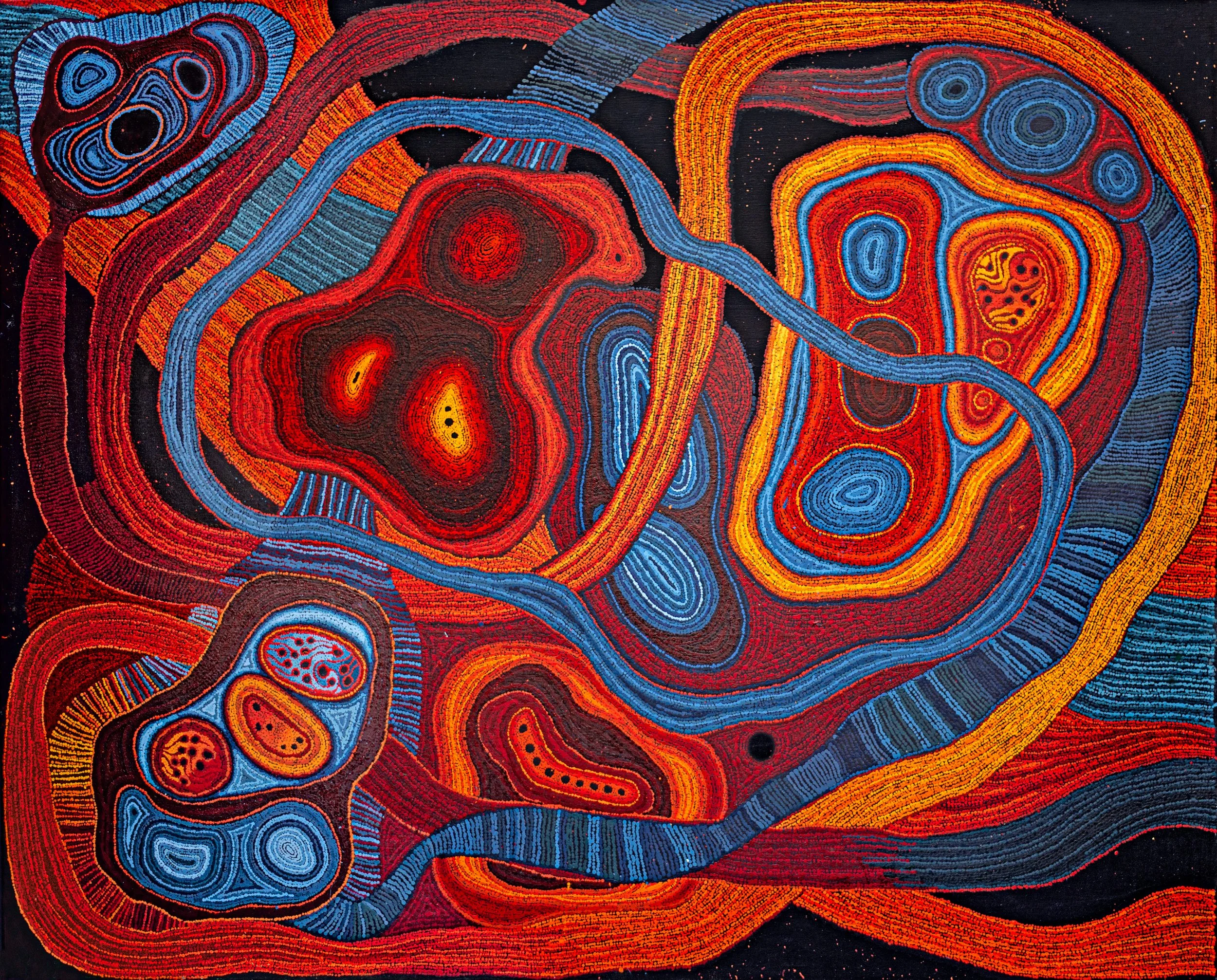
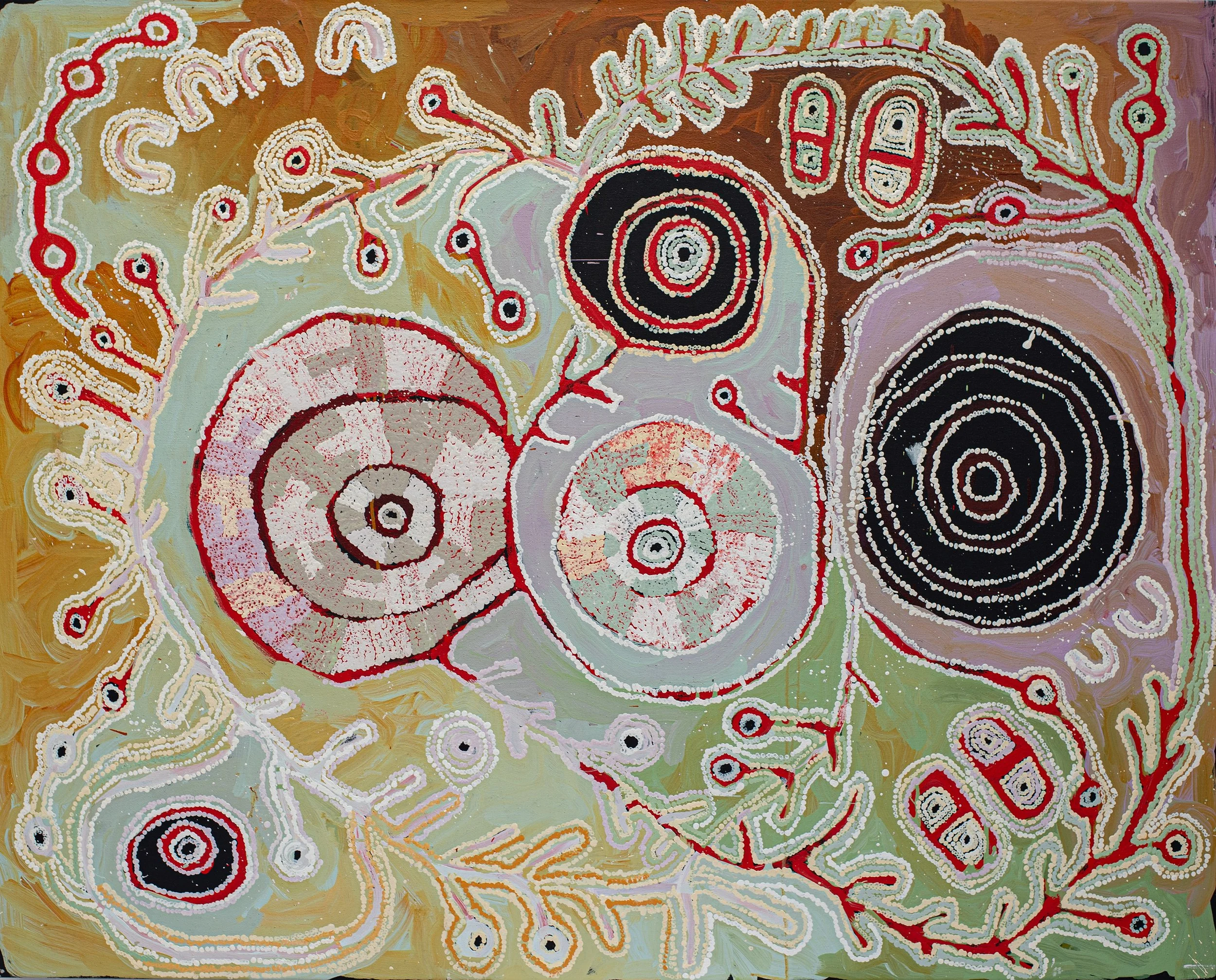
Peinture de l’artiste Emma Singer, Pauline Wangin, Betty Campbell - Walytja Family Collaborative - 198cm x 189cm - 303-24 © Photo Aboriginal Signature Estrangin Gallery with the courtesy of Mimili Maku & the artist.
Au nord-ouest de l’Australie-Méridionale, au pied des Everard Ranges, à près de 500 kilomètres d’Alice Springs, vit une petite communauté d’environ trois cents Anangu : Mimili. Ancienne station d’élevage rendue à ses gardiens en 1981, cette terre rouge n’a jamais cessé d’être lue, parcourue, chantée. Chaque trou d’eau, chaque rocher, chaque arbre y porte un nom, une histoire, une loi : le Tjukurpa.
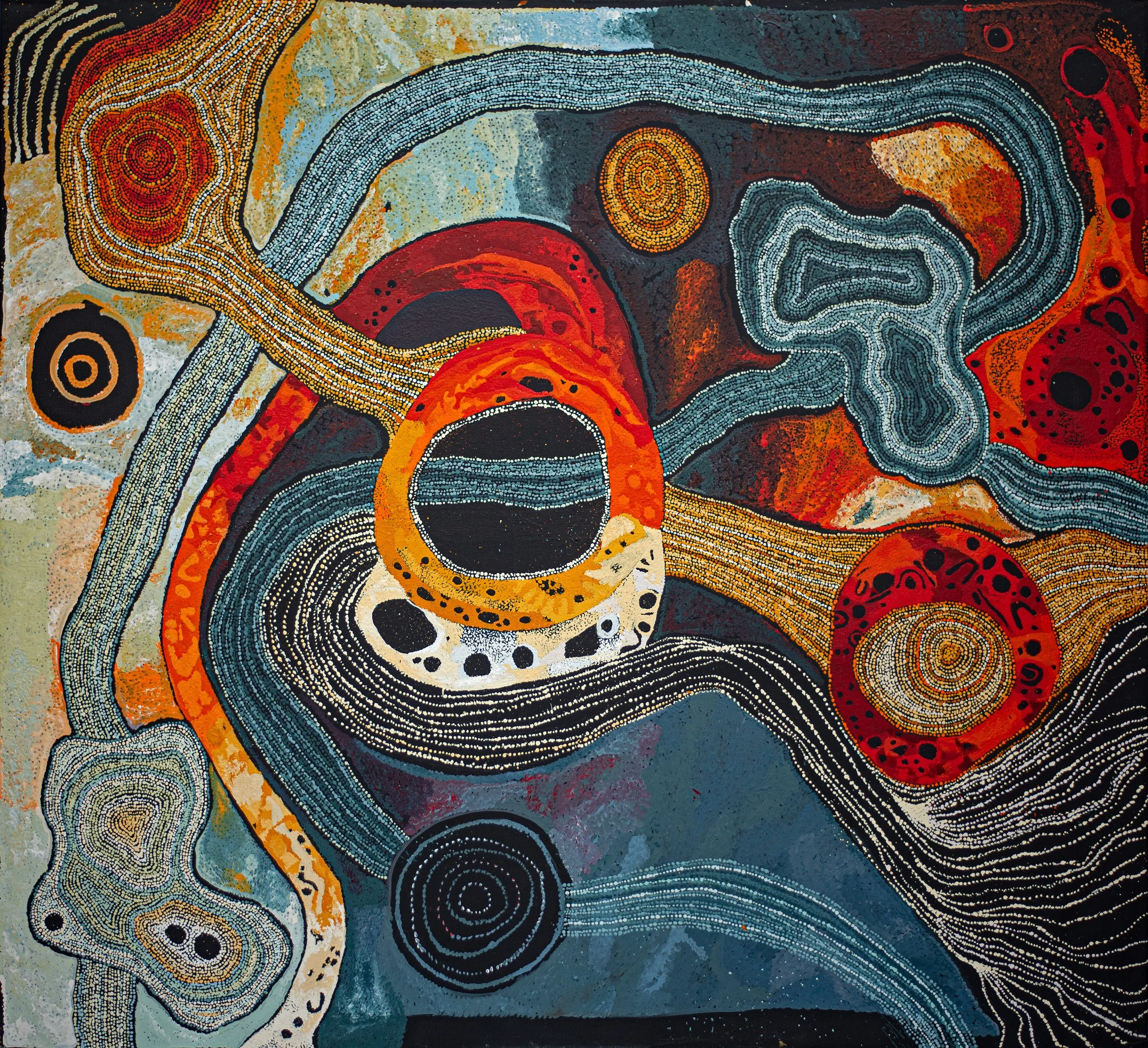
Peinture de l’artiste Emma Singer - Ngayuku Ngura 2023 - 200cm x 240cm - 650-23. © Photo Aboriginal Signature Gallery with the courtesy of Mimili Maku and the artist.
Pour cette nouvelle exposition, huit peintres de Mimili Maku Arts nous ouvrent les portes de leur Pays. Ce sont huit femmes, de plusieurs générations, qui peignent comme on transmet.
Les aînées Puna Yanima et Tuppy Ngintja Goodwin reviennent sans cesse à Antara, site cérémoniel des femmes et demeure du Maku, la larve witchetty. Chez Puna, l’encre et l’eau ruissellent librement. Chez Tuppy, chaque cercle résonne comme un pas de danse. « C’est ma voie », dit simplement Puna. Amy Yilpi suit la même piste du Maku en une nuée de points vibrants. On y sent la terre qui frémit après les grandes pluies, quand les femmes partent déterrer les larves au pied des buissons.
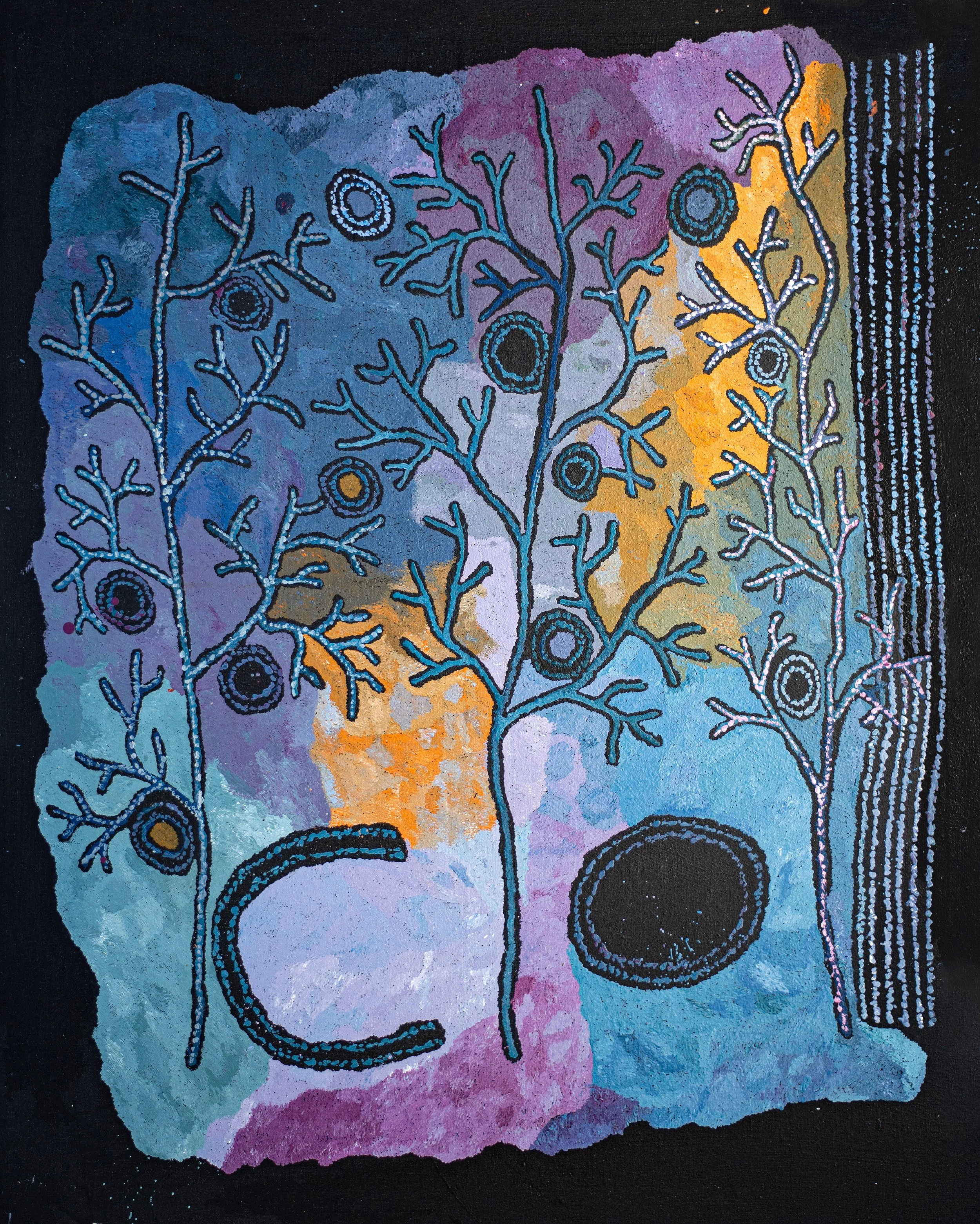
Peinture de l’artiste Betty Mula - Punu tjuta (many trees) - 152x122cm - 188-25 © Photo Aboriginal Signature Gallery with the courtesy of Mimili Maku and the artist.
Betty Campbell, gardienne respectée des chants et des danses, peint les Minymaku Inma, les chants des femmes. Certains n’appartiennent qu’aux seules initiées. Ce que ses toiles nous montrent, c’est ce qui peut être partagé, et c’est déjà immense.
Pauline Wangin peint l’eau, ou plutôt l’art de la trouver. Enfant, un jour de chaleur écrasante où la voiture était tombée en panne, sa mère lui a appris à découvrir le kapi tjukula, le trou d’eau caché dans la roche. Elle lui a montré comment le vider, le nettoyer, puis le couvrir de branches et d’une lourde pierre pour que l’eau nouvelle reste pure. Ce geste de survie est devenu peinture.
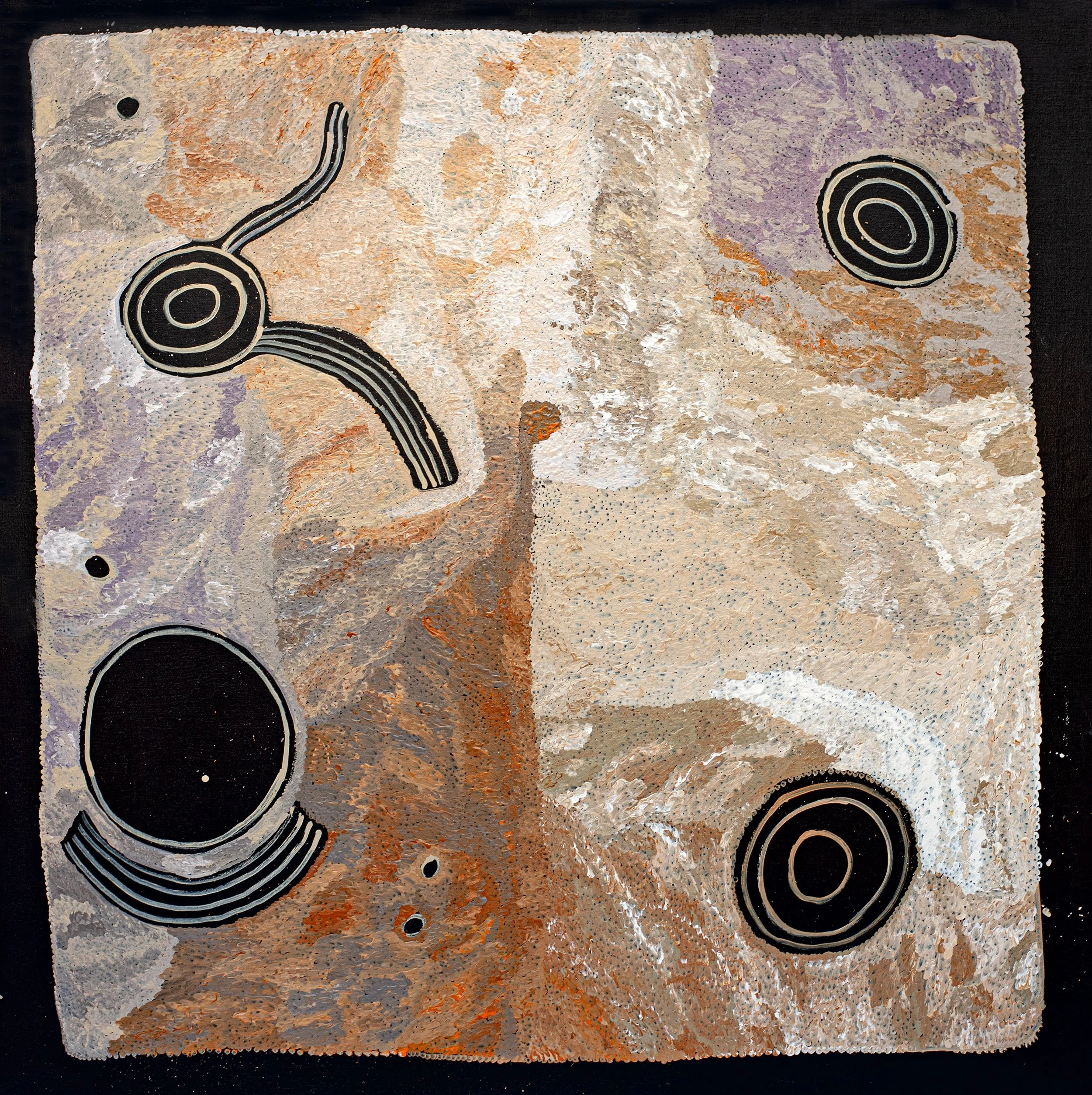
Peinture de l’artiste Betty Campbell - Minymaku Inma (Women's Song) - 150cm x 150 cm - 302-25. © Photo Aboriginal Signature Gallery with the courtesy of Mimili Maku and the artist.
Avec sa fille Emma Singer et sa sœur Betty Campbell, Pauline signe aussi Walytja, « famille ». Ce sont de grandes toiles à six mains, de près de deux mètres, où se relient les points d’eau entre Kinara Mimi, Antara, Paralpi et Iwantja. On y lit de véritables cartes chantées, où le chemin se souvient de lui-même.
Liées à Imanpa, dans le Territoire du Nord, Betty Mula et Rhonda Young élargissent l’horizon. Betty Mula peint Punu tjuta, les arbres qui annoncent le temps, révèlent les sources et guident vers la nourriture, comme une langue propre au Pays.
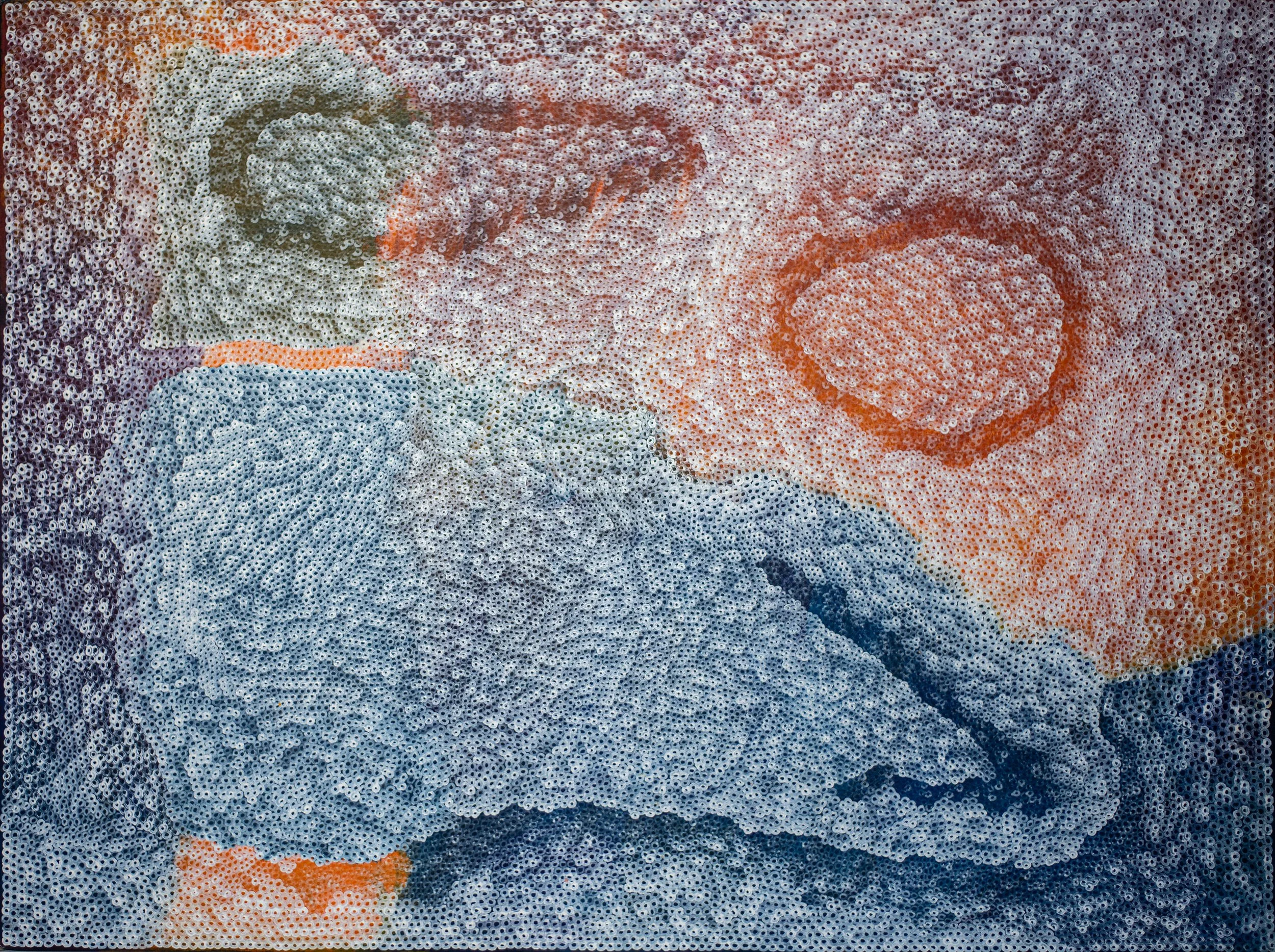
Peinture de l’artiste Amy Yilpi - Maku - 198x152cm - 492-26. © Photo Aboriginal Signature Gallery with the courtesy of Mimili Maku and the artist.
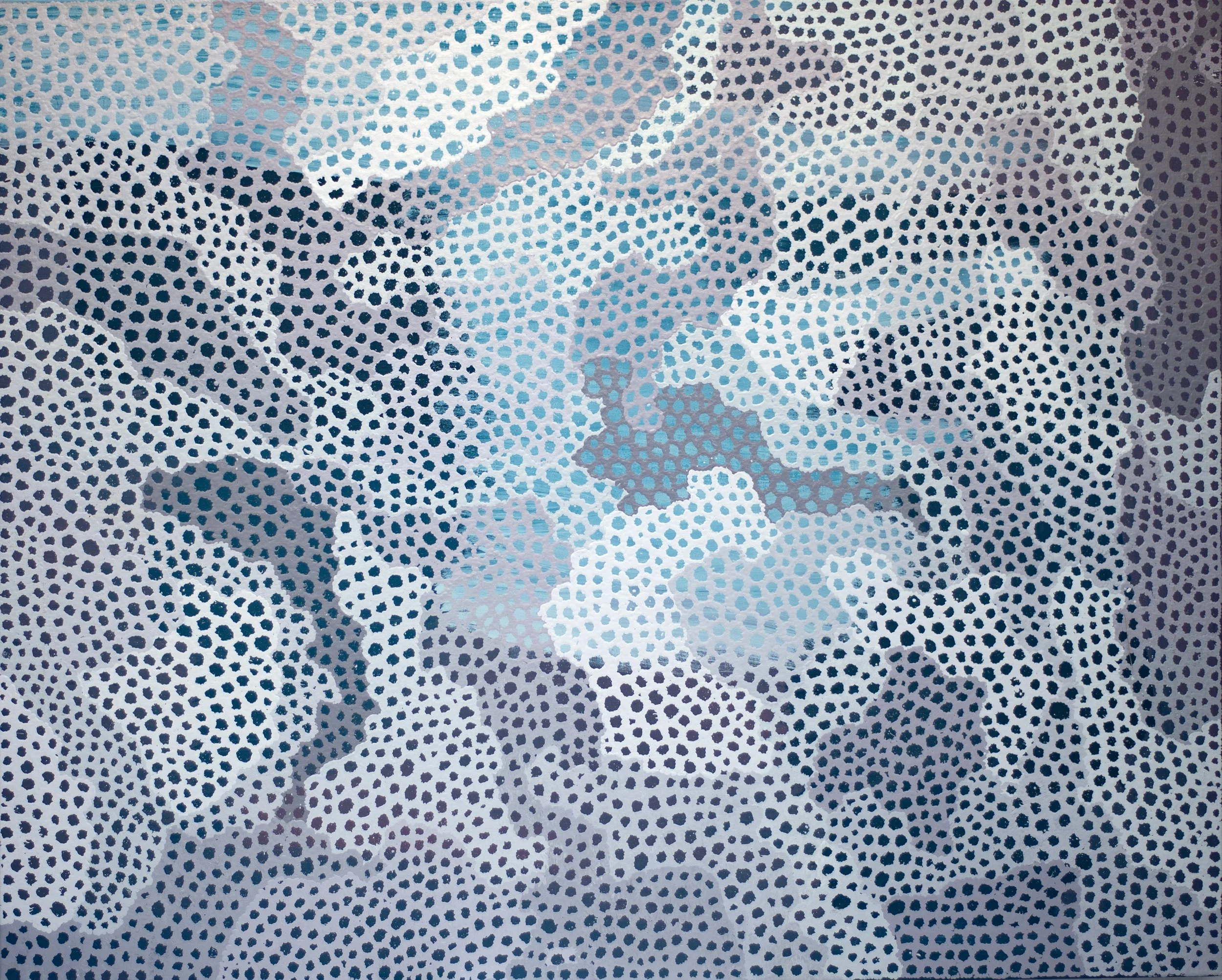
Rhonda Young peint les lacs salés du pays de sa mère, roses, blancs ou bleus selon les saisons, que reliaient autrefois des rivières. Ces œuvres ne représentent pas des paysages. Elles montrent le paysage vu de l’intérieur, des savoirs vivants, une mémoire qui passe de mère en fille. Venez les rencontrer.
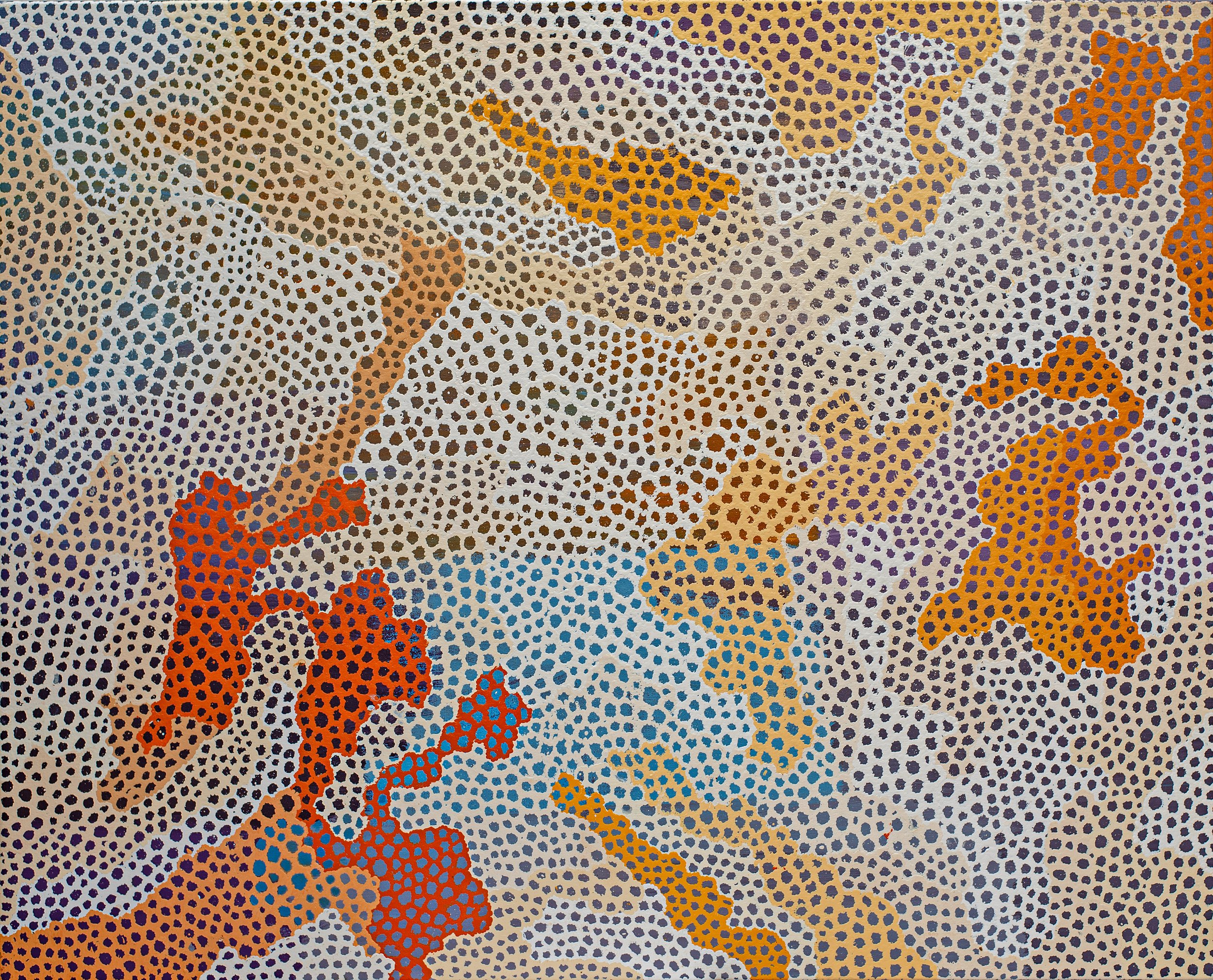
Peinture de l’artiste Rhonda Young - Salt Lakes - 152x122cm - 421-26. © Photo Aboriginal Signature Gallery with the courtesy of Mimili Maku and the artist.
Toutes les œuvres proviennent directement de Tjala Arts et sont accompagnées de leur certificat d'authenticité. Aboriginal Signature Estrangin, première galerie bruxelloise consacrée à l'art aborigène d'Australie et adhérente à l'Indigenous Art Code, travaille en partenariat direct avec les centres d'art. Chaque acquisition soutient la communauté d'Amata et la transmission de sa culture.
Ces œuvres ne sont pas des illustrations : elles sont, tout à la fois, une carte, une loi, une généalogie, une prière, une révérence. La cristallisation contemporaine de la plus ancienne tradition picturale vivante au monde — un art qui rayonne aujourd'hui du Metropolitan à la Tate Modern, du quai Branly au British Museum, et que nous sommes heureux d'accueillir à Bruxelles, à Koekelberg.
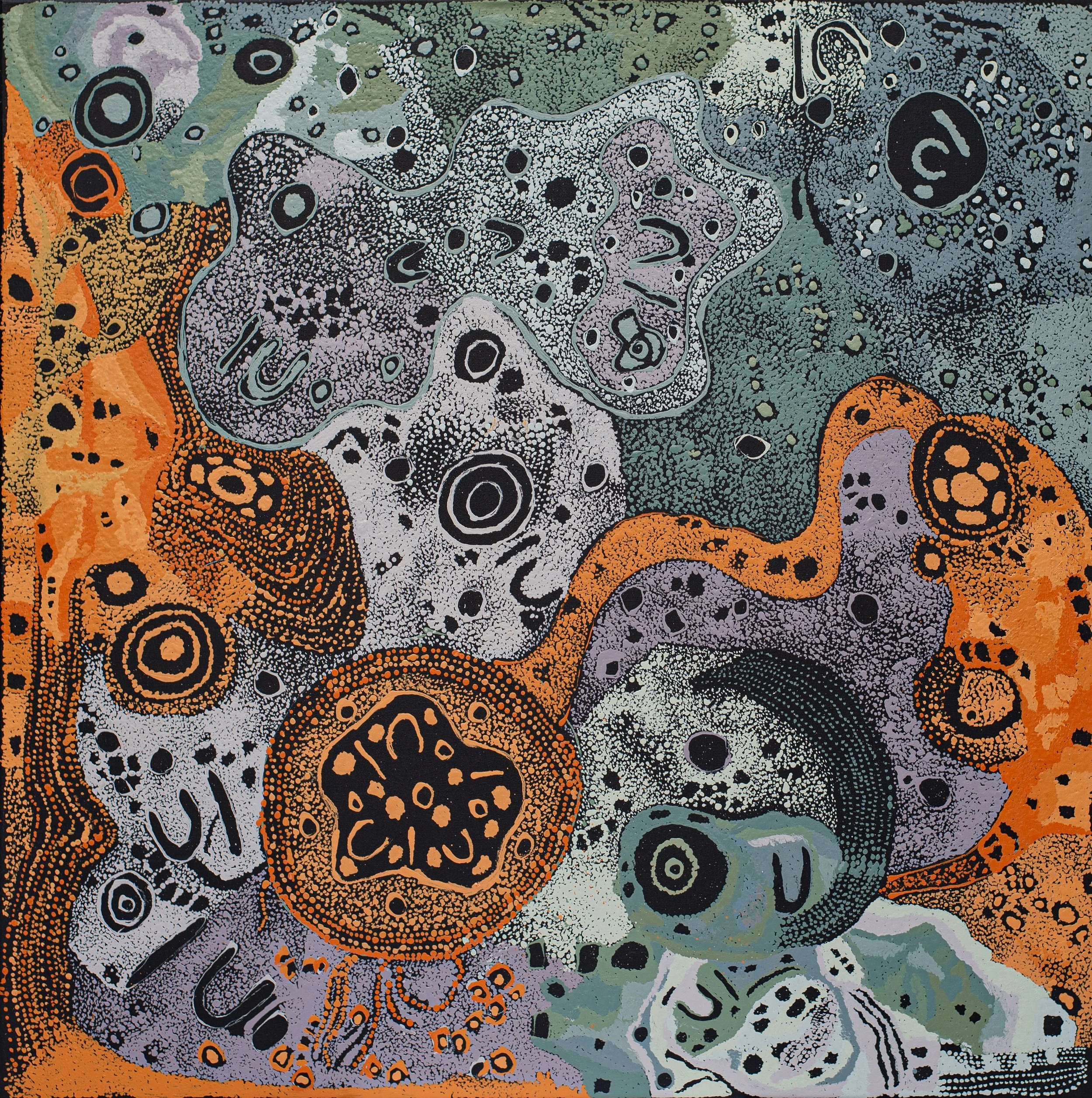
Peinture de l’artiste Pauline Minmila Wangin - Kapi Tjukula (Water Hole) - 101cm x 101cm - 596-26. © Photo Aboriginal Signature Gallery with the courtesy of Mimili Maku and the artist.
Leurs œuvres célèbrent leurs paysages grandioses et signifiants, porteurs d’une mémoire ancestrale, ancrée, et portée par les hommes et femmes extraordinaires qui résident dans ces contrées hors du temps, connectées à la terre, considérées par les Australiens comme les coins les plus éloignés de leur pays.
Nous nous réjouissons de vous accueillir au sein de la galerie à Bruxelles, dans notre espace de 250 m2 tout entier dédié à ces grands et petits trésors du bout du monde.
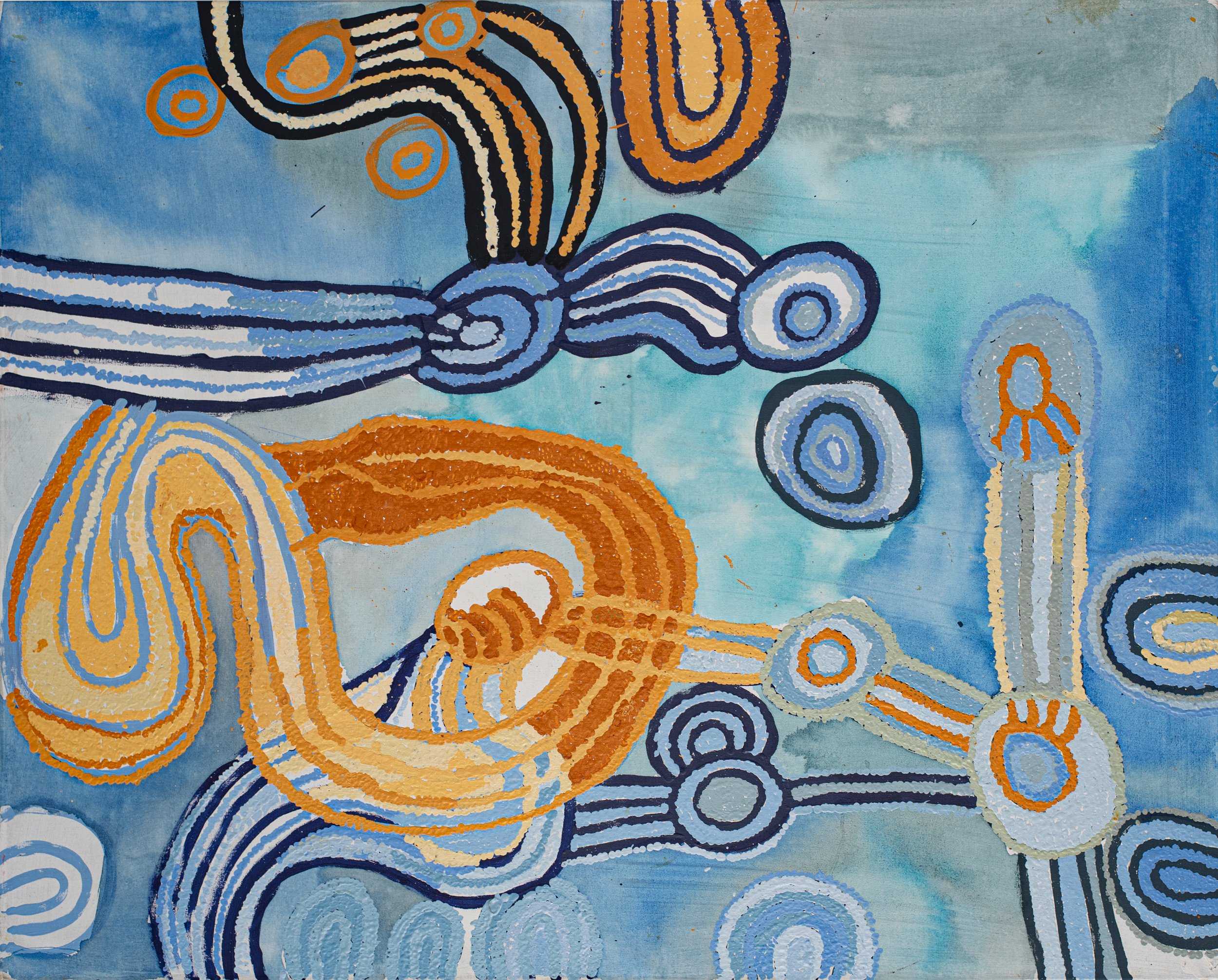
Peinture de l’artiste Puna Yanima - Antara - 152cm x 122cm - 889-24. © Photo Aboriginal Signature Gallery with the courtesy of Mimili Maku and the artist.
Vernissage le mercredi 28 octobre 2026, de 14h à 22h.
Exposition à découvrir ensuite sur rendez-vous ici, du mardi au samedi de 11h à 19h.
101 rue Jules Besme, 1081 Bruxelles — +32 (0)475 55 08 54
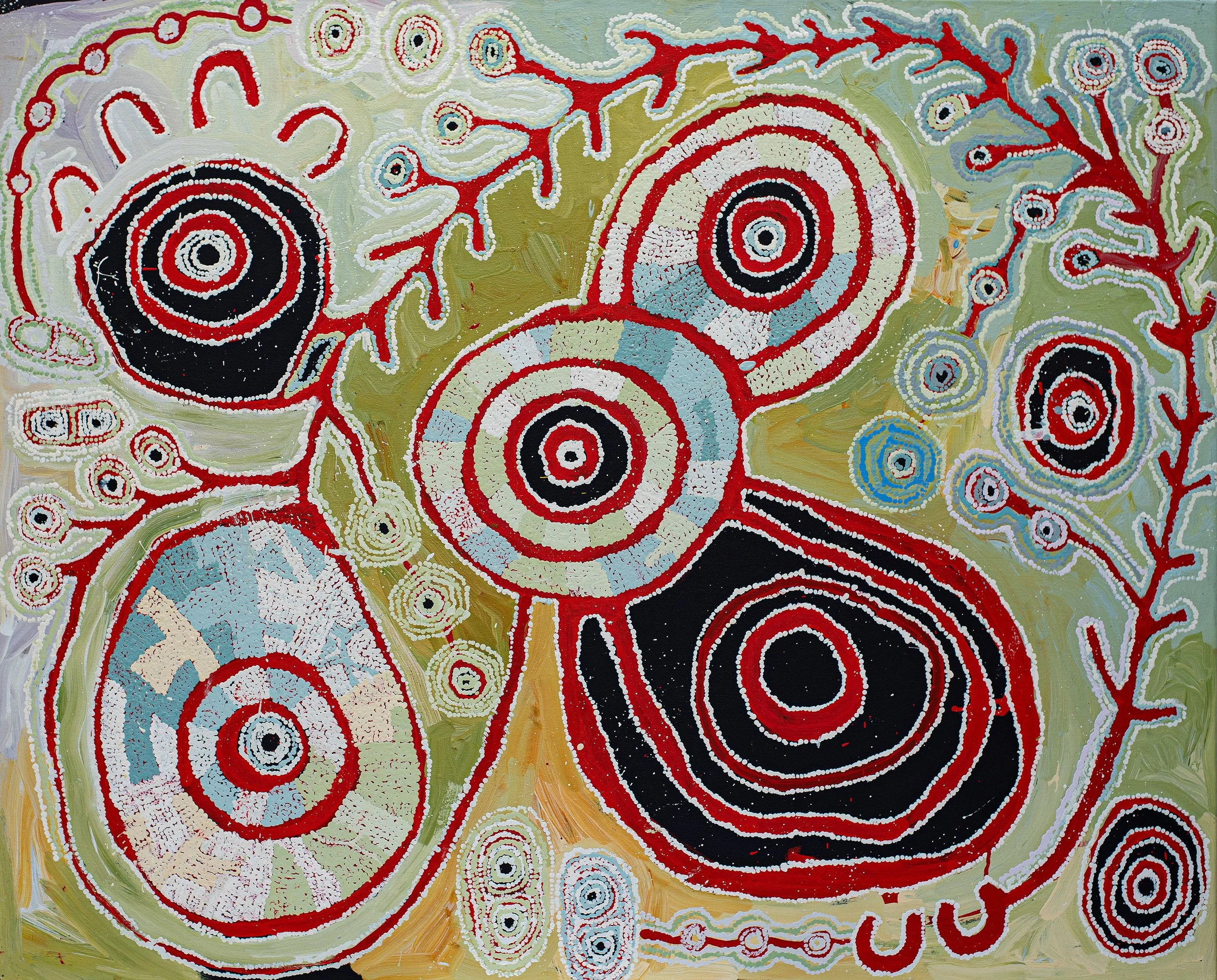
Peinture de l’artiste Tuppy Ngintja Goodwin - Antara sacred valley - 152cm x 122cm - 563-22. © Photo Aboriginal Signature Gallery with the courtesy of Mimili Maku and the artist.
Découvrez l’ensemble des peintures de l’exposition ci-dessous
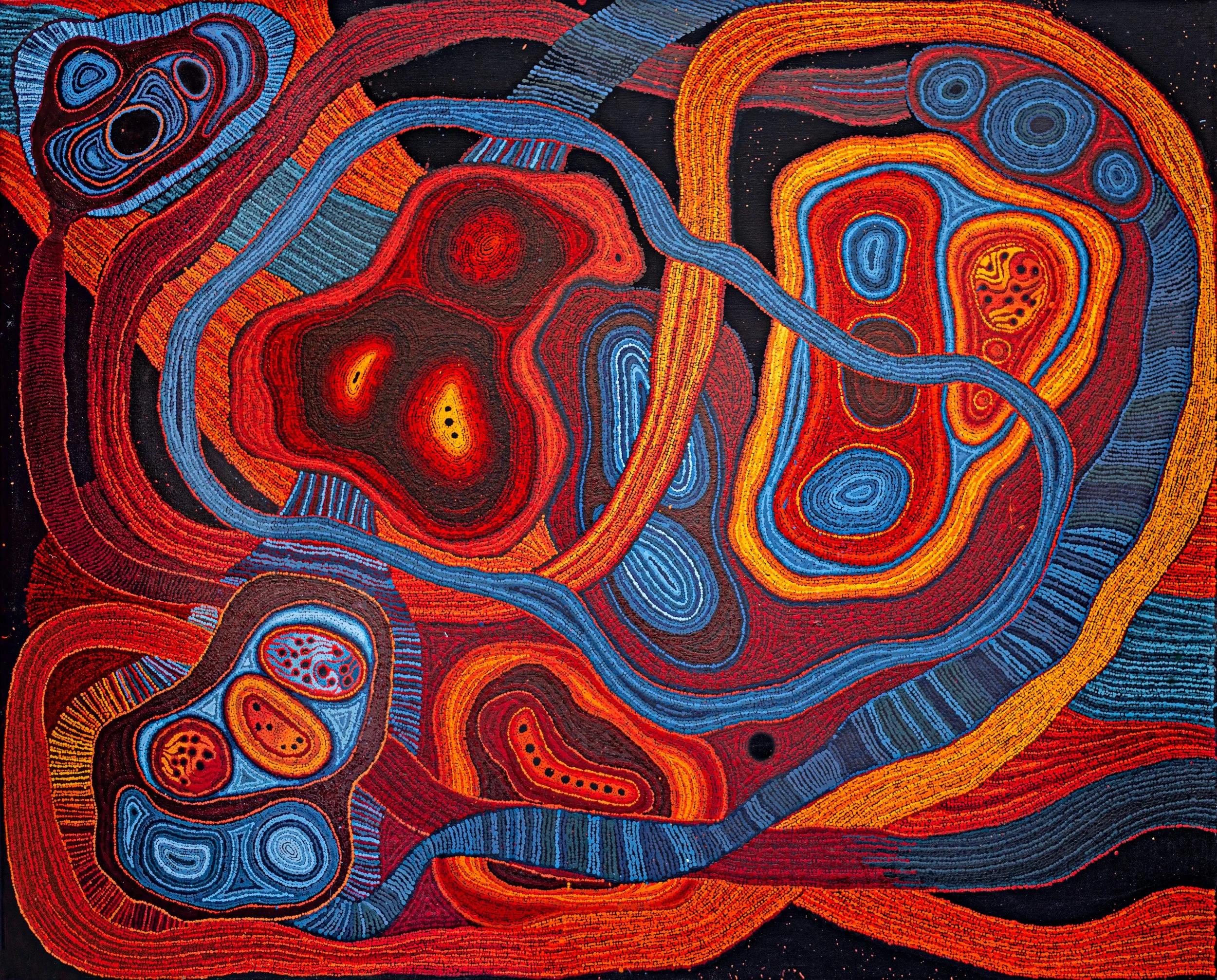
Artistes : Emma Singer
Titre de l'œuvre : Walytja - Family Collaboration
Format : 200cm x 240cm
Provenance et certificat : centre d'art aborigène de Mimili Maku
Référence de cette peinture aborigène : 650-23
Demander le prix de cette œuvre
Explications pour cette peinture d'art Aborigène :
Emma Singer (1986) is one of the strong painters in Mimili from the new generation. She works alongside her mother Pauline Wangin, and has collaborated with her on several paintings. Through the visual language passed from generation to generation, she explores her connection to manta (country) and Tjukurpa (an ongoing, eternal, life-giving transformative power that accounts for every aspect of existence).
This painting depicts the kapi tjukula (water holes), murpu and apu (mountains and rocks), tali (sand hills) and punu (trees) that surround Emma's home of Mimili Community. Mimili has many ancestral songlines that criss-cross the land. A really important place for Anangu from Mimili is Antara, a cermeonial site on top of a hill. This is a place for inma (ceremonial song and dance) relating to the Maku (witchetty grub) Tjukurpa.
Our families would move between rock holes, they’d know them all. They would always be looking for clear drinking water. They lived around Antara and many other named places between Kinara Mimi, Antara, Artutja, Paralpi and Iwantja. All those places are connected, and they used to walk far distances every day. We remember the paths by the songlines that still run through those places. They’d sing the songs, dig for water, and know where to travel. The water was underground, and they’d dig till it seeped upwards. They’d always know. I remember going to Iwantja Soakage with our mother and her showing us how it’s done. We remember this from when we were young, and we want to keep sharing this story for our children and grandchildren. It’s important to remember what we’ve always known."
Pauline Wangin, 2023
Mimili Community is home to 300 Pitjantjatjara and Yankunytjatjara people who have been living in the area for millennia in harmony with nature and acting as custodians of the land and the Tjukurpa (creation stories). Mimili was formerly known as Everard Park, which was a cattle station that was returned to Aboriginal ownership through the 1981 APY Lands Act. Mimili Community was incorporated as an Aboriginal Community in 1975.
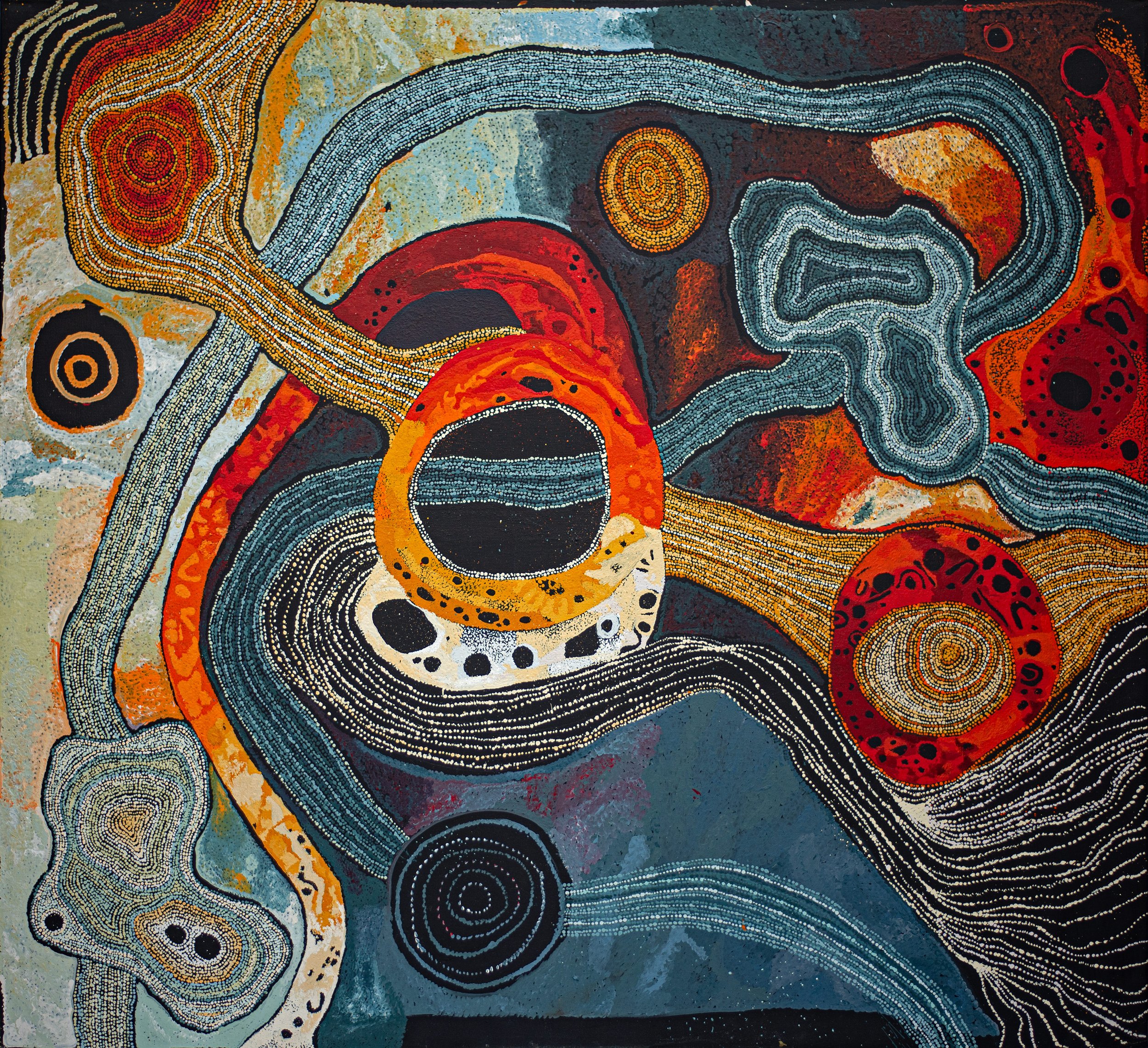
Artistes : Emma Singer, her mother Pauline Wangin and Pauline's sister Betty Campbell
Titre de l'œuvre : Walytja - Family Collaboration
Format : 198cm x 189cm
Provenance et certificat : centre d'art aborigène de Mimili Maku
Référence de cette peinture aborigène : 303-24
Demander le prix de cette œuvre
Explications pour cette peinture d'art Aborigène :
This is a collaborative canvas between Emma Singer, her mother Pauline Wangin and Pauline's sister Betty Campbell. Pauline says about the work : "We’ve painted this big canvas together as a family.
This canvas is about kapi tjukula and soakages around Kinara Mimi, Mimili. Our families would move between rock holes, they’d know them all. They would always be looking for clear drinking water. They lived around Antara and many other named places between Kinara Mimi, Antara, Artutja, Paralpi and Iwantja. All those places are connected, and they used to walk far distances every day. We remember the paths by the songlines that still run through those places. They’d sing the songs, dig for water, and know where to travel. The water was underground, and they’d dig till it seeped upwards. They’d always know. I remember going to Iwantja Soakage with our mother and her showing us how it’s done. We remember this from when we were young, and we want to keep sharing this story for our children and grandchildren. It’s important to remember what we’ve always known."
Pauline Wangin, 2023
Mimili Community is home to 300 Pitjantjatjara and Yankunytjatjara people who have been living in the area for millennia in harmony with nature and acting as custodians of the land and the Tjukurpa (creation stories). Mimili was formerly known as Everard Park, which was a cattle station that was returned to Aboriginal ownership through the 1981 APY Lands Act. Mimili Community was incorporated as an Aboriginal Community in 1975.
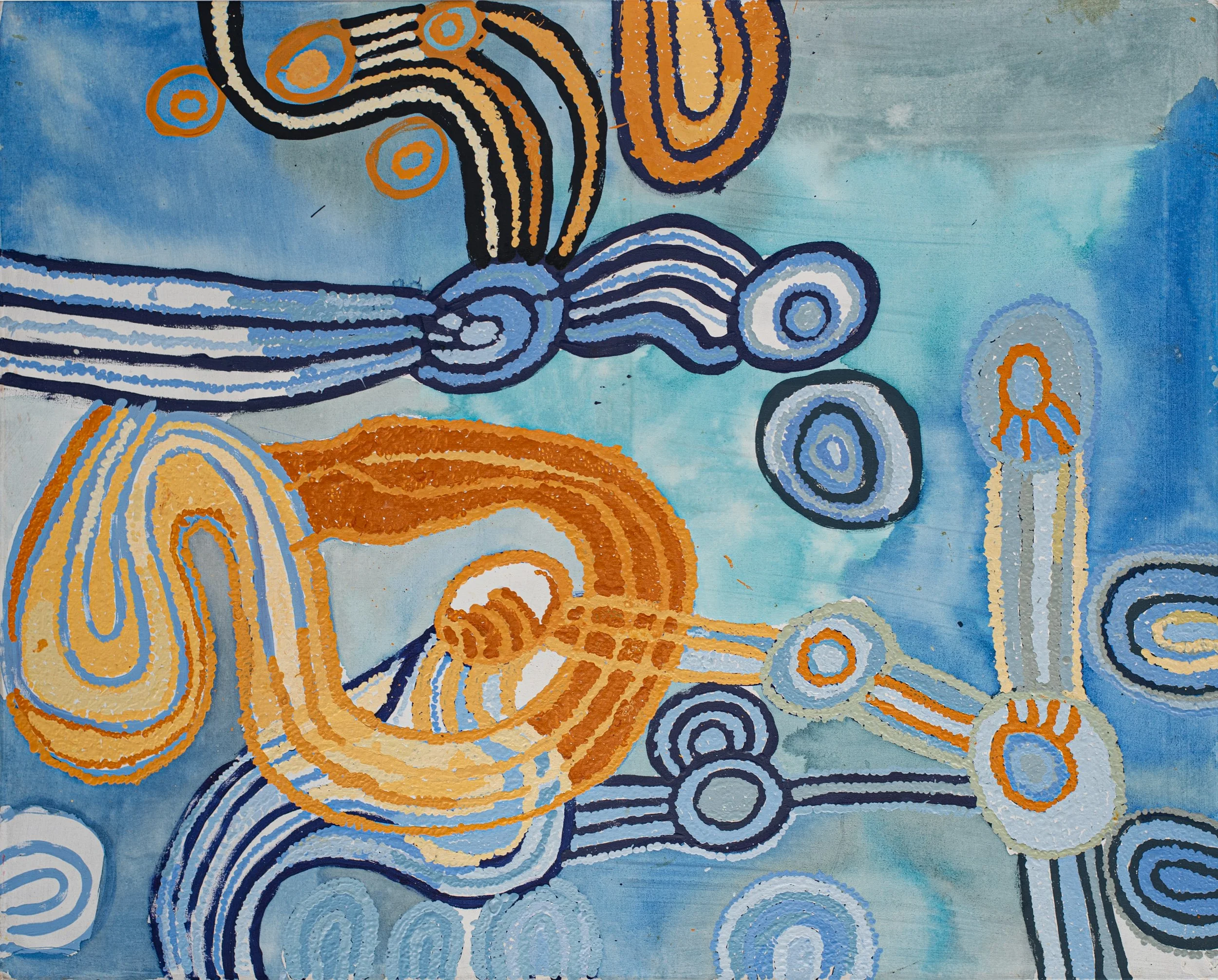
Artiste : Puna Yanima (1955)
Titre de l'œuvre : Antara
Format : 152 cm x 122 cm
Provenance et certificat : centre d'art aborigène de Mimili Maku
Référence de cette peinture aborigène : 889-24
Enquiry / Demander le prix de l'œuvre
Explications pour cette peinture d'art Aborigène :
Antara is an important women’s ceremonial site near Mimili community. Many of the senior women at Mimili Maku Arts represent Antara and its significant Maku Tjukurpa (Witchetty Grub Dreaming) in their paintings. Puna Yanima has utilised the immediacy and loose fluidity of ink to map the ngura (country) of this sacred place, marking its kapi tjukula (rock holes), apu and murpu (rocks and mountains).
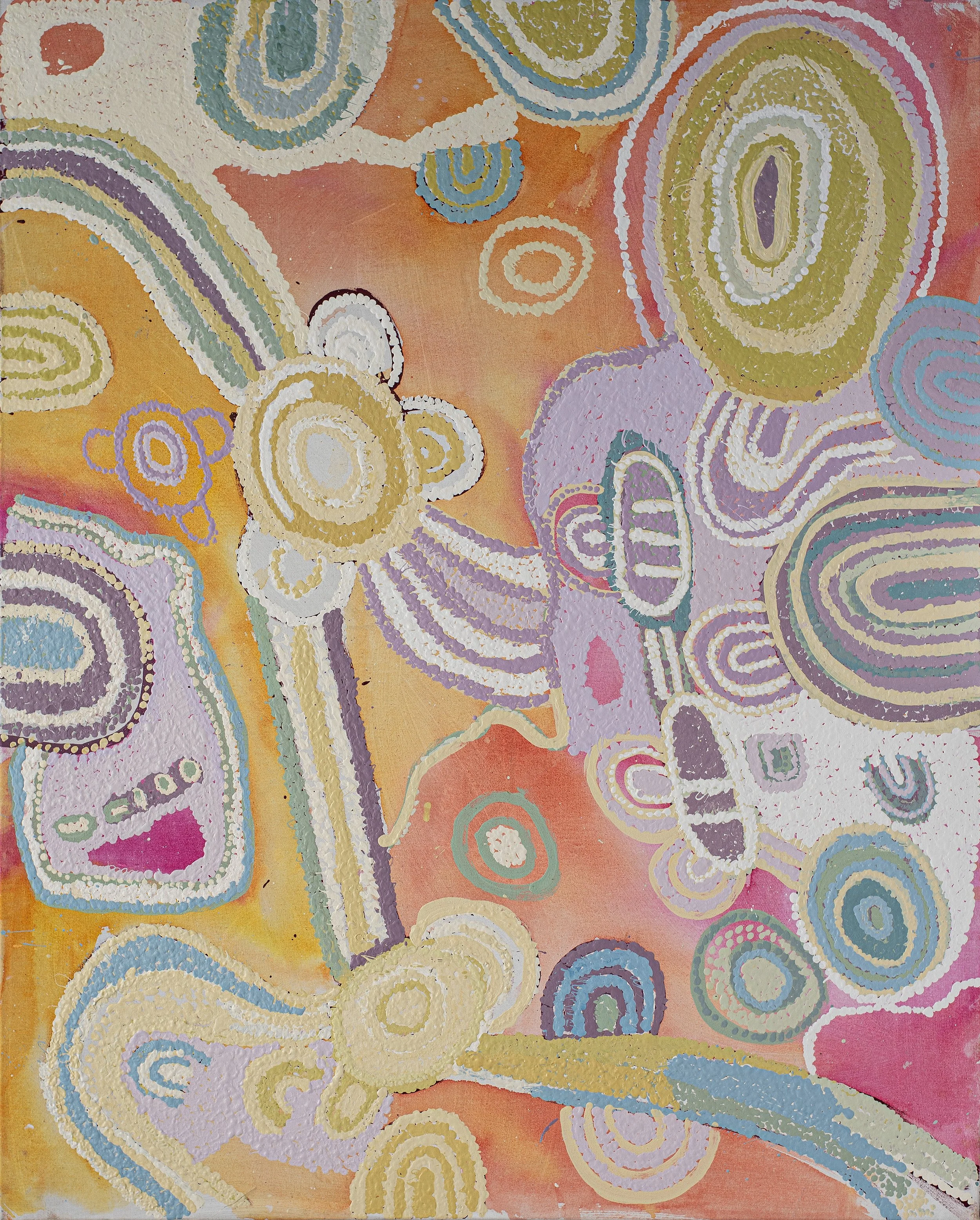
Artiste : Puna Yanima (1955)
Titre de l'œuvre : Antara
Format : 152 cm x 122 cm
Provenance et certificat : centre d'art aborigène de Mimili Maku
Référence de cette peinture aborigène : 33-26
Enquiry / Demander le prix de l'œuvre
Explications pour cette peinture d'art Aborigène :
Antara is an important women’s ceremonial site near Mimili community. Many of the senior women at Mimili Maku Arts represent Antara and its significant Maku Tjukurpa (Witchetty Grub Dreaming) in their paintings. Puna Yanima has utilised the immediacy and loose fluidity of ink to map the ngura (country) of this sacred place, marking its kapi tjukula (rock holes), apu and murpu (rocks and mountains).
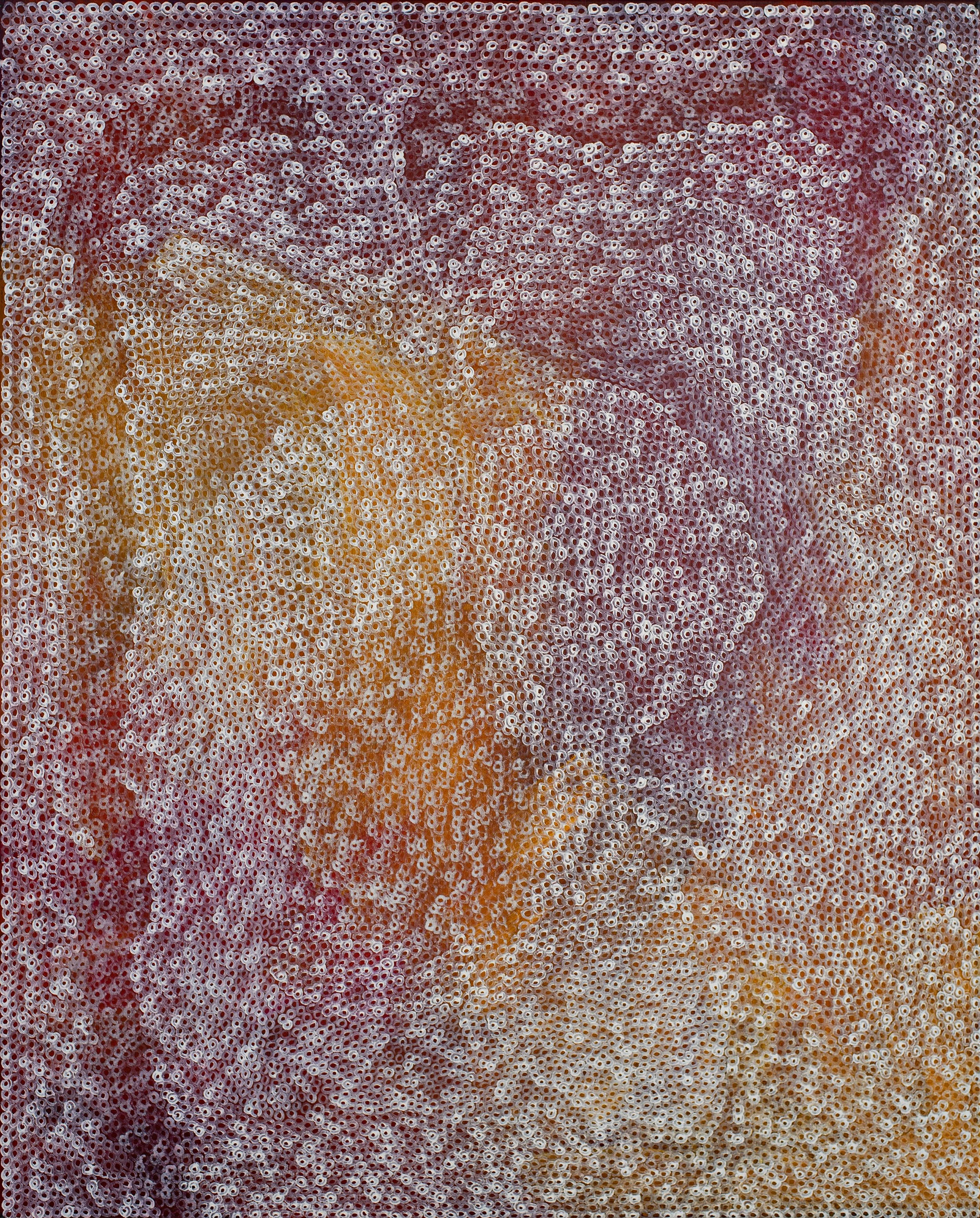
Artiste : Amy Yilpi (1967)
Titre de l'œuvre : Maku
Format : 152 cm x 122 cm
Provenance et certificat : centre d'art aborigène de Mimili Maku
Référence de cette peinture aborigène : 274-26
Enquiry / Demander le prix de cette œuvre
Explications pour cette peinture d'art Aborigène :
Amy paints the Maku (Witchetty Grub) Songline that shapes the land around Mimili. The Maku is an edible grub that lives in the roots of the Witchetty Bush. Particularly after big rains, it is a good time for Maku. Amy and the ladies from Mimili often go out bush to dig up Maku from the roots of the Witchetty Bush, and slowly roast it in the embers of the fire. It is a delicious bush food!
Mimili Community is home to 300 Pitjantjatjara and Yankunytjatjara people who have been living in the area for millennia in harmony with nature and acting as custodians of the land and the Tjukurpa (creation stories). Mimili was formerly known as Everard Park, which was a cattle station that was returned to Aboriginal ownership through the 1981 APY Lands Act. Mimili Community was incorporated as an Aboriginal Community in 1975.
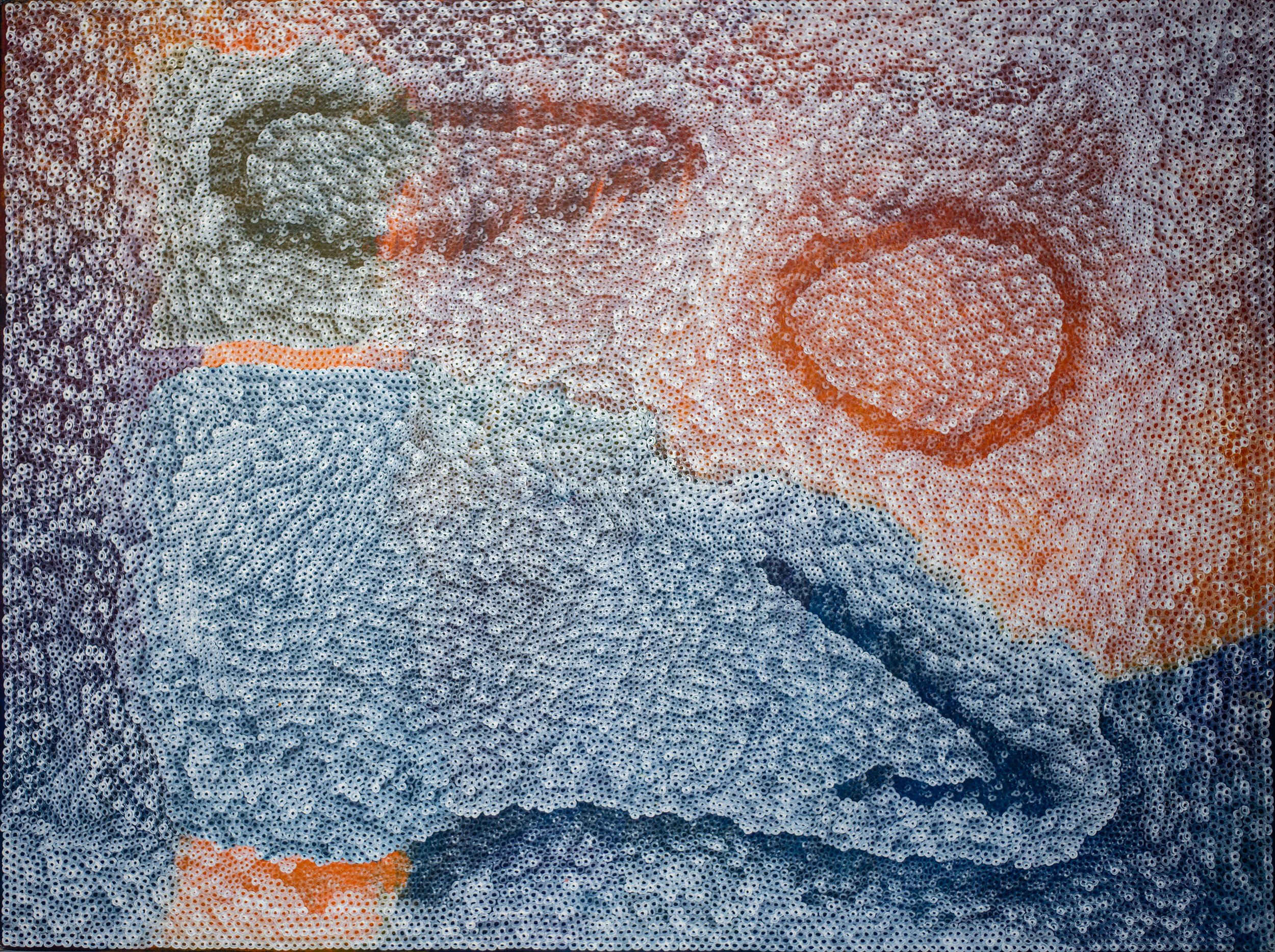
Artiste : Amy Yilpi (1967)
Titre de l'œuvre : Maku
Format : 198 x 152 cm
Provenance et certificat : centre d'art aborigène de Mimili Maku
Référence de cette peinture aborigène : 492-26
Enquiry / Demander le prix de cette œuvre
Explications pour cette peinture d'art Aborigène :
Amy paints the Maku (Witchetty Grub) Songline that shapes the land around Mimili. The Maku is an edible grub that lives in the roots of the Witchetty Bush. Particularly after big rains, it is a good time for Maku. Amy and the ladies from Mimili often go out bush to dig up Maku from the roots of the Witchetty Bush, and slowly roast it in the embers of the fire. It is a delicious bush food!
Mimili Community is home to 300 Pitjantjatjara and Yankunytjatjara people who have been living in the area for millennia in harmony with nature and acting as custodians of the land and the Tjukurpa (creation stories). Mimili was formerly known as Everard Park, which was a cattle station that was returned to Aboriginal ownership through the 1981 APY Lands Act. Mimili Community was incorporated as an Aboriginal Community in 1975.
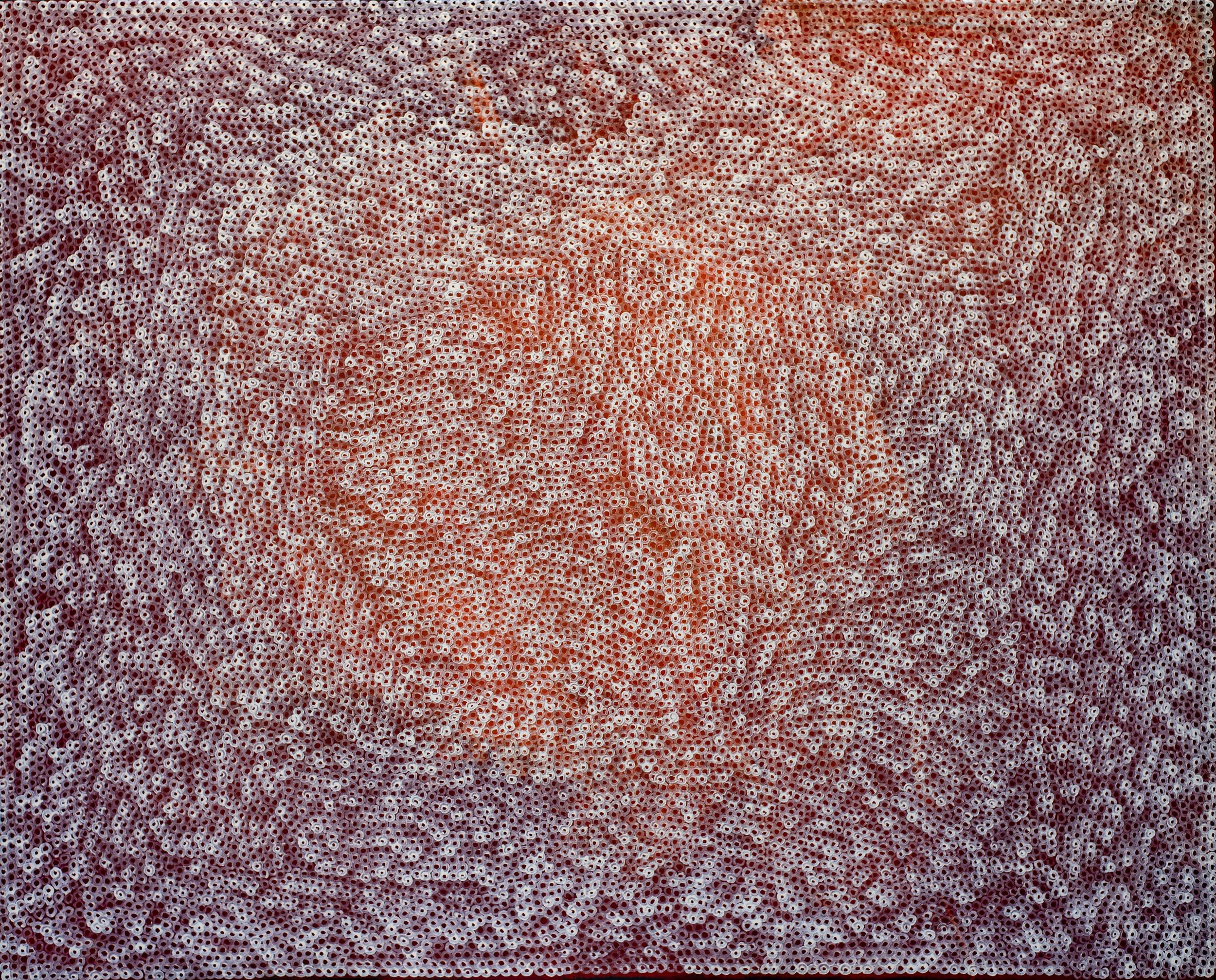
Artiste : Amy Yilpi (1967)
Titre de l'œuvre : Maku
Format : 152 cm x 122 cm
Provenance et certificat : centre d'art aborigène de Mimili Maku
Référence de cette peinture aborigène : 649-25
Enquiry / Demander le prix de cette œuvre
Explications pour cette peinture d'art Aborigène :
Amy paints the Maku (Witchetty Grub) Songline that shapes the land around Mimili. The Maku is an edible grub that lives in the roots of the Witchetty Bush. Particularly after big rains, it is a good time for Maku. Amy and the ladies from Mimili often go out bush to dig up Maku from the roots of the Witchetty Bush, and slowly roast it in the embers of the fire. It is a delicious bush food!
Mimili Community is home to 300 Pitjantjatjara and Yankunytjatjara people who have been living in the area for millennia in harmony with nature and acting as custodians of the land and the Tjukurpa (creation stories). Mimili was formerly known as Everard Park, which was a cattle station that was returned to Aboriginal ownership through the 1981 APY Lands Act. Mimili Community was incorporated as an Aboriginal Community in 1975.
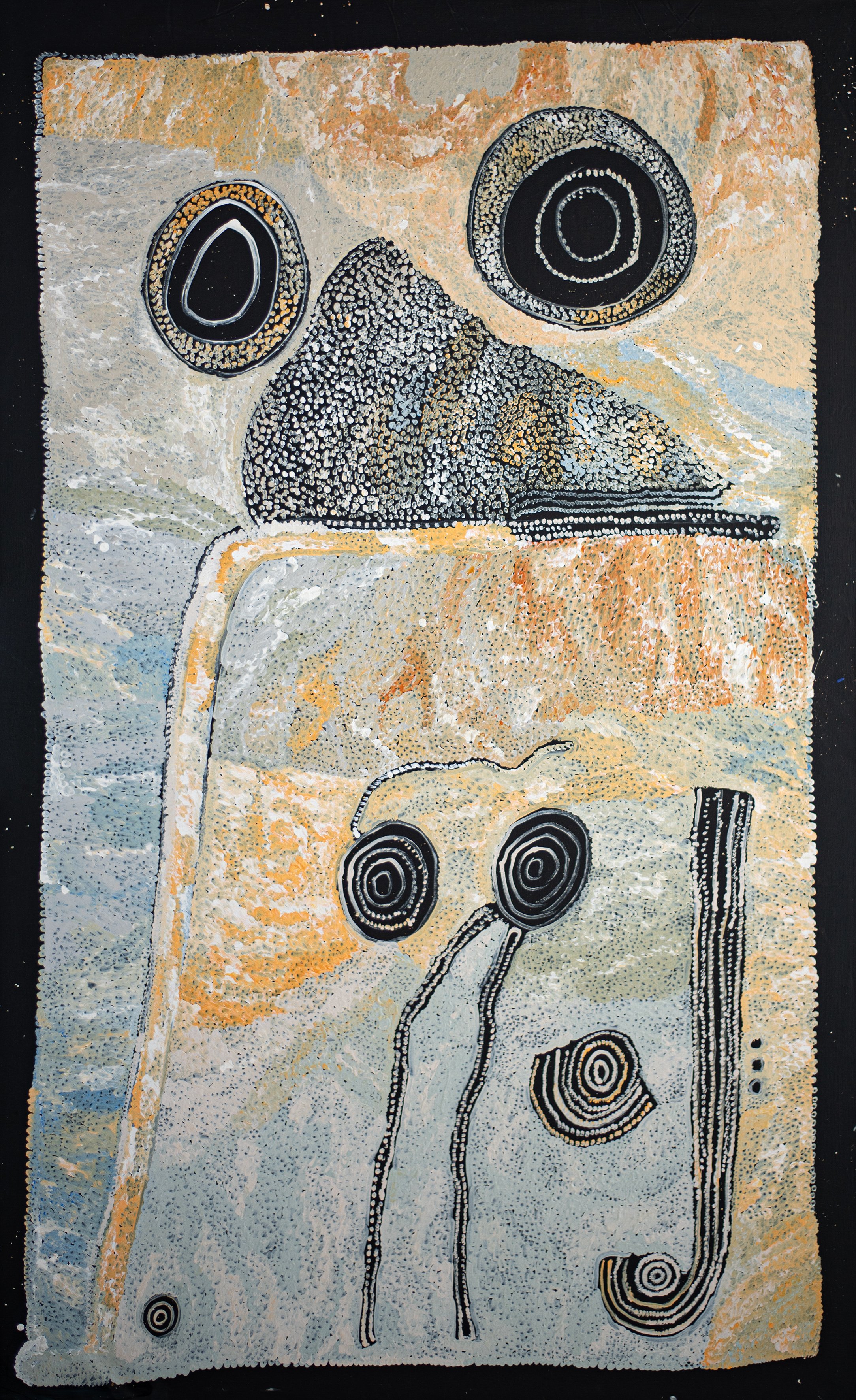
Artiste : Betty Campbell (1961)
Titre de l'œuvre : Minymaku Inma (Women's Song)
Format : 198cm x 122 cm
Provenance et certificat : centre d'art aborigène de Mimili Maku
Référence de cette peinture aborigène : 32-25
Demander le prix de cette œuvre
Explications pour cette peinture d'art Aborigène :
Bey is a senior cultural leader in Mimili Community. She knows a lot of storylines and the corresponding inma (song & dance). A lot of the inma is to be known by initiated women only, others can be celebrated by all. Betty loves to dance and teach the kids these stories that hold important lessons about the land and our relationship to it. She says about her work:
Inma inkapai ngayulu. Ngayuku tjukurpa nyanga palunya kutju ngaranyi. Nyanga palunya kutju ngayuku tjukurpa ngaranyi. Ngayulu inma rawangku inkapai munu ngayuku tjukurtjara ngayulu palyalpai canvas nyaratja. Rawangku. Uwa palyo.
I sing ceremony. That’s the message that I would really like to impart. I’d like to leave it at that. I practice ceremony, consistently, and I record the tjukurpa related to me on canvas. This is a consistent practice. Yes, that’s it.
Mimili Community is home to 300 Pitjantjatjara and Yankunytjatjara people who have been living in the area for millennia in harmony with nature and acting as custodians of the land and the Tjukurpa (creation stories). Mimili was formerly known as Everard Park, which was a cattle station that was returned to Aboriginal ownership through the 1981 APY Lands Act. Mimili Community was incorporated as an Aboriginal Community in 1975.
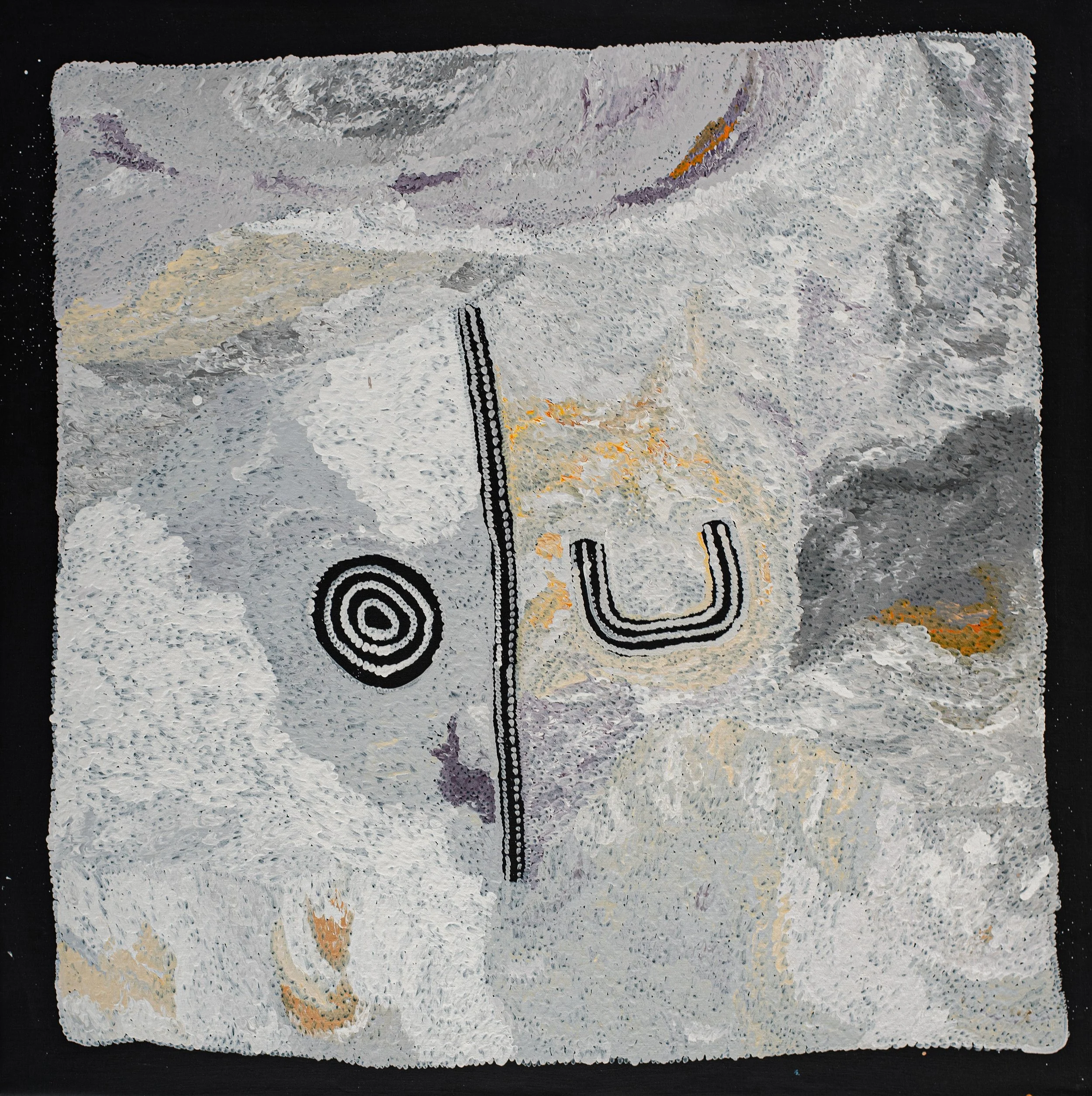
Artiste : Betty Campbell (1961)
Titre de l'œuvre : Minymaku Inma (Women's Song)
Format : 101cm x 101 cm
Provenance et certificat : centre d'art aborigène de Mimili Maku
Référence de cette peinture aborigène : 251-26
Demander le prix de cette œuvre
Explications pour cette peinture d'art Aborigène :
Bey is a senior cultural leader in Mimili Community. She knows a lot of storylines and the corresponding inma (song & dance). A lot of the inma is to be known by initiated women only, others can be celebrated by all. Betty loves to dance and teach the kids these stories that hold important lessons about the land and our relationship to it. She says about her work:
Inma inkapai ngayulu. Ngayuku tjukurpa nyanga palunya kutju ngaranyi. Nyanga palunya kutju ngayuku tjukurpa ngaranyi. Ngayulu inma rawangku inkapai munu ngayuku tjukurtjara ngayulu palyalpai canvas nyaratja. Rawangku. Uwa palyo.
I sing ceremony. That’s the message that I would really like to impart. I’d like to leave it at that. I practice ceremony, consistently, and I record the tjukurpa related to me on canvas. This is a consistent practice. Yes, that’s it.
Mimili Community is home to 300 Pitjantjatjara and Yankunytjatjara people who have been living in the area for millennia in harmony with nature and acting as custodians of the land and the Tjukurpa (creation stories). Mimili was formerly known as Everard Park, which was a cattle station that was returned to Aboriginal ownership through the 1981 APY Lands Act. Mimili Community was incorporated as an Aboriginal Community in 1975.
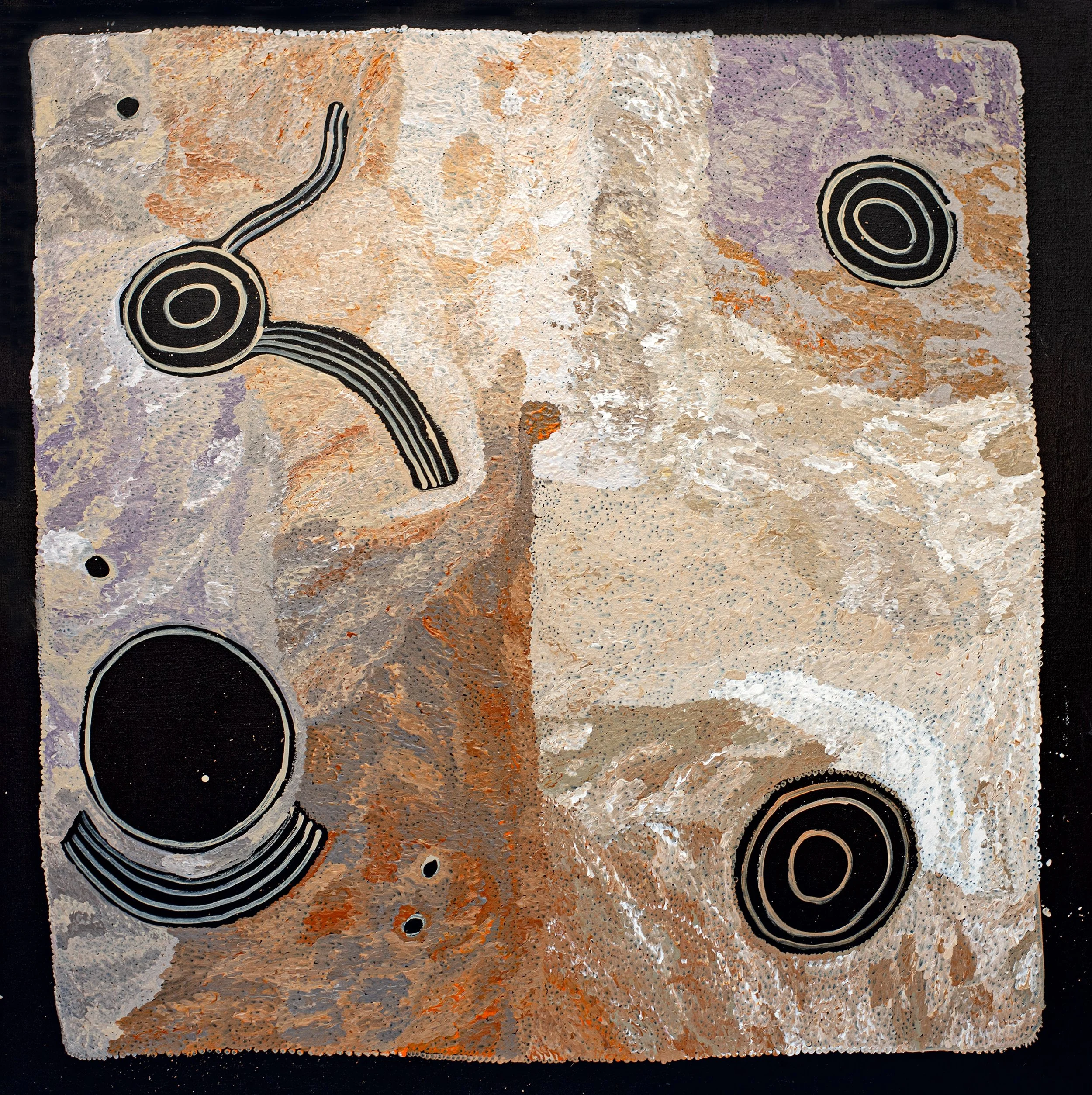
Artiste : Betty Campbell (1961)
Titre de l'œuvre : Minymaku Inma (Women's Song)
Format : 150cm x 150 cm
Provenance et certificat : centre d'art aborigène de Mimili Maku
Référence de cette peinture aborigène : 302-25
Demander le prix de cette œuvre
Explications pour cette peinture d'art Aborigène :
Bey is a senior cultural leader in Mimili Community. She knows a lot of storylines and the corresponding inma (song & dance). A lot of the inma is to be known by initiated women only, others can be celebrated by all. Betty loves to dance and teach the kids these stories that hold important lessons about the land and our relationship to it. She says about her work:
Inma inkapai ngayulu. Ngayuku tjukurpa nyanga palunya kutju ngaranyi. Nyanga palunya kutju ngayuku tjukurpa ngaranyi. Ngayulu inma rawangku inkapai munu ngayuku tjukurtjara ngayulu palyalpai canvas nyaratja. Rawangku. Uwa palyo.
I sing ceremony. That’s the message that I would really like to impart. I’d like to leave it at that. I practice ceremony, consistently, and I record the tjukurpa related to me on canvas. This is a consistent practice. Yes, that’s it.
Mimili Community is home to 300 Pitjantjatjara and Yankunytjatjara people who have been living in the area for millennia in harmony with nature and acting as custodians of the land and the Tjukurpa (creation stories). Mimili was formerly known as Everard Park, which was a cattle station that was returned to Aboriginal ownership through the 1981 APY Lands Act. Mimili Community was incorporated as an Aboriginal Community in 1975.
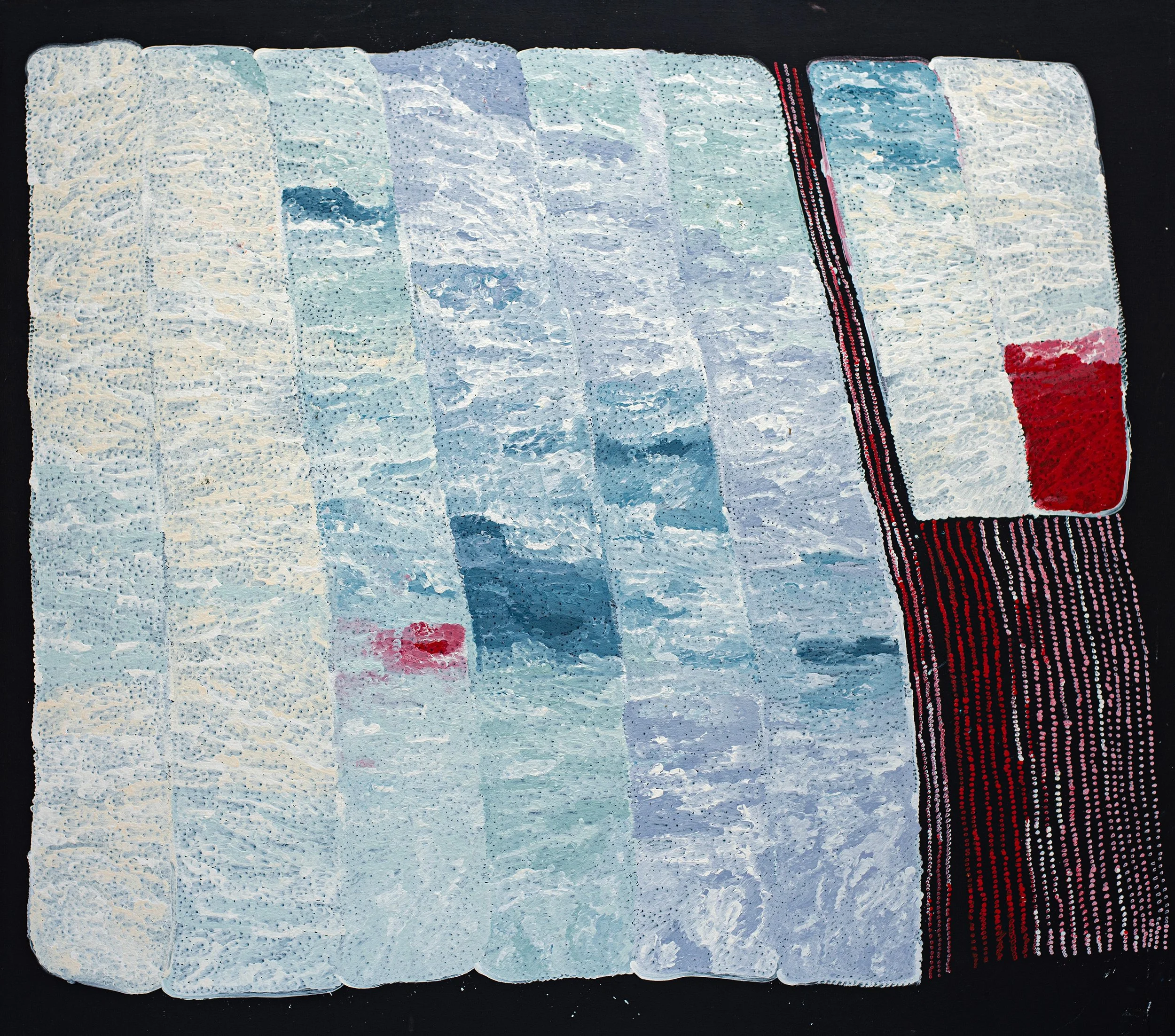
Artiste : Betty Campbell (1961)
Titre de l'œuvre : Minymaku Inma (Women's Song)
Format : 198cm x 189 cm
Provenance et certificat : centre d'art aborigène de Mimili Maku
Référence de cette peinture aborigène : 661-23
Demander le prix de cette œuvre
Explications pour cette peinture d'art Aborigène :
Bey is a senior cultural leader in Mimili Community. She knows a lot of storylines and the corresponding inma (song & dance). A lot of the inma is to be known by initiated women only, others can be celebrated by all. Betty loves to dance and teach the kids these stories that hold important lessons about the land and our relationship to it. She says about her work:
Inma inkapai ngayulu. Ngayuku tjukurpa nyanga palunya kutju ngaranyi. Nyanga palunya kutju ngayuku tjukurpa ngaranyi. Ngayulu inma rawangku inkapai munu ngayuku tjukurtjara ngayulu palyalpai canvas nyaratja. Rawangku. Uwa palyo.
I sing ceremony. That’s the message that I would really like to impart. I’d like to leave it at that. I practice ceremony, consistently, and I record the tjukurpa related to me on canvas. This is a consistent practice. Yes, that’s it.
Mimili Community is home to 300 Pitjantjatjara and Yankunytjatjara people who have been living in the area for millennia in harmony with nature and acting as custodians of the land and the Tjukurpa (creation stories). Mimili was formerly known as Everard Park, which was a cattle station that was returned to Aboriginal ownership through the 1981 APY Lands Act. Mimili Community was incorporated as an Aboriginal Community in 1975.
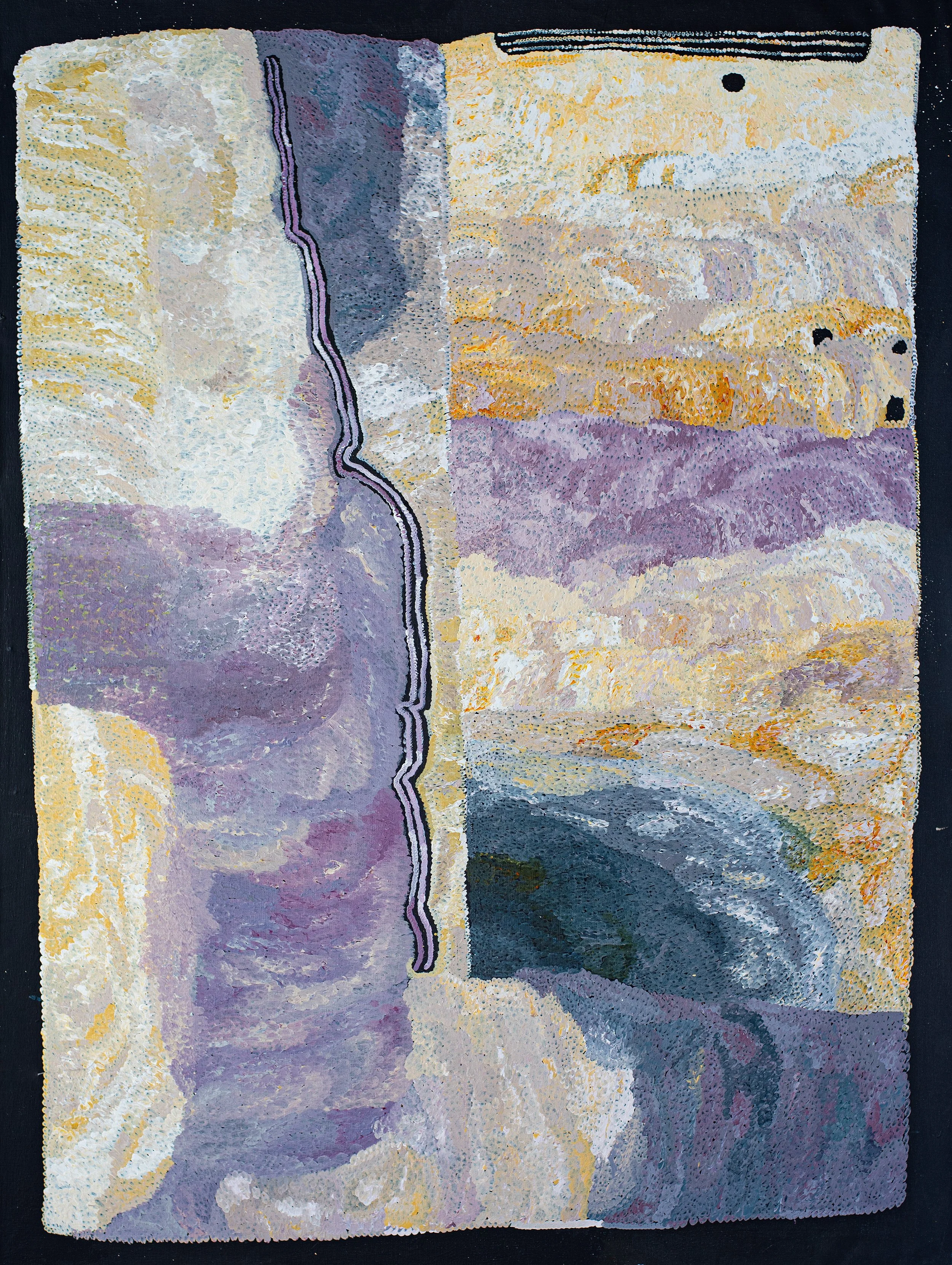
Artiste : Betty Campbell (1961)
Titre de l'œuvre : Minymaku Inma (Women's Song)
Format : 198cm x 152 cm
Provenance et certificat : centre d'art aborigène de Mimili Maku
Référence de cette peinture aborigène : 683-25
Demander le prix de cette œuvre
Explications pour cette peinture d'art Aborigène :
Bey is a senior cultural leader in Mimili Community. She knows a lot of storylines and the corresponding inma (song & dance). A lot of the inma is to be known by initiated women only, others can be celebrated by all. Betty loves to dance and teach the kids these stories that hold important lessons about the land and our relationship to it. She says about her work:
Inma inkapai ngayulu. Ngayuku tjukurpa nyanga palunya kutju ngaranyi. Nyanga palunya kutju ngayuku tjukurpa ngaranyi. Ngayulu inma rawangku inkapai munu ngayuku tjukurtjara ngayulu palyalpai canvas nyaratja. Rawangku. Uwa palyo.
I sing ceremony. That’s the message that I would really like to impart. I’d like to leave it at that. I practice ceremony, consistently, and I record the tjukurpa related to me on canvas. This is a consistent practice. Yes, that’s it.
Mimili Community is home to 300 Pitjantjatjara and Yankunytjatjara people who have been living in the area for millennia in harmony with nature and acting as custodians of the land and the Tjukurpa (creation stories). Mimili was formerly known as Everard Park, which was a cattle station that was returned to Aboriginal ownership through the 1981 APY Lands Act. Mimili Community was incorporated as an Aboriginal Community in 1975.
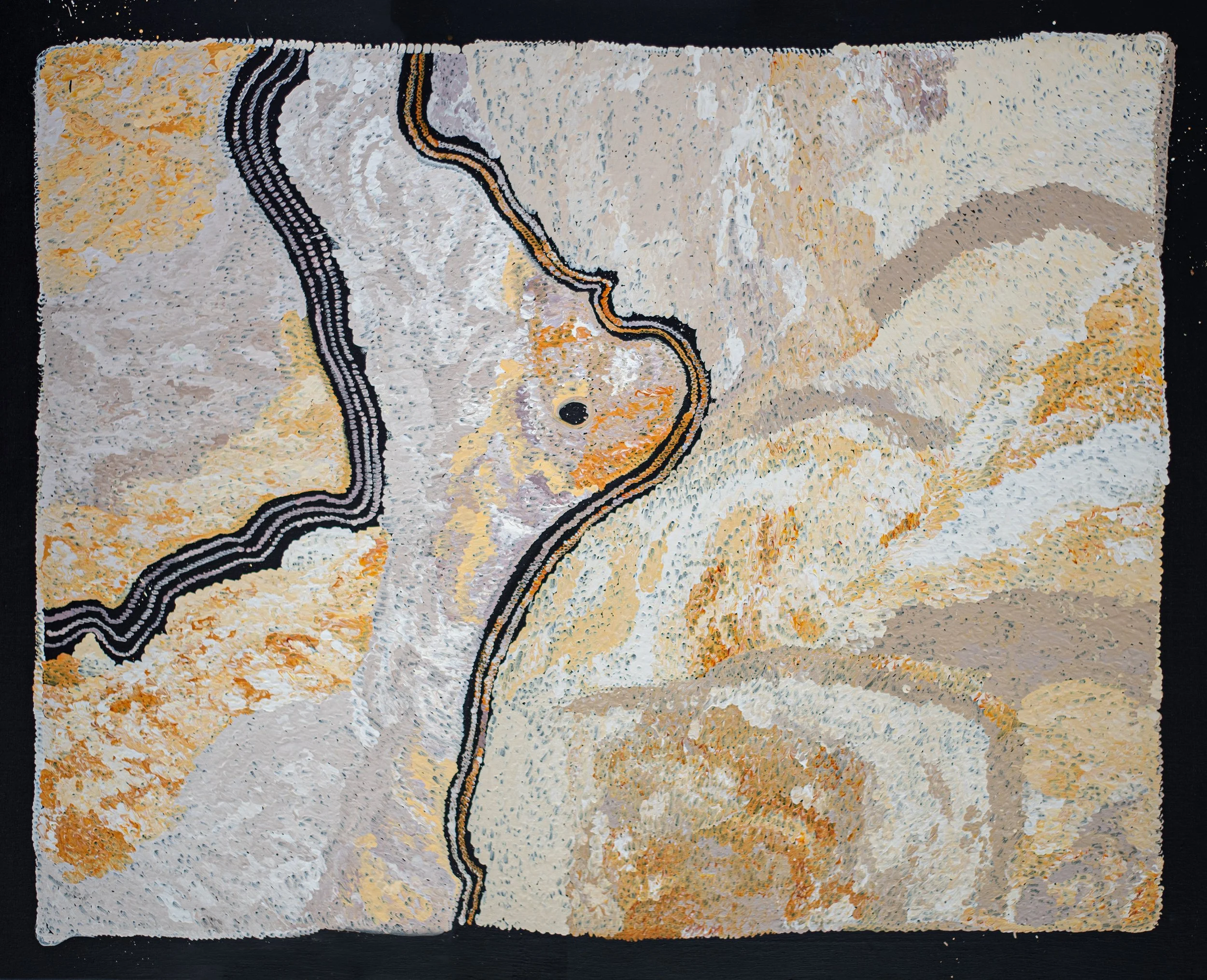
Artiste : Betty Campbell (1961)
Titre de l'œuvre : Minymaku Inma (Women's Song)
Format : 152cm x 122 cm
Provenance et certificat : centre d'art aborigène de Mimili Maku
Référence de cette peinture aborigène : 729-25
Demander le prix de cette œuvre
Explications pour cette peinture d'art Aborigène :
Bey is a senior cultural leader in Mimili Community. She knows a lot of storylines and the corresponding inma (song & dance). A lot of the inma is to be known by initiated women only, others can be celebrated by all. Betty loves to dance and teach the kids these stories that hold important lessons about the land and our relationship to it. She says about her work:
Inma inkapai ngayulu. Ngayuku tjukurpa nyanga palunya kutju ngaranyi. Nyanga palunya kutju ngayuku tjukurpa ngaranyi. Ngayulu inma rawangku inkapai munu ngayuku tjukurtjara ngayulu palyalpai canvas nyaratja. Rawangku. Uwa palyo.
I sing ceremony. That’s the message that I would really like to impart. I’d like to leave it at that. I practice ceremony, consistently, and I record the tjukurpa related to me on canvas. This is a consistent practice. Yes, that’s it.
Mimili Community is home to 300 Pitjantjatjara and Yankunytjatjara people who have been living in the area for millennia in harmony with nature and acting as custodians of the land and the Tjukurpa (creation stories). Mimili was formerly known as Everard Park, which was a cattle station that was returned to Aboriginal ownership through the 1981 APY Lands Act. Mimili Community was incorporated as an Aboriginal Community in 1975.
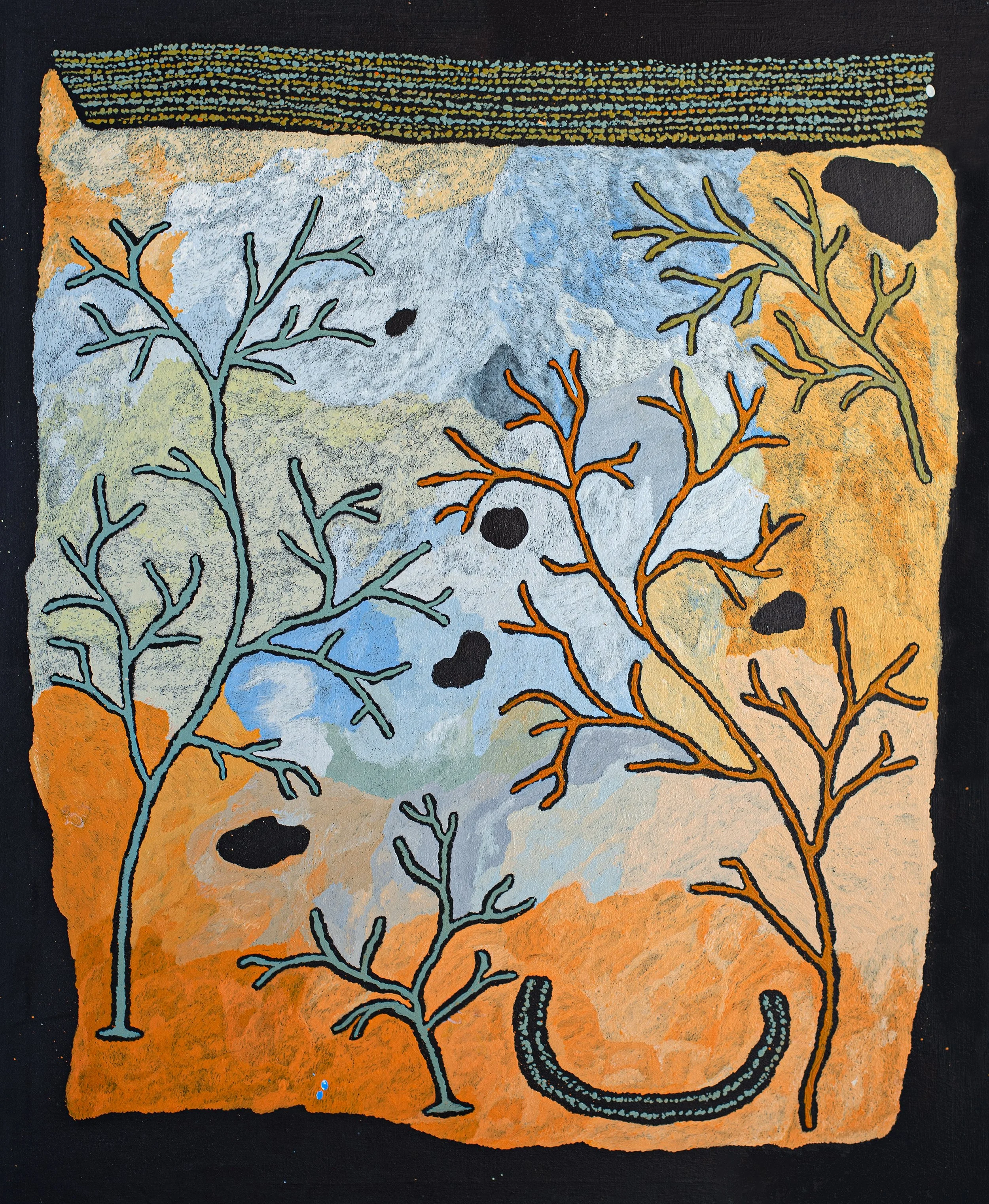
Artiste : Betty Mula (1973)
Titre de l'œuvre : Punu tjuta (many trees)
Format : 152 cm x 122 cm
Provenance et certificat : centre d'art aborigène de Mimili Maku
Référence de cette peinture aborigène : 11-26
Enquiry / Demander le prix de cette œuvre
Explications pour cette peinture d'art Aborigène :
This painting is about the many different trees I have grown up with. Each tree, bush and flower has its own story. In recent years we've had big rains and many trees that we hadn't seen in many years were flowering again for the first time.
With it came many birds we haven't heard here in many years. Whenever I travel away from country, I miss the trees and flowers the most. They show us the changes in seasons, show us where there are soakages, river beds, foods - we can read those signs from far away, it's like my country's own language that I'm sharing in my painting.
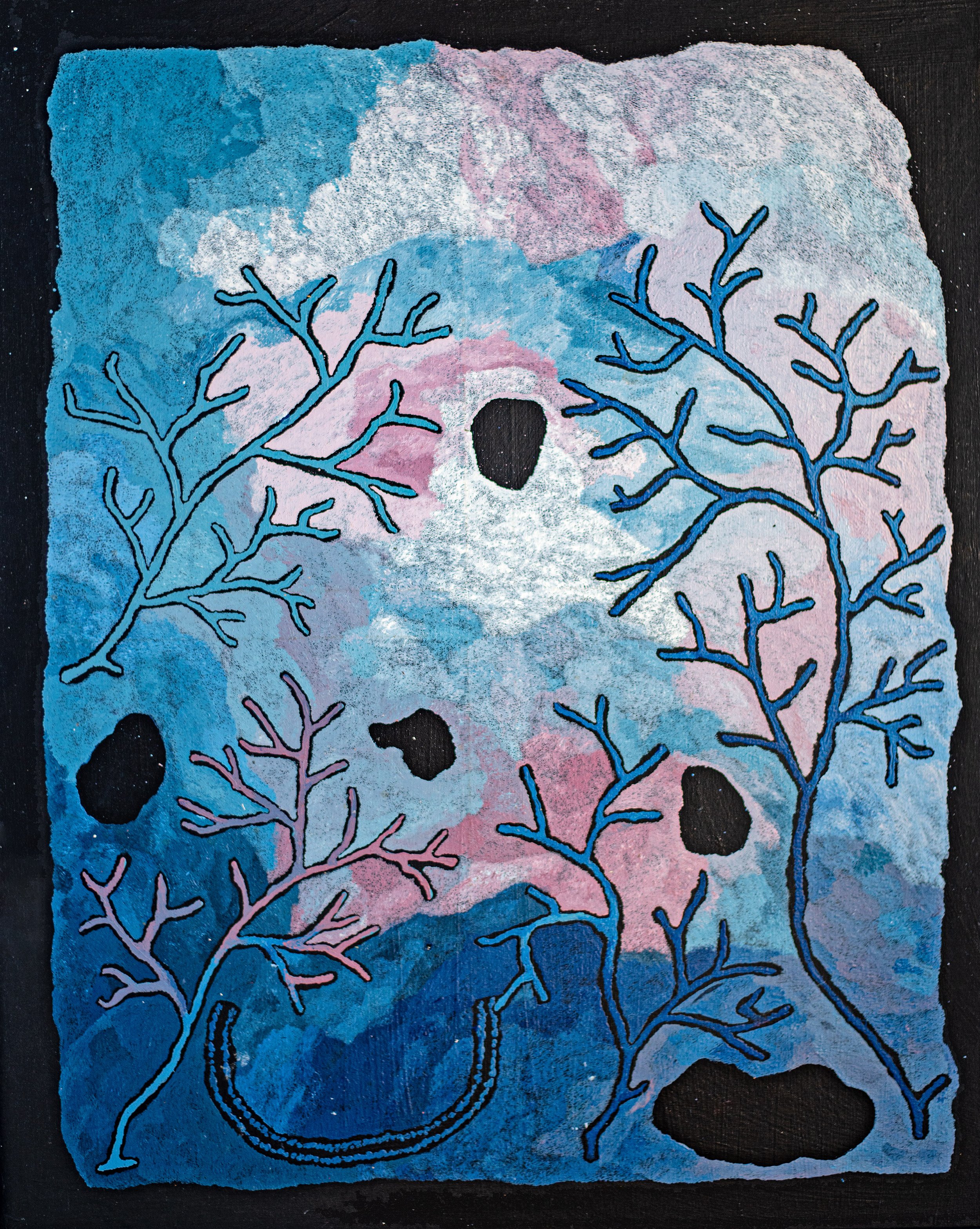
Artiste : Betty Mula (1973)
Titre de l'œuvre : Punu tjuta (many trees)
Format : 152 cm x 122 cm
Provenance et certificat : centre d'art aborigène de Mimili Maku
Référence de cette peinture aborigène : 38-26
Enquiry / Demander le prix de cette œuvre
Explications pour cette peinture d'art Aborigène :
This painting is about the many different trees I have grown up with. Each tree, bush and flower has its own story. In recent years we've had big rains and many trees that we hadn't seen in many years were flowering again for the first time.
With it came many birds we haven't heard here in many years. Whenever I travel away from country, I miss the trees and flowers the most. They show us the changes in seasons, show us where there are soakages, river beds, foods - we can read those signs from far away, it's like my country's own language that I'm sharing in my painting.
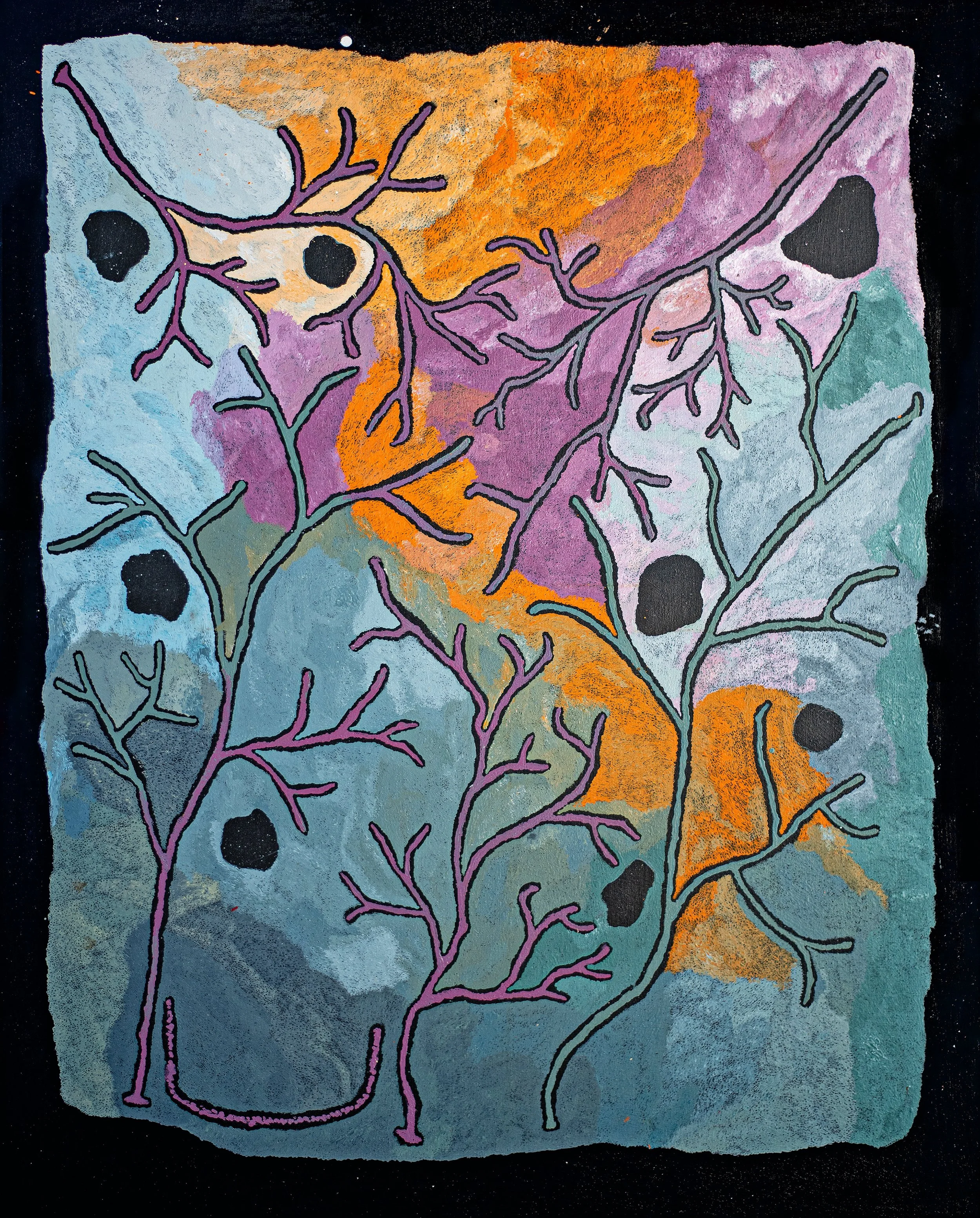
Artiste : Betty Mula (1973)
Titre de l'œuvre : Punu tjuta (many trees)
Format : 152 cm x 122 cm
Provenance et certificat : centre d'art aborigène de Mimili Maku
Référence de cette peinture aborigène : 90-26
Enquiry / Demander le prix de cette œuvre
Explications pour cette peinture d'art Aborigène :
This painting is about the many different trees I have grown up with. Each tree, bush and flower has its own story. In recent years we've had big rains and many trees that we hadn't seen in many years were flowering again for the first time.
With it came many birds we haven't heard here in many years. Whenever I travel away from country, I miss the trees and flowers the most. They show us the changes in seasons, show us where there are soakages, river beds, foods - we can read those signs from far away, it's like my country's own language that I'm sharing in my painting.
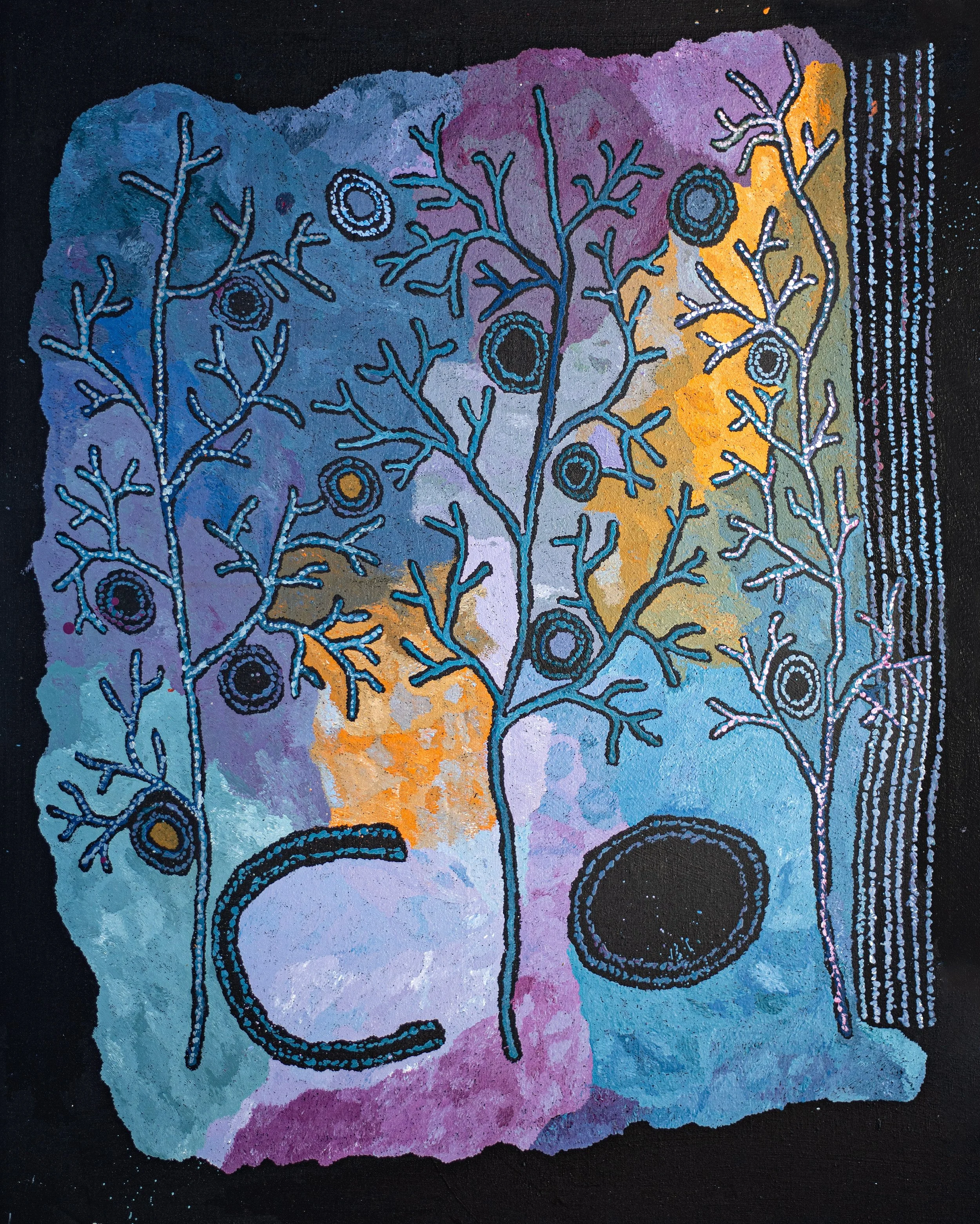
Artiste : Betty Mula (1973)
Titre de l'œuvre : Punu tjuta (many trees)
Format : 152 cm x 122 cm
Provenance et certificat : centre d'art aborigène de Mimili Maku
Référence de cette peinture aborigène : 188-25
Enquiry / Demander le prix de cette œuvre
Explications pour cette peinture d'art Aborigène :
This painting is about the many different trees I have grown up with. Each tree, bush and flower has its own story. In recent years we've had big rains and many trees that we hadn't seen in many years were flowering again for the first time.
With it came many birds we haven't heard here in many years. Whenever I travel away from country, I miss the trees and flowers the most. They show us the changes in seasons, show us where there are soakages, river beds, foods - we can read those signs from far away, it's like my country's own language that I'm sharing in my painting.
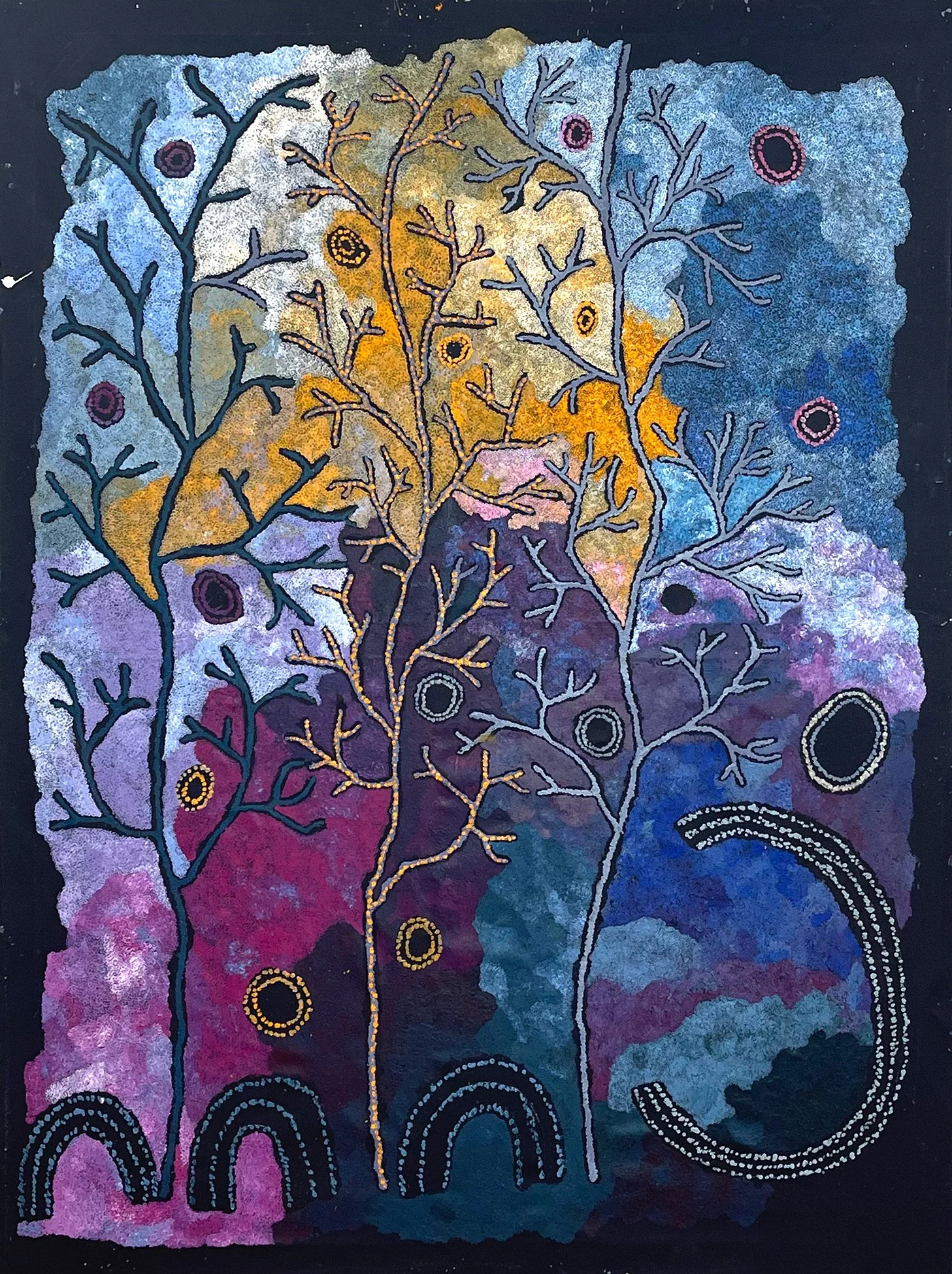
Artiste : Betty Mula (1973)
Titre de l'œuvre : Punu tjuta (many trees)
Format : 198 cm x 152 cm
Provenance et certificat : centre d'art aborigène de Mimili Maku
Référence de cette peinture aborigène : 103-24
Enquiry / Demander le prix de cette œuvre
Explications pour cette peinture d'art Aborigène :
This painting is about the many different trees I have grown up with. Each tree, bush and flower has its own story. In recent years we've had big rains and many trees that we hadn't seen in many years were flowering again for the first time.
With it came many birds we haven't heard here in many years. Whenever I travel away from country, I miss the trees and flowers the most. They show us the changes in seasons, show us where there are soakages, river beds, foods - we can read those signs from far away, it's like my country's own language that I'm sharing in my painting.
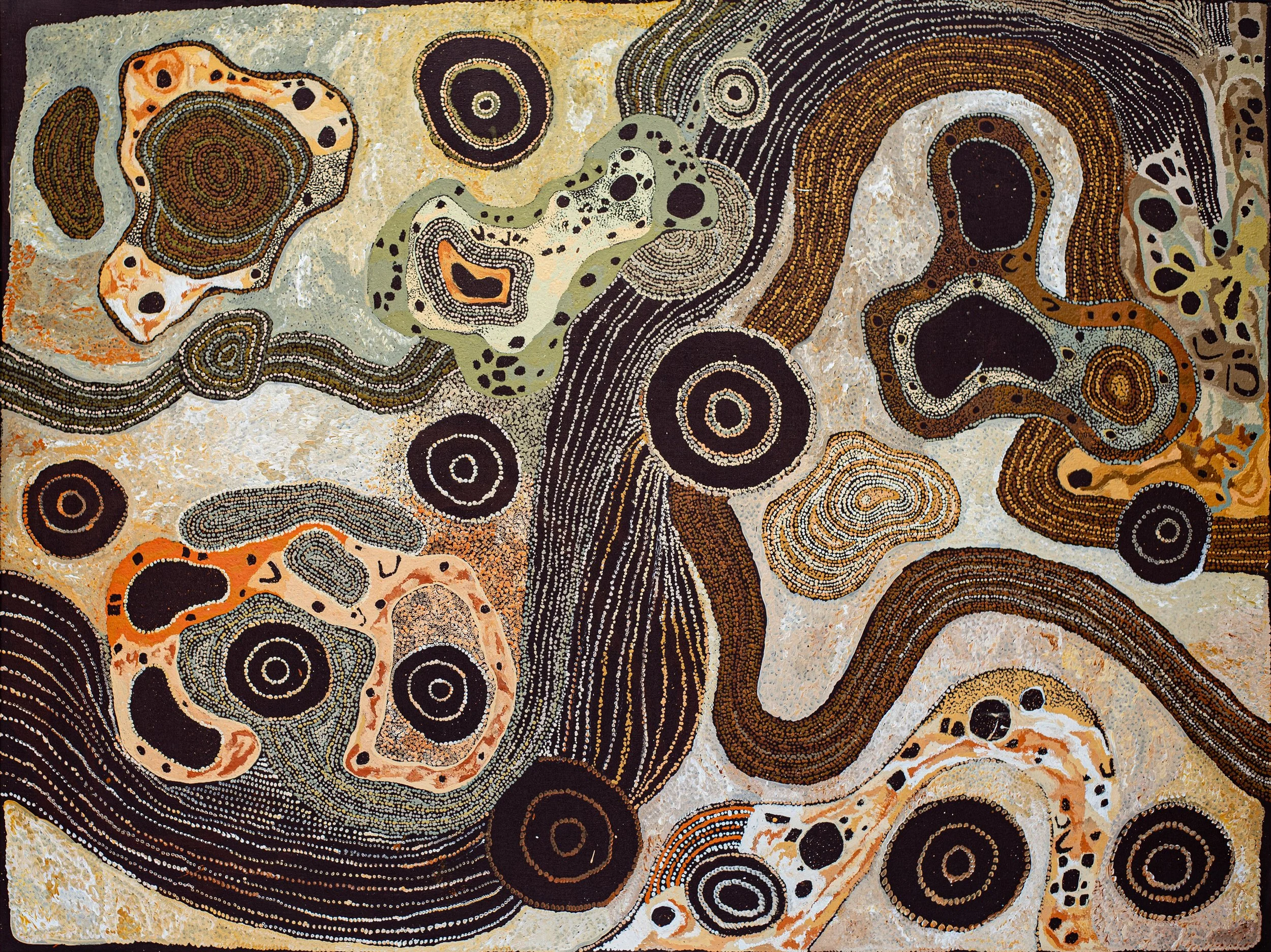
Artistes : Emma Singer, her mother Pauline Wangin and Pauline's sister Betty Campbell
Titre de l'œuvre : Walytja - Family Collaboration
Format : 198cm x 152cm
Provenance et certificat : centre d'art aborigène de Mimili Maku
Référence de cette peinture aborigène : 766-24
Demander le prix de cette œuvre
Explications pour cette peinture d'art Aborigène :
This is a collaborative canvas between Emma Singer, her mother Pauline Wangin and Pauline's sister Betty Campbell. Pauline says about the work : "We’ve painted this big canvas together as a family.
This canvas is about kapi tjukula and soakages around Kinara Mimi, Mimili. Our families would move between rock holes, they’d know them all. They would always be looking for clear drinking water. They lived around Antara and many other named places between Kinara Mimi, Antara, Artutja, Paralpi and Iwantja. All those places are connected, and they used to walk far distances every day. We remember the paths by the songlines that still run through those places. They’d sing the songs, dig for water, and know where to travel. The water was underground, and they’d dig till it seeped upwards. They’d always know. I remember going to Iwantja Soakage with our mother and her showing us how it’s done. We remember this from when we were young, and we want to keep sharing this story for our children and grandchildren. It’s important to remember what we’ve always known."
Pauline Wangin, 2023
Mimili Community is home to 300 Pitjantjatjara and Yankunytjatjara people who have been living in the area for millennia in harmony with nature and acting as custodians of the land and the Tjukurpa (creation stories). Mimili was formerly known as Everard Park, which was a cattle station that was returned to Aboriginal ownership through the 1981 APY Lands Act. Mimili Community was incorporated as an Aboriginal Community in 1975.
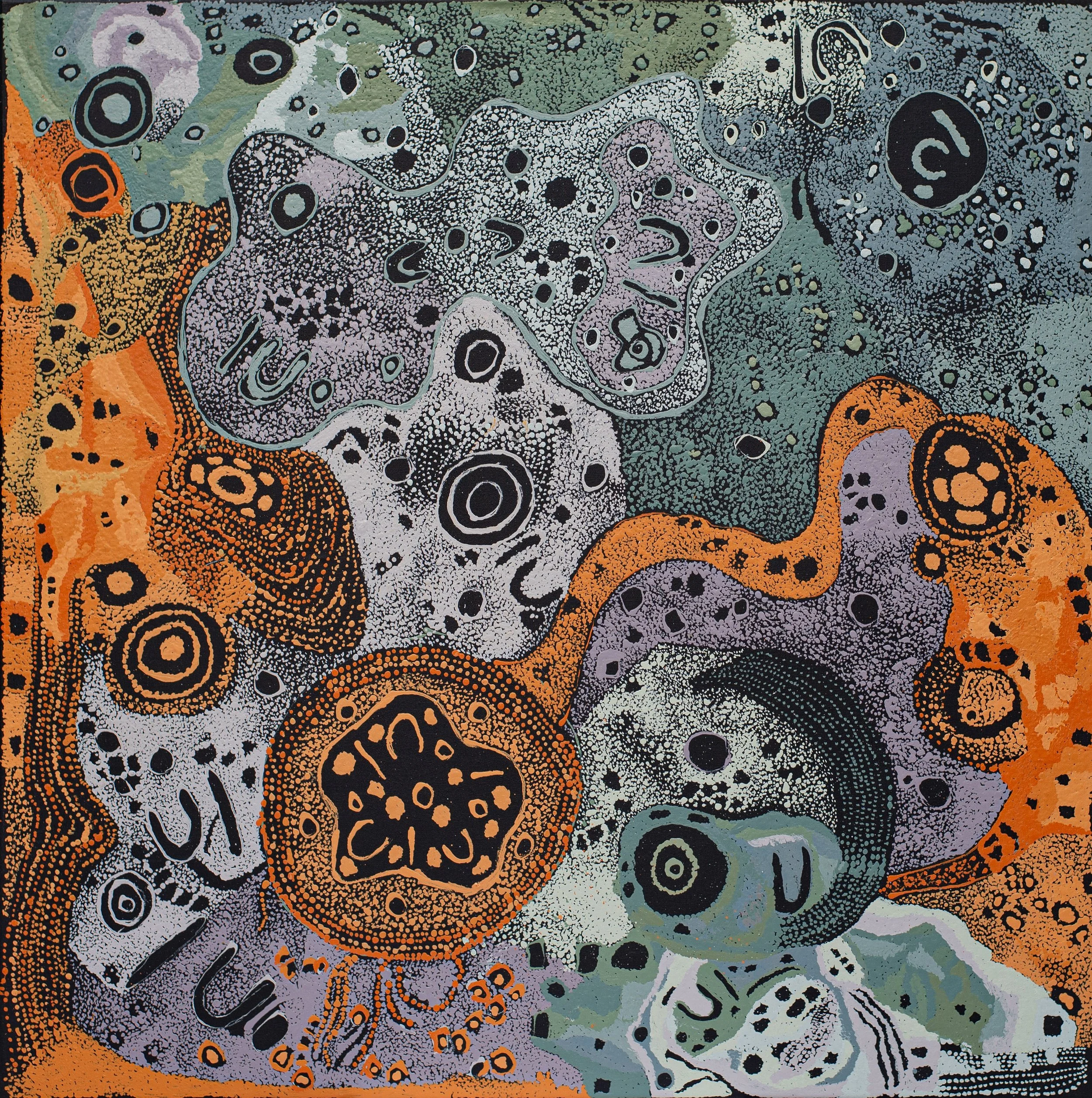
Artiste : Pauline Minmila Wangin (1970)
Titre de l'œuvre : Kapi Tjukula (Water Hole)
Format : 101cm x 101cm
Provenance et certificat : centre d'art aborigène de Mimili Maku
Référence de cette peinture aborigène : 596-26
Explications pour cette peinture d'art Aborigène :
Pauline is painting tjukurpa (story) about the journey of water, explaining how to care for kapi tjukula (water holes), particularly in the area around paralpii (Victory Well). This tjukurpa was passed on to her by her mother.
“One time when I was a little girl, my mother and me went out driving to collect bush tucker. It was a very hot day, and our car broke down. We didn't have any water with us, and I was scared, but my mother led me away from the car to kapi tjukula really closeby. She taught me how to find it, and how to care for it. After emptying the kapi (water) with mara munu punu (hands and sticks) the empty tjukula is cleaned. We place punu tjuta (many sticks and branches) over the top of the tjukula and use puli pulka (big rock) to stop them blowing away. Now no animals can dirty the new water that will soon collect."
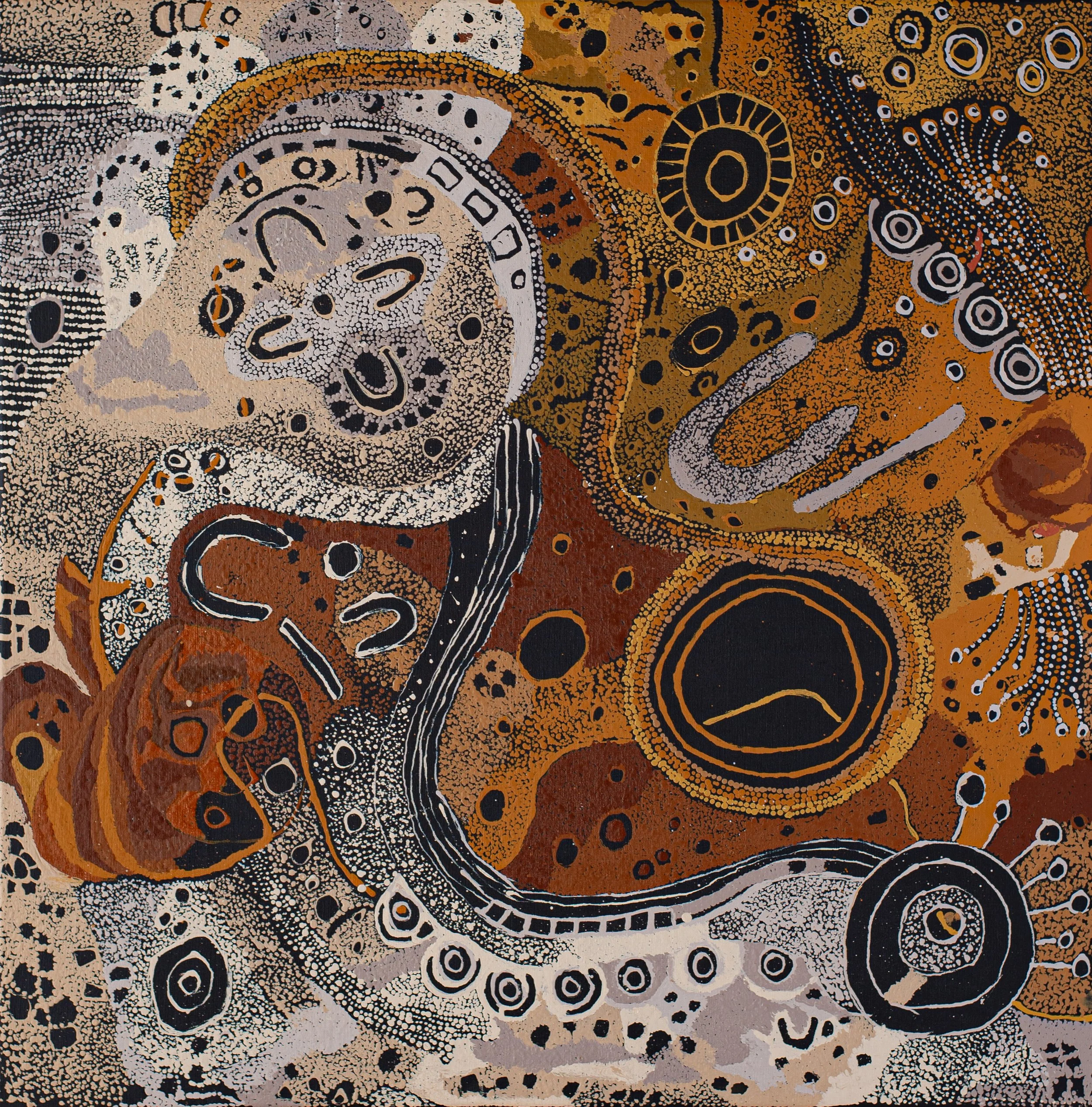
Artiste : Pauline Minmila Wangin (1970)
Titre de l'œuvre : Kapi Tjukula (Water Hole)
Format : 101cm x 101cm
Provenance et certificat : centre d'art aborigène de Mimili Maku
Référence de cette peinture aborigène : 618-26
Explications pour cette peinture d'art Aborigène :
Pauline is painting tjukurpa (story) about the journey of water, explaining how to care for kapi tjukula (water holes), particularly in the area around paralpii (Victory Well). This tjukurpa was passed on to her by her mother.
“One time when I was a little girl, my mother and me went out driving to collect bush tucker. It was a very hot day, and our car broke down. We didn't have any water with us, and I was scared, but my mother led me away from the car to kapi tjukula really closeby. She taught me how to find it, and how to care for it. After emptying the kapi (water) with mara munu punu (hands and sticks) the empty tjukula is cleaned. We place punu tjuta (many sticks and branches) over the top of the tjukula and use puli pulka (big rock) to stop them blowing away. Now no animals can dirty the new water that will soon collect."
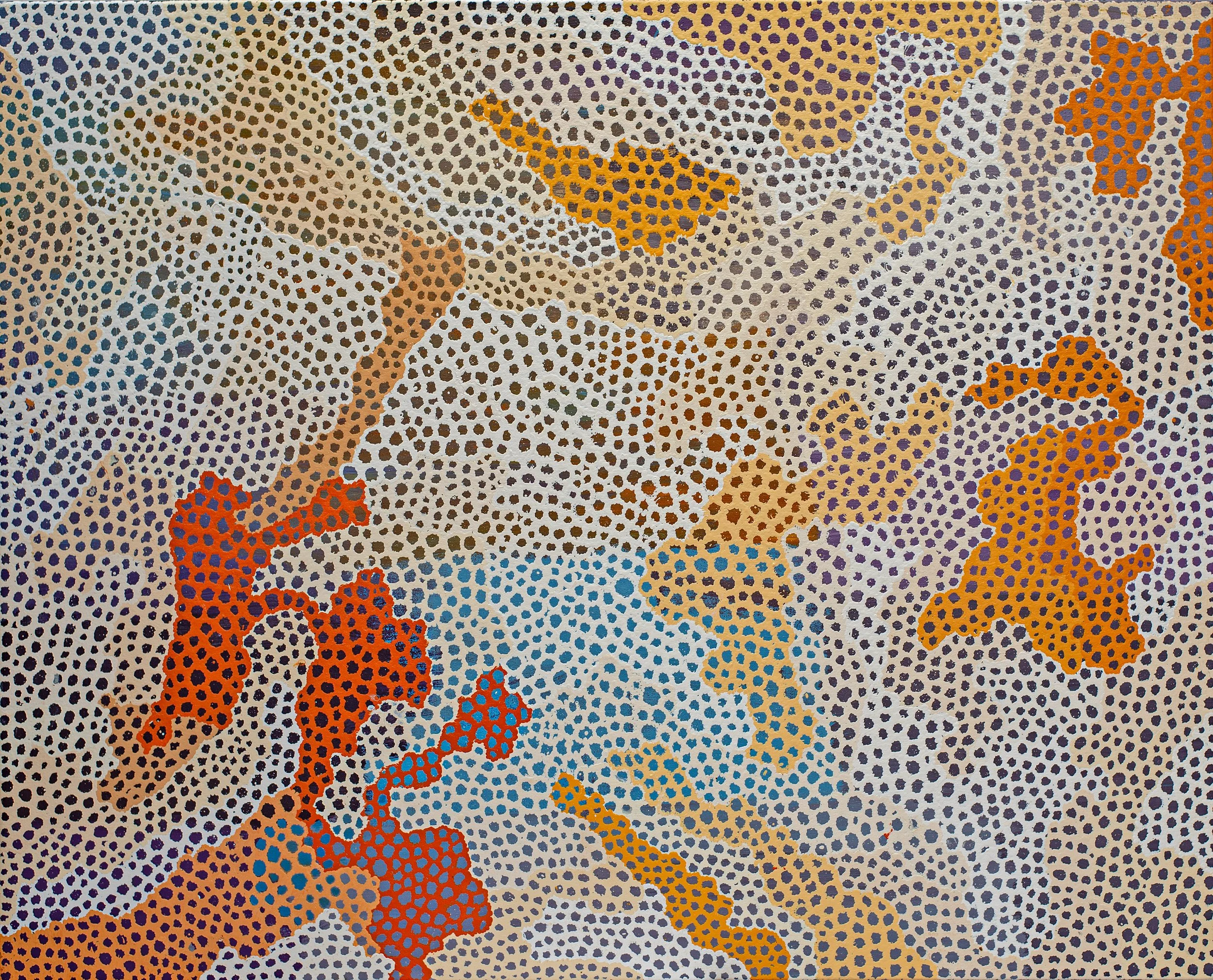
Artiste : Rhonda Young (1975)
Titre de l'œuvre : Salt Lakes
Format : 152 cm x 122 cm
Provenance et certificat : centre d'art aborigène de Mimili Maku
Référence de cette peinture aborigène : 421-26
Enquiry / Demander le prix de cette œuvre
Explications pour cette peinture d'art Aborigène :
Rhonda is one of the talented emerging painters at Mimili Maku Arts. Rhonda's mother is from Inmampa in the Northern Territory, and Rhonda is proud to paint her mother's country:
"There's many salt lakes around my mothers country. They change colours with the seasons: pink, white, blue, everything! Sometimes the lakes are big, somemes they are small, it always changes and there's storylines around all of this. Long long time ago they were all connected by rivers, and my ancestors walked between them, always following the riverbeds. I paint those journeys as remember my old people with every painting I make."
Rhonda lives and paints in Mimili Community. Mimili is home to 300 Pitjantjatjara and Yankunytjatjara people who have been living in the area for millennia in harmony with nature and acting as custodians of the land and the Tjukurpa (creaon stories). Mimili was formerly known as Everard Park, which was a cattle station that was returned to Aboriginal ownership through the 1981 APY Lands Act. Mimili Community was incorporated as an Aboriginal Community in 1975.
Artiste : Rhonda Young (1975)
Titre de l'œuvre : Salt Lakes
Format : 152 cm x 122 cm
Provenance et certificat : centre d'art aborigène de Mimili Maku
Référence de cette peinture aborigène : 120-26
Enquiry / Demander le prix de cette œuvre
Explications pour cette peinture d'art Aborigène :
Rhonda is one of the talented emerging painters at Mimili Maku Arts. Rhonda's mother is from Inmampa in the Northern Territory, and Rhonda is proud to paint her mother's country:
"There's many salt lakes around my mothers country. They change colours with the seasons: pink, white, blue, everything! Sometimes the lakes are big, somemes they are small, it always changes and there's storylines around all of this. Long long time ago they were all connected by rivers, and my ancestors walked between them, always following the riverbeds. I paint those journeys as remember my old people with every painting I make."
Rhonda lives and paints in Mimili Community. Mimili is home to 300 Pitjantjatjara and Yankunytjatjara people who have been living in the area for millennia in harmony with nature and acting as custodians of the land and the Tjukurpa (creaon stories). Mimili was formerly known as Everard Park, which was a cattle station that was returned to Aboriginal ownership through the 1981 APY Lands Act. Mimili Community was incorporated as an Aboriginal Community in 1975.
Artiste : Tuppy Ngintja Goodwin (1952)
Titre de l'œuvre : Antara sacred valley
Format : 152 cm x 122 cm
Provenance et certificat : centre d'art aborigène de Mimili Maku
Référence de cette peinture aborigène : 563-22
Explications pour cette peinture d'art Aborigène :
Tuppy (1952) is a senior Pitjantjatjara woman committed to fostering traditional law and culture, dance and painting. Tuppy’s father’s name was Nguyarangu (dec) and his country was near Docker River. Her mother’s name was Emily Nyanyanta and her country was Wintutjuru, west of Fregon on the APY Lands.
Tuppy Goodwin was born in the bush near Bumbali Creek and she moved to Mimili with her family when she was a baby. At the time Mimili was called Everard Park, it was a cattle station, which was eventually returned to the Yankunytjatjara people in the mid-‐1960s.
When I paint, it’s like inma (ceremonial dance and song).
This is Antara, a sacred place for Anangu, and the Maku (witchetty grub) Tjukurpa. There’s a special rock hole at Antara where women perform inma – ‘inmaku pakani’ – and afterwards there’s enough maku to feed everyone.
Antara and Maku Tjukurpa is really important for Mimili women, we paint this place and its stories, keeping them strong.
Her artwoks are in the public Australian collection at the South Australian Museum and several private collections.
Artiste : Rhonda Young (1975)
Titre de l'œuvre : Salt Lakes
Format : 152 cm x 122 cm
Provenance et certificat : centre d'art aborigène de Mimili Maku
Référence de cette peinture aborigène : 579-26
Enquiry / Demander le prix de cette œuvre
Explications pour cette peinture d'art Aborigène :
Rhonda is one of the talented emerging painters at Mimili Maku Arts. Rhonda's mother is from Inmampa in the Northern Territory, and Rhonda is proud to paint her mother's country:
"There's many salt lakes around my mothers country. They change colours with the seasons: pink, white, blue, everything! Sometimes the lakes are big, somemes they are small, it always changes and there's storylines around all of this. Long long time ago they were all connected by rivers, and my ancestors walked between them, always following the riverbeds. I paint those journeys as remember my old people with every painting I make."
Rhonda lives and paints in Mimili Community. Mimili is home to 300 Pitjantjatjara and Yankunytjatjara people who have been living in the area for millennia in harmony with nature and acting as custodians of the land and the Tjukurpa (creaon stories). Mimili was formerly known as Everard Park, which was a cattle station that was returned to Aboriginal ownership through the 1981 APY Lands Act. Mimili Community was incorporated as an Aboriginal Community in 1975.