One island one side. • Yati Ratuwati Yatuwati • Munupi and Jilamara working together • Art Aborigène des Iles TIWI
Du 9 Mai au 2 Juin 2018 au sein de la galerie Aboriginal Signature Estrangin à Bruxelles
Vernissage le mercredi 9 mai de 14h30 à 22h.
Ouverture du Jeudi au Samedi de 14h30 à 19h.
Et sur RDV les autres jours.
Nous sommes très honorés d'accueillir à Bruxelles pour la première fois, une magnifique exposition des artistes Aborigènes des Iles Tiwi. A base de pigments naturels apposés sur des toiles de lin, leurs peintures traditionnelles reflètent avec une saisissante intimité l'univers des ïles Tiwi et le sens graphique de leurs peintures corporelles.
Les anciens des communautés de Jilamara et Munupi, ont décidé de choisir comme titre particulier pour cette exposition : Yati Ratuwati Yatuwati. Ce qui signifie dans leur langue "Munupi et Jilamara travaillant main dans la main".
La notion de « design » revient régulièrement dans la cosmogonie des Iles Tiwi. Loin d’être un concept marketing et publicitaire occidental, éventuellement superfétatoire, destiné à accentuer l’attractivité d’un produit, le design est ici fondamental dans la culture Tiwi.
Un design érigé comme une empreinte corporelle
Le design est clef comme élément de différenciation chez les habitants des Iles Tiwi. Il s’affirme comme une « empreinte corporelle » apposée sur les corps depuis la nuit des temps, en particulier lors des cérémonies rituelles et des danses traditionnelles. Les lignes hachurées, sont savamment combinées et soulignent l’appartenance au clan. Dans un langage codifié et graphique, ce design résonnent des mythes ancestraux avec un sens de l’abstraction assez hors du commun.
Densité de la vie sociale dans les Iles Tiwi
A l’inverse du désert où une grande partie du temps était consacrée à la recherche de l’eau et de la nourriture, au sein des Iles une certaine opulence règne et permet de consacrer une partie beaucoup plus importante du temps à la vie sociale, culturelle et cultuelle. L’iconographie codifiée et abstraite des Iles Tiwi s’affirme comme un véhicule particulièrement parlant de la densité d’expression de ce peuple.
Cette exposition deux œuvres magistrales en pigments naturels des artistes mondialement connus comme Cornelia Tipuamantumirri (1929) de Munupi et Timothy Cook (1958) de Jilamara et une sélection rare de plus de 30 peintures des artistes emblématiques sénior et de la jeune garde née dans les années 80.
Les artistes Tiwi Jilamara et Munupi ont conçu avec nous cette exposition, pour souligner l'importance d'assurer la continuité de la culture Tiwi, en y impliquant les jeunes générations via l'expression artistique, terreau essentiel pour perpétuer la mémoire de leur peuple et défendre leur identité.
Peintures de MUNUPI proposées dans le cadre de l'exposition :

Artiste : Cornelia Tipuamantumirri
Titre de l'œuvre : Jilamara dances
Pigments naturels sur toile de lin Belge
Format : 90 x 60 cm
Provenance et certificat : centre d'art aborigène de Munupi (Tiwi Island)
Référence de la peinture : 14-120
© Photo : Aboriginal signature with the courtesy of the artist & Munupi Art centre (Tiwi Island)
Explications sur cette œuvre :
During ceremony on the Tiwi Islands a series of 'yoi' (dances), are performed; some are totemic (inherited from the person's Mother) and some serve to act out the narrative of newly composed songs.
Participants in these ceremonies are painted with turtiyanginari (the different natural ochre colours) in varying designs, transforming the dancers and, in some cases, providing protection against recognition by mapurtiti (spirits).
These designs can be applied in different ways. Ochre is applied to the body and face. These significant artistic designs collectively are called 'Jilamara'.
Œuvre vendue. Découvrez notre collection de peintures Aborigènes disponibles ici
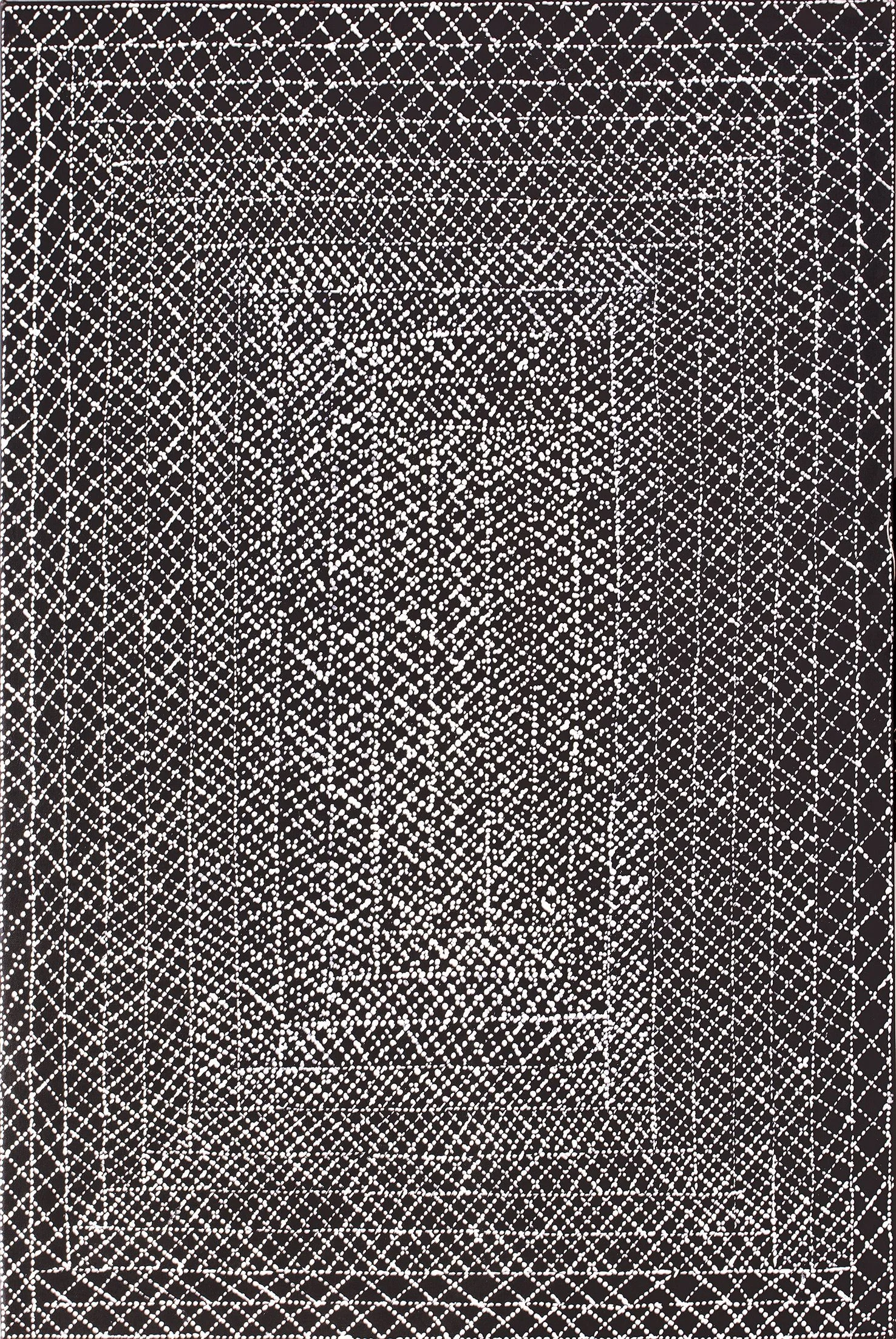
Artiste : Kaye Mary Orsto
Titre de l'œuvre : Pwoja Jilamara
Pigments naturels sur toile de lin Belge
Format : 120 x 80 cm
Provenance et certificat : centre d'art aborigène de Munupi (Tiwi Island)
Référence de la peinture : 16-455
© Photo : Aboriginal signature with the courtesy of the artist & Munupi Art centre (Tiwi Island)
Explications sur cette œuvre :
During ceremony on the Tiwi Islands a series of ‘yoi’ (dances), are performed; some are totemic (inherited from the person's Mother) and some serve to act out the narrative of newly composed songs. Participants in these ceremonies are painted with turtiyanginari (the different natural ochre colours) in varying designs, transforming the dancers and, in some cases, providing protection against recognition by mapurtiti (spirits). These designs can be applied in different ways, one of which is using the pwoja (or kayimwagakimi), a traditional Tiwi ‘comb’ carved with a single row of teeth on one or both ends, usually made using ironwood or bloodwood. After being dipped in ochre and applied to the body a straight row of dots is imprinted. Once completed, these dots are then collectively called yirrinkiripwoja (body painting).
Painting of the face also occurs. These significant artistic designs collectively are called ‘Jilamara’.
Œuvre vendue. Découvrez notre collection de peintures Aborigènes disponibles ici

Artiste : Alison Puruntatameri
Titre de l'œuvre : Jilamara Design
Pigments naturels sur toile de lin Belge
Format : 100 x 100 cm
Provenance et certificat : centre d'art aborigène de Munupi (Tiwi Island)
Référence de la peinture : 17-207
© Photo : Aboriginal signature with the courtesy of the artist & Munupi Art centre (Tiwi Island)
Explications sur cette œuvre :
During ceremony on the Tiwi Islands a series of 'yoi' (dances), are performed; some are totemic (inherited from the person's Mother) and some serve to act out the narrative of newly composed songs.
Participants in these ceremonies are painted with turtiyanginari (the different natural ochre colours) in varying designs, transforming the dancers and, in some cases, providing protection against recognition by mapurtiti (spirits).
These designs can be applied in different ways. Ochre is applied to the body and face. These significant artistic designs collectively are called 'Jilamara'.
Œuvre vendue. Découvrez notre collection de peintures Aborigènes disponibles ici
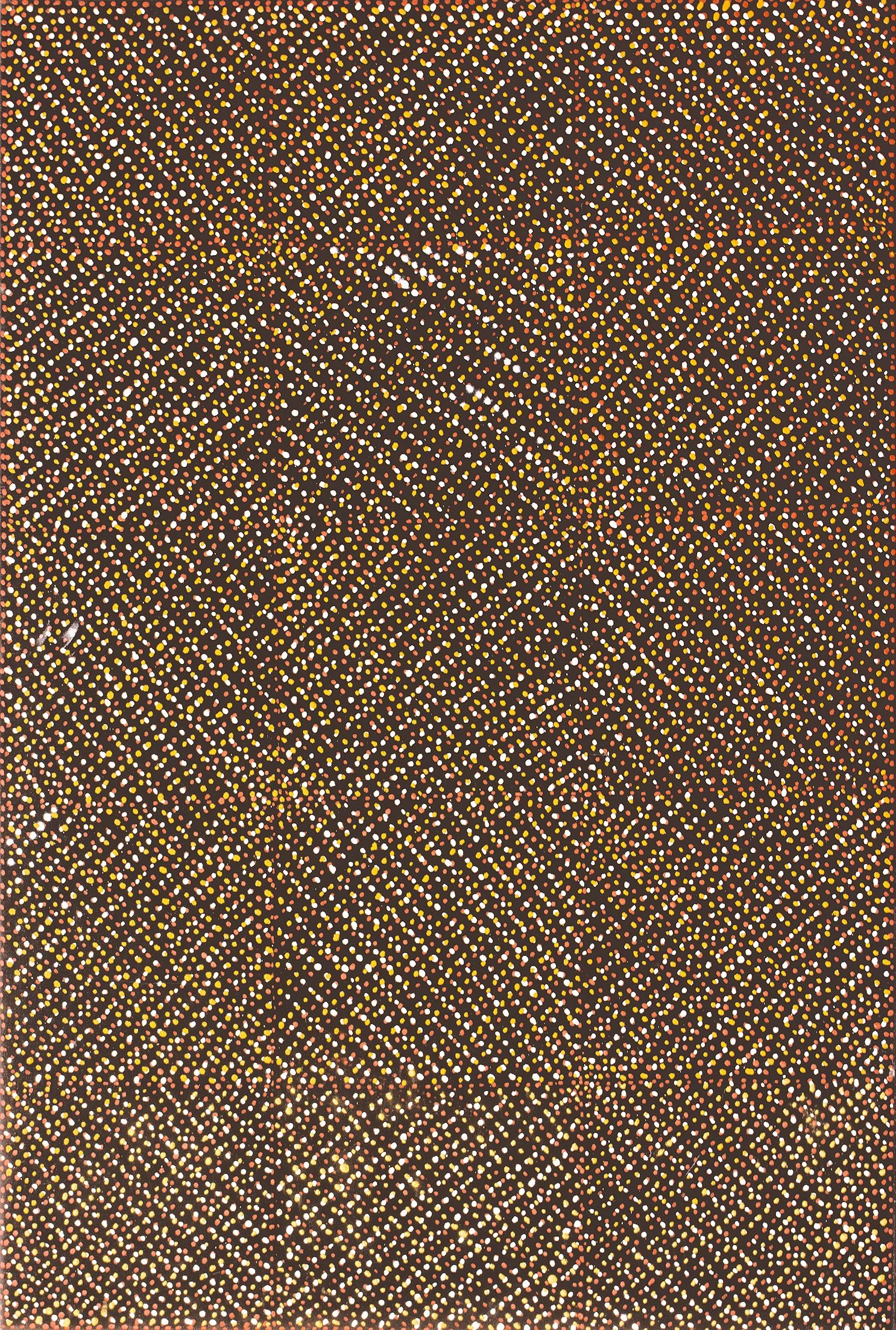
Artiste : Diane Tipungwuti
Titre de l'œuvre : Pwoja Jilamara
Pigments naturels sur toile de lin Belge
Format : 120 x 80 cm
Provenance et certificat : centre d'art aborigène de Munupi (Tiwi Island)
Référence de la peinture : 17-124
© Photo : Aboriginal signature with the courtesy of the artist & Munupi Art centre (Tiwi Island)
Explications sur cette œuvre :
During ceremony on the Tiwi Islands a series of ‘yoi’ (dances), are performed; some are totemic (inherited from the person's Mother) and some serve to act out the narrative of newly composed songs. Participants in these ceremonies are painted with turtiyanginari (the different natural ochre colours) in varying designs, transforming the dancers and, in some cases, providing protection against recognition by mapurtiti (spirits). These designs can be applied in different ways, one of which is using the pwoja (or kayimwagakimi), a traditional Tiwi ‘comb’ carved with a single row of teeth on one or both ends, usually made using ironwood or bloodwood. After being dipped in ochre and applied to the body a straight row of dots is imprinted. Once completed, these dots are then collectively called yirrinkiripwoja (body painting).
Painting of the face also occurs. These significant artistic designs collectively are called ‘Jilamara’.
Œuvre vendue. Découvrez notre collection de peintures Aborigènes disponibles ici
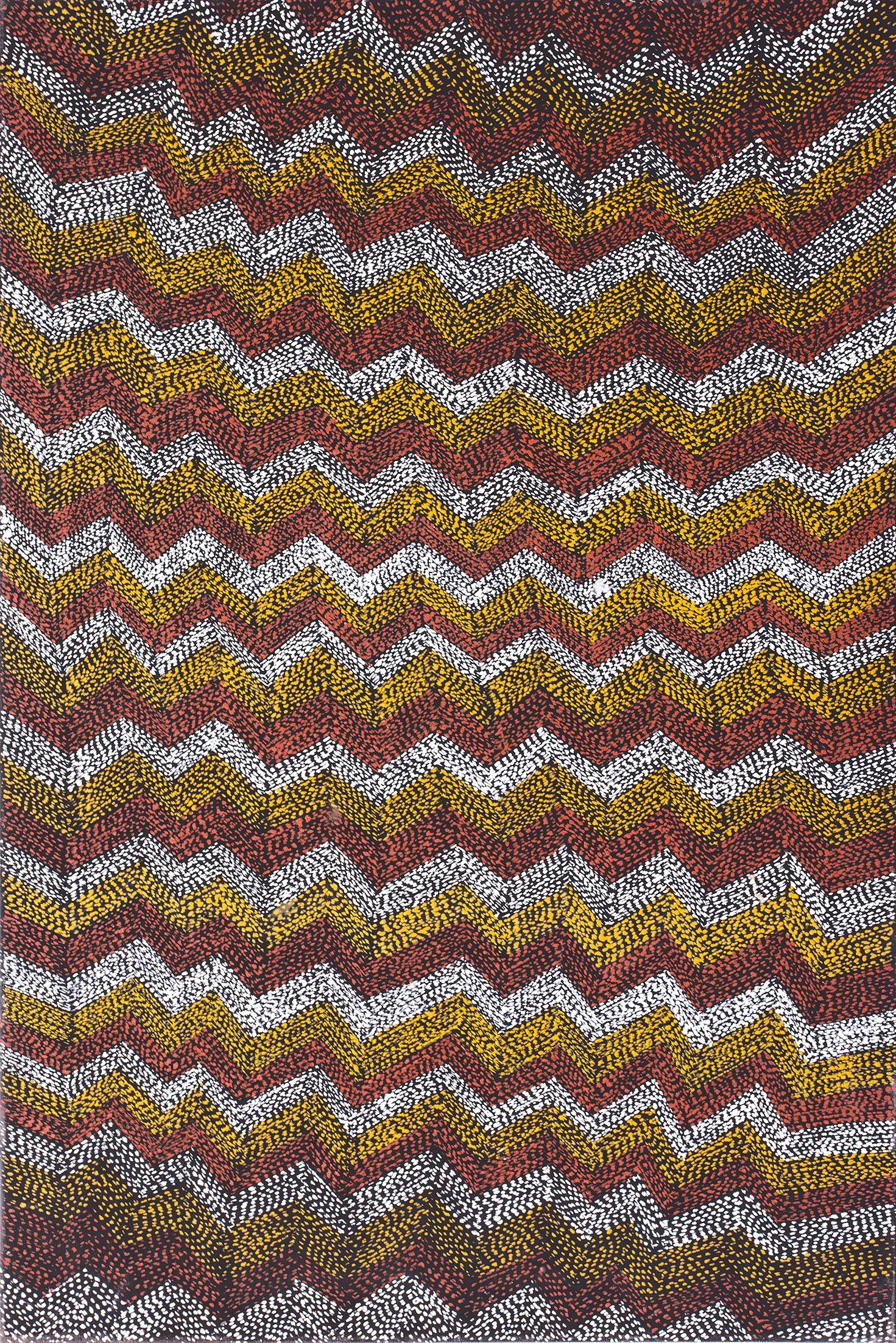
Artiste : Alison Puruntatameri
Titre de l'œuvre : Pwoja Jilamara
Pigments naturels sur toile de lin Belge
Format : 120 x 80 cm
Provenance et certificat : centre d'art aborigène de Munupi (Tiwi Island)
Référence de la peinture : 17-102
© Photo : Aboriginal signature with the courtesy of the artist & Munupi Art centre (Tiwi Island)
Explications sur cette œuvre :
During ceremony on the Tiwi Islands a series of ‘yoi’ (dances), are performed; some are totemic (inherited from the person's Mother) and some serve to act out the narrative of newly composed songs. Participants in these ceremonies are painted with turtiyanginari (the different natural ochre colours) in varying designs, transforming the dancers and, in some cases, providing protection against recognition by mapurtiti (spirits). These designs can be applied in different ways, one of which is using the pwoja (or kayimwagakimi), a traditional Tiwi ‘comb’ carved with a single row of teeth on one or both ends, usually made using ironwood or bloodwood. After being dipped in ochre and applied to the body a straight row of dots is imprinted. Once completed, these dots are then collectively called yirrinkiripwoja (body painting).
Painting of the face also occurs. These significant artistic designs collectively are called ‘Jilamara’.
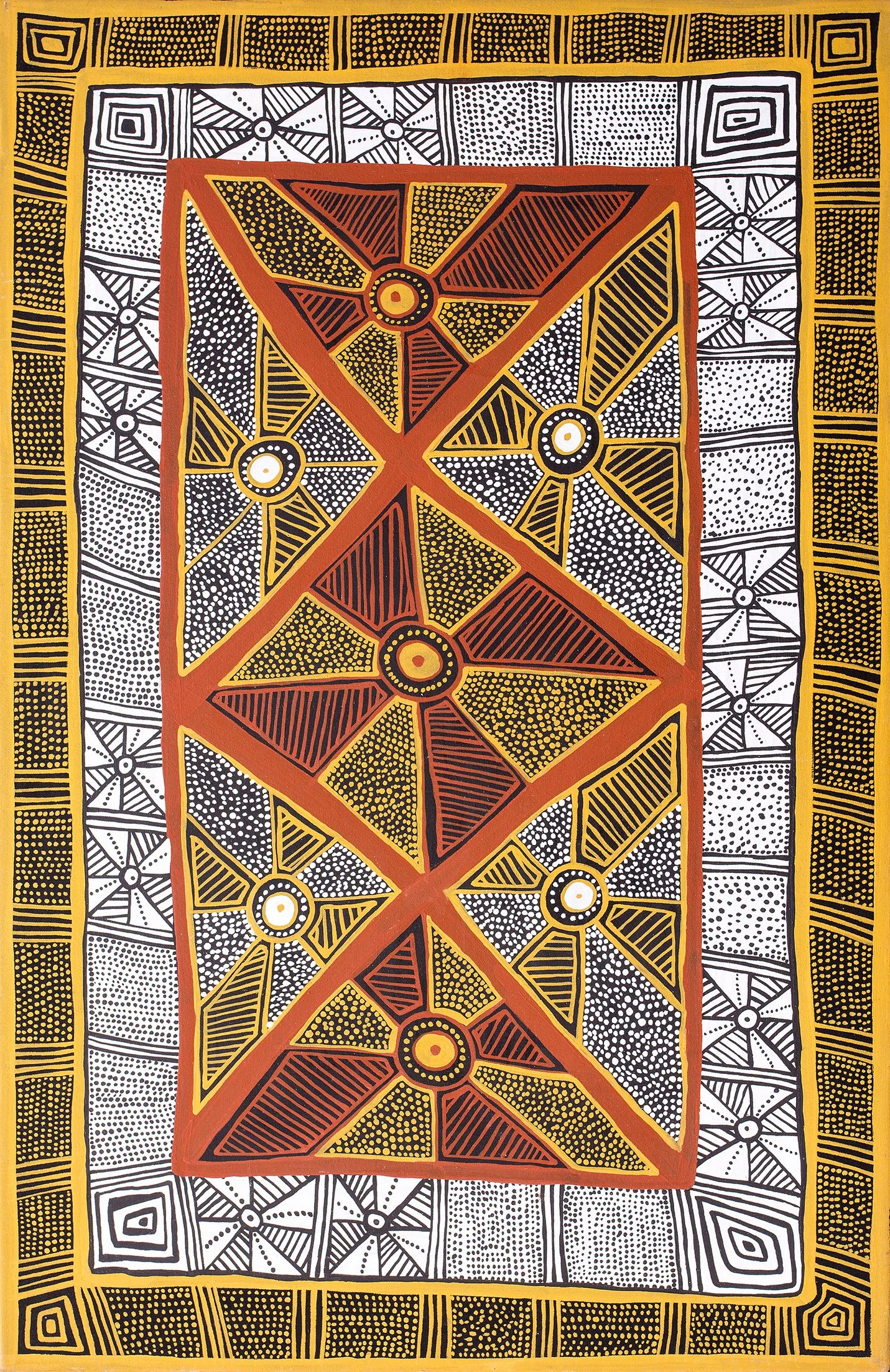
Artiste : Thecla Bernadette Puruntatameri
Titre de l'œuvre : Jilamara Dances
Pigments naturels sur toile de lin Belge
Format : 120 x 80 cm
Provenance et certificat : centre d'art aborigène de Munupi (Tiwi Island)
Référence de la peinture : 14-231
© Photo : Aboriginal signature with the courtesy of the artist & Munupi Art centre (Tiwi Island)
Explications sur cette œuvre :
During ceremony on the Tiwi Islands a series of ‘yoi’ (dances), are performed; some are totemic (inherited from the person's Mother) and some serve to act out the narrative of newly composed songs. Participants in these ceremonies are painted with turtiyanginari (the different natural ochre colours) in varying designs, transforming the dancers and, in some cases, providing protection against recognition by mapurtiti (spirits). These designs can be applied in different ways, one of which is using the pwoja (or kayimwagakimi), a traditional Tiwi ‘comb’ carved with a single row of teeth on one or both ends, usually made using ironwood or bloodwood. After being dipped in ochre and applied to the body a straight row of dots is imprinted. Once completed, these dots are then collectively called yirrinkiripwoja (body painting).
Painting of the face also occurs. These significant artistic designs collectively are called ‘Jilamara’.
Œuvre vendue. Découvrez notre collection de peintures Aborigènes disponibles ici
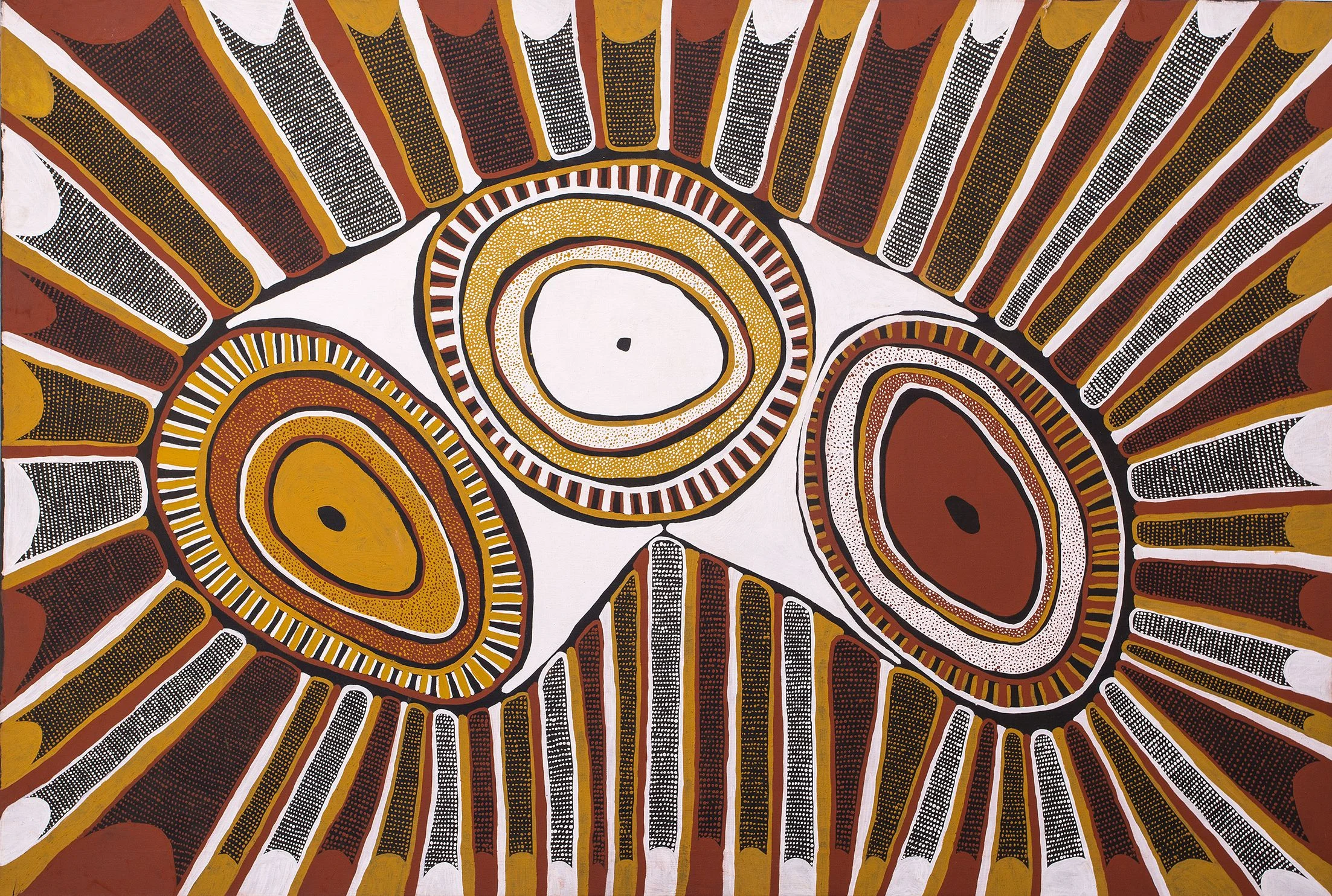
Artiste : Lydwina Puruntatameri
Titre de l'œuvre : Kulama Design
Pigments naturels sur toile de lin Belge
Format : 180 x 120 cm
Provenance et certificat : centre d'art aborigène de Munupi (Tiwi Island)
Référence de la peinture : 16-207
© Photo : Aboriginal signature with the courtesy of the artist & Munupi Art centre (Tiwi Island)
Explications sur cette œuvre :
The Kulama design depicts this important ceremony of the Tiwi people; the dancers and singers create a circle and prepare the poisonous yam for eating, as indicated by the circles in the painting. The Kulama ceremony was given to the Tiwi people by the Nyingawi, who are little spirit people (as depicted in Tiwi mythology). It is a celebration of life and food, occurring at the end of the wet season. The Tiwi know when to perform Kulama when the last full moon of the wet season has a yellow halo surrounding it, which tells them that Japarra (the moon man) is ready for it to begin.

Artiste : Josephine Burak
Titre de l'œuvre : Jilamara Design
Pigments naturels sur toile de lin Belge
Format : 160 x 100 cm
Provenance et certificat : centre d'art aborigène de Munupi (Tiwi Island)
Référence de la peinture : 15-414
© Photo : Aboriginal signature with the courtesy of the artist & Munupi Art centre (Tiwi Island)
Explications sur cette œuvre :
The Kulama design depicts this important ceremony of the Tiwi people; the dancers and singers create a circle and prepare the poisonous yam for eating, as indicated by the circles in the painting. The Kulama ceremony was given to the Tiwi people by the Nyingawi, who are little spirit people (as depicted in Tiwi mythology). It is a celebration of life and food, occurring at the end of the wet season. The Tiwi know when to perform Kulama when the last full moon of the wet season has a yellow halo surrounding it, which tells them that Japarra (the moon man) is ready for it to begin.

Artiste : Susan Wanji Wanji
Titre de l'œuvre : Jilamara Design
Pigments naturels sur toile de lin Belge
Format : 160 x 100 cm
Provenance et certificat : centre d'art aborigène de Munupi (Tiwi Island)
Référence de la peinture : 13sww127
© Photo : Aboriginal signature with the courtesy of the artist & Munupi Art centre (Tiwi Island)
Explications sur cette œuvre :
The Kulama design depicts this important ceremony of the Tiwi people; the dancers and singers create a circle and prepare the poisonous yam for eating, as indicated by the circles in the painting. The Kulama ceremony was given to the Tiwi people by the Nyingawi, who are little spirit people (as depicted in Tiwi mythology). It is a celebration of life and food, occurring at the end of the wet season. The Tiwi know when to perform Kulama when the last full moon of the wet season has a yellow halo surrounding it, which tells them that Japarra (the moon man) is ready for it to begin.

Artiste : Alison Puruntatameri
Titre de l'œuvre : Pwoja Jilamara
Pigments naturels sur toile de lin Belge
Format : 90 x 60 cm
Provenance et certificat : centre d'art aborigène de Munupi (Tiwi Island)
Référence de la peinture : 18-18
© Photo : Aboriginal signature with the courtesy of the artist & Munupi Art centre (Tiwi Island)
Explications sur cette œuvre :
During ceremony on the Tiwi Islands a series of ‘yoi’ (dances), are performed; some are totemic (inherited from the person's Mother) and some serve to act out the narrative of newly composed songs. Participants in these ceremonies are painted with turtiyanginari (the different natural ochre colours) in varying designs, transforming the dancers and, in some cases, providing protection against recognition by mapurtiti (spirits). These designs can be applied in different ways, one of which is using the pwoja (or kayimwagakimi), a traditional Tiwi ‘comb’ carved with a single row of teeth on one or both ends, usually made using ironwood or bloodwood. After being dipped in ochre and applied to the body a straight row of dots is imprinted. Once completed, these dots are then collectively called yirrinkiripwoja (body painting).
Painting of the face also occurs. These significant artistic designs collectively are called ‘Jilamara’.
Œuvre vendue. Découvrez notre collection de peintures Aborigènes disponibles ici
Peintures de JILAMARA proposées dans le cadre de l'exposition :
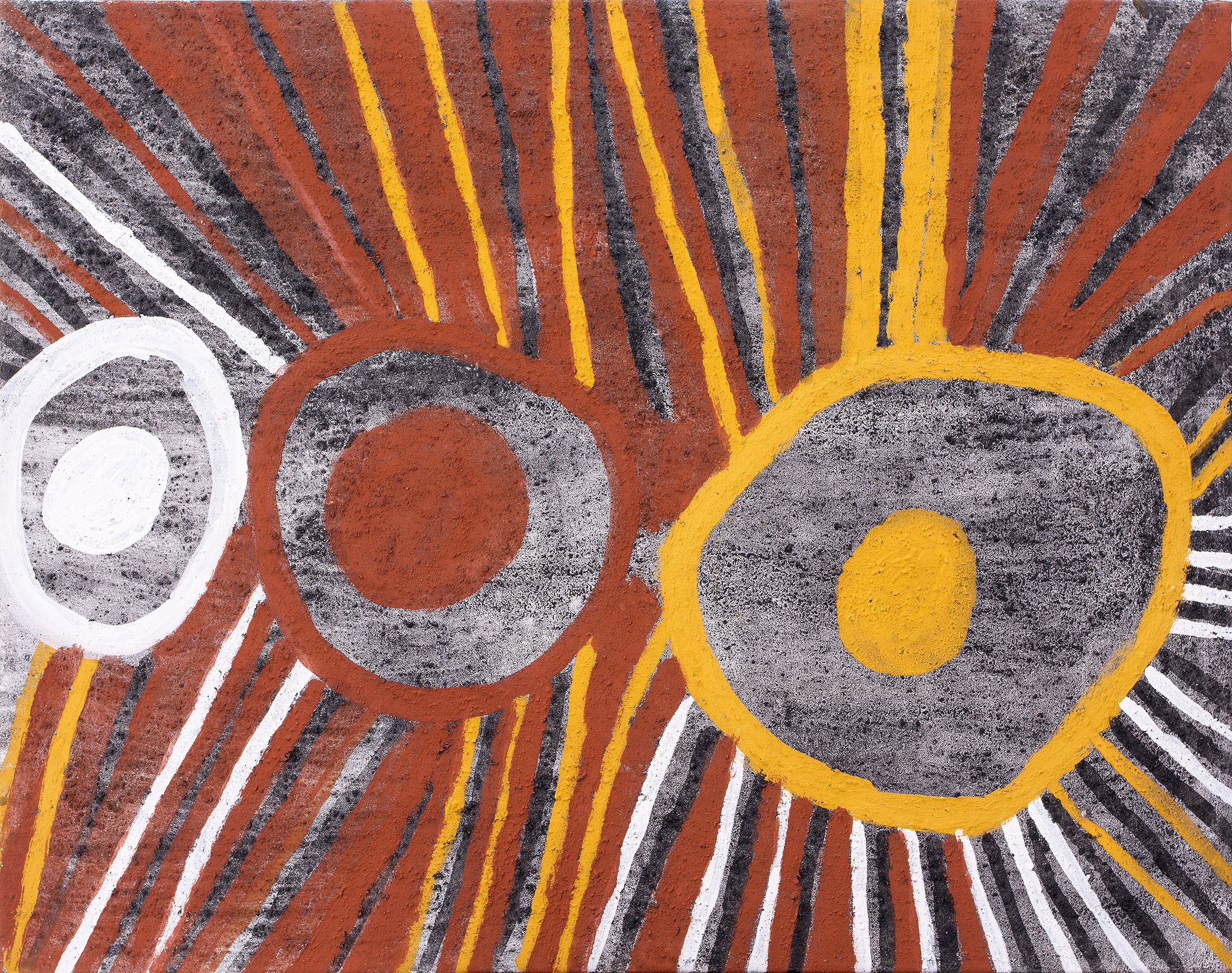
Artiste : Timothy Cook
Titre de l'œuvre : Japarra (Moon Man)
Pigments naturels sur toile de lin Belge
Format : 90 x 70 cm
Provenance et certificat : centre d'art aborigène de Jalimara (Tiwi Island)
Référence de la peinture : 412-17
© Photo : Aboriginal signature with the courtesy of the artist & Jilamara Art centre (Tiwi Island)
Explications sur cette œuvre :
Japarra the moon man is central to the Tiwi Creation Story. Purukapali's younger brother ran away with his wifwe Bima, her baby Jinani left alone to die from heat and neglect, a bitter struggle ensued between the brothers and the king proclaimed all life would be subject to mortality. Japarra escaped up into the moon where his body changed into a pale half moon.

Artiste : Johnathon Bush
Titre de l'œuvre : Jilamara
Pigments naturels sur toile de lin Belge
Format : 150 x 150cm
Provenance et certificat : centre d'art aborigène de Jalimara (Tiwi Island)
Référence de la peinture : 361-17
© Photo : Aboriginal signature with the courtesy of the artist & Jilamara Art centre (Tiwi Island)
Explications pour cette œuvre :
All jilamara (design) are originally drawn from the body painting which accompanied the pukumani (funeral) and kulama (initiation/yam) ceremonies. An individual design and aesthetic is highly valued by Tiwi artists and is representative of their personal interpretation of the traditional Tiwi design or jilamara.
In this work Johnathon has explored the use of charcoal which was traditionally used by his ancestors when painting onto the body or pukamani poles, instead of black gesso as a base colour. Johnathon discovered Jackson Pollocks work in early 2017 and was really taken by the chaos of the splattered and dripped paint marks over the painted surface.

Artiste : Timothy Cook
Titre de l'œuvre : Kulama ceremonies
Pigments naturels sur toile de lin Belge
Format : 120 x 120 cm
Provenance et certificat : centre d'art aborigène de Jalimara (Tiwi Island)
Référence de la peinture : 162-16
© Photo : Aboriginal signature with the courtesy of the artist & Jilamara Art centre (Tiwi Island)
Explications sur cette œuvre :
Japarra the moon man is central to the Tiwi Creation Story. Purukapali's younger brother ran away with his wifwe Bima, her baby Jinani left alone to die from heat and neglect, a bitter struggle ensued between the brothers and the king proclaimed all life would be subject to mortality. Japarra escaped up into the moon where his body changed into a pale half moon.
Œuvre vendue. Découvrez notre collection de peintures Aborigènes disponibles ici
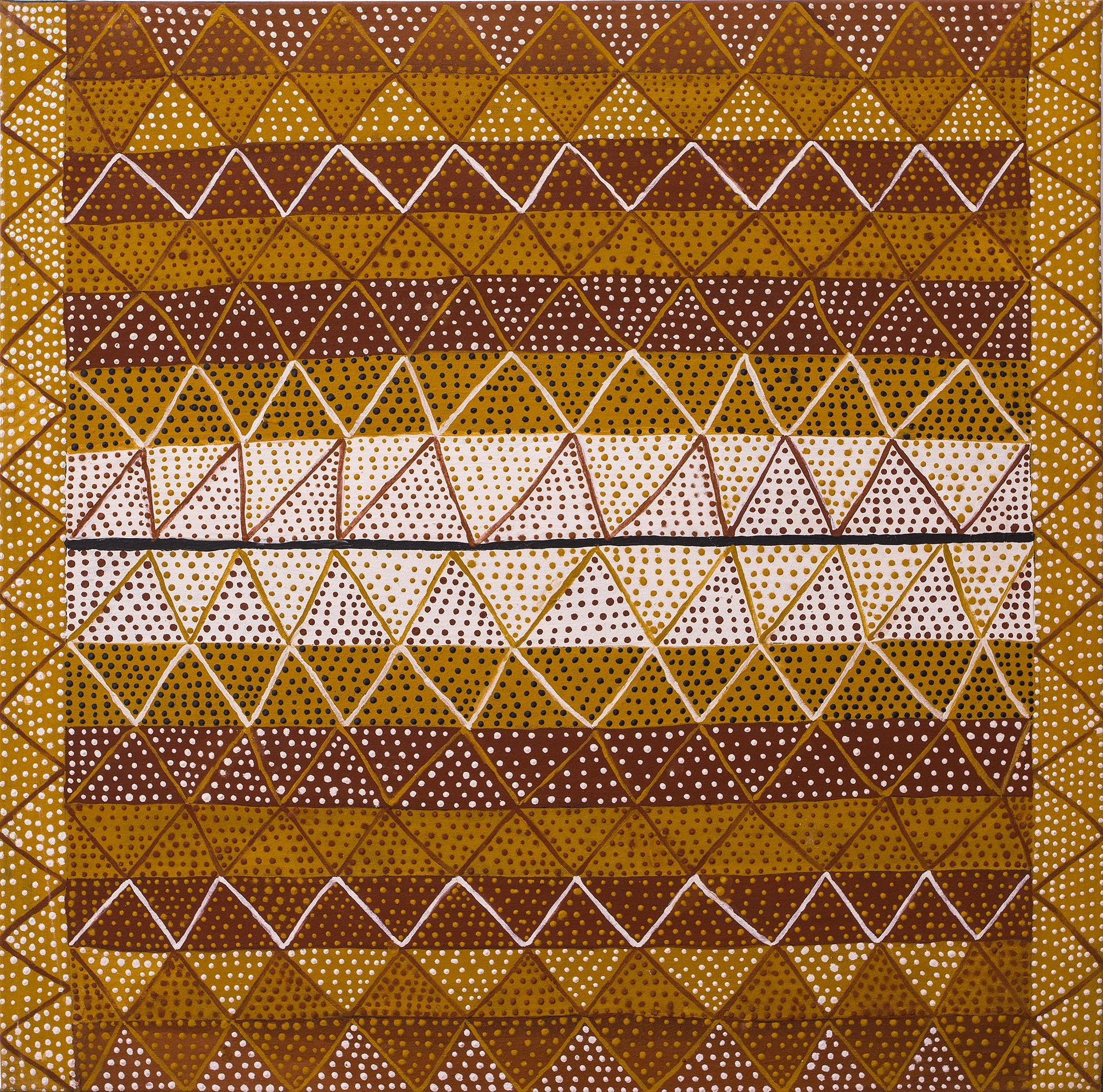
Artiste : Jacinta Lorenzo
Titre de l'œuvre : Pumpuni Jilamara
Pigments naturels sur toile de lin Belge
Format : 90 x 90 cm
Provenance et certificat : centre d'art aborigène de Jalimara (Tiwi Island)
Référence de la peinture : 381-16
© Photo : Aboriginal signature with the courtesy of the artist & Jilamara Art centre (Tiwi Island)
Explications sur cette œuvre :
Pumpuni Jilamara translates as 'good design or painting' and is how the artist refers to all 'good' paintings. The origins of the imagery lie in the Tiwi traditions of Yirrinkiripwoja (bodypainting) and the pukumani ceremonial designs. All paintings are done in natural ochre collected locally on Melville Island.
Œuvre vendue. Découvrez notre collection de peintures Aborigènes disponibles ici

Artiste : Jacinta Lorenzo
Titre de l'œuvre : Parlini jilamara (old design)
Pigments naturels sur toile de lin Belge
Format : 120 x 150cm
Provenance et certificat : centre d'art aborigène de Jalimara (Tiwi Island)
Référence de la peinture : 445-17
© Photo : Aboriginal signature with the courtesy of the artist & Jilamara Art centre (Tiwi Island)
Explications sur cette œuvre :
Jilamara translates to design. Jilamara is originally drawn from the body painting which accompanied the pukumani (funeral) and kulama (initiation / yam) ceremonies. All the artists living at Milikapiti are drawing on collective Tiwi memory, and the individual expression and aesthetic qualities of each artist's work is reflective of their personal interpretation of traditional Tiwi design or jilamara. Parlini Jilamara means old design.
Vendue

Artiste : Brian Farmer Illortaminni
Titre de l'œuvre : Jilamara
Pigments naturels sur toile de lin Belge
Format : 120 x 90cm
Provenance et certificat : centre d'art aborigène de Jalimara (Tiwi Island)
Référence de la peinture : 357-14
© Photo : Aboriginal signature with the courtesy of the artist & Jilamara Art centre (Tiwi Island)
Explications sur cette œuvre :
All jilamara (design) are originally drawn from the body painting which accompanied the pukumani (funeral) and kulama (initiation/yam) ceremonies. An individual design and aesthetic is highly valued by Tiwi artists and is representative of their personal interpretation of the traditional Tiwi design or jilamara.
vendue

Artiste : Brian Farmer Illortaminni
Titre de l'œuvre : Jilamara
Pigments naturels sur toile de lin Belge
Format : 120 x 60cm
Provenance et certificat : centre d'art aborigène de Jalimara (Tiwi Island)
Référence de la peinture : 114-16
© Photo : Aboriginal signature with the courtesy of the artist & Jilamara Art centre (Tiwi Island)
Explications sur cette œuvre :
All jilamara (design) are originally drawn from the body painting which accompanied the pukumani (funeral) and kulama (initiation/yam) ceremonies. An individual design and aesthetic is highly valued by Tiwi artists and is representative of their personal interpretation of the traditional Tiwi design or jilamara.
Vendue

Artiste : Brian Farmer Illortaminni
Titre de l'œuvre : Jilamara
Pigments naturels sur toile de lin Belge
Format : 120 x 60cm
Provenance et certificat : centre d'art aborigène de Jalimara (Tiwi Island)
Référence de la peinture : 407-14
© Photo : Aboriginal signature with the courtesy of the artist & Jilamara Art centre (Tiwi Island)
Explications sur cette œuvre :
All jilamara (design) are originally drawn from the body painting which accompanied the pukumani (funeral) and kulama (initiation/yam) ceremonies. An individual design and aesthetic is highly valued by Tiwi artists and is representative of their personal interpretation of the traditional Tiwi design or jilamara.
Vendue
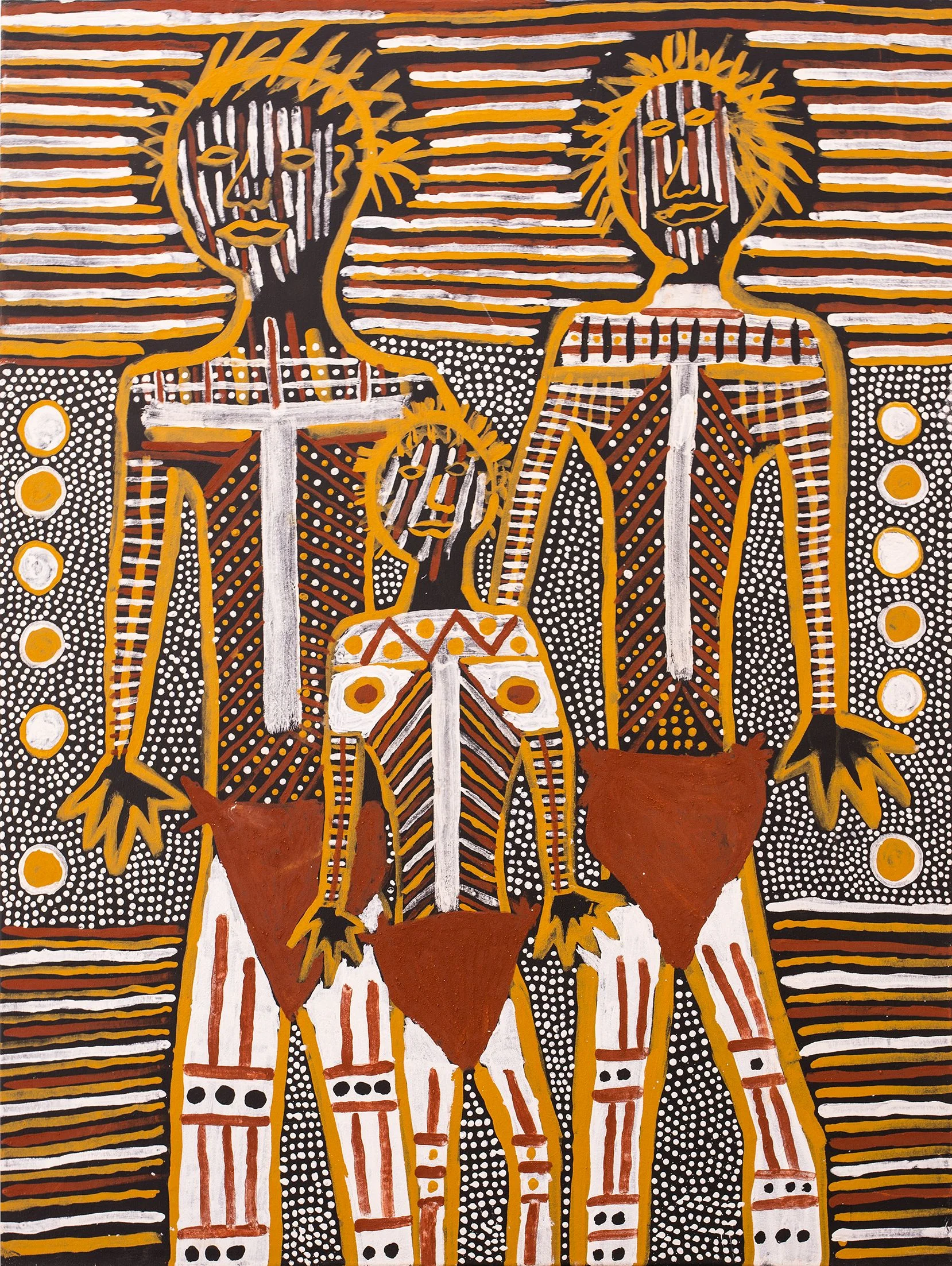
Artiste : Johnathon Bush
Titre de l'œuvre : Regeneration
Pigments naturels sur toile de lin Belge
Format : 120 x 90cm
Provenance et certificat : centre d'art aborigène de Jalimara (Tiwi Island)
Référence de la peinture : 44-17
© Photo : Aboriginal signature with the courtesy of the artist & Jilamara Art centre (Tiwi Island)

Artiste : Johnathon Bush
Titre de l'œuvre : Dream Time Warrior
Pigments naturels sur toile de lin Belge
Format : 120 x 90cm
Provenance et certificat : centre d'art aborigène de Jalimara (Tiwi Island)
Référence de la peinture : 311-17
© Photo : Aboriginal signature with the courtesy of the artist & Jilamara Art centre (Tiwi Island)
Explications pour cette œuvre :
My paintings are a retelling of our Tiwi stories and culture that were claimed in the form of black and white photography by white explorerers to the Tiwi Islands throughout history.

Artiste : Raymond Bush
Titre de l'œuvre : Jilamara
Pigments naturels sur toile de lin Belge
Format : 80 x 30 cm
Provenance et certificat : centre d'art aborigène de Jalimara (Tiwi Island)
Référence de la peinture : 50-16
© Photo : Aboriginal signature with the courtesy of the artist & Jilamara Art centre (Tiwi Island)
Explications pour cette œuvre :
All jilamara (design) are originally drawn from the body painting which accompanied the pukumani (funeral) and kulama (initiation/yam) ceremonies. An individual design and aesthetic is highly valued by Tiwi artists and is representative of their personal interpretation of the traditional Tiwi design or jilamara.
Œuvre vendue. Découvrez notre collection de peintures Aborigènes disponibles ici
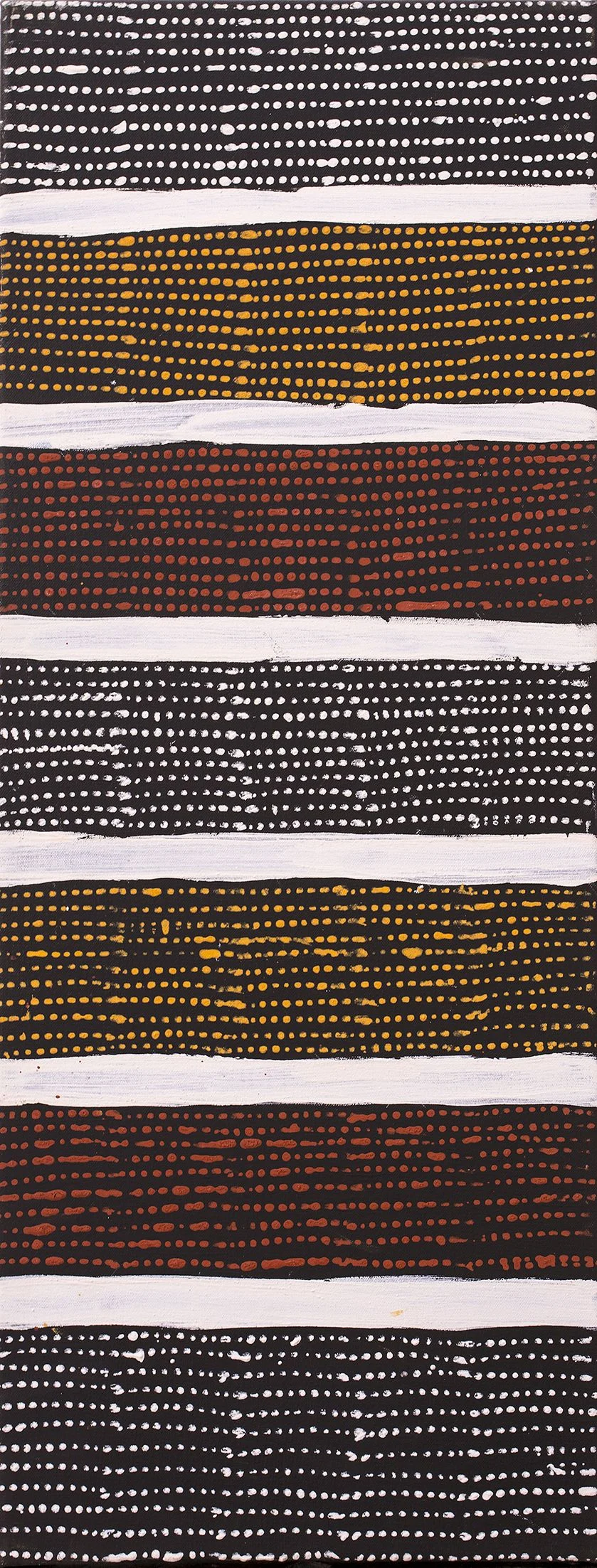
Artiste : Michelle Woody
Titre de l'œuvre : Jilamara
Pigments naturels sur toile de lin Belge
Format : 80 x 30 cm
Provenance et certificat : centre d'art aborigène de Jalimara (Tiwi Island)
Référence de la peinture : 429-17
© Photo : Aboriginal signature with the courtesy of the artist & Jilamara Art centre (Tiwi Island)
Explications pour cette œuvre :
All jilamara (design) are originally drawn from the body painting which accompanied the pukumani (funeral) and kulama (initiation/yam) ceremonies. An individual design and aesthetic is highly valued by Tiwi artists and is representative of their personal interpretation of the traditional Tiwi design or jilamara.
Vendue

Artiste : Michelle Woody
Titre de l'œuvre : Minga
Pigments naturels sur toile de lin Belge
Format : 80 x 30 cm
Provenance et certificat : centre d'art aborigène de Jalimara (Tiwi Island)
Référence de la peinture : 50-14
© Photo : Aboriginal signature with the courtesy of the artist & Jilamara Art centre (Tiwi Island)
Explications pour cette œuvre :
Minga or munguntaringa refers to the old Tiwi practice of scarification.
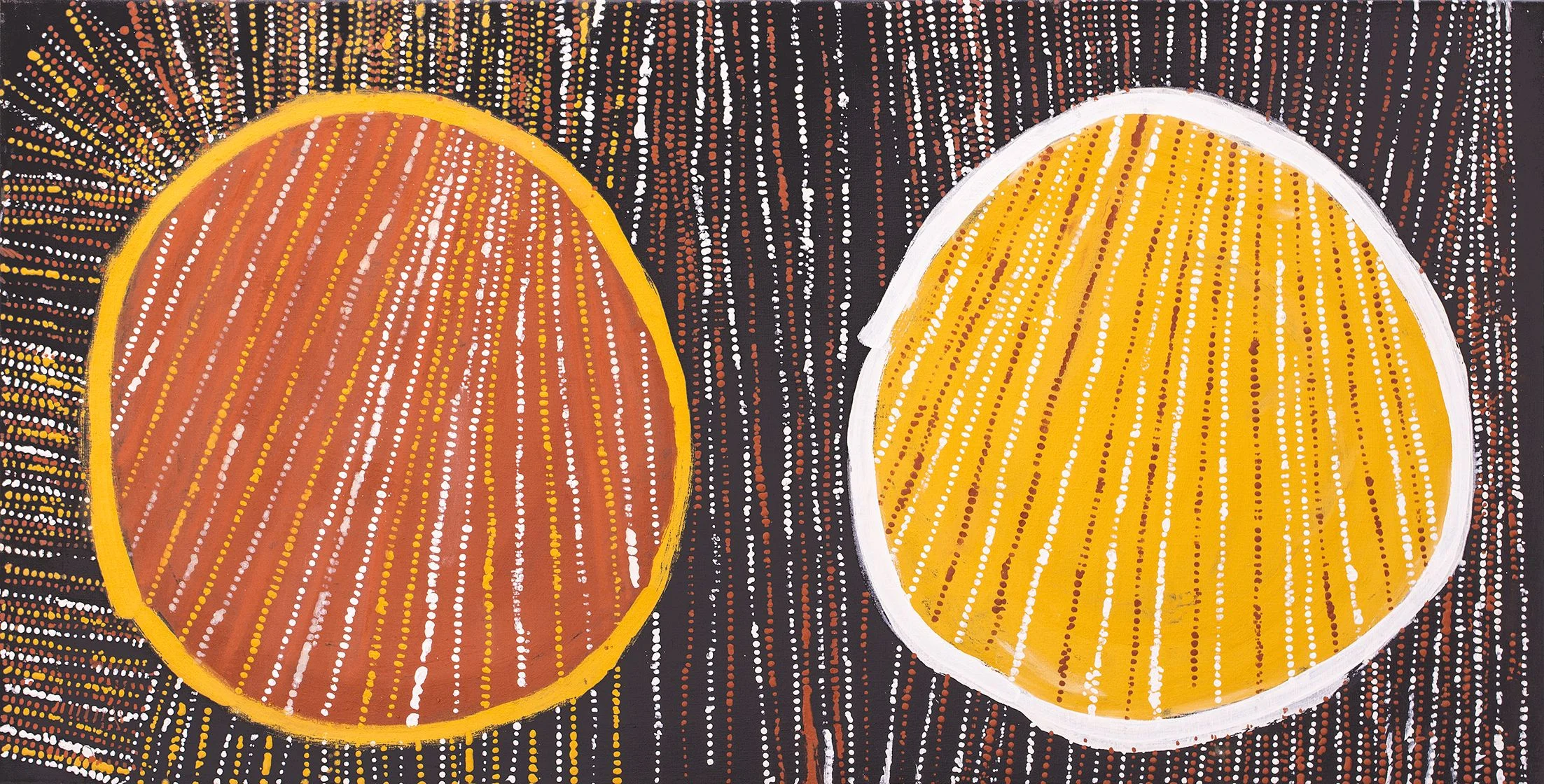
Artiste : Conrad Kamilowra Tipungwuti
Titre de l'œuvre : Kulama ceremonies
Pigments naturels sur toile de lin Belge
Format : 150 x 75 cm
Provenance et certificat : centre d'art aborigène de Jalimara (Tiwi Island)
Référence de la peinture : 132-14
© Photo : Aboriginal signature with the courtesy of the artist & Jilamara Art centre (Tiwi Island)
Explications pour cette œuvre :
The Kulama Ceremony is performed in the late wet season (March-April) when a ring appears around the moon. Kulama is a traditional initiation for young men which coincides with the harvest of a certain wild yam species. Elders of both sexes sing and dance for three days welcoming the boys into adulthood. The boy is then renamed with his true man's name.

Artiste : Conrad Kamilowra Tipungwuti
Titre de l'œuvre : Pakitiringa (rain)
Pigments naturels sur toile de lin Belge
Format : 150 x 75 cm
Provenance et certificat : centre d'art aborigène de Jalimara (Tiwi Island)
Référence de la peinture : 190-17
© Photo : Aboriginal signature with the courtesy of the artist & Jilamara Art centre (Tiwi Island)
Explications pour cette œuvre :
Pakitiringa is the Tiwi word for rain. The over-riding theme of Tipungwuti’s most recent work depicts the wet season and the heavy Pakatiringa that falls in the top end for months on end.

Artiste : Conrad Kamilowra Tipungwuti
Titre de l'œuvre : Pakitiringa III (rain)
Pigments naturels sur toile de lin Belge
Format : 80 x 30 cm
Provenance et certificat : centre d'art aborigène de Jalimara (Tiwi Island)
Référence de la peinture : 50-17
© Photo : Aboriginal signature with the courtesy of the artist & Jilamara Art centre (Tiwi Island)
Explications pour cette œuvre :
Pakitiringa is the Tiwi word for rain. The over-riding theme of Tipungwuti’s most recent work depicts the wet season and the heavy Pakatiringa that falls in the top end for months on end.
Vendue
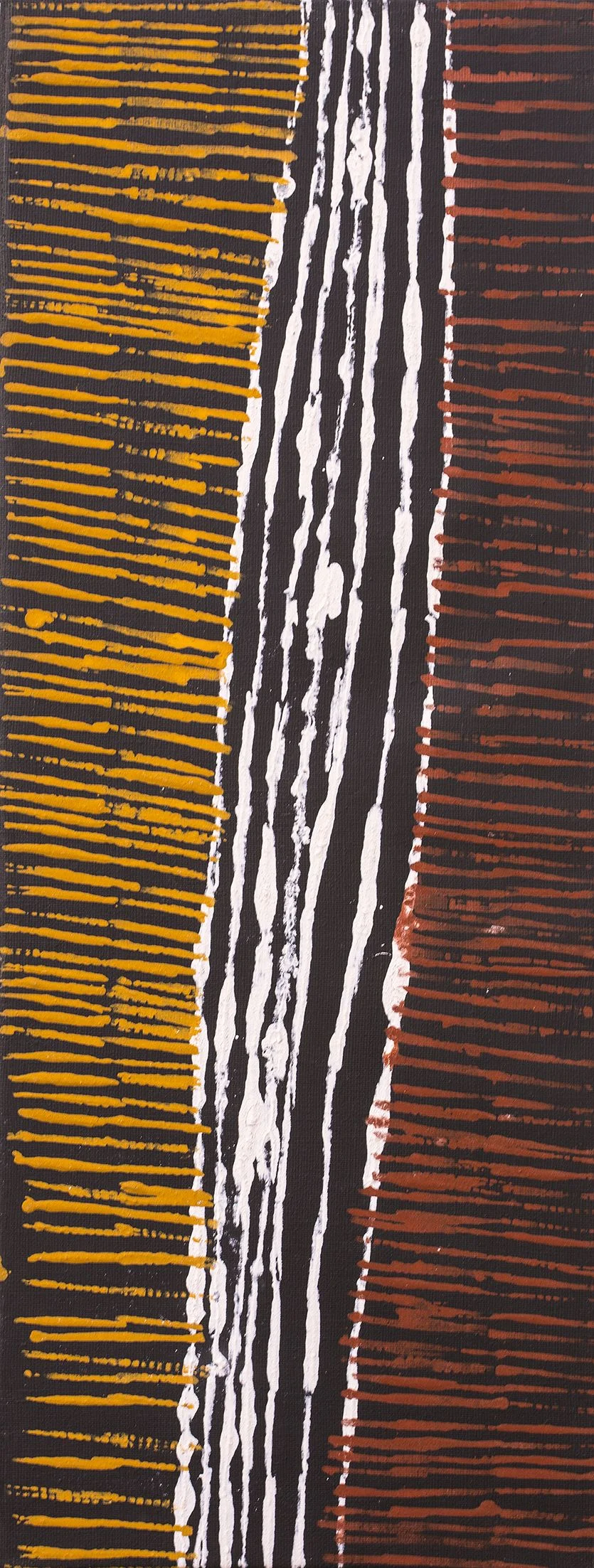
Artiste : Conrad Kamilowra Tipungwuti
Titre de l'œuvre : Pakitiringa IV (rain)
Pigments naturels sur toile de lin Belge
Format : 80 x 30 cm
Provenance et certificat : centre d'art aborigène de Jalimara (Tiwi Island)
Référence de la peinture : 99-17
© Photo : Aboriginal signature with the courtesy of the artist & Jilamara Art centre (Tiwi Island)
Explications pour cette œuvre :
Pakitiringa is the Tiwi word for rain. The over-riding theme of Tipungwuti’s most recent work depicts the wet season and the heavy Pakatiringa that falls in the top end for months on end.
Vendue

Artiste : Conrad Kamilowra Tipungwuti
Titre de l'œuvre : Pakitiringa I (rain)
Pigments naturels sur toile de lin Belge
Format : 80 x 30 cm
Provenance et certificat : centre d'art aborigène de Jalimara (Tiwi Island)
Référence de la peinture : 223-17
© Photo : Aboriginal signature with the courtesy of the artist & Jilamara Art centre (Tiwi Island)
Explications pour cette œuvre :
Pakitiringa is the Tiwi word for rain. The over-riding theme of Tipungwuti’s most recent work depicts the wet season and the heavy Pakatiringa that falls in the top end for months on end.
Vendue

Artiste : Conrad Kamilowra Tipungwuti
Titre de l'œuvre : Pakitiringa II (rain)
Pigments naturels sur toile de lin Belge
Format : 80 x 30 cm
Provenance et certificat : centre d'art aborigène de Jalimara (Tiwi Island)
Référence de la peinture : 224-17
© Photo : Aboriginal signature with the courtesy of the artist & Jilamara Art centre (Tiwi Island)
Explications pour cette œuvre :
Pakitiringa is the Tiwi word for rain. The over-riding theme of Tipungwuti’s most recent work depicts the wet season and the heavy Pakatiringa that falls in the top end for months on end.
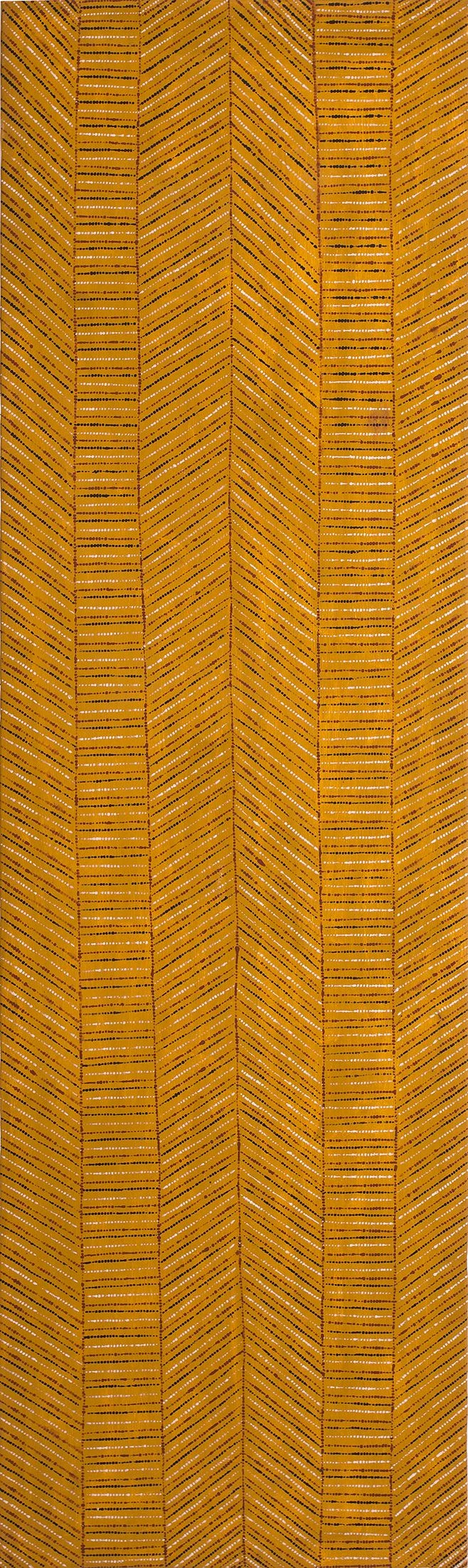
Artiste : Raelene Lampuwatu Kerinauia
Titre de l'œuvre : Kayimwagakimi jilamara
Pigments naturels sur toile de lin Belge
Format : 200 x 60 cm
Provenance et certificat : centre d'art aborigène de Jalimara (Tiwi Island)
Référence de la peinture : 1666-03
© Photo : Aboriginal signature with the courtesy of the artist & Jilamara Art centre (Tiwi Island)
Explications pour cette œuvre :
Kayimwagakimi is the traditional Tiwi painting 'comb'. Made from bloodwood or ironwood, it is about 15cm high with a single row of teeth. The comb is dabbed in ochre and applied to the painting surface resulting in a straight line of fine dots, a process which is repeated over and over. Kayimwagakimi and marlipinyini (a fine stick or pandanus frond chewed to form a brush) have largely been replaced by modern brushes but a handful of Tiwi still use traditional tools.
Vendue
Exposition organisée
en partenariat avec
et les artistes
des centres d'art de Munupi et Jilamara
Artiste : Cornelia Tipuamantumirri
Titre de l'œuvre : Jilamara dances
Pigments naturels sur toile de lin Belge
Format : 180 x 150 cm
Provenance et certificat : centre d'art aborigène de Munupi (Tiwi Island)
Référence de la peinture : 14-317
© Photo : Aboriginal signature with the courtesy of the artist & Munupi Art centre (Tiwi Island)
Explications sur cette œuvre :
During ceremony on the Tiwi Islands a series of 'yoi' (dances), are performed; some are totemic (inherited from the person's Mother) and some serve to act out the narrative of newly composed songs.
Participants in these ceremonies are painted with turtiyanginari (the different natural ochre colours) in varying designs, transforming the dancers and, in some cases, providing protection against recognition by mapurtiti (spirits).
These designs can be applied in different ways. Ochre is applied to the body and face. These significant artistic designs collectively are called 'Jilamara'.
Demander le prix de l'œuvre