NOW : From the Desert to the Sea
a Journey with the Yulparitja - at Bidyadanga
DU 17 AVRIL AU 11 MAI 2019 INCLUS, AU SEIN DE LA GALERIE ABORIGINAL SIGNATURE ESTRANGIN À BRUXELLES
Vernissage le mercredi 17 avril de 14h30 à 22h.
Ouverture du Mercredi au Samedi de 14h30 à 19h, à la galerie : 101 rue Jules Besme, 1081 Bruxelles.
Et sur RDV tous les autres jours au (+32 (0) 475 55 08 54).

Trois œuvres de l’exposition d’art Aborigène “From the Desert to the Sea, a Journey with the Yulparitja” à la galerie Aboriginal Signature Estrangin, à Bruxelles. Œuvres clef des artistes Lydia Balbal, Daniel Walbidi, Lydia Balbal. © Photo : Aboriginal Signature Estrangin with the courtesy of the artists and Short Street
C’est une première en Europe ! Une rare exposition - rétrospective de tous les artistes Aborigènes majeurs du clan Yulparitja de Bidyadanga. Ils sont tous là, des plus anciens nés en 1928 qui nous ont déjà quittés, à la jeune génération de 1983 qui porte avec un talent incroyable le flambeau. Nous sommes très honorés d’ accueillir en Belgique et particulièrement à la galerie à Bruxelles, l’exposition “From the Desert to the Sea : a Journey with the Yulparitja - at Bidyadanga”.
La vie et l’histoire des Aborigènes Yulparitja est bouleversante et remarquable par leur itinéraire de vie et leurs peintures, questionnant notre propre mode de vie.
Des réfugiés climatiques au coeur de l’Australie
Autour des années 1970, ils furent parmi les premiers réfugiés climatiques de l’histoire de l’Australie contemporaine. Une immense sécheresse conduisit ce peuple du désert vivant autour de la Canning Stock Route, à quitter leur terre ancestrale pour se réfugier sur la côte près de Broome à Bidyandanga, dans une mission. Ce fut un déchirement terrible dicté par la volonté farouche de survivre. Nombreux Yulparitja perdirent la vie dans cette épopée de 1000 km à travers les zones les plus arides du pays.
Témoins de l’impact environnemental des mines
En fracturant la structure géologique du sol, les compagnies minières de l’ouest de l’Australie, ont interrompu un cycle de l’eau souterraine naturel. Les nappes phréatiques de leurs déserts, s’évanouirent et n’alimentèrent plus leurs trous d’eau. Le monde moderne dans une confrontation invisible venait de bouleverser l’écologie de cette région depuis des milliers d’années. Pour les Yulparitja, il fallait bouger ou c’était la mort pour tous. certains ne voulurent pas partir et d’autres entreprirent un immense voyage à travers les terres, vers la côte.
Un jeune leader inventeur d’un courant artistique
A l’âge où tous les rêves sont possibles, Daniel Walbidi (16 ans) va inviter en 1999 tous les survivants de son peuple à célébrer à travers la peinture leurs territoires ancestraux. Emily Rohr de la galerie Short Street à Broome, jouera un rôle prépondérant pour accompagner ces artistes à l’époque. Parmi les plus jeunes, il devient néanmoins le leader des artistes Yulparitja de Bidyadanga et continue de porter le flambeau aujourd’hui au plus haut niveau, avec ses œuvres exposées au MET à New-York ou dans les plus grands musées Australiens.
Peintres de la diaspora
Avant d’accomplir plusieurs pèlerinages vers leurs terres natales, les artistes de Bidyadanga seront des peintres de la diaspora. Si tous les anciens ont connu la vie nomade traditionnelle, cela ne sera pas le cas de la jeune génération. Certains vont ainsi peindre un territoire en fonction des histoires transmises par les anciens et au fil de leur niveau d’initiation. Puis dans le cadre de différents pèlerinage vers ces lieux très éloignés du désert, leur pratique artistique reconnectée changera à jamais leur palette et l’intensité de leurs œuvres.
Les peintures de ces dix grands artistes Yulparitja de Bidyadanga nous racontent ce voyage inclassable et inouï du désert vers la mer, et la naissance d’un courant artistique clef en Australie. Leur palette chromatique nous transportent à l’échelle d’une ile continent entre différents univers climatiques où résonnent l’histoire unique de leur peuple. Une exposition à ne pas manquer, avec 25 toiles rares proposées, célébrées dans les plus importantes institutions en Australie ou à l’international, avec ici de petits et moyens formats, couvrant ici les 15 dernières années de ce courant artistique important de l’ouest de l’Australie.
Peintures ABORIGènes dES Artistes Yulparitja de Bidyadanga, proposées dans le cadre de l'exposition :

Artiste : Lydia Balbal
Titre de l'œuvre : Martakulu - Dreaming Time stories
Format : 91 x 91 cm
Provenance et certificat : Short Street opérant pour les artistes Yulparija de Bidyadanga
Référence de cette peinture aborigène : 783617
Explications sur cette peinture d’art Aborigène :
Lydia Balbal (1958) is a Mangala woman. Lydia's country is near Punmu in the Great Sandy Desert of W.A. Her people's existence was threatened by severe drought so that they had little choice but to leave their traditional country. Her family were some of the last to walk out to the coastal town of Bidyadanga (then La Grange Mission) located two hours south of Broome in the early 70s. Lydia first began painting in 2007 but has already received significant attention from collectors and the media alike.
Martakulu is a soak out near Punmu near the Canning Stock Route in the Great Sandy Desert in Western Australia. It is strong womans country, it is part of the women's law line. Long time ago a law man he come up to this country, he went home and left his wife and baby. They make him fire and sit down, cook mayi (bush food) and then started to cry for her husband. Her tears made that soak. It is important country this one. Lydia says "I been young girl walked all around here with my mummy and daddy. We camp and hunt here." This painting shows the rockhole with king brown snakes and their eggs.
Collections : Murdoch University Art Collection. Aboriginal Art Museum, The Netherlands. Thomas Vroom Collection, The Netherlands. National Gallery of Victoria Felton Collection. Queensland Art Gallery. Laverty Collection. Monash University Art Collection. Lepley Collection. Western Australian Art Gallery. National Gallery of Australia. Wesfarmers Collection. Australia Parliament House Collection. Brocard - Estrangin Collection. Kluge-Ruhe Aboriginal Art Collection of the University of Virginia…
© Photo : Aboriginal Signature Estrangin gallery with the courtesy of Short Street and the artist

Artiste : Lydia Balbal
Titre de l'œuvre : Yidalarung - Dreaming Time stories
Format : 122 x 56 cm
Provenance et certificat : Short Street opérant pour les artistes Yulparija de Bidyadanga
Référence de cette peinture aborigène : 784774
Explications sur cette peinture d’art Aborigène :
Lydia Balbal (1958) is a Mangala woman. Lydia's country is near Punmu in the Great Sandy Desert of W.A. Her people's existence was threatened by severe drought so that they had little choice but to leave their traditional country. Her family were some of the last to walk out to the coastal town of Bidyadanga (then La Grange Mission) located two hours south of Broome in the early 70s. Lydia first began painting in 2007 but has already received significant attention from collectors and the media alike.
Lydia says: "This jila Yidalarung got hill kangaroo hunting in this one and dingo. This Mangala country belong Mother and Father and this my country. This bush side underground this water."
Collections : Murdoch University Art Collection. Aboriginal Art Museum, The Netherlands. Thomas Vroom Collection, The Netherlands. National Gallery of Victoria Felton Collection. Queensland Art Gallery. Laverty Collection. Monash University Art Collection. Lepley Collection. Western Australian Art Gallery. National Gallery of Australia. Wesfarmers Collection. Australia Parliament House Collection. Brocard - Estrangin Collection. Kluge-Ruhe Aboriginal Art Collection of the University of Virginia.
© Photo : Aboriginal Signature Estrangin gallery with the courtesy of Short Street and the artist

Artiste : Lydia Balbal
Titre de l'œuvre : Martakulu - Dreaming Time stories
Format : 147 x 76 cm
Provenance et certificat : Short Street opérant pour les artistes Yulparija de Bidyadanga
Référence de cette peinture aborigène : 839429
Vendue
Explications sur cette peinture d’art Aborigène :
Lydia Balbal (1958) is a Mangala woman. Lydia's country is near Punmu in the Great Sandy Desert of W.A. Her people's existence was threatened by severe drought so that they had little choice but to leave their traditional country. Her family were some of the last to walk out to the coastal town of Bidyadanga (then La Grange Mission) located two hours south of Broome in the early 70s. Lydia first began painting in 2007 but has already received significant attention from collectors and the media alike.
Martakulu is a soak out near Punmu near the Canning Stock Route in the Great Sandy Desert in Western Australia. It is strong womans country, it is part of the women's law line. Long time ago a law man he come up to this country, he went home and left his wife and baby. They make him fire and sit down, cook mayi (bush food) and then started to cry for her husband. Her tears made that soak. It is important country this one. Lydia says "I been young girl walked all around here with my mummy and daddy. We camp and hunt here." This painting shows the rockhole with king brown snakes and their eggs.
Collections : Murdoch University Art Collection. Aboriginal Art Museum, The Netherlands. Thomas Vroom Collection, The Netherlands. National Gallery of Victoria Felton Collection. Queensland Art Gallery. Laverty Collection. Monash University Art Collection. Lepley Collection. Western Australian Art Gallery. National Gallery of Australia. Wesfarmers Collection. Australia Parliament House Collection. Brocard - Estrangin Collection. Kluge-Ruhe Aboriginal Art Collection of the University of Virginia…
© Photo : Aboriginal Signature Estrangin gallery with the courtesy of Short Street and the artist

Artiste : Lydia Balbal
Titre de l'œuvre : Sans titre
Format : 106 x 76 cm
Provenance et certificat : Short Street opérant pour les artistes Yulparija de Bidyadanga
Référence de cette peinture aborigène : 841292
Vendue
Explications sur cette peinture d’art Aborigène :
Lydia Balbal (1958) is a Mangala woman. Lydia's country is near Punmu in the Great Sandy Desert of W.A. Her people's existence was threatened by severe drought so that they had little choice but to leave their traditional country. Her family were some of the last to walk out to the coastal town of Bidyadanga (then La Grange Mission) located two hours south of Broome in the early 70s. Lydia first began painting in 2007 but has already received significant attention from collectors and the media alike.
Collections : Murdoch University Art Collection. Aboriginal Art Museum, The Netherlands. Thomas Vroom Collection, The Netherlands. National Gallery of Victoria Felton Collection. Queensland Art Gallery. Laverty Collection. Monash University Art Collection. Lepley Collection. Western Australian Art Gallery. National Gallery of Australia. Wesfarmers Collection. Australia Parliament House Collection. Brocard - Estrangin Collection. Kluge-Ruhe Aboriginal Art Collection of the University of Virginia…
© Photo : Aboriginal Signature Estrangin gallery with the courtesy of Short Street and the artist

Artiste : Lydia Balbal
Titre de l'œuvre : Winpa - Dreaming Time stories
Format : 90 x 60 cm
Provenance et certificat : Short Street opérant pour les artistes Yulparija de Bidyadanga
Référence de cette peinture aborigène : 838533
Explications sur cette peinture d’art Aborigène :
Lydia Balbal (1958) is a Mangala woman. Lydia's country is near Punmu in the Great Sandy Desert of W.A. Her people's existence was threatened by severe drought so that they had little choice but to leave their traditional country. Her family were some of the last to walk out to the coastal town of Bidyadanga (then La Grange Mission) located two hours south of Broome in the early 70s. Lydia first began painting in 2007 but has already received significant attention from collectors and the media alike.
Winpa is jila (living water) located near the Percival Lakes in the Great Sandy Desert in WA. It is an important gathering of the Yulparija and neighbouring groups. they would gather for rain making ceremonial ceremonies.
Collections : Murdoch University Art Collection. Aboriginal Art Museum, The Netherlands. Thomas Vroom Collection, The Netherlands. National Gallery of Victoria Felton Collection. Queensland Art Gallery. Laverty Collection. Monash University Art Collection. Lepley Collection. Western Australian Art Gallery. National Gallery of Australia. Wesfarmers Collection. Australia Parliament House Collection. Brocard - Estrangin Collection. Kluge-Ruhe Aboriginal Art Collection of the University of Virginia.
© Photo : Aboriginal Signature Estrangin gallery with the courtesy of Short Street and the artist

Artiste : Lydia Balbal
Titre de l'œuvre : Winpa sacred place
Format : 90 x 60 cm
Provenance et certificat : Short Street opérant pour les artistes Yulparija de Bidyadanga
Référence de cette peinture aborigène : 836195
Vendue
Explications sur cette peinture d’art Aborigène :
Lydia Balbal (1958) is a Mangala woman. Lydia's country is near Punmu in the Great Sandy Desert of W.A. Her people's existence was threatened by severe drought so that they had little choice but to leave their traditional country. Her family were some of the last to walk out to the coastal town of Bidyadanga (then La Grange Mission) located two hours south of Broome in the early 70s. Lydia first began painting in 2007 but has already received significant attention from collectors and the media alike.
Winpa is jila (living water) located near the Percival Lakes in the Great Sandy Desert in WA. It is an important gathering of the Yulparija and neighbouring groups. they would gather for rain making ceremonial ceremonies.
Collections : Murdoch University Art Collection. Aboriginal Art Museum, The Netherlands. Thomas Vroom Collection, The Netherlands. National Gallery of Victoria Felton Collection. Queensland Art Gallery. Laverty Collection. Monash University Art Collection. Lepley Collection. Western Australian Art Gallery. National Gallery of Australia. Wesfarmers Collection. Australia Parliament House Collection. Brocard - Estrangin Collection. Kluge-Ruhe Aboriginal Art Collection of the University of Virginia.
© Photo : Aboriginal Signature Estrangin gallery with the courtesy of Short Street and the artist

Artiste : Lydia Balbal
Titre de l'œuvre : Winpa Desert place
Format : 90 x 60 cm
Provenance et certificat : Short Street opérant pour les artistes Yulparija de Bidyadanga
Référence de cette peinture aborigène : 830467
Explications sur cette peinture d’art Aborigène :
Lydia Balbal (1958) is a Mangala woman. Lydia's country is near Punmu in the Great Sandy Desert of W.A. Her people's existence was threatened by severe drought so that they had little choice but to leave their traditional country. Her family were some of the last to walk out to the coastal town of Bidyadanga (then La Grange Mission) located two hours south of Broome in the early 70s. Lydia first began painting in 2007 but has already received significant attention from collectors and the media alike.
Winpa is jila (living water) located near the Percival Lakes in the Great Sandy Desert in WA. It is an important gathering of the Yulparija and neighbouring groups. they would gather for rain making ceremonial ceremonies.
Collections : Murdoch University Art Collection. Aboriginal Art Museum, The Netherlands. Thomas Vroom Collection, The Netherlands. National Gallery of Victoria Felton Collection. Queensland Art Gallery. Laverty Collection. Monash University Art Collection. Lepley Collection. Western Australian Art Gallery. National Gallery of Australia. Wesfarmers Collection. Australia Parliament House Collection. Brocard - Estrangin Collection. Kluge-Ruhe Aboriginal Art Collection of the University of Virginia.
© Photo : Aboriginal Signature Estrangin gallery with the courtesy of Short Street and the artist

Artiste : Lydia Balbal
Titre de l'œuvre : Martakulu - Dreaming Time stories
Format : 100 x 100 cm
Provenance et certificat : Short Street opérant pour les artistes Yulparija de Bidyadanga
Référence de cette peinture aborigène : 834421
Explications sur cette peinture d’art Aborigène :
Lydia Balbal (1958) is a Mangala woman. Lydia's country is near Punmu in the Great Sandy Desert of W.A. Her people's existence was threatened by severe drought so that they had little choice but to leave their traditional country. Her family were some of the last to walk out to the coastal town of Bidyadanga (then La Grange Mission) located two hours south of Broome in the early 70s. Lydia first began painting in 2007 but has already received significant attention from collectors and the media alike.
Martakulu is a soak out near Punmu near the Canning Stock Route in the Great Sandy Desert in Western Australia. It is strong womans country, it is part of the women's law line. Long time ago a law man he come up to this country, he went home and left his wife and baby. They make him fire and sit down, cook mayi (bush food) and then started to cry for her husband. Her tears made that soak. It is important country this one. Lydia says "I been young girl walked all around here with my mummy and daddy. We camp and hunt here." This painting shows the rockhole with king brown snakes and their eggs.
Collections : Murdoch University Art Collection. Aboriginal Art Museum, The Netherlands. Thomas Vroom Collection, The Netherlands. National Gallery of Victoria Felton Collection. Queensland Art Gallery. Laverty Collection. Monash University Art Collection. Lepley Collection. Western Australian Art Gallery. National Gallery of Australia. Wesfarmers Collection. Australia Parliament House Collection. Brocard - Estrangin Collection. Kluge-Ruhe Aboriginal Art Collection of the University of Virginia…
© Photo : Aboriginal Signature Estrangin gallery with the courtesy of Short Street and the artist

Artiste : Lydia Balbal
Titre de l'œuvre : Pikarong
Format : 91 x 46 cm
Provenance et certificat : Short Street opérant pour les artistes Yulparija de Bidyadanga
Référence de cette peinture aborigène : 833891
Vendu
Explications sur cette peinture d’art Aborigène :
Lydia Balbal (1958) is a Mangala woman. Lydia's country is near Punmu in the Great Sandy Desert of W.A. Her people's existence was threatened by severe drought so that they had little choice but to leave their traditional country. Her family were some of the last to walk out to the coastal town of Bidyadanga (then La Grange Mission) located two hours south of Broome in the early 70s. Lydia first began painting in 2007 but has already received significant attention from collectors and the media alike.
Pikarong is a Jila (living water) in Jawiny and Mangala border country. This is both Lydia's parents country. This is the country that Lydia was born in. It is strong woman's country forming part of the woman's law line. There is a lot of campi (bushfood) here especially king brown snake. This country is north of Winpa near well 33 on the Canning Stock Route in the Great Sandy Desert, W.A.
Collections : Murdoch University Art Collection. Aboriginal Art Museum, The Netherlands. Thomas Vroom Collection, The Netherlands. National Gallery of Victoria Felton Collection. Queensland Art Gallery. Laverty Collection. Monash University Art Collection. Lepley Collection. Western Australian Art Gallery. National Gallery of Australia. Wesfarmers Collection. Australia Parliament House Collection. Brocard - Estrangin Collection. Kluge-Ruhe Aboriginal Art Collection of the University of Virginia.
© Photo : Aboriginal Signature Estrangin gallery with the courtesy of Short Street and the artist

Artiste : Lydia Balbal
Titre de l'œuvre : Martakulu
Format : 106 x 75 cm
Provenance et certificat : Short Street opérant pour les artistes Yulparija de Bidyadanga
Référence de cette peinture aborigène : 829882
Vendu
Explications sur cette peinture d’art Aborigène :
Lydia Balbal (1958) is a Mangala woman. Lydia's country is near Punmu in the Great Sandy Desert of W.A. Her people's existence was threatened by severe drought so that they had little choice but to leave their traditional country. Her family were some of the last to walk out to the coastal town of Bidyadanga (then La Grange Mission) located two hours south of Broome in the early 70s. Lydia first began painting in 2007 but has already received significant attention from collectors and the media alike.
Martakulu is a soak out near Punmu near the Canning Stock Route in the Great Sandy Desert in Western Australia. It is strong womans country, it is part of the women's law line. Long time ago a law man he come up to this country, he went home and left his wife and baby. They make him fire and sit down, cook mayi (bush food) and then started to cry for her husband. Her tears made that soak. It is important country this one. Lydia says "I been young girl walked all around here with my mummy and daddy. We camp and hunt here." This painting shows the rockhole with king brown snakes and their eggs.
Collections : Murdoch University Art Collection. Aboriginal Art Museum, The Netherlands. Thomas Vroom Collection, The Netherlands. National Gallery of Victoria Felton Collection. Queensland Art Gallery. Laverty Collection. Monash University Art Collection. Lepley Collection. Western Australian Art Gallery. National Gallery of Australia. Wesfarmers Collection. Australia Parliament House Collection. Brocard - Estrangin Collection. Kluge-Ruhe Aboriginal Art Collection of the University of Virginia…
© Photo : Aboriginal Signature Estrangin gallery with the courtesy of Short Street and the artist

Artiste : Lydia Balbal
Titre de l'œuvre : Pikarong
Format : 101 x 66 cm
Provenance et certificat : Short Street opérant pour les artistes Yulparija de Bidyadanga
Référence de cette peinture aborigène : 829884
Vendue
Explications sur cette peinture d’art Aborigène :
Lydia Balbal (1958) is a Mangala woman. Lydia's country is near Punmu in the Great Sandy Desert of W.A. Her people's existence was threatened by severe drought so that they had little choice but to leave their traditional country. Her family were some of the last to walk out to the coastal town of Bidyadanga (then La Grange Mission) located two hours south of Broome in the early 70s. Lydia first began painting in 2007 but has already received significant attention from collectors and the media alike.
Pikarong is a Jila (living water) in Jawiny and Mangala border country. This is both Lydia's parents country. This is the country that Lydia was born in. It is strong woman's country forming part of the woman's law line. There is a lot of campi (bushfood) here especially king brown snake. This country is north of Winpa near well 33 on the Canning Stock Route in the Great Sandy Desert, W.A.
Collections : Murdoch University Art Collection. Aboriginal Art Museum, The Netherlands. Thomas Vroom Collection, The Netherlands. National Gallery of Victoria Felton Collection. Queensland Art Gallery. Laverty Collection. Monash University Art Collection. Lepley Collection. Western Australian Art Gallery. National Gallery of Australia. Wesfarmers Collection. Australia Parliament House Collection. Brocard - Estrangin Collection. Kluge-Ruhe Aboriginal Art Collection of the University of Virginia.
© Photo : Aboriginal Signature Estrangin gallery with the courtesy of Short Street and the artist

Artiste : Lydia Balbal
Titre de l'œuvre : Martakulu
Format : 122 x 61 cm
Provenance et certificat : Short Street opérant pour les artistes Yulparija de Bidyadanga
Référence de cette peinture aborigène : 835712
Explications sur cette peinture d’art Aborigène :
Lydia Balbal (1958) is a Mangala woman. Lydia's country is near Punmu in the Great Sandy Desert of W.A. Her people's existence was threatened by severe drought so that they had little choice but to leave their traditional country. Her family were some of the last to walk out to the coastal town of Bidyadanga (then La Grange Mission) located two hours south of Broome in the early 70s. Lydia first began painting in 2007 but has already received significant attention from collectors and the media alike.
Lydia says 'this is women's country. Its all warla, lots of warla, running salt water. There is also a big rockhole here, a big jila for drinking, sweet water. I grew here, my home. walking long way other side Pinkalarta and Winpa long long way. And walking to Anna Plains station, long way."
Collections : Murdoch University Art Collection. Aboriginal Art Museum, The Netherlands. Thomas Vroom Collection, The Netherlands. National Gallery of Victoria Felton Collection. Queensland Art Gallery. Laverty Collection. Monash University Art Collection. Lepley Collection. Western Australian Art Gallery. National Gallery of Australia. Wesfarmers Collection. Australia Parliament House Collection. Brocard - Estrangin Collection. Kluge-Ruhe Aboriginal Art Collection of the University of Virginia…
© Photo : Aboriginal Signature Estrangin gallery with the courtesy of Short Street and the artist

Artiste : Lydia Balbal
Titre de l'œuvre : Winpa - Dreaming Time stories
Format : 91 x 60 cm
Provenance et certificat : Short Street opérant pour les artistes Yulparija de Bidyadanga
Référence de cette peinture aborigène : 785667
Vendue
Explications sur cette peinture d’art Aborigène :
Lydia Balbal (1958) is a Mangala woman. Lydia's country is near Punmu in the Great Sandy Desert of W.A. Her people's existence was threatened by severe drought so that they had little choice but to leave their traditional country. Her family were some of the last to walk out to the coastal town of Bidyadanga (then La Grange Mission) located two hours south of Broome in the early 70s. Lydia first began painting in 2007 but has already received significant attention from collectors and the media alike.
Winpa is jila (living water) located near the Percival Lakes in the Great Sandy Desert in WA. It is an important gathering of the Yulparija and neighbouring groups. they would gather for rain making ceremonial ceremonies.
Collections : Murdoch University Art Collection. Aboriginal Art Museum, The Netherlands. Thomas Vroom Collection, The Netherlands. National Gallery of Victoria Felton Collection. Queensland Art Gallery. Laverty Collection. Monash University Art Collection. Lepley Collection. Western Australian Art Gallery. National Gallery of Australia. Wesfarmers Collection. Australia Parliament House Collection. Brocard - Estrangin Collection. Kluge-Ruhe Aboriginal Art Collection of the University of Virginia.
© Photo : Aboriginal Signature Estrangin gallery with the courtesy of Short Street and the artist

Artiste : Alma Webou
Titre de l'œuvre : Sans titre
Format : 76 x 66 cm
Provenance et certificat : Short Street opérant pour les artistes Yulparija de Bidyadanga
Référence de cette peinture aborigène : 841043
Vendue
Explications sur cette peinture d’art Aborigène :
Alma Webou (c.1928 - 2009) is a Yulparija elder who grew up in Pinkalakara in the Great Sandy Desert. She led a traditional existence until the early 1970s when severe drought forced the Yulparija people to move to Bidyadanga on the coast. Alma said, "Pinkalakara is the place I was born and grew up; this is my mother's country. (It is near Joanna Spring on Anna Plains station close to the Canning Stock Route.) This country has lots of mayi (bush food). I lost my mummy and sister here." Alma cried when she painted Pinkalarta. Many of her family died as a result of the droughts in this country. Alma was a senior law woman and was well respected in her community.
Collections : Newcastle Art Gallery. National Gallery of Australia. National Gallery of Victoria. Felton Collection. Museum and Art Gallery of Northern Territory. Broken Hill Regional Art Gallery. Laverty Collection. Myer Collection. Sam Barry Collection. Harvey Wagner Collection, USA. NSW State Gallery. Brocard - Estrangin Collection. The Hood Museum, Dartmouth, USA…
© Photo : Aboriginal Signature Estrangin gallery with the courtesy of Short Street and the artist

Artiste : Weaver Jack
Titre de l'œuvre : Lungarung
Format : 152 x 122 cm
Provenance et certificat : Short Street opérant pour les artistes Yulparija de Bidyadanga
Référence de cette peinture aborigène : 781405
Vendue
Explications sur cette peinture d’art Aborigène :
Weaver Jack (1928-2010) was born at Lungarung, a jila (waterhole) in the Great Sandy Desert. This place is near Winpa country on the Canning Stock Route. Weaver grew up in this country and travelled around with her two mummies and daddy before being married off to her promised husband. After mining started in the Pilbara, much of the valuable underground creek system was disturbed, creating a devastating drought in the Yulparija country. Many people died and others moved away.
"This is me, this is mine. The whole lot is me (she points to the x mark in the painting). I bin walking all around, I know him proper way, he is always here. (Clasps her heart). We are same one, my country is me. He long way that way, but he still here." - Weaver Jack In many of the works, Weaver places a cross. At first, it was presumed to be a signature, but it is actually a self-representation. It acts as a trigger to help understand that she and her land, Lungarung, are one. For her it is a self-portrait in country. She is one mark of many, but she is unique, like the country.
Weaver Jack primarily paints her traditional country south of Well 33 on the Canning Stock Route. When she first started to paint, the outlines of the country were laid bare on the canvas. Like a skeleton of the country, slowly she reclaimed this country dotting over it, loosely at first. She said these where her people walking all around that country, collecting mayi (bush food) and hunting for kuwi (meat). Slowly, the country merged with the people. It was then she started putting herself in the paintings, and through her painting, Weaver managed to reclaim her country. Each turn of her brush captures the intimacy in which she knows her subject. It is an intimacy that is almost impossible to comprehend. It is an extension of herself. She takes discordant colours which represent all the things she eats, and the seemingly disordered is transformed and placed very deliberately in its right place, revealing its perfection. For Weaver, she and her land are inseparable: they are the same.
We realize this does not fit in with conventional western views of portraiture, but portraiture is about extending our perceptions of who we are. To understand Weaver, one must know her land, because they exist together and define each other.
Painted in 2004.
Collections : University of Newcastle. Laverty Collection. Kerry Stokes, Perth. University of Notre Dame. Sam Barry Collection. National Gallery of Australia. National Gallery of Victoria. Felton Collection. Myer Collection. Artbank. Harvey Wagner Collection, USA. Lepley Collection, Perth. Australia Parliament House Collection, Canberra. Brocard - Estrangin Collection. Commonwealth Bank of Australia, London Headquarters. The Hood Museum, Dartmouth, USA. Kluge-Ruhe Aboriginal Art Collection of the University of Virginia
© Photo : Aboriginal Signature Estrangin gallery with the courtesy of Short Street and the artist

Artiste : Sally (Liki) Nanii
Titre de l'œuvre : Kirriwirri
Format : 140 x 98 cm
Provenance et certificat : Short Street opérant pour les artistes Yulparija de Bidyadanga
Référence de cette peinture aborigène : 781410
Vendue
Explications sur cette peinture d’art Aborigène :
Sally (Liki) Nanii (1930), came into Bidyadanga as a young girl with her brother Meridoo in the 1960's. Her father took her away from her mother to take her to Bidyadanga, which was very sad for her. Her mother cried and didn't see Liki again. Very sadly Liki had a stroke in 2007 and unfortunately was no longer able to paint since then.
Here she is painting her birthplace at Kirriwirri.
Collections :
National Gallery of Victoria
Laverty Collection.
Sam Barry Collection
Private collection in Australia
© Photo : Aboriginal Signature Estrangin gallery with the courtesy of Short Street and the artist

Artiste : Marie Meribida
Titre de l'œuvre : Yalta
Format : 60,5 x 60 cm
Provenance et certificat : Short Street opérant pour les artistes Yulparija de Bidyadanga
Référence de cette peinture aborigène : 785589
Vendue
Explications sur cette peinture d’art Aborigène :
Mary Meribida (1938) was born at Ilyara (Punmu) and lived there throughout her childhood. She travelled around her country with her family. Until the early 1970s, she lived a traditional life and says, "We been walk 'em, no clothes, nothing. We proper bush people, no English." Mary is a part of the Yulparija people who walked out of the desert to the coastal town of Bidyadanga in search of water after severe drought had plagued their land.
Mary Says "this place Yalta. There is tali (sand dunes) and lots of Nyarlka (trees). Good country this one got plenty water." Yalta is near well 33 on the Canning Stock Route not far from the Percival Lakes in the Great Sandy Desert, W.A.
Collections :
Canning Stock Route Project Collection
Notre Dame University
Laverty collection
Sam Barry collection
National Gallery of Australia
Parliament House Collection, Canberra
Kluge-Ruhe Aboriginal Art Collection of the University of Virginia
© Photo : Aboriginal Signature Estrangin gallery with the courtesy of Short Street and the artist
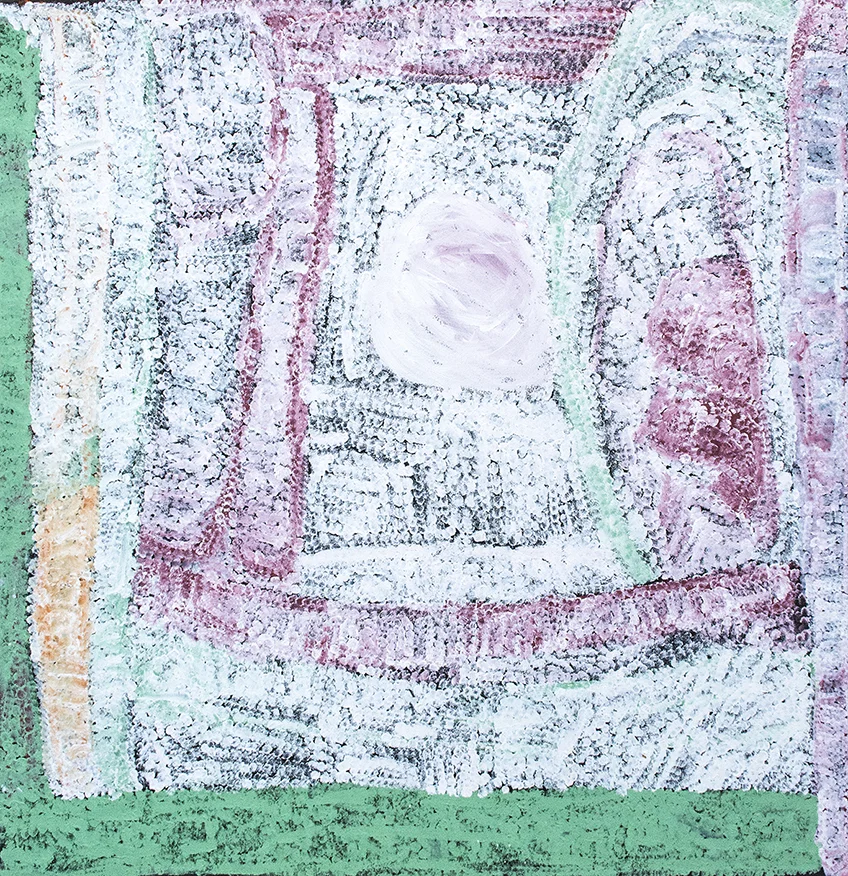
Artiste : Lydia Balbal
Titre de l'œuvre : Poorada Poorada
Format : 91 x 91 cm
Provenance et certificat : centre d'art aborigène de Bidyadanga
Référence de cette peinture aborigène : 26244

Artiste : Margaret Baragurra
Titre de l'œuvre : Lajarri
Format : 102 x 76 cm
Provenance et certificat : Short Street opérant pour les artistes Yulparija de Bidyadanga
Référence de cette peinture aborigène : 787568
Explications sur cette peinture d’art Aborigène :
Margaret Baragurra (1939) was born in Kalpirti located in the Great Sandy Desert of W.A. Her people, the Yulparija, walked out of their traditional country in the early 1970s when their existence was threatened by a severe drought. Margaret travelled with her family to the coastal town of Bidyadanga (then LeGrange Mission) where she now lives.
Since Margaret started painting in 2003 her work has enjoyed critical acclaim and she has been widely exhibited. She combinations the traditional imagery of the Great Sandy Desert with the vibrant colours of the saltwater landscape she now inhabits.
Lajarri is Margaret's traditional country which is south east of Bidyadanga where she now lives. As a child she travelled with her parents across this desert country. This is when the country is full of water in the wet season. In this country there is a big warla (mud flat) which makes the water go milky . At this time there is much mayi (bush tucker) and the country is very beautiful. This is an important place for Margaret.
Collections : University of Newcastle. National Gallery of Australia. Notre Dame University. Laverty Collection. Kerry Stokes, Perth. Sam Barry Collection. QLD State Gallery. Parliament House Collection, Canberra
© Photo : Aboriginal Signature Estrangin gallery with the courtesy of Short Street and the artist
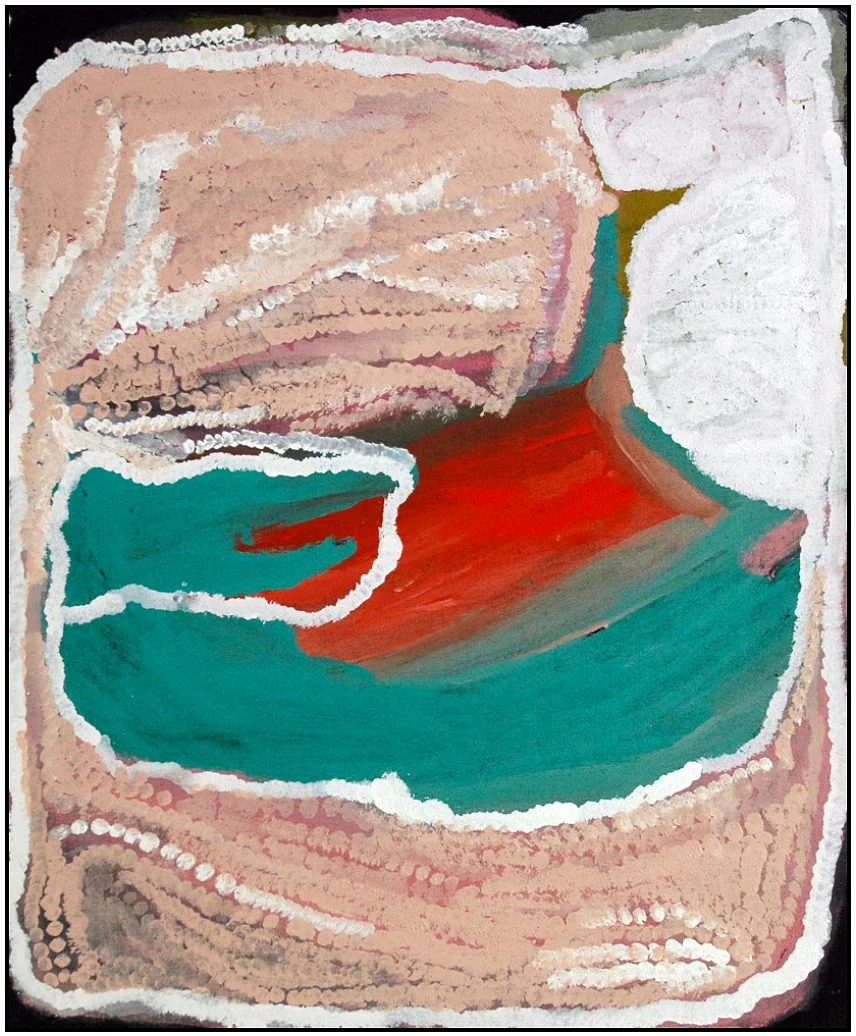
Artiste : Jan Billycan
Titre de l'œuvre : Kirriwirri
Format : 98 x 76,5 cm
Provenance et certificat : Short Street opérant pour les artistes Yulparija de Bidyadanga
Référence de cette peinture aborigène : 787316
Explications sur cette peinture d’art Aborigène :
Jan Billycan (1930-2015) (Djan Nanudie) grew up in Ilyarra country. There are jila (living water) in this country including Karrparti, Kawarr, Jurntiwa, and Wirrguj. Other places include Dodo, Kartal, Kiriwirri and Yukarri. When Jan was young she walked all around these places with her parents. Jan says, "in living water there is a quiet snake. Sometimes he rises up, but we sing him down sometimes he can travel and bring rain. Ilyarra is my country Ilyarra, where I grew up. Lots of tali (sand dunes) and jila in this country. This big dog country."
"This place is the birth place of my father's clan. Our clan is also named Kirriwirri, and call each individual members of this clan Kirriwirri.
There is a a big warla (mud flat) at this place. This is what this painting is about." Kirriwirri is in the Great Sandy Desert close to and west of Well 33 on the Canning Stock Route. It is the birth place of Jan and her family. This work shows tali (sand dunes) and jila (living water).
Collection :
National Museum of Australia
Queensland Art Gallery
National Gallery of Australia
National Gallery of Victoria
Felton Collection
Museum and Art Gallery of Northern Territory
Laverty Collection
Dr Ian Bernhardt Collection
William Mora Collection
Sam Barry Collection
Harvey Wagner Collection, USA
Dr Ian Constable Collection
Myer Collection
Newcastle Regional Art Gallery
Canning Stock Route Project Collection
Big River Collection
Wesfarmers Collection
Leslie Walton Collection
Art Gallery of Western Australia
Queensland Art Gallery
AWARDS
2010 Hedland Art Awards - 'Most Outstanding Work'
2011 Winner Western Australian Artist, West Australian Indigenous Art Award
2011 Hedland Art Awards 'Best Work by an Indigenous Artist'
© Photo : Aboriginal Signature Estrangin gallery with the courtesy of Short Street and the artist
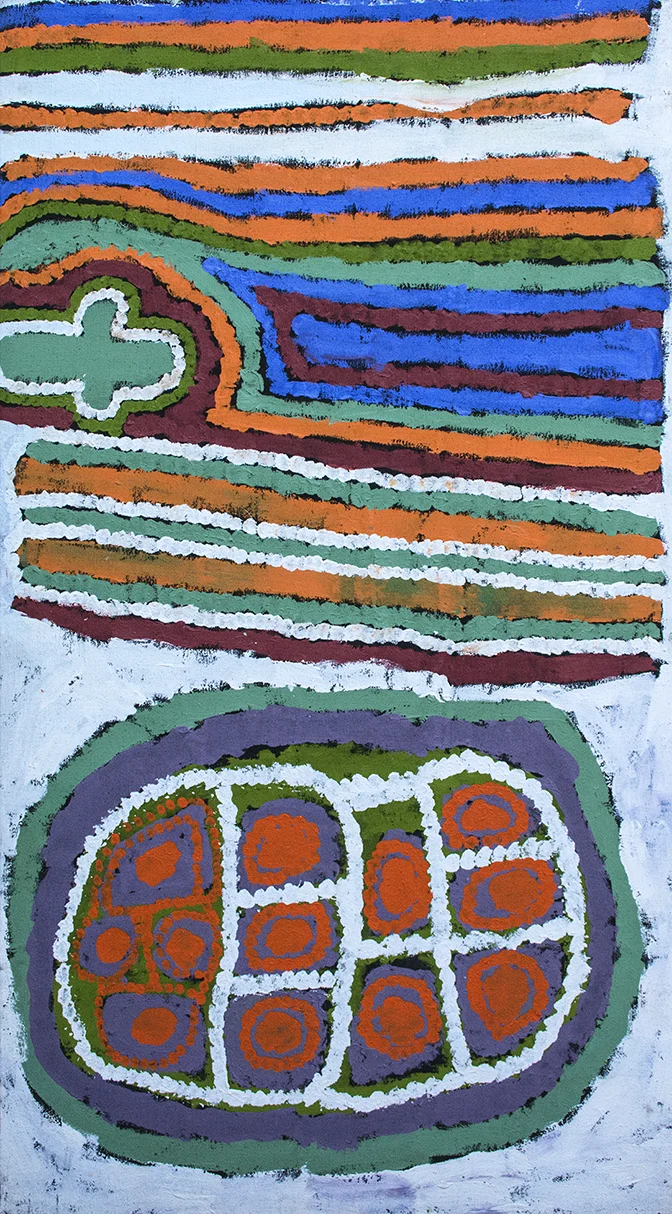
Artiste : Weaver Jack
Titre de l'œuvre : "Desert way with community and jila"
Format : 106,5 x 60 cm
Provenance et certificat : centre d'art aborigène de Bidyadanga
Référence de cette peinture aborigène : 26689
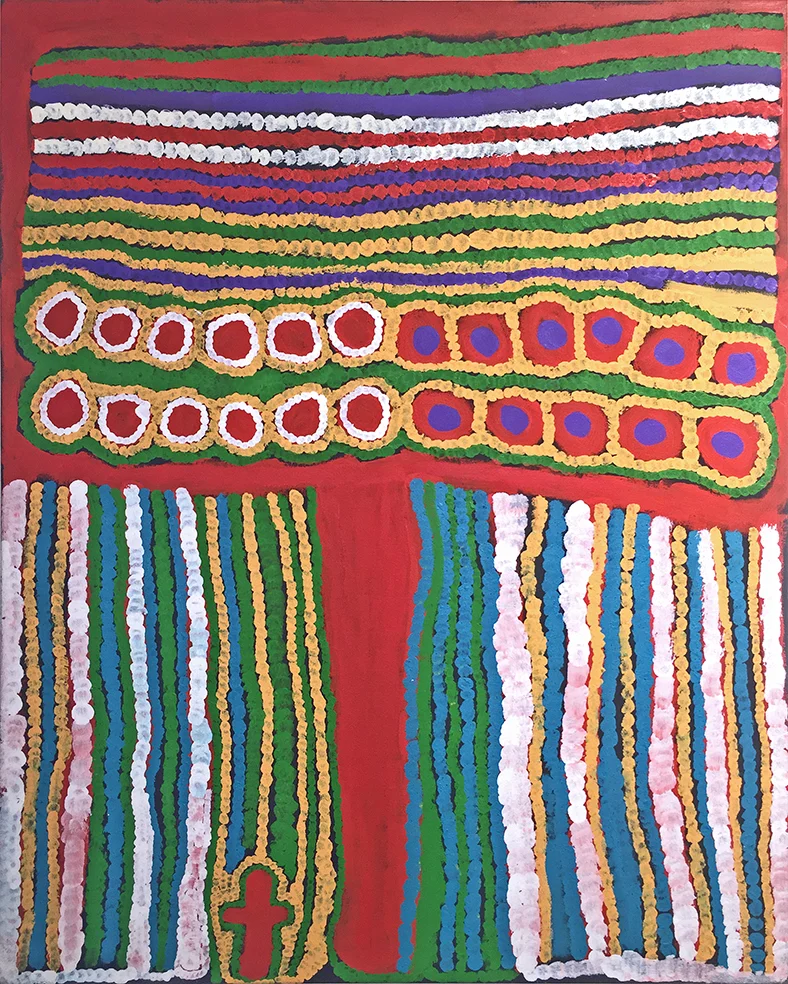
Artiste : Weaver Jack
Titre de l'œuvre : All the Jila
Format : 104 x 83 cm
Provenance et certificat : centre d'art de Tjala
Référence de la peinture : ID-559
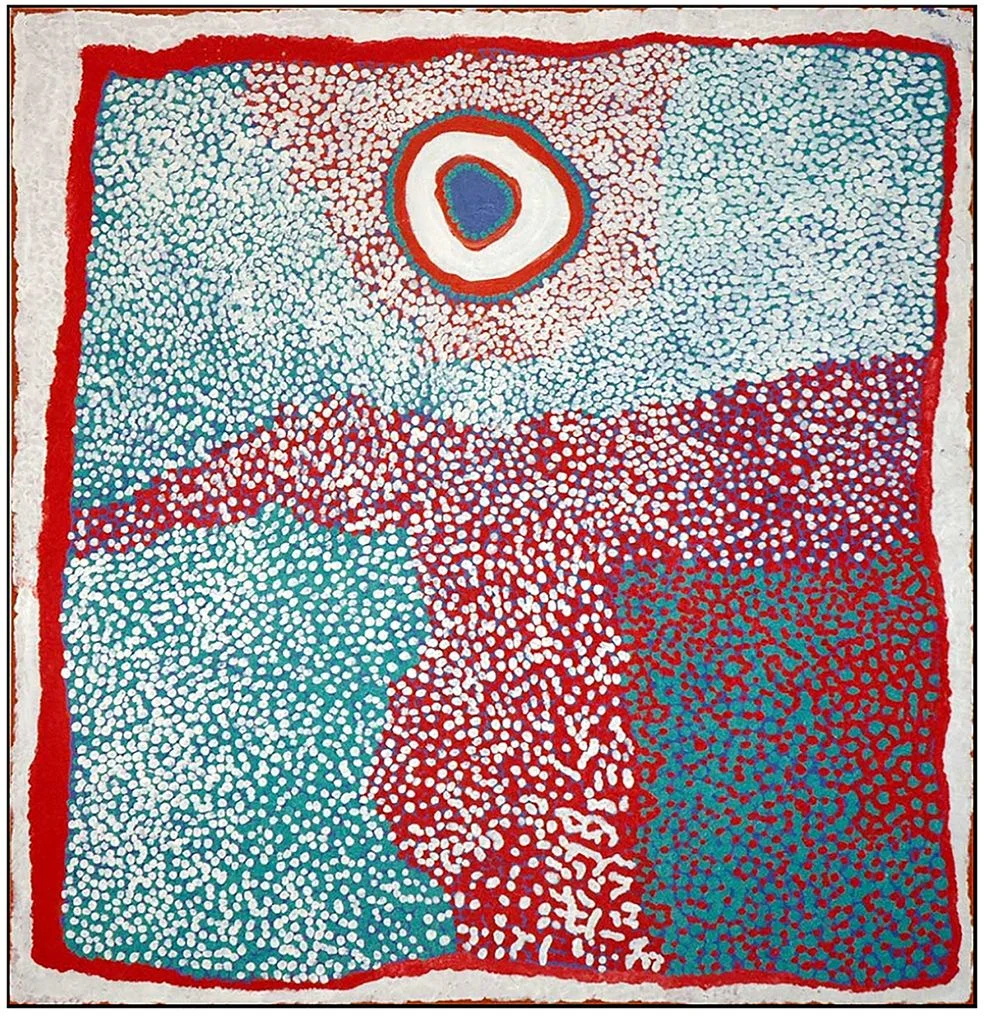
Artiste : Margaret Baragurra
Titre de l'œuvre : Ngatarn at Nanarra - Dreaming Time stories
Format : 97 x 97 cm
Provenance et certificat : centre d'art aborigène de Bidyadanga
Référence de cette peinture aborigène : 786402
En tant que partenaire et représentant des centres d’art Aborigène soutenus par le gouvernement Australien, la galerie Aboriginal Signature Estrangin vous permet d’avoir un accès privilégié en Europe (primary market) à des oeuvres recherchées, disposant des meilleures provenances éthiques reconnues par les grandes institutions et collections privées ou publiques. A travers notre programme d’exposition en Europe, nous vous invitons à voyager à travers le temps et les immensités Aborigènes pour apprivoiser toute l’amplitude et l’excellence de ce mouvement artistique contemporain.
Artiste : Daniel Walbidi
Titre de l'œuvre : Kiriwirri - Dreaming Time stories
Format : 180 x 95 cm
Provenance et certificat : Short Street opérant pour les artistes Yulparija de Bidyadanga
Référence de cette peinture aborigène : 841412
Demander le prix de l'œuvre
Explications sur cette œuvre :
Daniel Walbidi (1983) is one of the most sough after Aboriginal Contemporary artist. He was exhibited in significant museum like the MET and won the Telstra award few years ago.
Daniel says "this is a border place between Yulparija and Warnman country. Daniel says: 'Kirriwirri' is my grandfather's and grandmother's country. That is where they bought up all their children, and where my father was bought up. It is like their family home, their roots. There is big claypan at this place, it is an important place for our family. Our clan is also named Kirriwirri, and individual members of our clan clan are named 'Kirriwirri'. Kirriwirri is a jila (living water) near well 33 on the Canning stock route in the Great Sandy Desert. Daniel's painting reflects the complex desert landscape full of life and colour. He depicts saltlakes (white areas) and the talis (sandhills) Kiriwirri is the birthplace of my fathers family it is the family home. my father along with his older siblings spent their childhood and adolescents here.
Kiriwirri is also important to many other family and clan groups because it is a living jila meaning it has water that never dries out even during the dryest of seasons. i have never been to Kiriwirri but I have a deep desire with in to travel and see this country to become connected. my grandparents have sadly passed away a longtime ago so i guess if i ever do go back to Kiriwirri i would be taking a part of them back. i also paint another important place called wirnpa. wirnpa and kiriwirri are very important to me because i am related to two of these jila. Kiriwirri is my grandfather and Wirnpa is my grandfather they also related to each other being brother in laws. Wirnpa is of the same skin group as me we are both Purungu and Kiriwirri is the Milangka skin group.
© Photo : Aboriginal Signature Estrangin gallery with the courtesy of Short Street and the artist