Hold our connection to country strong for malatja-malatja (future generations)
Du 31 Octobre au dimanche 25 Novembre inclus, au sein de la galerie Aboriginal Signature Estrangin à Bruxelles
Ouverture du Mercredi au Dimanche de 14h30 à 19h, à la galerie : 101 rue Jules Besme, 1081 Bruxelles.
Et sur RDV tous les autres jours au (+32 (0) 475 55 08 54).

Œuvre collaborative magistrale Watarru des artistes femmes de la communauté de Nyapirri (APY land). Format : 300 x 180 cm. © Photo : Aboriginal Signature Estrangin gallery with the courtesy of the artists and Tjungu Palya Art.
La galerie Aboriginal Signature Estrangin vous invite au vernissage de l’exposition « Hold our connection to country strong for malatja-malatja (future generations) » dont le titre reprend en hommage la phrase de l’artiste Willy Martin qui vient de nous quitter.
Nous sommes très honorés d’accueillir à Bruxelles 40 chefs d’œuvre réalisés par 20 artistes aborigènes originaires du désert du APY land, une région artistique du sud de l’Australie, parmi les plus dynamiques et célébrées.

De gauche à droite, œuvre des artistes Nynmiti Burton (Tjala), Alec Baker and Peter Mungkuri (Iwantja), puis Kunmanara Martin (Mimili Maku), Ngupulya Pumani Margaret (Mimili Maku). Photo Aboriginal Signature Estrangin gallery with the courtesy of the artists and the art centres.
Certaines peintures magistrales de plus de deux mètres ont été exposées au sein du prestigieux Musée d’Adelaïde, dans le cadre de l’Exposition Tarnanthi. Les contempler face à face donne l’impression d’ouvrir les battants d’une porte monumentale vers ces immenses territoires habités par les esprits du Temps du Rêve. D’autres formats plus réduits tissent un lien plus intime avec le territoire. L’air chaud du désert y caresse votre visage, la poussière de sable rouge s’immisce partout et offre un écrin à ces monuments de pierre carbonisés depuis la nuit des temps.
Leurs toiles portent avec force et émotion la mémoire de leur peuple millénaire et le partage sous forme picturale avec nous, en Europe, nous invitant à un voyage intérieur au cœur de la Création.

De gauche à droite, œuvre des artistes Wawiriya Burton (Tjala), puis Alison Munti Riley (Ernabella), puis Mitakiki Seven sisters stories (Tjala). Photo Aboriginal Signature Estrangin gallery with the courtesy of the artists and the art centres.
Pour chaque artiste du désert du APY présentés dans cette rare exposition collective, leur connexion intime à la terre touche également à la plus tendre enfance, quand leur mère ressentit pour la première fois les mouvements du bébé à naître dans son ventre. A cet endroit, l’esprit des lieux venait d’habiter le cœur de l’enfant et lui donner un lien et une autorité, pour toujours associés à cette terre dont il serait plus tard le gardien et le protecteur.
Pour la plupart grands initiés, ces artistes honorent ainsi dans leurs peintures les grands « ancêtres du Temps du Rêve » et ce rapport essentiel avec leur environnement, qui structure la vie culturelle et spirituelle de ce peuple. Dans cette magnifique exposition résonne l’essence même de ce lien à la terre qui s’évanouit ailleurs dans le monde occidental.

De droite à gauche, œuvre de l’artiste Aborigène Puna Yanima (1955) de Mimili, sur le thème d’Antara. Puis œuvre de l’artiste Pepai Jangala Caroll (Ernabella). Photo Aboriginal Signature Estrangin gallery with the courtesy of the artists and the art centres.
Peintures dU APY proposées dans le cadre de l'exposition :

Artiste : Pepai Jangala Carroll
Titre de l'œuvre : Walungurru
Format : 170cm x 170cm
Provenance et certificat : centre d'art aborigène d’Ernabella
Référence de cette peinture aborigène : 357-18
Vendue
Explication sur cette œuvre :
Pepai's father comes from sand-dune country near Kintore in the Northern Territory. This place is called Walungurru."The Wanampi is looking for that man. He did the wrong thing and he is running into sand hill country. The Wanampi made that road and he brought the water with him. There was no water here before, but it is still there now."

Artiste : Taylor Wanyima Cooper (1940)
Titre de l'œuvre : Malara: Wanampi Tjukurpa
Format : 153cm x 153cm
Provenance et certificat : centre d'art aborigène de Kaltjiti Arts
Référence de cette peinture aborigène : 18-204
Vendue
Explications pour cette peinture d'art Aborigène :
Malara is the place of the Water Serpent Dreaming. Taylor was born at this important site of the Wanampi Tjukurpa, the Rainbow Serpent or water snake Dreaming. The Malara Wanampi is his Tjukurpa totemic ancestor. Taylor is Nguraritja, a traditional custodian of this tjukurpa. There were many water holes that the Wanapmi travelled through.
“That Wanampi came from Malara. He went to Kunytjanu near Pipalyatjara From Kunytjanu that Wanampi kept walking, walking. He came to Tjuntun (kutjupa -different to Tjuntun at Fregon.) near Watarru. He threw one spear and made that rockhole. He went right in that rockhole and then he travelled back to Malara. This is a conflict story. This region is located far west of the *APY Lands.

Artiste : Witjiti George (1938)
Titre de l'œuvre : Piltati: Wanampi Tjukurpa
Format : 198cm x 153cm
Provenance et certificat : centre d'art aborigène de Kaltjiti Arts
Référence de cette peinture aborigène : 17-154
Vendue
Explications pour cette peinture d'art Aborigène :
Piltati is the well known Tjukurpa story of the two water serpents who live in the Piltati Rockhole with their two wives. This is Witjiti's mother's country near Kanypi on the Anangu Pitjantjatjara/Yankunytjatjara Lands in the far north of South Australia.
Witjiti says that "this is a love story; a story about two brothers and two sisters". The two watis - two brothers - two water snakes, are at the Piltati rockhole waiting for two sisters. The two women had gone to find mai - food. They were gone a long time and the men were hungry. They all live there in this rockhole. - Witjiti George.
The rabbit burrows are depicted as lines with semi circles either side. Underground water flows through these channels and the connected circles are places where the sisters travelled looking for bushtucker.

Artistes : Mitakiki Women's Collaborative
Titre de l'œuvre : Seven Sisters Dreaming Time story
Format : 198cm x 153cm
Provenance et certificat : centre d'art aborigène de Tjala Arts
Référence de cette peinture aborigène : 696-17
Vendue
Explication sur cette œuvre :
Mona, Naomi and Tjimpayi has depicted the Seven Sisters Story. This is a Tjukurpa Story (Creation Story) about the constellations of Pleiades and Orion. The sisters are the constellaton of Pleiades and the other star Orion is said to be Nyiru or Nyirunya (described as a lusty or bad man). Nyiru is forever chasing the sisters known as the Kunkarunkara women as it is said he wants to marry the eldest sister. The seven sisters travel again and again from the sky to the earth to escape Nyiru’s unwanted attentions. They turn into their human form to escape from the persistent Nyiru, but he always finds them and they flee back to the sky. As Nyiru is chasing the sisters he tries to catch them by using magic to turn into the most tempting kampurarpra (bush tomatoes) for the sisters to eat and the most beautiful Ili (fig) tree for them to camp under. However, the sisters are too clever for Nyiru and outwit him as they are knowledgeable about his magic. They go hungry and run through the night rather than be caught by Nyiru. Every now and again one of the women fall victim to his ways. It is said that he eventually captures the youngest sister, but with the help of the oldest sister, she escapes back to her sisters who are waiting for her.
Eventually the sisters fly back into the sky to escape Nyiru, reforming the constellation.
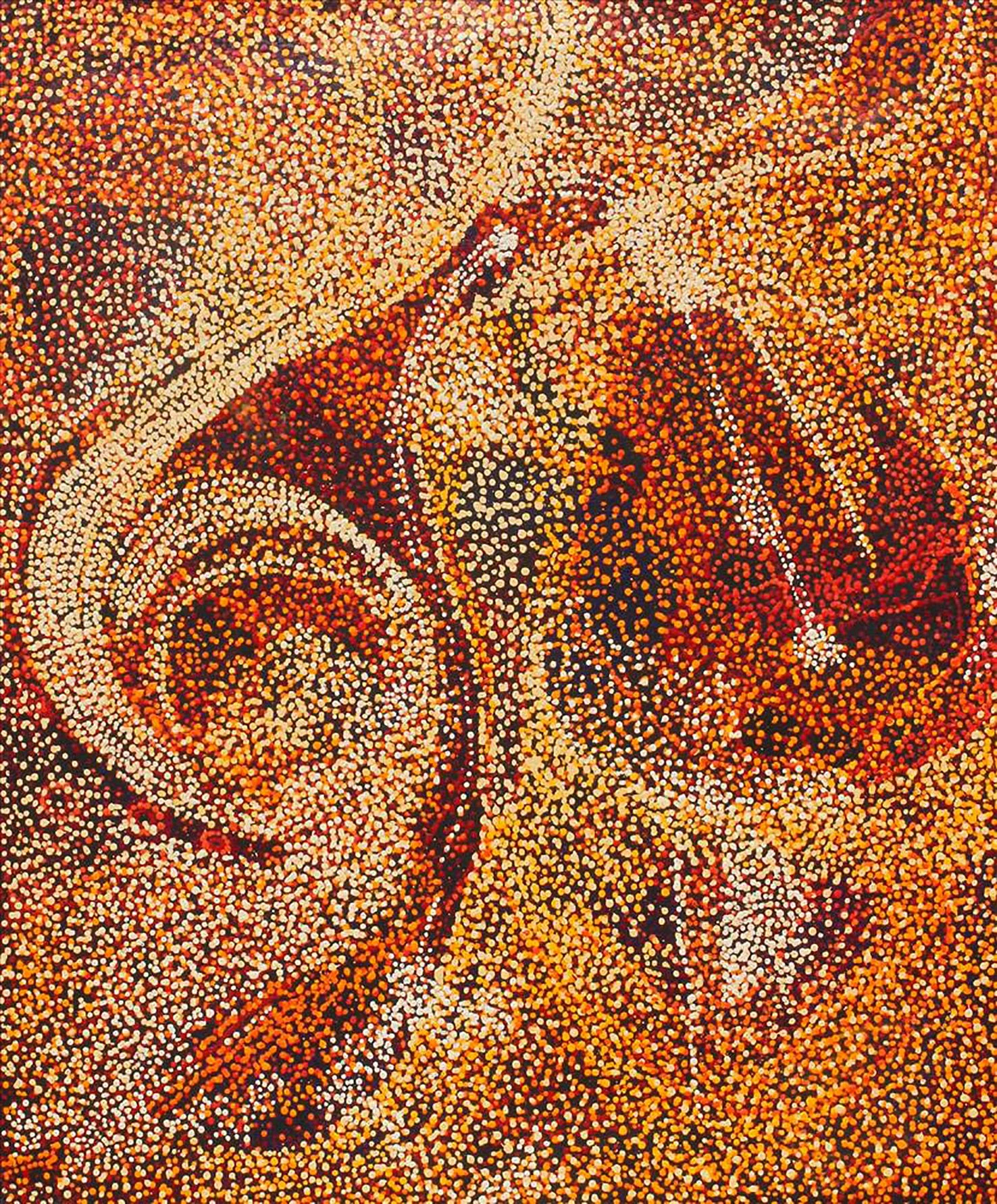
Artiste : Nyunmiti Burton (1964)
Titre de l'œuvre : Ngayuku ngura - My Country
Format : 122cm x 102cm
Provenance et certificat : centre d'art aborigène de Tjala Arts
Référence de cette peinture aborigène : 498-18
Vendue
Explication sur cette œuvre :
In this painting Nyumiti has depicted her country. The different colours and designs represent variations in the landscape along the sacred song lines.

Artistes : Mitakiki Women's Collaborative
Titre de l'œuvre : Seven Sisters Dreaming Time story
Format : 52cm x 102cm
Provenance et certificat : centre d'art aborigène de Tjala Arts
Référence de cette peinture aborigène : 506-18
Vendue
Explication sur cette œuvre :
Mona, Naomi and Tjimpayi has depicted the Seven Sisters Story. This is a Tjukurpa Story (Creation Story) about the constellations of Pleiades and Orion. The sisters are the constellaton of Pleiades and the other star Orion is said to be Nyiru or Nyirunya (described as a lusty or bad man). Nyiru is forever chasing the sisters known as the Kunkarunkara women as it is said he wants to marry the eldest sister. The seven sisters travel again and again from the sky to the earth to escape Nyiru’s unwanted attentions. They turn into their human form to escape from the persistent Nyiru, but he always finds them and they flee back to the sky. As Nyiru is chasing the sisters he tries to catch them by using magic to turn into the most tempting kampurarpra (bush tomatoes) for the sisters to eat and the most beautiful Ili (fig) tree for them to camp under. However, the sisters are too clever for Nyiru and outwit him as they are knowledgeable about his magic. They go hungry and run through the night rather than be caught by Nyiru. Every now and again one of the women fall victim to his ways. It is said that he eventually captures the youngest sister, but with the help of the oldest sister, she escapes back to her sisters who are waiting for her.
Eventually the sisters fly back into the sky to escape Nyiru, reforming the constellation.
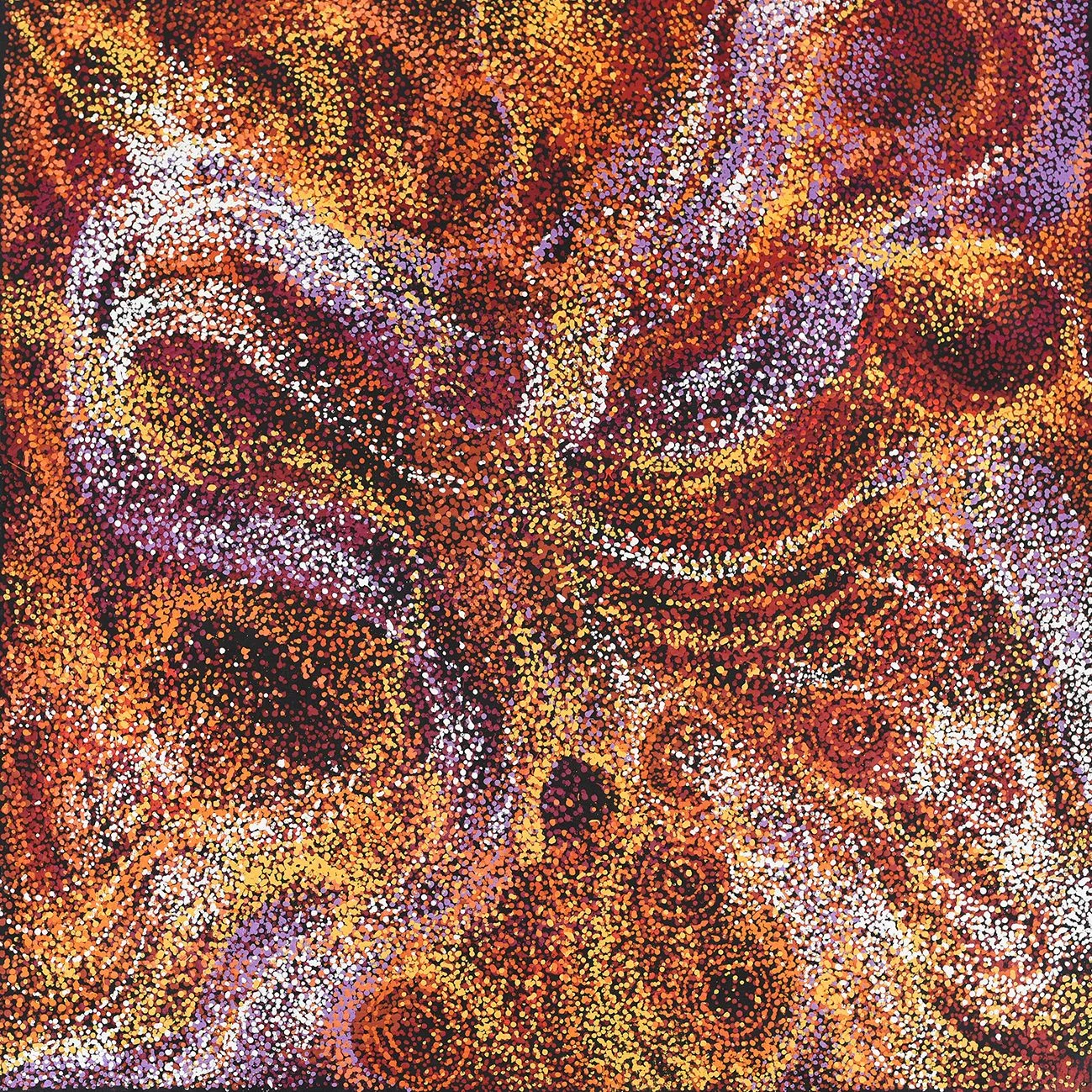
Artiste : Jennifer Ingkatji (1964)
Titre de l'œuvre : Ngayuku ngura - My Country
Format : 122cm x 122cm
Provenance et certificat : centre d'art aborigène de Tjala Arts
Référence de cette peinture aborigène : 486-18
Vendue
Explication sur cette œuvre :
In this painting Jennifer has depicted her country. The different colours and designs represent variations in the landscape along the sacred song lines.

Artiste : Alison Lionel
Titre de l'œuvre : Likara (bark)
Format : 100cm x 84cm
Provenance et certificat : centre d'art aborigène d’Ernabella
Référence de cette peinture aborigène : 422-18
Vendue
Explication sur cette œuvre :
Alison is a quiet observer. She often walks gently around the community with her daughter on her shoulders looking at nature. Something she has been paying attention to is the movement on trees. Her paintings are inspired by the shifts and wandering lines of their bark.

Artiste : Janice Stanley
Titre de l'œuvre : Pantu (Salt lake)
Format : 80cm x 80cm
Provenance et certificat : centre d'art aborigène d’Ernabella
Référence de cette peinture aborigène : 437-18
Vendue
Explication sur cette œuvre :
A very significant tjurkurpa (story) to Anangu is Kungkarangkalpa (Seven Sisters) which is an extensive creation story relating to the Pleiades constellation. The story traverses Australia taking different forms, but local women are privy to the part of the story which takes place in the country near Ernabella. In her paintings Janice is depicting a salt lake near Attila (Mt Connor), a landmark in the Seven Sisters story.

Artiste : Michelle Lewis
Titre de l'œuvre : Ngayuku mamaku ngura ini Makiri
Format : 170cm x 84cm
Provenance et certificat : centre d'art aborigène d’Ernabella
Référence de cette peinture aborigène : 220-18
Vendue
Explication sur cette œuvre :
Michelle’s father's country is a place called Makiri located east of Ernabella near the Fregon community. This is country is tjala tjukurpa (honey ant dreaming). Michelle and her family still visit this country where she draws special attention to the natural elements on the land which are then represented in her paintings:
I am painting the landscape from above, as you might see it from an airplane or as a bird looking down. It is beautiful country both from on the ground and up above. When Michelle created her work, ngayuku mamku ngura ini Makiri (my father's country, a place called Makiri) she was thinking of Makiri and how the tjala (honeyants) tunnel though the sandy soil as well as about the waterholes, the assemblages of trees and shrubs and the country that is “quiet” (empty).
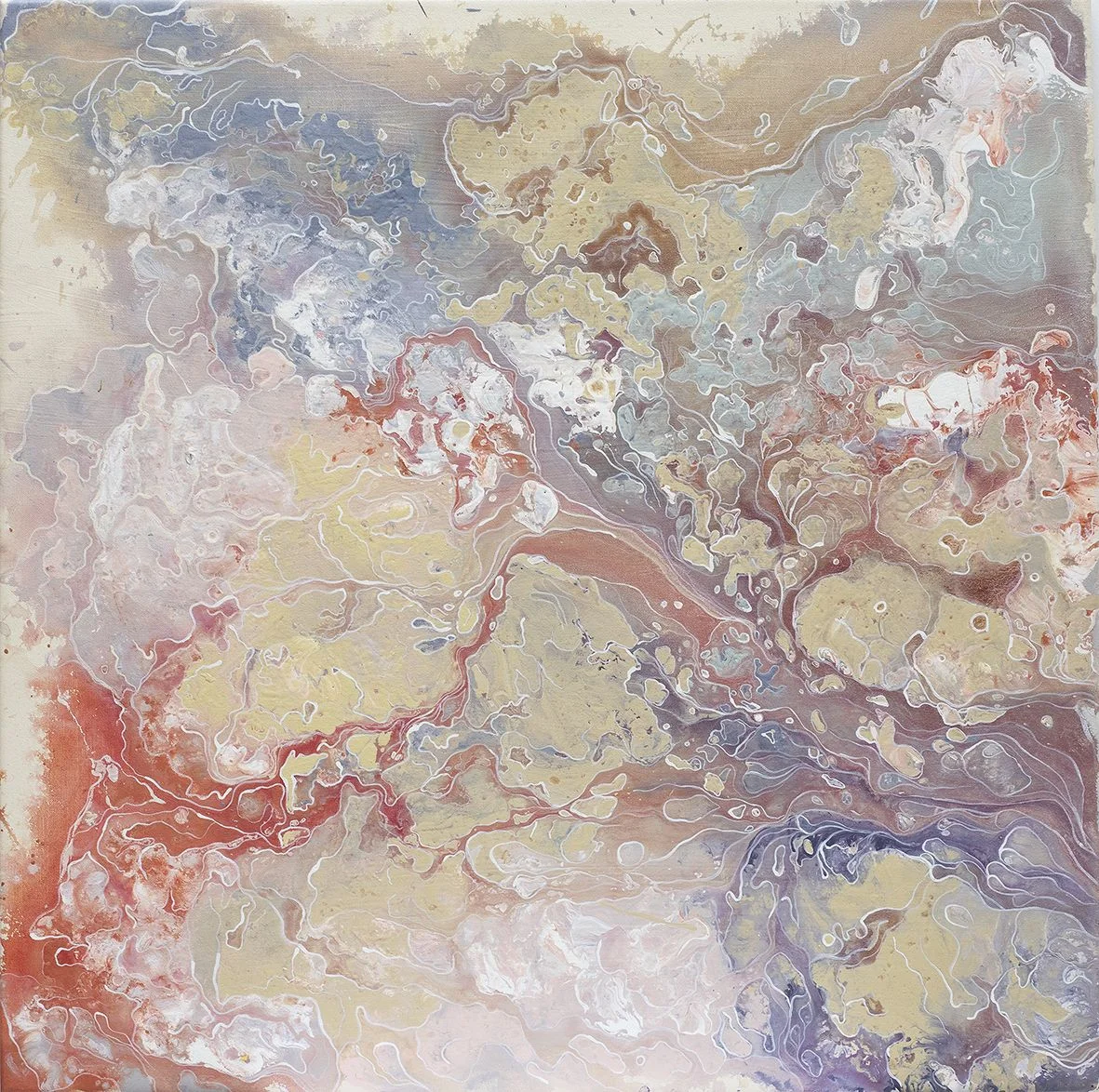
Artiste : Janice Stanley
Titre de l'œuvre : Pantu (Salt lake)
Format : 80cm x 80cm
Provenance et certificat : centre d'art aborigène d’Ernabella
Référence de cette peinture aborigène : 436-18
Vendue
Explication sur cette œuvre :
A very significant tjurkurpa (story) to Anangu is Kungkarangkalpa (Seven Sisters) which is an extensive creation story relating to the Pleiades constellation. The story traverses Australia taking different forms, but local women are privy to the part of the story which takes place in the country near Ernabella. In her paintings Janice is depicting a salt lake near Attila (Mt Connor), a landmark in the Seven Sisters story.

Artistes : Alec Baker (1932)
Titre de l'œuvre : Ngura (Country)
Format : 198 x 162 cm
Provenance et certificat : centre d'art aborigène d’Iwantja
Référence de cette peinture aborigène : 862-18
Explications pour cette peinture d'art Aborigène :
Alec Baker's paintings and drawings map out the experienced story of his country. Alec draws on ancestry tjukurpa (stories), personal memories, and a rich lifetime spent travelling across vast desert lands as a stock man and cultural law man.
Alec’s detailed works reflects topographic map like imagery, utilising traditional doting techniques and a tactile palette to highlight and define forms and spaces within the landscape, outlining a strong sense of place within Alec's drawings.
"I teach my grandchildren the stories and knowledge about our culture, our land, Yankunytjatjara land. I paint my memories of country, I try to make the paintings strong, holding all the memories and keeping it strong."

Artistes : Alec Baker (1932)
Titre de l'œuvre : Ngura (Country)
Format : 152 x 76 cm
Provenance et certificat : centre d'art aborigène d’Iwantja
Référence de cette peinture aborigène : 477-20
Explications pour cette peinture d'art Aborigène :
Alec Baker's paintings and drawings map out the experienced story of his country. Alec draws on ancestry tjukurpa (stories), personal memories, and a rich lifetime spent travelling across vast desert lands as a stock man and cultural law man.
Alec’s detailed works reflects topographic map like imagery, utilising traditional doting techniques and a tactile palette to highlight and define forms and spaces within the landscape, outlining a strong sense of place within Alec's drawings.
"I teach my grandchildren the stories and knowledge about our culture, our land, Yankunytjatjara land. I paint my memories of country, I try to make the paintings strong, holding all the memories and keeping it strong."

Artistes : Alec Baker (1932)
Titre de l'œuvre : Ngura (Country)
Format : 198 x 112 cm
Provenance et certificat : centre d'art aborigène d’Iwantja
Référence de cette peinture aborigène : 525-19
Explications pour cette peinture d'art Aborigène :
Alec Baker's paintings and drawings map out the experienced story of his country. Alec draws on ancestry tjukurpa (stories), personal memories, and a rich lifetime spent travelling across vast desert lands as a stock man and cultural law man.
Alec’s detailed works reflects topographic map like imagery, utilising traditional doting techniques and a tactile palette to highlight and define forms and spaces within the landscape, outlining a strong sense of place within Alec's drawings.
"I teach my grandchildren the stories and knowledge about our culture, our land, Yankunytjatjara land. I paint my memories of country, I try to make the paintings strong, holding all the memories and keeping it strong."

Artistes : Alec Baker (1932)
Titre de l'œuvre : Ngura (Country)
Format : 198 x 167 cm
Provenance et certificat : centre d'art aborigène d’Iwantja
Référence de cette peinture aborigène : 869-18
Explications pour cette peinture d'art Aborigène :
Alec Baker's paintings and drawings map out the experienced story of his country. Alec draws on ancestry tjukurpa (stories), personal memories, and a rich lifetime spent travelling across vast desert lands as a stock man and cultural law man.
Alec’s detailed works reflects topographic map like imagery, utilising traditional doting techniques and a tactile palette to highlight and define forms and spaces within the landscape, outlining a strong sense of place within Alec's drawings.
"I teach my grandchildren the stories and knowledge about our culture, our land, Yankunytjatjara land. I paint my memories of country, I try to make the paintings strong, holding all the memories and keeping it strong."
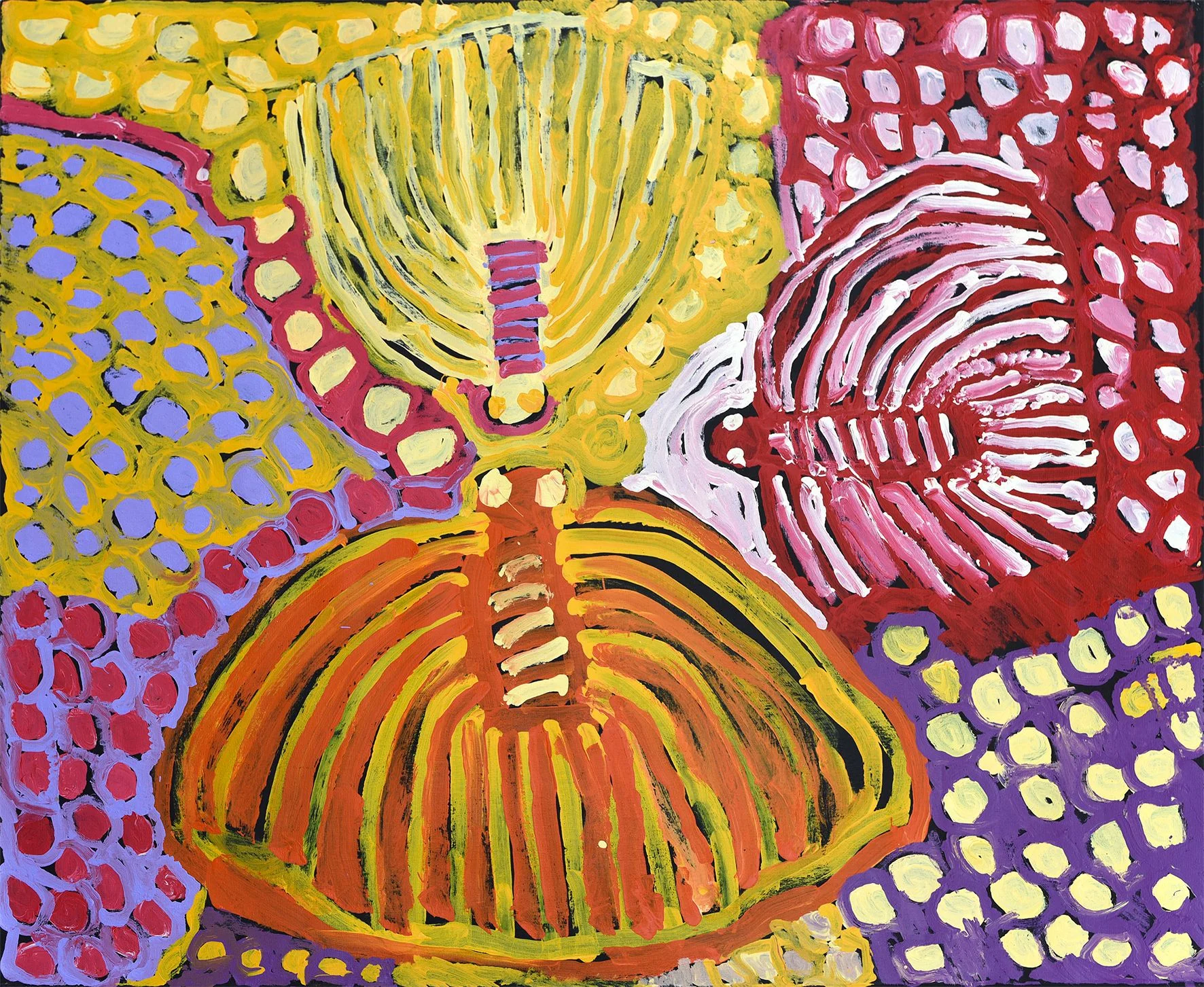
Artiste : Harry Tjutjuna
Titre de l'œuvre : Spider man dreaming
Format : 147 x 121 cm
Provenance et certificat : centre d'art aborigène de Ninuku Arts
Référence de cette toile aborigène : 17-247a
Demander le prix de cette œuvre
Explications pour cette peinture d'art Aborigène :
Cette œuvre convoque l'histoire du Temps du Rêve liée au Spider Man, totem de ce peintre, grand homme de loi. Cette créature emblématique a créé le pays de Tjutjuna aux temps des origines. La générosité du pinceau et la résonance des formes solaires de l'araignée, embrassent son territoire ancestral.

Artiste : Jimmy Donegan
Titre de l'œuvre : Pukara - Dreaming Time story of a father and son
Format : 107 x 91 cm
Provenance et certificat : centre d'art aborigène de Ninuku Arts
Référence de cette toile aborigène : 14-388
Explications pour cette peinture d'art Aborigène :
Cette œuvre évoque une histoire ancestrale du Temps du Rêve associée au lieu de Pukara, un trou d'eau très important dans le APY land. Ici un père et son fils, deux serpents d'eau mythologiques Wanampi, sont les gradiens des lieux.
L'eau à Pukara a une saveur particulière en raison du nectar d'une plante du bush qui s'y mélange, ce qui conduisait des Aborigènes à déborder de leurs frontières pour venir y boire.
Ces comportements déplaisaient profondément au serpent Wanampi père, qui devait souligner les droits à respecter en invitant les personnes à quitter ces lieux.
Le Père et son fils poursuivent ensuite leur périple vers Willuna dans le APY land. Quand ils reviendront par la suite à Pukara, le lieu sera envahi par des mouches femelles attirées à leur tour par le miel sauvage.
Le père et son fils s'empressent alors de récolter le miel, mais la fourmis noire les attaque et va blesser avec une lance les flancs du fils.

Artiste : Molly Miller
Titre de l'œuvre : Ngura Tjuta
Format : 126 x 90 cm
Provenance et certificat : centre d'art aborigène de Ninuku Arts
Référence de cette toile aborigène : 18-214
Demander le prix de cette œuvre

Artiste : Samuel Miller
Titre de l'œuvre : Ngayuku Ngura
Format : 183 x 110 cm
Provenance et certificat : centre d'art aborigène de Ninuku Arts
Référence de cette toile aborigène : 18-244a
Demander le prix de cette œuvre
Explication sur cette œuvre :
Ngayuku Ngura means ‘My Place’. Samuel uses an extensive palette of colours to paint the country surrounding Kalka and Pipalyatjara. His paintings feature the various land formations from that area - rockholes, creeks and hills. His land is a sacred men’s rockhole, so sacred that the name is not allowed to be wrien down or spoken about.
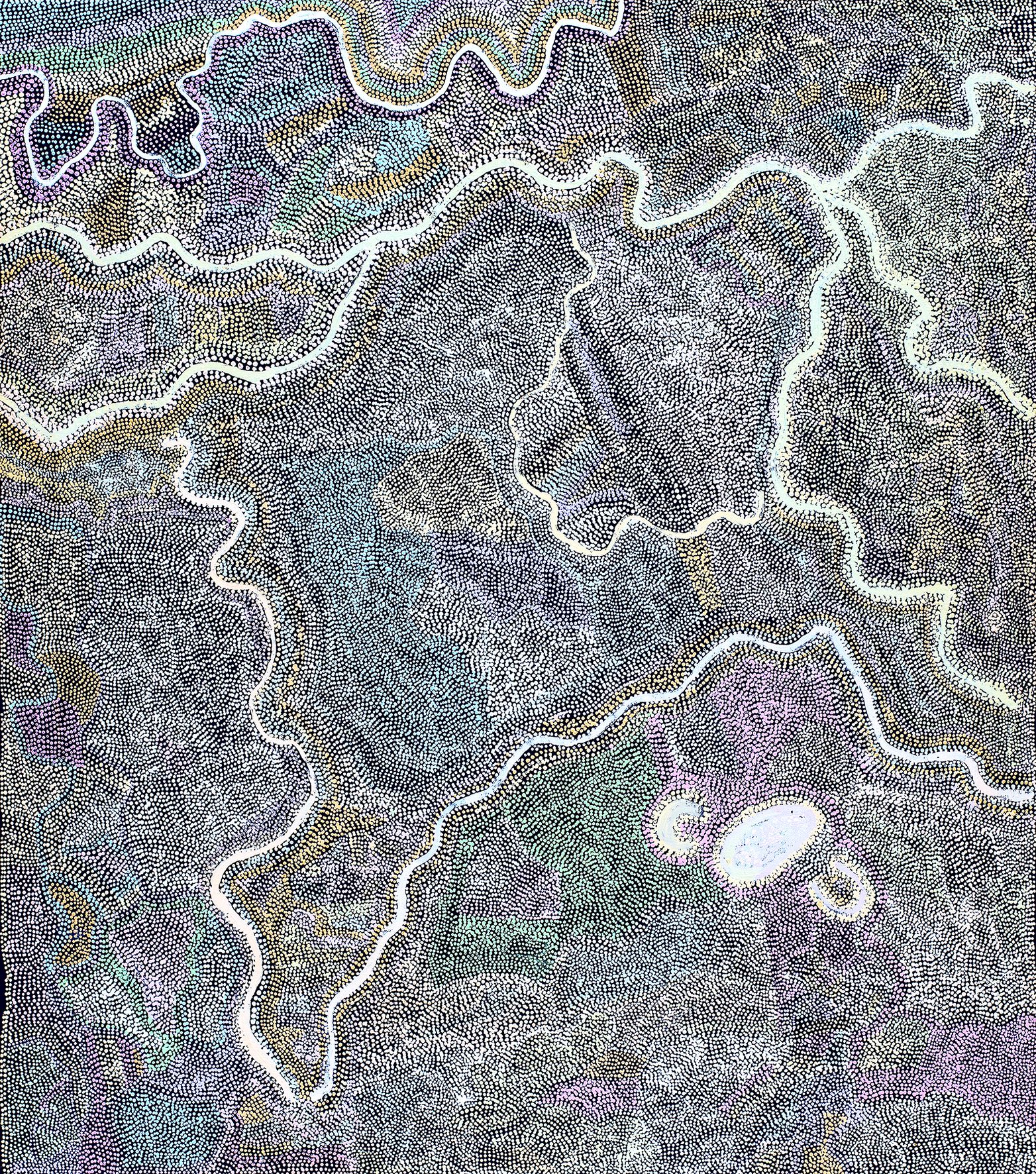
Artiste : Molly Miller
Titre de l'œuvre : Ngura Tjuta
Format : 122 x 107 cm
Provenance et certificat : centre d'art aborigène de Ninuku Arts
Référence de cette toile aborigène : 18-134
Vendue
Explication sur cette œuvre :
This is an ancestral story about Minyma Tjuta (lots of women spirits). Kalpama and Alkuwari – husband and wife – lived in a nest in a tree. Kalpama could not walk so he relied on his wife Alkuwari to go hunting for him. One day his evil grandson came by. When the grandson looked up, he noticed water coming down and, upon further inspection, he noticed it was Kalpama urinating. He became angry and got a firestick, lighting the tree and burning the nest where Kalpama lived. Alkuwari was out hunting for kuka (meat), but she noticed the smoke coming from Kalpama’s nest. She knew straight away that her evil grandson had burnt down the tree. She travelled to a place south-west of Watarru called Mamungari. There she started crying incessantly and called out to the Minyma (female spirit relatives) to come and help her. When the Minyma arrived, they all travelled back to where the boy was. He had made a long ladder out of branches and had climbed up a tree, where he was hiding. When the women tried to climb up towards him, the boy pushed the ladder down and all the spirit women fell down onto the ground. This is a minyma (women’s) site, where the ancestors still live today.
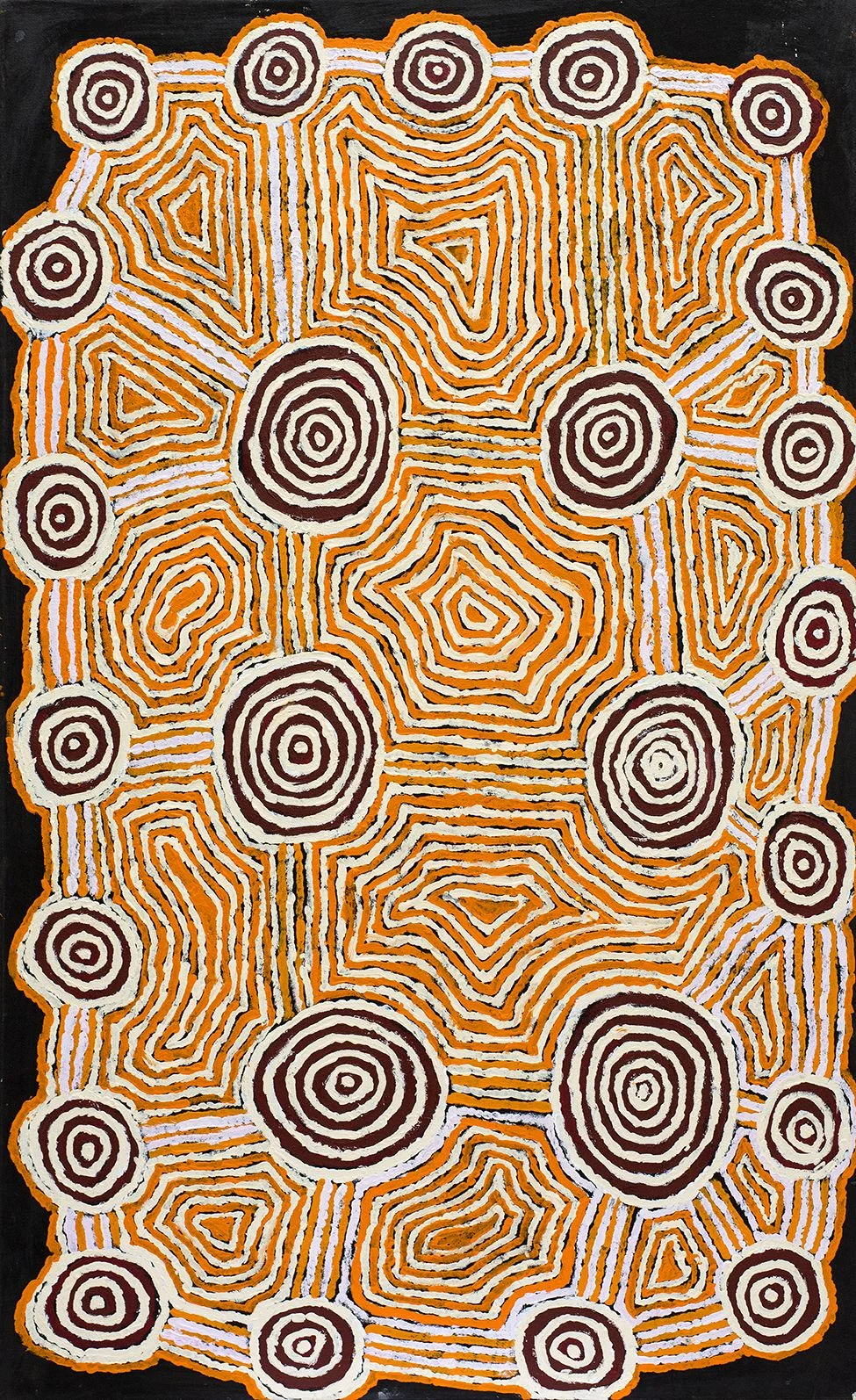
Artiste : Simon Butler
Titre de l'œuvre : Sacred story connected to country
Format : 127 x 78 cm
Provenance et certificat : centre d'art aborigène de Ninuku Arts
Référence de cette toile aborigène : 18-175
Exposition organisée en partenariat avec les artistes, les communautés Aborigènes et les équipes des centres d’art de Tjungu Palya, Iwantja, Kaltjiti, Tjala, Ernabella, Mimili Maku, Ninuku Art.
Artiste : Wawiriya Burton (1925)
Titre de l'œuvre : Ngayuku ngura - My Country
Format : 198cm x 187cm
Provenance et certificat : centre d'art aborigène de Tjala Arts
Référence de cette peinture aborigène : 730-17
Vendue
Explication sur cette œuvre :
In this painting Wawiriya has depicted her country. The different colours and designs represent variations in the landscape along the sacred song lines.