Profil de l'artiste Robert Fielding Punnagka
Centre d'art Aborigène de Mimili Maku
Langage : Pitjantjatjara
Région : APY land
Date de naissance: c. 1969
Œuvres d'art Aborigène de l'artiste, proposées à la galerie :


.... Robert Fielding (1969) est un artiste engagé de part la diversité de ses origines. La mère de Robert Fielding était Garieva Fielding (déc.), Une femme d’origine pakistanaise / occidentale et Aborigène Arrernte. Le père de Robert, Bruce Fielding (déc.) Était un Yankunytjatjara né à Lilla Creek Station, près de Finke (Aputula).
Enfant, Bruce a été enlevé à sa mère et a grandi à Colebrook Home, à Quorn, en Australie-Méridionale. La grand-mère de Robert était Miriam Khan (déc.) Et elle était de la gare de Henbury. L’un de ses maris était James Inkamala (déc.) Et il venait de Ntaria Hermannsburg.
Robert est le plus jeune des 12 enfants. En continuant la tradition des grandes familles, lui et sa femme, Kaye Lowah (originaire du détroit de Torres / Palm Island), ont 9 enfants eux-mêmes.
Robert a développé sa pratique artistique à Mimili Maku Arts depuis 2005. Robert a participé au programme de Wesfarmers Indigenous Leaders en 2013 et a ouvert de nouvelles voies artistiques au sein de Mimili Maku Arts, comme le programme Mimili Maku Photography et New Media.
En 2015 et 2017 il a gagné le grand prix de l’œuvre Photographique sur papier au Musée de Darwin dans le cadre du Telstra NATSIAA Award. ..
Robert Fielding’s mother was Garieva Fielding (dec.), a woman of Pakistani/Western Arrernte descent. Robert’s father Bruce Fielding (dec.) was a Yankunytjatjara born at Lilla Creek Station, near Finke
(Aputula). As a child Bruce was taken from his mother and raised in Colebrook Home, at Quorn, South Australia. Robert’s grandmother was Miriam Khan (dec.) and she was from Henbury Station. One of her husbands was James Inkamala (dec.) and he was from Ntaria Hermannsburg. Robert is the youngest of 12 children. Continuing the tradition of large families, he and his wife Kaye Lowah have 9 children of their own – Zaachariaha, Zaavan, Zibeon, Zeldon Fielding, Payrozza, Partimah, Peshwah, Priayangka and Zedekiah Fielding. Robert’s wife Kaye is of Torres Strait/Palm Island heritage.
Robert has been developing his artistic practice at Mimili Maku Arts since 2005 and been employed as a studio assistant, supporting his fellow artists at the art centre since 2010. Robert participated in the Wesfarmers Indigenous Leaders program in 2013 and has led the way for the arts worker program at Mimili Maku Arts. Robert has recently initiated the Mimili Maku Photography and New Media program, mentoring young and emerging artists in Mimili Community. ....
Collections d'art privées et publiques
National Gallery of Australia
National Gallery of Victoria
Art Gallery of South Australia
ArtBank
Parliament House Collection, Canberra, ACT The McGeoch Collection
Artiste : Robert Fielding (1969)
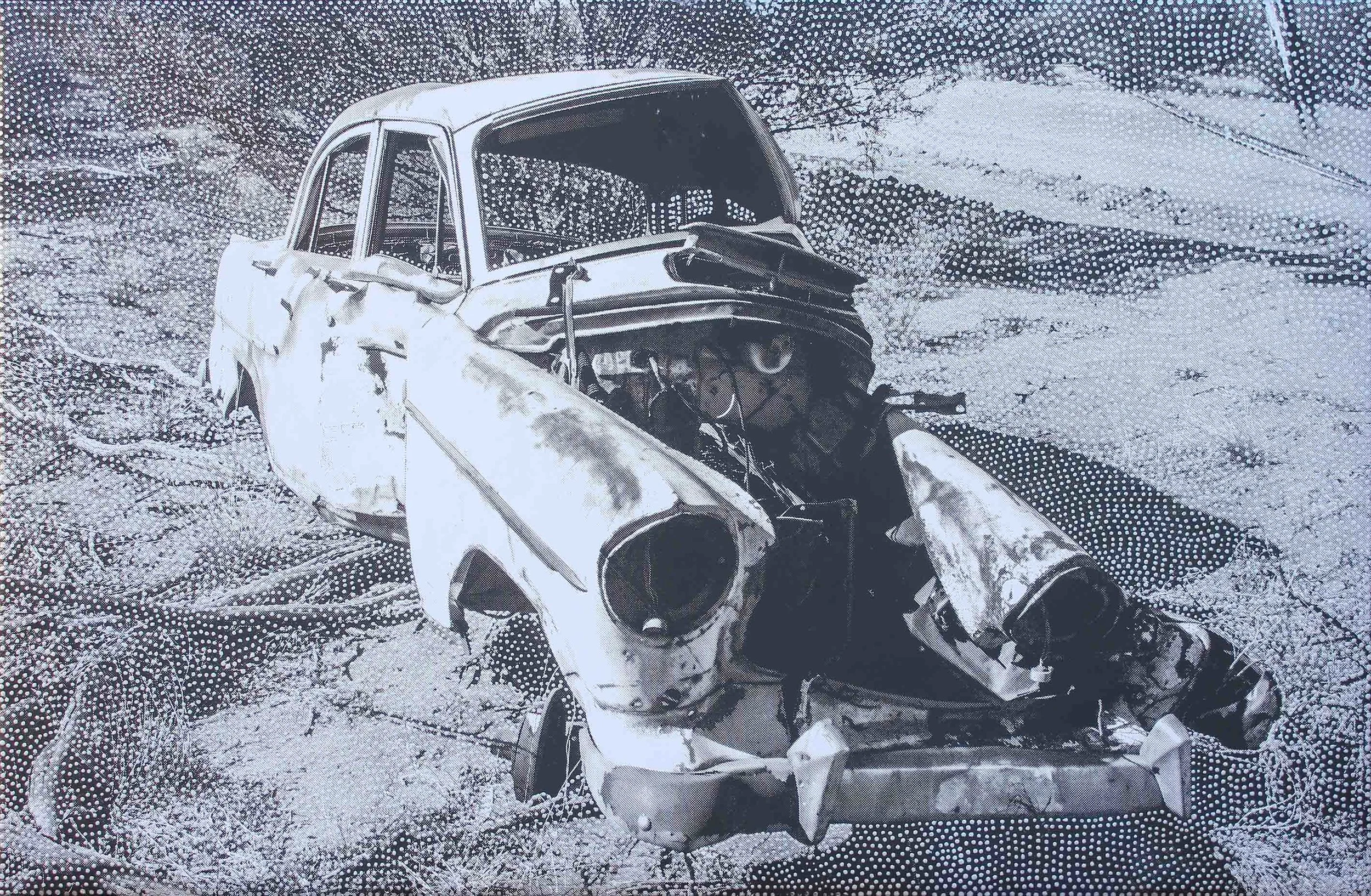
Titre de l'œuvre : Tjukurpa Miil Miilpa
Format : 152 cm x 122 cm
Provenance et certificat : centre d'art aborigène de Mimili Maku
Référence de cette peinture aborigène : 119-21
Demander le prix de cette œuvre
Explications pour cette peinture d'art Aborigène :
Anangu culture has many layers of secrecy. Not all knowledge is to be held by each member of our community, some knowledge is only to be held by few. These paintings are also layered with much secrecy, things we share and things we choose not to share.
Some truths are so strong and important they shine through the veils and complex systems of sacred storylines. These are the foundations of our culture, the sacredness of our land, and the depth of our knowledge.
Like our culture these paintings cover the secret and sacred, whilst celebrating the strong cornerstones of what it is to be Anangu.
Ngurkantananma - Recognise.
Nganampa Manta Miil Miilpa - our land is sacred.
Nganampa Tjukurpa Miil Miilpa - our culture is sacred.
Mimili Community is home to 300 Pitjantjatjara and Yankunytjatjara people who have been living in the area for millennia in harmony with nature and acting as custodians of the land and the Tjukurpa (creation stories). Mimili was formerly known as Everard Park, which was a cattle station that was returned to Aboriginal ownership through the 1981 APY Lands Act. Mimili Community was incorporated as an Aboriginal Community in 1975.