
Profil de l'artiste Tuppy Ngintja Goodwin
Centre d'art Aborigène de Mimili Maku
Langage : Pitjantjatjara
Région : APY land
Date de naissance: c. 1952
Tuppy Goodwin (1952) est une femme senior de Pitjantjatjara très engagée pour promouvoir le droit traditionnel et la culture Aborigène, également à travers la danse et la peinture. Le nom du père de Tuppy était Nguyarangu (déc) et son pays était près de Docker River. Le nom de sa mère était Emily Nyanyanta et son pays était Wintutjuru, à l’ouest de Fregon, sur les terres APY.
Tuppy Goodwin est né dans le bush près du ruisseau Bumbali et elle a déménagé à Mimili avec sa famille quand elle était un bébé. À l’époque, Mimili s’appelait Everard Park, c’était une station de bétail, qui est finalement retournée au peuple Yankunytjatjara au milieu des années 1960. Tuppy a eu trois enfants avec Reggie Goodwin (déc), David, Maxine et Neville Goodwin.
Tuppy était professeur pré-scolaire à l’école Mimili Anangu pendant trente ans, elle a pris sa retraite en 2009 et a commencé à peindre au Centre d’art en 2010. Tuppy vit à Mimili et elle a trois grands-enfants Jasmine, Eva et Kishana avec son défunt mari Kunmanara (Mumu Mike) Williams.
Collections d'art privées et publiques
Art Gallery of South Australia, Adelaide, SA
Corrigan Art Collection
Art Bank Collection
James Selva-Nangam Collection
Desert Country Collection
Luczo Collection, USA
Laverty Collection, Sydney
Art Gallery of New South Wales, Sydney
Museum and Art Gallery of the Northern Territory, Darwin
National Gallery of Australia, Canberra
National Gallery of Victoria, Melbourne
Awards
2020 Finalist, John Leslie Art Prize, Gippsland Art Gallery
2018 Finalist, NATSIAA, MAGNT
Œuvres d'art Aborigène de l'artiste, proposées à la galerie :

Artiste : Tuppy Ngintja Goodwin (1952)
Titre de l'œuvre : Antara
Format : 152cm x 152cm
Provenance et certificat : centre d'art aborigène de Mimili Maku
Référence de cette peinture aborigène : 59-21
Explications pour cette peinture d'art Aborigène :
When I paint, it’s like inma (ceremonial dance and song). This is Antara, a sacred place for Anangu, and the Maku (witchetty grub) Tjukurpa. There’s a special rock hole at Antara where women perform inma – ‘inmaku pakani’ – and afterwards there’s enough maku to feed everyone. Antara and Maku Tjukurpa is really important for Mimili women, we paint this place and its stories, keeping them strong.

Artiste : Tuppy Ngintja Goodwin (1952)
Titre de l'œuvre : Antara
Format : 152 cm x 152 cm
Provenance et certificat : centre d'art aborigène de Mimili Maku
Référence de cette peinture aborigène : 417-18
Explications pour cette peinture d'art Aborigène :
When I paint, it’s like inma (ceremonial dance and song). This is Antara, a sacred place for Anangu, and the Maku (witchetty grub) Tjukurpa. There’s a special rock hole at Antara where women perform inma – ‘inmaku pakani’ – and afterwards there’s enough maku to feed everyone. Antara and Maku Tjukurpa is really important for Mimili women, we paint this place and its stories, keeping them strong.

Artiste : Tuppy Ngintja Goodwin (1952)
Titre de l'œuvre : Antara
Format : 152cm x 122cm
Provenance et certificat : centre d'art aborigène de Mimili Maku
Référence de cette peinture aborigène : 327-20
Explications pour cette peinture d'art Aborigène :
When I paint, it’s like inma (ceremonial dance and song). This is Antara, a sacred place for Anangu, and the Maku (witchetty grub) Tjukurpa. There’s a special rock hole at Antara where women perform inma – ‘inmaku pakani’ – and afterwards there’s enough maku to feed everyone. Antara and Maku Tjukurpa is really important for Mimili women, we paint this place and its stories, keeping them strong.

Artiste : Tuppy Ngintja Goodwin (1952)
Titre de l'œuvre : Antara
Format : 152cm x 122cm
Provenance et certificat : centre d'art aborigène de Mimili Maku
Référence de cette peinture aborigène : 371-20
Explications pour cette peinture d'art Aborigène :
When I paint, it’s like inma (ceremonial dance and song). This is Antara, a sacred place for Anangu, and the Maku (witchetty grub) Tjukurpa. There’s a special rock hole at Antara where women perform inma – ‘inmaku pakani’ – and afterwards there’s enough maku to feed everyone. Antara and Maku Tjukurpa is really important for Mimili women, we paint this place and its stories, keeping them strong.

Artiste : Tuppy Ngintja Goodwin (1952)
Titre de l'œuvre : Antara
Format : 122cm x 122cm
Provenance et certificat : centre d'art aborigène de Mimili Maku
Référence de cette peinture aborigène : 406-20
Explications pour cette peinture d'art Aborigène :
When I paint, it’s like inma (ceremonial dance and song). This is Antara, a sacred place for Anangu, and the Maku (witchetty grub) Tjukurpa. There’s a special rock hole at Antara where women perform inma – ‘inmaku pakani’ – and afterwards there’s enough maku to feed everyone. Antara and Maku Tjukurpa is really important for Mimili women, we paint this place and its stories, keeping them strong.
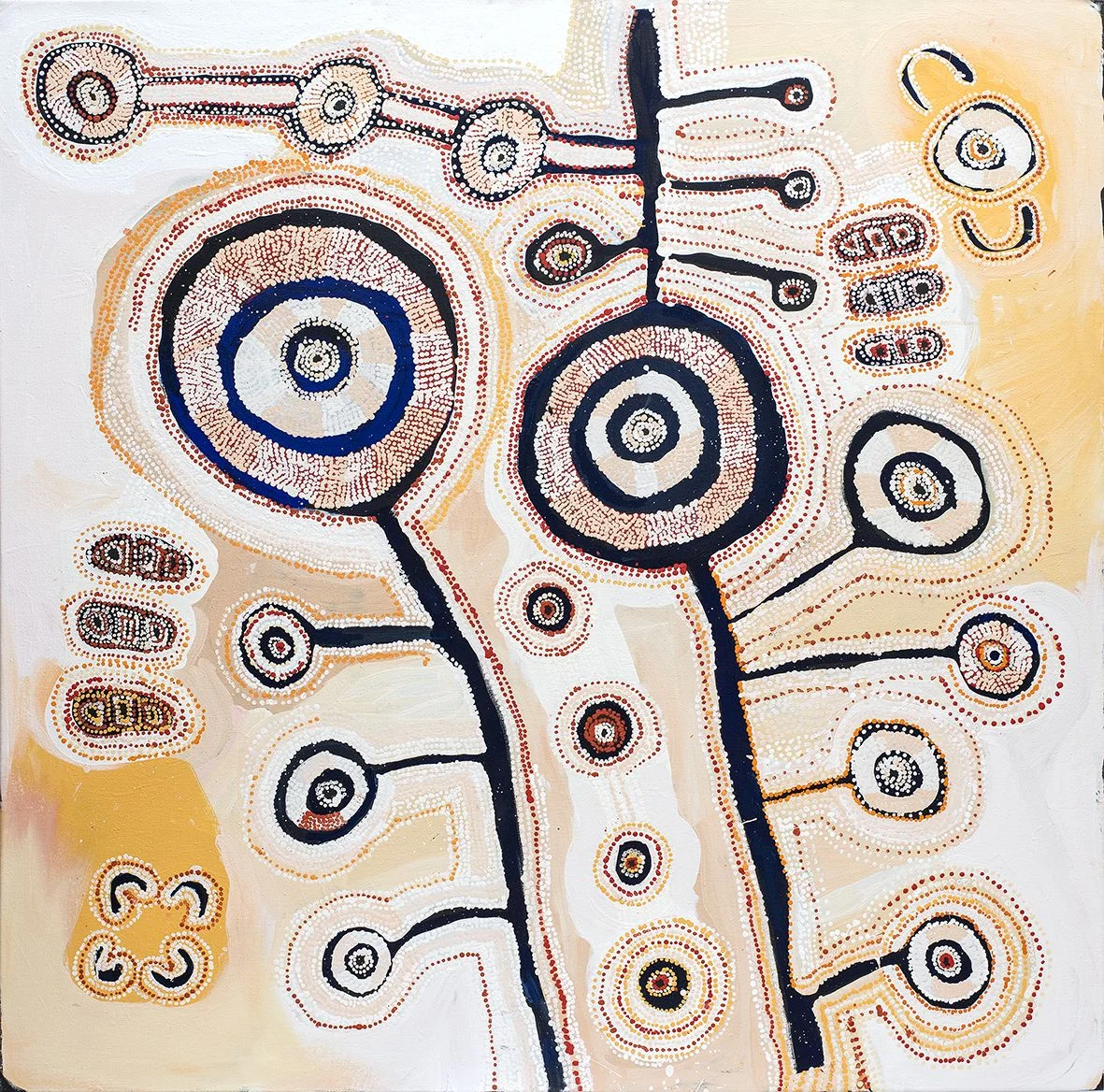
Artiste : Tuppy Ngintja Goodwin (1952)
Titre de l'œuvre : Antara
Format : 150cm x 150cm
Provenance et certificat : centre d'art aborigène de Mimili Maku
Référence de cette peinture aborigène : 188-18
Explications pour cette peinture d'art Aborigène :
When I paint, it’s like inma (ceremonial dance and song). This is Antara, a sacred place for Anangu, and the Maku (witchetty grub) Tjukurpa. There’s a special rock hole at Antara where women perform inma – ‘inmaku pakani’ – and afterwards there’s enough maku to feed everyone. Antara and Maku Tjukurpa is really important for Mimili women, we paint this place and its stories, keeping them strong.

Artiste : Tuppy Ngintja Goodwin (1952)
Titre de l'œuvre : Antara
Format : 200 cm x 200 cm
Provenance et certificat : centre d'art aborigène de Mimili Maku
Référence de cette peinture aborigène : 633-17
Vendue
Explications pour cette peinture d'art Aborigène :
When I paint, it’s like inma (ceremonial dance and song). This is Antara, a sacred place for Anangu, and the Maku (witchetty grub) Tjukurpa. There’s a special rock hole at Antara where women perform inma – ‘inmaku pakani’ – and afterwards there’s enough maku to feed everyone. Antara and Maku Tjukurpa is really important for Mimili women, we paint this place and its stories, keeping them strong.

Artiste : Tuppy Ngintja Goodwin (1952)
Titre de l'œuvre : Antara
Format : 152 cm x 122 cm
Provenance et certificat : centre d'art aborigène de Mimili Maku
Référence de cette peinture aborigène : 334-18
Explications pour cette peinture d'art Aborigène :
When I paint, it’s like inma (ceremonial dance and song). This is Antara, a sacred place for Anangu, and the Maku (witchetty grub) Tjukurpa. There’s a special rock hole at Antara where women perform inma – ‘inmaku pakani’ – and afterwards there’s enough maku to feed everyone. Antara and Maku Tjukurpa is really important for Mimili women, we paint this place and its stories, keeping them strong.
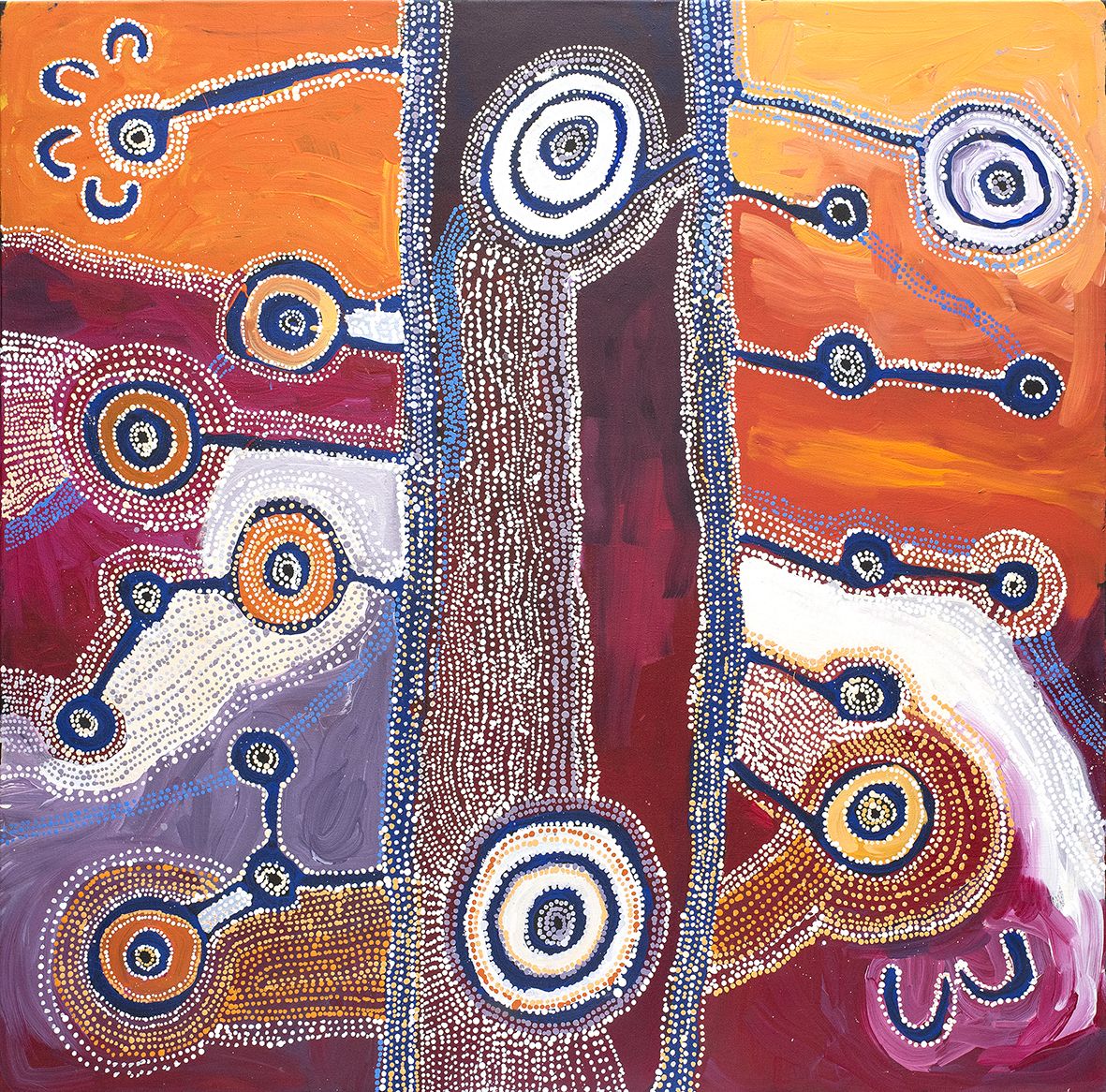
Artiste : Tuppy Ngintja Goodwin (1952)
Titre de l'œuvre : Antara
Format : 150cm x 150cm
Provenance et certificat : centre d'art aborigène de Mimili Maku
Référence de cette peinture aborigène : 570-17
Vendue
Explications pour cette peinture d'art Aborigène :
When I paint, it’s like inma (ceremonial dance and song). This is Antara, a sacred place for Anangu, and the Maku (witchetty grub) Tjukurpa. There’s a special rock hole at Antara where women perform inma – ‘inmaku pakani’ – and afterwards there’s enough maku to feed everyone. Antara and Maku Tjukurpa is really important for Mimili women, we paint this place and its stories, keeping them strong.
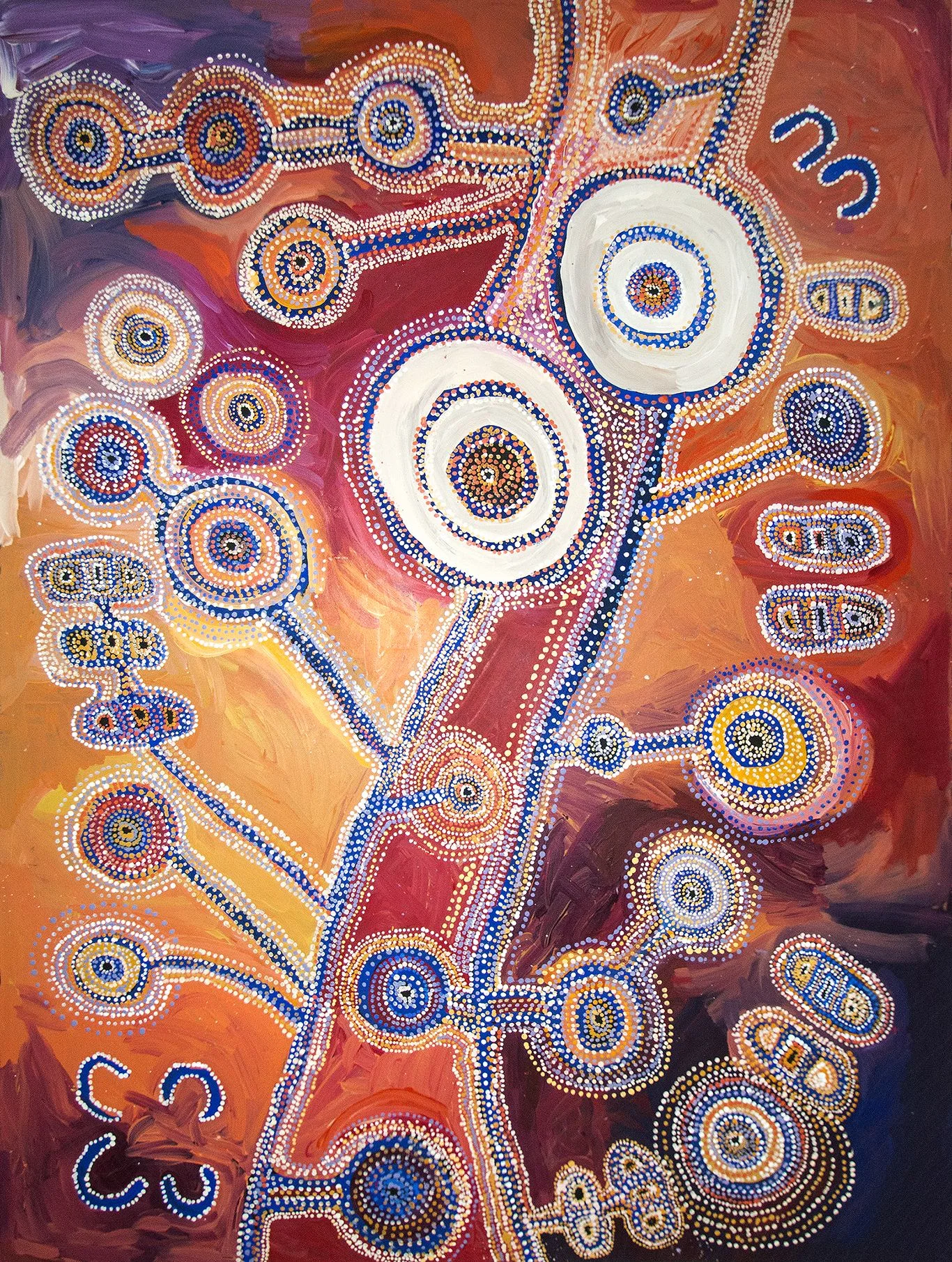
Artiste : Tuppy Ngintja Goodwin
Titre de l'œuvre : Antara Tjukurpa - Dreaming Time story
Format : 200 x 150 cm
Provenance et certificat : centre d'art aborigène de Mimili Maku Arts
Référence de cette peinture aborigène : 334-17
Œuvre vendue. Découvrez notre collection de peintures Aborigènes disponibles ici
Explications pour cette peinture Aborigène :
When I paint, it’s like inma (ceremonial dance and song).
This is Antara, a sacred place for Anangu, and the Maku (witchetty grub) Tjukurpa. There’s a special rock hole at Antara where women perform inma – ‘inmaku pakani’ – and afterwards there’s enough maku to feed everyone.
Antara and Maku Tjukurpa is really important for Mimili women, we paint this place and its stories, keeping them strong.
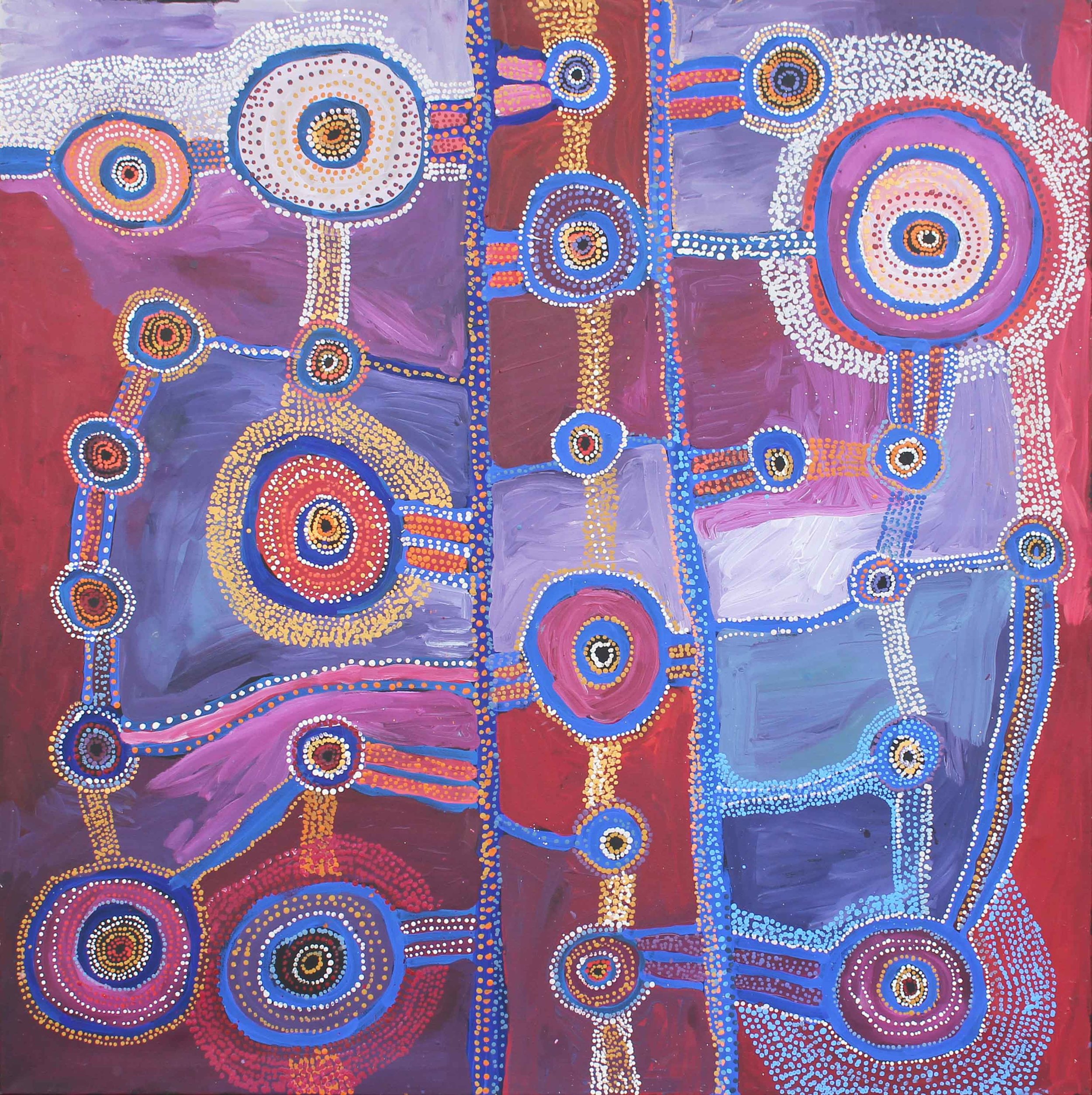
Artiste : Tuppy Ngintja Goodwin
Titre de l'œuvre : Antara Tjukurpa - Dreaming Time story
Format : 150 x 150 cm
Provenance et certificat : centre d'art aborigène de Mimili Maku Arts
Référence de cette peinture aborigène : 127-17
Explications pour cette peinture Aborigène :
When I paint, it’s like inma (ceremonial dance and song).
This is Antara, a sacred place for Anangu, and the Maku (witchetty grub) Tjukurpa. There’s a special rock hole at Antara where women perform inma – ‘inmaku pakani’ – and afterwards there’s enough maku to feed everyone.
Antara and Maku Tjukurpa is really important for Mimili women, we paint this place and its stories, keeping them strong.
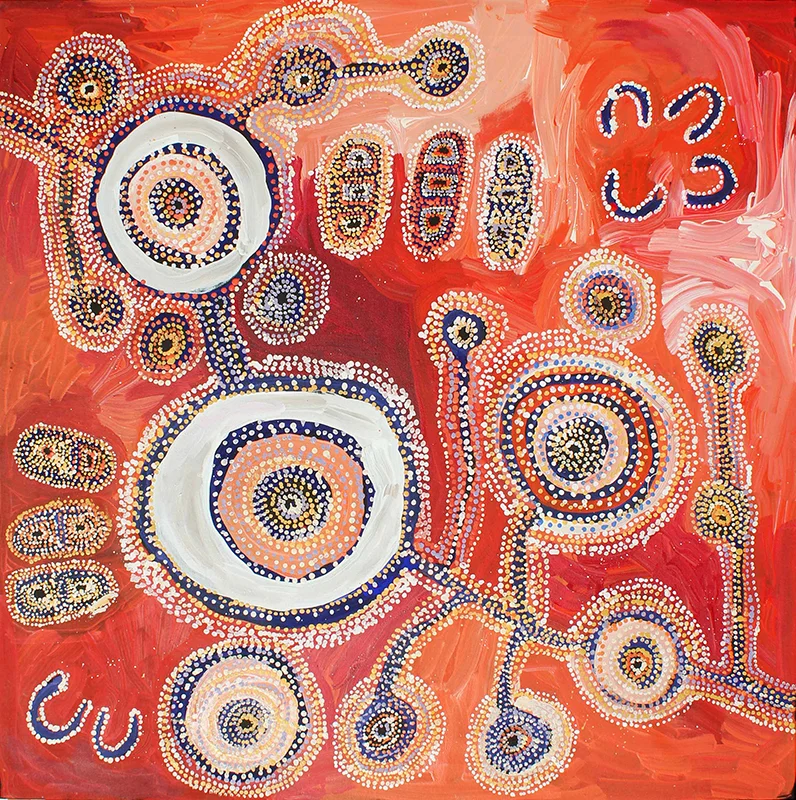
Artiste : Tuppy Ngintja Goodwin
Titre de l'œuvre : Antara Tjukurpa - Dreaming Time story
Format : 122 x 122 cm
Provenance et certificat : centre d'art aborigène de Mimili Maku Arts
Référence de cette peinture aborigène : 301-17
Œuvre vendue. Découvrez notre collection de peintures Aborigènes disponibles ici
Explications pour cette peinture Aborigène :
When I paint, it’s like inma (ceremonial dance and song).
This is Antara, a sacred place for Anangu, and the Maku (witchetty grub) Tjukurpa. There’s a special rock hole at Antara where women perform inma – ‘inmaku pakani’ – and afterwards there’s enough maku to feed everyone.
Antara and Maku Tjukurpa is really important for Mimili women, we paint this place and its stories, keeping them strong.
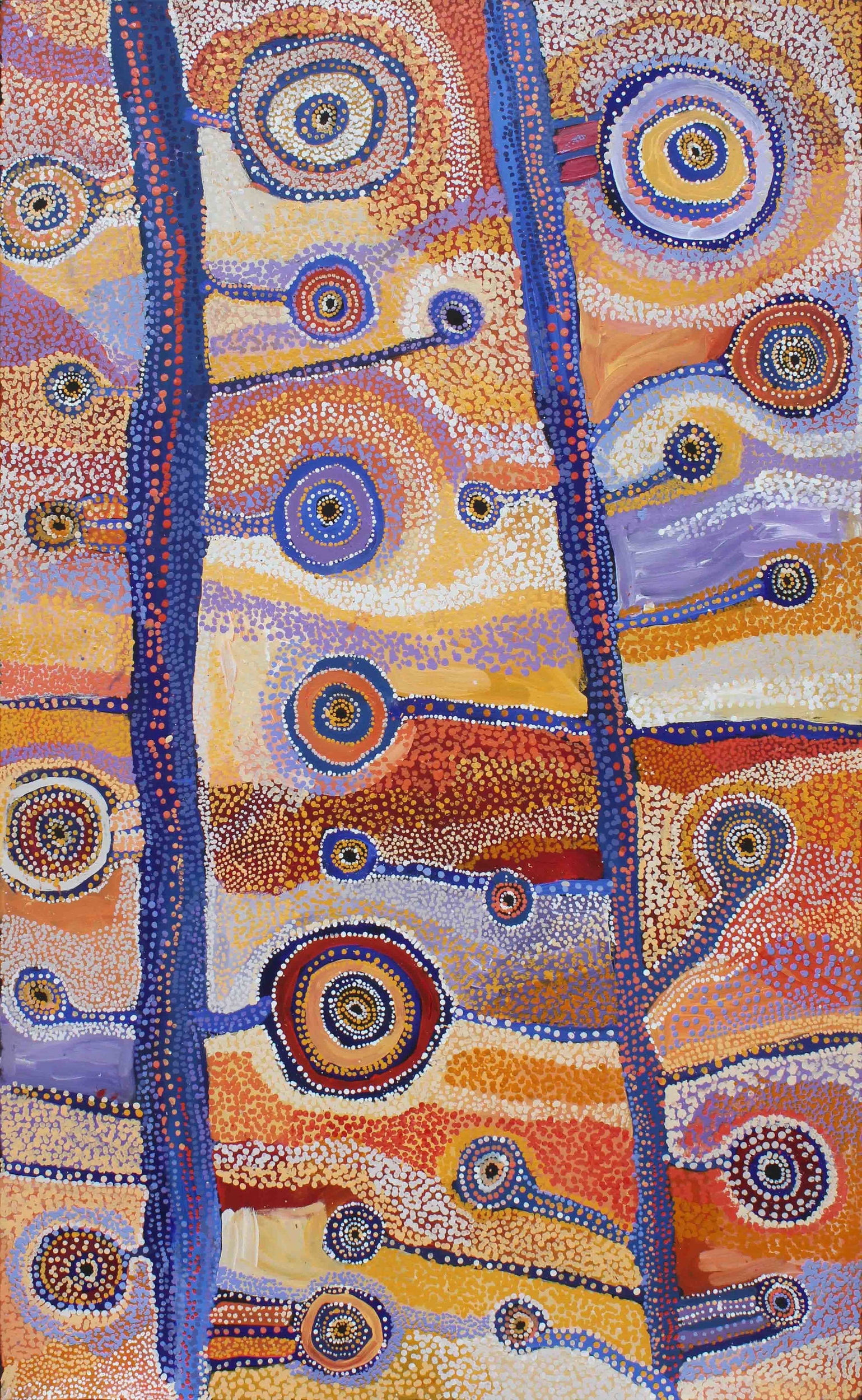
Artiste : Tuppy Ngintja Goodwin
Titre de l'œuvre : Antara Tjukurpa - Dreaming Time story
Format : 198 x 121 cm
Provenance et certificat : centre d'art aborigène de Mimili Maku Arts
Référence de cette peinture aborigène : 72-17
Œuvre vendue. Découvrez notre collection de peintures Aborigènes disponibles ici
Explications pour cette peinture Aborigène :
When I paint, it’s like inma (ceremonial dance and song).
This is Antara, a sacred place for Anangu, and the Maku (witchetty grub) Tjukurpa. There’s a special rock hole at Antara where women perform inma – ‘inmaku pakani’ – and afterwards there’s enough maku to feed everyone.
Antara and Maku Tjukurpa is really important for Mimili women, we paint this place and its stories, keeping them strong.

Artiste : Tuppy Ngintja Goodwin (1952)
Titre de l'œuvre : Antara
Format : 200 cm x 150 cm
Provenance et certificat : centre d'art aborigène de Mimili Maku
Référence de cette peinture aborigène : 239-22
Enquiry / Demander le prix de l'œuvre
Explications pour cette peinture d'art Aborigène :
When I paint, it’s like inma (ceremonial dance and song). This is Antara, a sacred place for Anangu, and the Maku (witchetty grub) Tjukurpa. There’s a special rock hole at Antara where women perform inma – ‘inmaku pakani’ – and afterwards there’s enough maku to feed everyone. Antara and Maku Tjukurpa is really important for Mimili women, we paint this place and its stories, keeping them strong.
Tuppy lives in Mimili Community, home to 300 Pitjantjatjara and Yankunytjatjara people who have been living in the area for millennia in harmony with nature and acting as custodians of the land and the Tjukurpa (creation stories). Mimili was formerly known as Everard Park, which was a cattle station that was returned to Aboriginal ownership through the 1981 AP Lands Act.
Mimili Community was incorporated as an Aboriginal Community in 1975.

Artiste : Tuppy Ngintja Goodwin (1952)
Titre de l'œuvre : Antara
Format : 200 cm x 150 cm
Provenance et certificat : centre d'art aborigène de Mimili Maku
Référence de cette peinture aborigène : 235-22
Explications pour cette peinture d'art Aborigène :
When I paint, it’s like inma (ceremonial dance and song). This is Antara, a sacred place for Anangu, and the Maku (witchetty grub) Tjukurpa. There’s a special rock hole at Antara where women perform inma – ‘inmaku pakani’ – and afterwards there’s enough maku to feed everyone. Antara and Maku Tjukurpa is really important for Mimili women, we paint this place and its stories, keeping them strong.
Tuppy lives in Mimili Community, home to 300 Pitjantjatjara and Yankunytjatjara people who have been living in the area for millennia in harmony with nature and acting as custodians of the land and the Tjukurpa (creation stories). Mimili was formerly known as Everard Park, which was a cattle station that was returned to Aboriginal ownership through the 1981 AP Lands Act.
Mimili Community was incorporated as an Aboriginal Community in 1975.

Artiste : Tuppy Ngintja Goodwin (1952)
Titre de l'œuvre : Antara
Format : 152x152cm
Provenance et certificat : centre d'art aborigène de Mimili Maku
Référence de cette peinture aborigène : 526-22
Explications pour cette peinture d'art Aborigène :
When I paint, it’s like inma (ceremonial dance and song). This is Antara, a sacred place for Anangu, and the Maku (witchetty grub) Tjukurpa. There’s a special rock hole at Antara where women perform inma – ‘inmaku pakani’ – and afterwards there’s enough maku to feed everyone. Antara and Maku Tjukurpa is really important for Mimili women, we paint this place and its stories, keeping them strong.
Tuppy lives in Mimili Community, home to 300 Pitjantjatjara and Yankunytjatjara people who have been living in the area for millennia in harmony with nature and acting as custodians of the land and the Tjukurpa (creation stories). Mimili was formerly known as Everard Park, which was a cattle station that was returned to Aboriginal ownership through the 1981 AP Lands Act.
Mimili Community was incorporated as an Aboriginal Community in 1975.

Artiste : Tuppy Ngintja Goodwin (1952)
Titre de l'œuvre : Antara
Format : 152 cm x 122 cm
Provenance et certificat : centre d'art aborigène de Mimili Maku
Référence de cette peinture aborigène : 646-22
Explications pour cette peinture d'art Aborigène :
When I paint, it’s like inma (ceremonial dance and song). This is Antara, a sacred place for Anangu, and the Maku (witchetty grub) Tjukurpa. There’s a special rock hole at Antara where women perform inma – ‘inmaku pakani’ – and afterwards there’s enough maku to feed everyone. Antara and Maku Tjukurpa is really important for Mimili women, we paint this place and its stories, keeping them strong.
Tuppy lives in Mimili Community, home to 300 Pitjantjatjara and Yankunytjatjara people who have been living in the area for millennia in harmony with nature and acting as custodians of the land and the Tjukurpa (creation stories). Mimili was formerly known as Everard Park, which was a cattle station that was returned to Aboriginal ownership through the 1981 AP Lands Act.
Mimili Community was incorporated as an Aboriginal Community in 1975.

Artiste : Tuppy Ngintja Goodwin (1952)
Titre de l'œuvre : Antara
Format : 198cm x 152cm
Provenance et certificat : centre d'art aborigène de Mimili Maku
Référence de cette peinture aborigène : 80-21
Explications pour cette peinture d'art Aborigène :
When I paint, it’s like inma (ceremonial dance and song). This is Antara, a sacred place for Anangu, and the Maku (witchetty grub) Tjukurpa. There’s a special rock hole at Antara where women perform inma – ‘inmaku pakani’ – and afterwards there’s enough maku to feed everyone. Antara and Maku Tjukurpa is really important for Mimili women, we paint this place and its stories, keeping them strong.

Artiste : Tuppy Ngintja Goodwin (1952)
Titre de l'œuvre : Antara
Format : 152cm x 152cm
Provenance et certificat : centre d'art aborigène de Mimili Maku
Référence de cette peinture aborigène : 168-21
Explications pour cette peinture d'art Aborigène :
When I paint, it’s like inma (ceremonial dance and song). This is Antara, a sacred place for Anangu, and the Maku (witchetty grub) Tjukurpa. There’s a special rock hole at Antara where women perform inma – ‘inmaku pakani’ – and afterwards there’s enough maku to feed everyone. Antara and Maku Tjukurpa is really important for Mimili women, we paint this place and its stories, keeping them strong.

Artiste : Tuppy Ngintja Goodwin (1952)
Titre de l'œuvre : Antara sacred valley
Format : 198cm x 189cm
Provenance et certificat : centre d'art aborigène de Mimili Maku
Référence de cette peinture aborigène : 374-23
Explications pour cette peinture d'art Aborigène :
When I paint, it’s like inma (ceremonial dance and song). This is Antara, a sacred place for Anangu, and the Maku (witchetty grub) Tjukurpa. There’s a special rock hole at Antara where women perform inma – ‘inmaku pakani’ – and afterwards there’s enough maku to feed everyone. Antara and Maku Tjukurpa is really important for Mimili women, we paint this place and its stories, keeping them strong.

Artiste : Tuppy Ngintja Goodwin (1952)
Titre de l'œuvre : Antara sacred valley
Format : 150cm x 150cm
Provenance et certificat : centre d'art aborigène de Mimili Maku
Référence de cette peinture aborigène : 157-23
Explications pour cette peinture d'art Aborigène :
When I paint, it’s like inma (ceremonial dance and song). This is Antara, a sacred place for Anangu, and the Maku (witchetty grub) Tjukurpa. There’s a special rock hole at Antara where women perform inma – ‘inmaku pakani’ – and afterwards there’s enough maku to feed everyone. Antara and Maku Tjukurpa is really important for Mimili women, we paint this place and its stories, keeping them strong.

Artiste : Tuppy Ngintja Goodwin (1952)
Titre de l'œuvre : Antara sacred valley
Format : 200cm x 150cm
Provenance et certificat : centre d'art aborigène de Mimili Maku
Référence de cette peinture aborigène : 172-23
Explications pour cette peinture d'art Aborigène :
When I paint, it’s like inma (ceremonial dance and song). This is Antara, a sacred place for Anangu, and the Maku (witchetty grub) Tjukurpa. There’s a special rock hole at Antara where women perform inma – ‘inmaku pakani’ – and afterwards there’s enough maku to feed everyone. Antara and Maku Tjukurpa is really important for Mimili women, we paint this place and its stories, keeping them strong.

Artiste : Tuppy Ngintja Goodwin (1952)
Titre de l'œuvre : Antara sacred valley
Format : 198cm x 198cm
Provenance et certificat : centre d'art aborigène de Mimili Maku
Référence de cette peinture aborigène : 361-23
Explications pour cette peinture d'art Aborigène :
When I paint, it’s like inma (ceremonial dance and song). This is Antara, a sacred place for Anangu, and the Maku (witchetty grub) Tjukurpa. There’s a special rock hole at Antara where women perform inma – ‘inmaku pakani’ – and afterwards there’s enough maku to feed everyone. Antara and Maku Tjukurpa is really important for Mimili women, we paint this place and its stories, keeping them strong.

Artiste : Tuppy Ngintja Goodwin (1952)
Titre de l'œuvre : Antara sacred valley
Format : 198 cm x 152 cm
Provenance et certificat : centre d'art aborigène de Mimili Maku
Référence de cette peinture aborigène : 593-23
Explications pour cette peinture d'art Aborigène :
Tuppy (1952) is a senior Pitjantjatjara woman committed to fostering traditional law and culture, dance and painting. Tuppy’s father’s name was Nguyarangu (dec) and his country was near Docker River. Her mother’s name was Emily Nyanyanta and her country was Wintutjuru, west of Fregon on the APY Lands.
Tuppy Goodwin was born in the bush near Bumbali Creek and she moved to Mimili with her family when she was a baby. At the time Mimili was called Everard Park, it was a cattle station, which was eventually returned to the Yankunytjatjara people in the mid-‐1960s.
When I paint, it’s like inma (ceremonial dance and song).
This is Antara, a sacred place for Anangu, and the Maku (witchetty grub) Tjukurpa. There’s a special rock hole at Antara where women perform inma – ‘inmaku pakani’ – and afterwards there’s enough maku to feed everyone.
Antara and Maku Tjukurpa is really important for Mimili women, we paint this place and its stories, keeping them strong.
Her artwoks are in the public Australian collection at the South Australian Museum and several private collections.
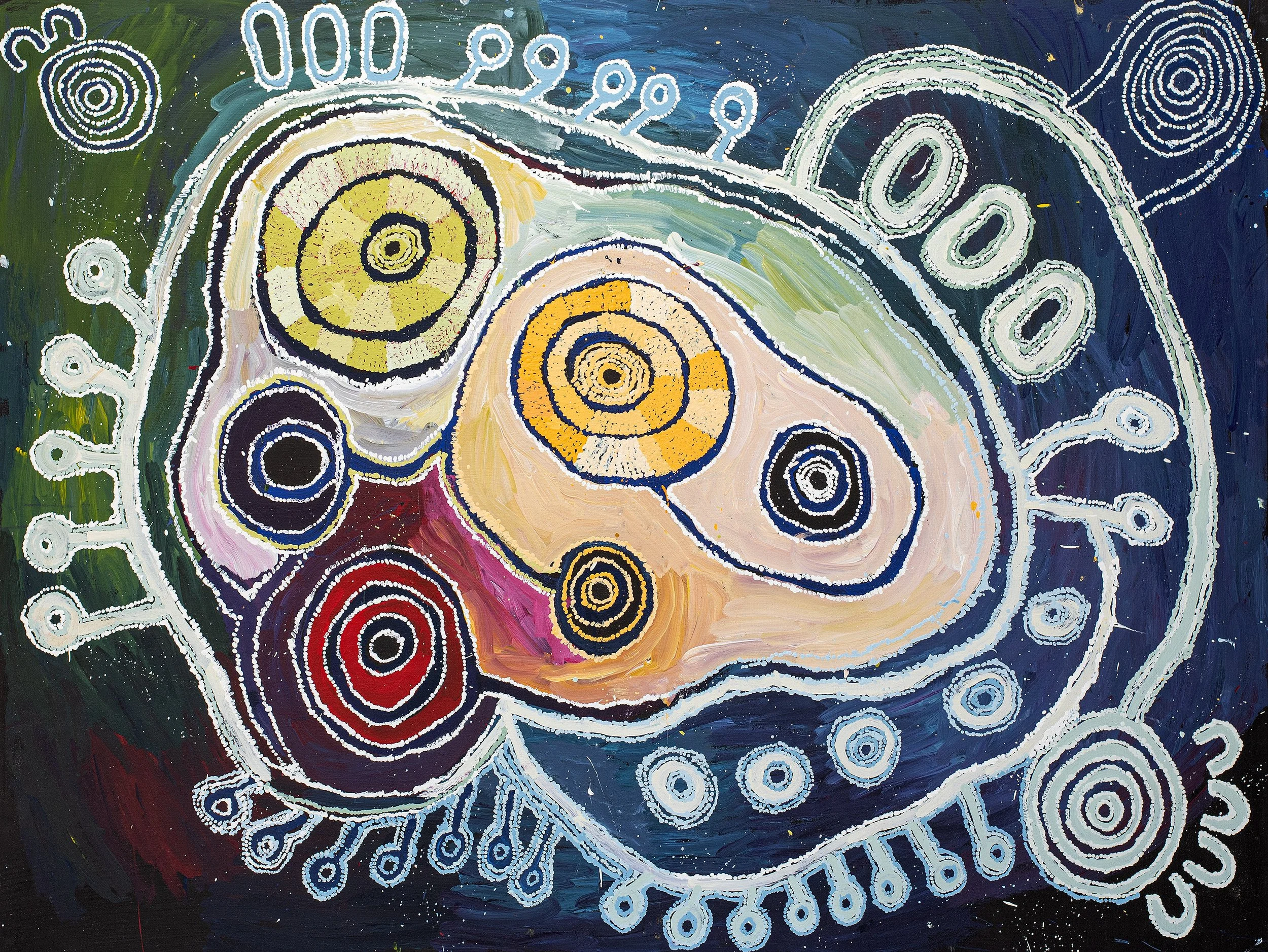
Artiste : Tuppy Ngintja Goodwin (1952)
Titre de l'œuvre : Antara sacred valley
Format : 198 cm x 152 cm
Provenance et certificat : centre d'art aborigène de Mimili Maku
Référence de cette peinture aborigène : 552-23
Explications pour cette peinture d'art Aborigène :
Tuppy (1952) is a senior Pitjantjatjara woman committed to fostering traditional law and culture, dance and painting. Tuppy’s father’s name was Nguyarangu (dec) and his country was near Docker River. Her mother’s name was Emily Nyanyanta and her country was Wintutjuru, west of Fregon on the APY Lands.
Tuppy Goodwin was born in the bush near Bumbali Creek and she moved to Mimili with her family when she was a baby. At the time Mimili was called Everard Park, it was a cattle station, which was eventually returned to the Yankunytjatjara people in the mid-‐1960s.
When I paint, it’s like inma (ceremonial dance and song).
This is Antara, a sacred place for Anangu, and the Maku (witchetty grub) Tjukurpa. There’s a special rock hole at Antara where women perform inma – ‘inmaku pakani’ – and afterwards there’s enough maku to feed everyone.
Antara and Maku Tjukurpa is really important for Mimili women, we paint this place and its stories, keeping them strong.
Her artwoks are in the public Australian collection at the South Australian Museum and several private collections.

Artiste : Tuppy Ngintja Goodwin (1952)
Titre de l'œuvre : Antara sacred valley
Format : 122 cm x 122 cm
Provenance et certificat : centre d'art aborigène de Mimili Maku
Référence de cette peinture aborigène : 376-24
Explications pour cette peinture d'art Aborigène :
Tuppy (1952) is a senior Pitjantjatjara woman committed to fostering traditional law and culture, dance and painting. Tuppy’s father’s name was Nguyarangu (dec) and his country was near Docker River. Her mother’s name was Emily Nyanyanta and her country was Wintutjuru, west of Fregon on the APY Lands.
Tuppy Goodwin was born in the bush near Bumbali Creek and she moved to Mimili with her family when she was a baby. At the time Mimili was called Everard Park, it was a cattle station, which was eventually returned to the Yankunytjatjara people in the mid-‐1960s.
When I paint, it’s like inma (ceremonial dance and song).
This is Antara, a sacred place for Anangu, and the Maku (witchetty grub) Tjukurpa. There’s a special rock hole at Antara where women perform inma – ‘inmaku pakani’ – and afterwards there’s enough maku to feed everyone.
Antara and Maku Tjukurpa is really important for Mimili women, we paint this place and its stories, keeping them strong.
Her artwoks are in the public Australian collection at the South Australian Museum and several private collections.
Artiste : Tuppy Ngintja Goodwin (1952)
Titre de l'œuvre : Antara
Format : 198cm x 198cm
Provenance et certificat : centre d'art aborigène de Mimili Maku
Référence de cette peinture aborigène : 240-20
Demander le prix de l'œuvre
Explications pour cette peinture d'art Aborigène :
When I paint, it’s like inma (ceremonial dance and song). This is Antara, a sacred place for Anangu, and the Maku (witchetty grub) Tjukurpa. There’s a special rock hole at Antara where women perform inma – ‘inmaku pakani’ – and afterwards there’s enough maku to feed everyone. Antara and Maku Tjukurpa is really important for Mimili women, we paint this place and its stories, keeping them strong.